


Thinning hair and slow growth are frustrating, and they push millions of people toward synthetic treatments that often do more harm than good. But natural oils for hair growth and thickness have been used for centuries across cultures, and modern research is finally catching up to explain why they work. From stimulating blood flow to the scalp to strengthening hair follicles at the root, certain oils deliver real, measurable results without harsh chemicals.
We put this thinking directly into our Rosemary Oil for Hair Growth, if you'd like to try it yourself.
The challenge? Knowing which oils actually live up to the hype and which are just riding the trend. Not every oil on a shelf will thicken your hair or reduce shedding, some are far more effective than others, and how you use them matters just as much as which ones you choose. At Xquisit Luxe, we formulate our hair care range with certified natural ingredients, so we've spent serious time researching what the science says about each oil.
This article breaks down 13 oils backed by evidence and real-world results, covering what each one does, who it's best suited for, and how to work it into your routine. Whether you're dealing with postpartum shedding, age-related thinning, or hair that just won't grow past a certain length, you'll find practical guidance you can act on straight away.
1. Xquisit Luxe hair growth oil blends
Before reaching for a single-ingredient oil, consider that purpose-built blends often deliver stronger results because they combine complementary actives. The Xquisit Luxe Hair Regrowth Bundle pairs certified natural oils formulated specifically to target thinning, shedding, and sluggish growth, giving you a complete routine rather than a one-note fix. If you want a starting point for natural oils for hair growth and thickness, a quality blend removes the guesswork.
What makes an oil blend effective for growth and thickness
An effective blend combines carrier oils with active botanicals that work on different layers of the hair system. Carrier oils such as castor and jojoba deliver hydration and reduce breakage, while growth-stimulating actives like rosemary and peppermint drive increased circulation to the follicle. When these are balanced correctly, each application addresses both the scalp environment and the structural integrity of existing strands.
A blend that targets both the scalp and the hair shaft will consistently outperform a single oil used in isolation.
Who should choose a ready-made blend
Ready-made blends suit anyone who finds mixing their own oils time-consuming or inconsistent. They're particularly useful if you're new to oil treatments and unsure about dilution ratios, or if you have multiple hair concerns at once, such as thinning at the crown alongside dry, brittle ends. A pre-formulated product removes the risk of using undiluted essential oils, which can irritate the scalp.
How to use it in a weekly routine
Apply the blend two to three times per week directly to the scalp, working in small sections so the oil reaches the skin rather than sitting on top of hair. Use your fingertips to massage in circular motions for five minutes to boost absorption and stimulate blood flow. Leave it on for at least 30 minutes before washing, or overnight for deeper conditioning.
Ingredient and sensitivity checks before you start
Always read the full ingredient list before your first application. Patch test on your inner arm 24 hours ahead, especially if you have a sensitive scalp or known nut allergies. Check for common irritants like undiluted camphor or high concentrations of menthol if your scalp is reactive.
Price and value to expect in the UK
Quality natural hair oil blends in the UK typically range from £18 to £35 depending on formulation and bottle size. Xquisit Luxe bundles sit within this range and include free UK shipping on orders over £25, making them a cost-effective option compared to buying multiple single oils separately.
2. Rosemary oil
Rosemary oil is one of the most researched natural oils for hair growth and thickness, and the evidence behind it is stronger than most. A 2015 study published in SKINmed Journal found rosemary oil performed comparably to minoxidil 2% over six months, with less scalp itching reported in the rosemary group.
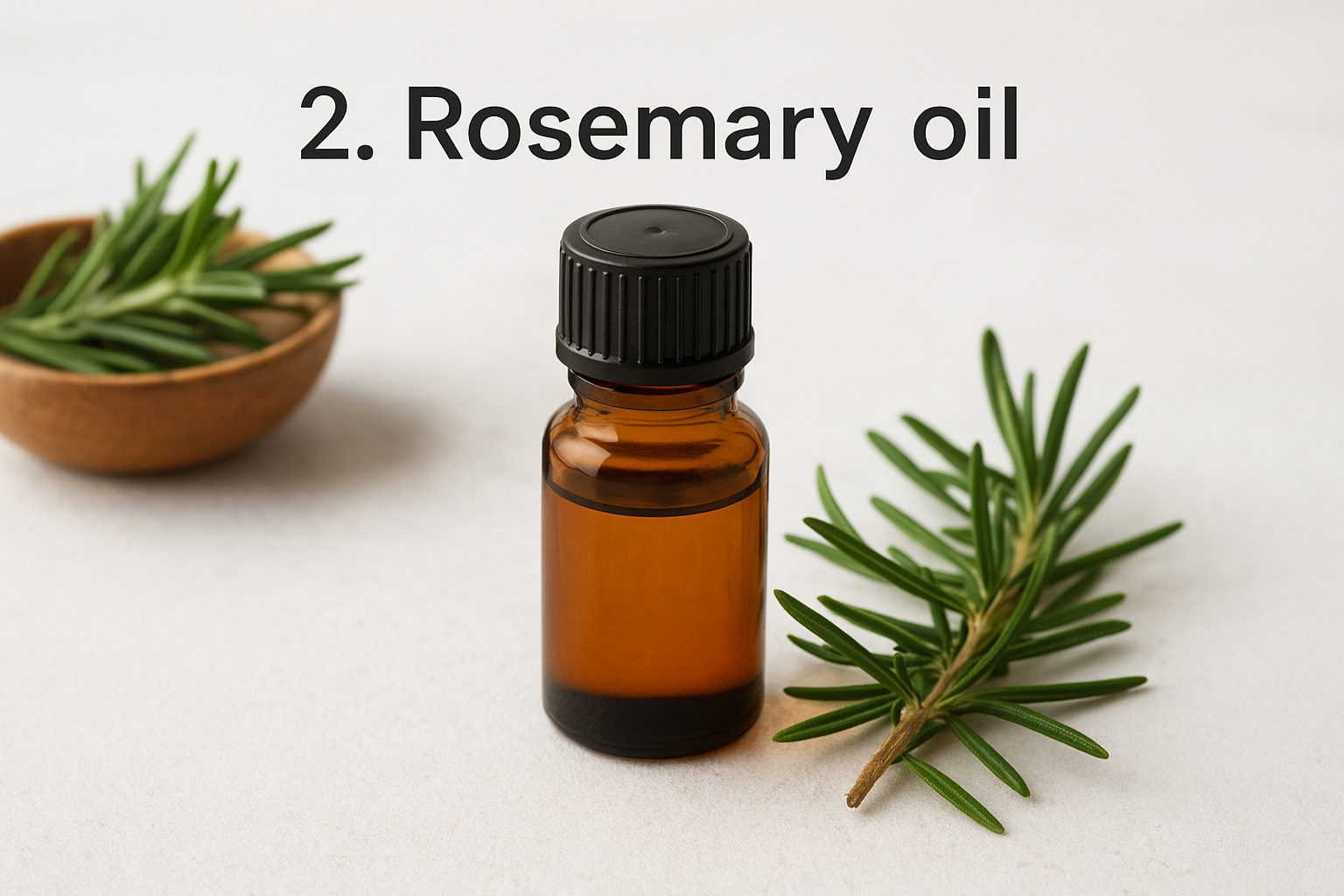
If you want one essential oil to prioritise for growth and density, rosemary oil has the most robust clinical backing available.
Why rosemary oil supports growth and density
Rosemary oil works by improving microcirculation to the scalp, which delivers more oxygen and nutrients directly to weakened follicles. Its active compound, carnosic acid, also helps repair nerve endings in scalp tissue, supporting the follicle growth cycle more directly than most topical treatments.
Best for thinning, shedding, and weak roots
Rosemary oil suits people experiencing gradual thinning or noticeable shedding during washing and brushing. It targets DHT-related follicle miniaturisation, making it useful for both men and women dealing with pattern thinning at the crown or temples.
How to dilute and apply it safely
Always dilute rosemary essential oil in a carrier such as jojoba or grapeseed oil at two to three drops per teaspoon of carrier. Apply directly to your scalp, massage with your fingertips for three to five minutes, then leave on for at least one hour before washing.
How long it takes to notice changes
Consistent use over four to six months is needed before visible density improvements appear. Track your progress by photographing your hairline in consistent lighting every four weeks so small changes register clearly.
Price and quality cues in the UK
Pure rosemary essential oil typically costs £5 to £15 for a 10ml bottle in the UK. Choose products that list 100% Rosmarinus officinalis on the label, with no added synthetic fragrance or filler carrier oils.
3. Pumpkin seed oil
Pumpkin seed oil sits quietly behind rosemary in popularity, but the research backing it for hair growth and thickness is genuinely strong. A 2014 randomised controlled trial published in Evidence-Based Complementary and Alternative Medicine found men who took pumpkin seed oil supplements showed a 40% increase in hair count over 24 weeks compared to a placebo group.
How pumpkin seed oil supports thicker-looking hair
Pumpkin seed oil is rich in phytosterols, zinc, and fatty acids that block the enzyme 5-alpha reductase, which converts testosterone into DHT. Reducing DHT activity at the follicle helps slow miniaturisation, which is the process that gradually thins each strand over time.
Pumpkin seed oil is one of the few natural oils with a randomised controlled trial specifically testing its effect on hair count.
Best for pattern thinning concerns
This oil suits anyone noticing gradual thinning at the crown or a receding hairline, which are classic signs of DHT-related follicle shrinkage. Both men and women dealing with androgenetic alopecia are the primary candidates for regular pumpkin seed oil use.
How to use it topically and in masks
Apply three to five drops of pumpkin seed oil directly to your scalp two to three times weekly, massaging it in for several minutes. For a deeper treatment, blend it into a weekly mask with jojoba as your base carrier oil and leave it on for 30 to 60 minutes before washing.
Interactions and who should avoid it
People taking blood-thinning medications should speak to a GP before using pumpkin seed oil regularly, as high doses may interact with anticoagulants. Those with seed allergies should also patch test carefully before full scalp application.
Price and quality cues in the UK
Cold-pressed pumpkin seed oil in the UK typically costs £8 to £20 for 50ml to 100ml. Look for cold-pressed, unrefined versions labelled with Cucurbita pepo to confirm you're getting the active compounds rather than a refined, processed version.
4. Castor oil
Castor oil is one of the most widely used natural oils for hair growth and thickness, but it comes with more myths attached to it than almost any other oil. Understanding what the research actually supports will help you use it effectively rather than expecting results it cannot deliver.
What castor oil can and cannot do for growth
Castor oil is rich in ricinoleic acid, a fatty acid that has shown anti-inflammatory properties in scalp tissue, which may help create a healthier environment for follicle activity. However, there is currently no strong clinical trial evidence showing it directly stimulates new follicle growth in the way rosemary oil does. Its real strength lies in reducing breakage, which helps hair retain length over time.
Castor oil improves the appearance of thickness by protecting existing strands, not by generating dramatic new growth on its own.
Best for dry lengths and breakage-prone hair
This oil works best for anyone with very dry, porous, or breakage-prone hair that snaps mid-shaft rather than shedding from the root. If your hair grows but never seems to get longer, reducing mechanical and moisture-related breakage is where castor oil genuinely helps.
How to apply it without buildup
Because castor oil is extremely thick and viscous, apply it sparingly, focusing on the scalp and lengths rather than coating every strand. Blend it with a lighter carrier like grapeseed or jojoba oil in a 1:3 ratio to make it easier to distribute evenly.
How to wash it out effectively
Use a gentle, sulphate-free shampoo applied directly to dry hair before wetting it. This breaks down the oil before water dilutes your shampoo's cleansing ability. Repeat the wash cycle twice if needed to prevent residue that weighs strands down.
Price and quality cues in the UK
Cold-pressed, hexane-free castor oil in the UK typically costs £5 to £14 for 100ml to 250ml. Look for the label term Ricinus communis and confirm the bottle states cold-pressed and unrefined, as refined versions lose much of the ricinoleic acid content.
5. Peppermint oil
Peppermint oil earns its place among the most promising natural oils for hair growth and thickness, and a 2014 study published in Toxicological Research found that a 3% peppermint oil solution produced the most significant hair growth results when compared to minoxidil, jojoba oil, and saline in an animal model, pointing to genuine follicle-stimulating potential.
How peppermint oil may stimulate the scalp
Peppermint oil's primary active compound, menthol, creates vasodilation in scalp blood vessels, drawing more blood flow to the follicle zone. This increased circulation delivers oxygen and nutrients directly to weakened roots, which can support the anagen (active growth) phase of the hair cycle more effectively.
Peppermint oil's vasodilating effect makes it one of the most physiologically active essential oils you can apply to your scalp.
Best for people who want a cooling scalp treatment
This oil suits anyone with a tight, itchy, or sluggish scalp who responds well to cooling sensations. It also works well for people dealing with mild shedding caused by poor scalp circulation rather than hormonal or nutritional factors.
How to dilute and apply it safely
Dilute peppermint essential oil at two drops per teaspoon of carrier oil, such as jojoba or grapeseed. Apply this directly to your scalp, massage for three to five minutes, and leave on for 20 to 30 minutes before washing out thoroughly.
Signs you used too much
Burning, prolonged redness, or a stinging sensation that lasts more than a few minutes after application means your concentration is too high. Rinse immediately with cool water and reduce your dilution ratio before trying again.
Price and quality cues in the UK
Pure peppermint essential oil typically costs £4 to £12 for a 10ml bottle in the UK. Look for products listing 100% Mentha piperita with no added synthetic fragrance, which dilutes the active menthol concentration.
6. Jojoba oil
Jojoba oil stands apart from the other natural oils for hair growth and thickness on this list because it is technically a liquid wax, not an oil. That distinction matters: its molecular structure closely mirrors human sebum, which means your scalp accepts it quickly without triggering excess oil production or clogging follicles.
Why jojoba oil works well on the scalp
Jojoba's sebum-like composition allows it to regulate scalp moisture balance rather than simply coating the surface. When your scalp produces too little sebum, jojoba compensates; when it produces too much, jojoba signals the sebaceous glands to slow down. This dual action keeps the follicle environment clean and hydrated, which supports consistent hair cycle activity.
Jojoba is the only natural wax that balances scalp sebum production in both directions, making it uniquely versatile among carrier oils.
Best for oily scalps and product buildup
This oil works particularly well for people with oily scalps or heavy product buildup that suffocates follicles over time. Unlike heavier oils, jojoba dissolves existing sebum deposits and lifts residue from the scalp without stripping moisture from the hair shaft.
How to use it for scalp massage and sealing ends
Apply three to five drops of jojoba oil directly to your scalp two to three times weekly and massage in circular motions for five minutes. You can also run a small amount through dry ends to reduce breakage and seal moisture between wash days.
How to pair it with essential oils
Jojoba is an ideal carrier oil for rosemary, peppermint, and lavender essential oils because its light texture distributes active compounds evenly across the scalp. Use one teaspoon of jojoba with two to three drops of your chosen essential oil for a well-balanced, effective blend.
Price and quality cues in the UK
Pure jojoba oil in the UK typically costs £8 to £18 for 100ml. Look for products labelled 100% Simmondsia chinensis that are cold-pressed and unrefined, as refined versions lose the beneficial compounds that make jojoba so effective on the scalp.
7. Argan oil
Argan oil comes from the kernels of the Argania spinosa tree native to Morocco, and it has earned its place among the most effective natural oils for hair growth and thickness by improving the structural condition of existing strands. Unlike growth-stimulating oils that target the follicle directly, argan oil works at the hair shaft level, reducing breakage and making each strand appear thicker and more lustrous.
How argan oil improves thickness appearance and shine
Argan oil is packed with oleic acid, linoleic acid, and vitamin E, all of which penetrate the hair cuticle to smooth and seal it. Smoother cuticles reflect light more evenly, which gives hair a visibly thicker, shinier appearance even before any growth changes occur. This makes it one of the fastest-acting oils in terms of perceived results.
Argan oil is one of the few oils with direct evidence supporting its role in reducing oxidative damage to the hair fibre itself.
Best for frizz, heat damage, and coloured hair
This oil works particularly well for people with colour-treated, heat-damaged, or frizz-prone hair that looks thin because of roughened cuticles and moisture loss. If your hair feels rough, tangles easily, or lacks shine, argan oil addresses all three issues simultaneously.
How to use it without weighing hair down
Apply two to three drops of argan oil to damp hair from mid-length to ends after washing. Avoid the roots entirely to prevent greasiness at the scalp. For a deeper treatment, apply it to dry hair overnight once a week and wash out in the morning.
Mistakes that reduce results
Using too much argan oil at once is the most common mistake, as it leaves hair flat and greasy rather than smooth and full. Start with one or two drops and only increase if your hair absorbs it quickly without residue.
Price and quality cues in the UK
Pure argan oil in the UK typically costs £8 to £22 for 50ml to 100ml. Look for products labelled 100% Argania spinosa kernel oil that are cold-pressed, as heat-processed versions lose their vitamin E content and deliver noticeably weaker results.
8. Coconut oil
Coconut oil is arguably the most popular entry in any conversation about natural oils for hair growth and thickness, yet it produces wildly different results depending on your hair type. Understanding exactly when it helps and when it works against you will save you months of frustrating use.
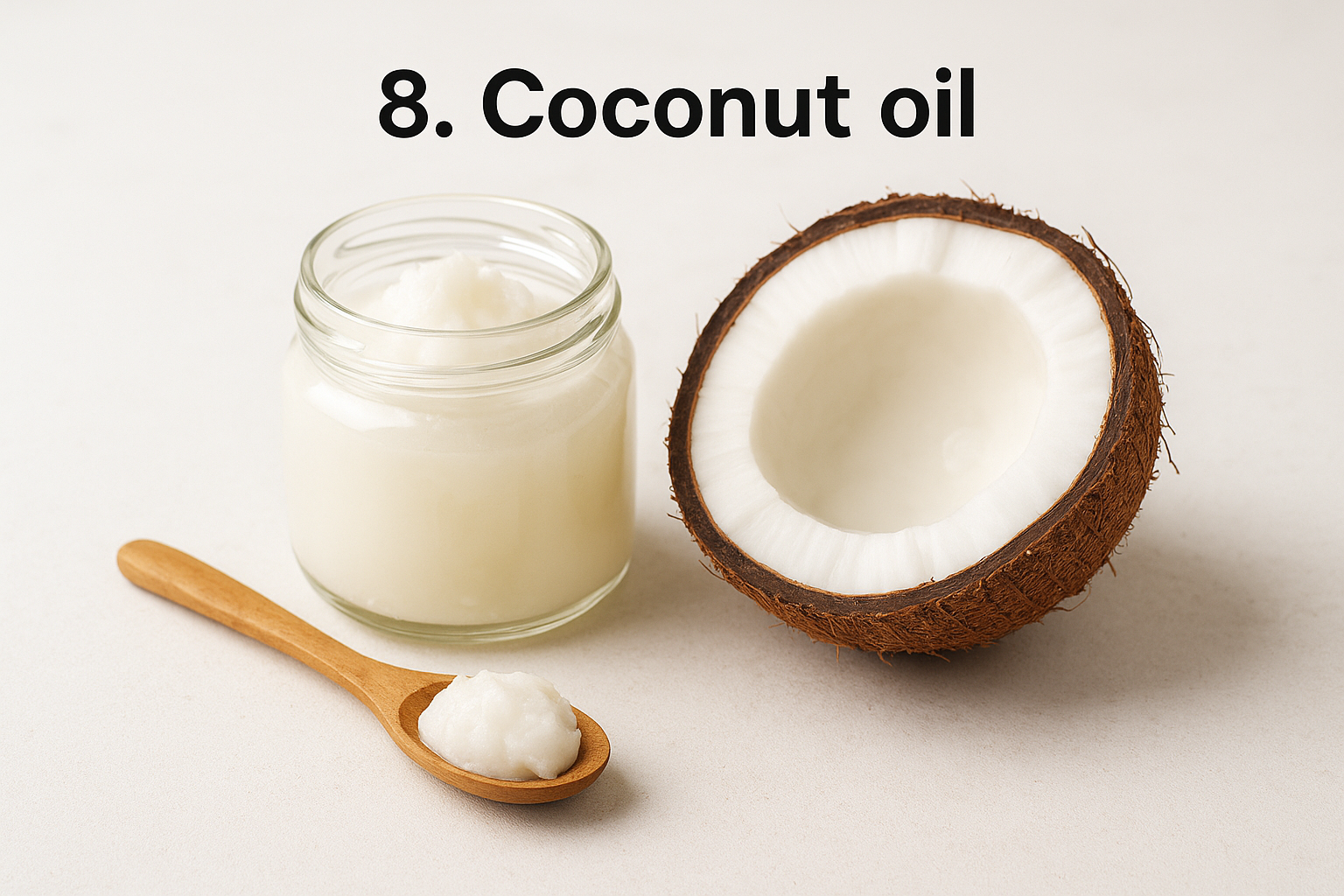
When coconut oil helps and when it backfires
Coconut oil's small molecular size allows it to penetrate the hair shaft and reduce protein loss during washing, which makes it genuinely useful for certain hair types. However, its high lauric acid content can cause hygral fatigue in highly porous hair, where repeated swelling and drying from oil absorption actually weakens the strand over time.
Coconut oil delivers clear benefits for low-to-medium porosity hair but can worsen breakage in high-porosity or protein-sensitive hair types.
Best for protecting lengths from protein loss
This oil works best for people with low-to-medium porosity hair that loses protein easily during chemical treatments, heat styling, or aggressive washing. Applying it before washing creates a protective barrier that limits how much protein the hair leaches into water.
How to use it as a pre-wash treatment
Apply refined or virgin coconut oil generously from mid-length to ends 30 to 60 minutes before shampooing. Avoid the scalp unless you have a dry scalp specifically, as regular scalp application can clog follicles and contribute to buildup over time.
Who should avoid frequent coconut oiling
People with high-porosity, fine, or protein-sensitive hair should limit use to once a fortnight or avoid it entirely. If your hair feels stiffer or more brittle after use, switch to a lighter carrier oil like grapeseed instead.
Price and quality cues in the UK
Virgin coconut oil in the UK typically costs £5 to £12 for 200ml to 500ml. Choose products labelled virgin, cold-pressed, and unrefined with Cocos nucifera on the ingredient list, as refined versions lose the beneficial fatty acids responsible for protein protection.
9. Olive oil
Olive oil has been used on hair and skin for centuries across the Mediterranean, and it remains one of the most accessible natural oils for hair growth and thickness available in any UK kitchen or health shop. Its value lies primarily in scalp conditioning and strand softening rather than direct follicle stimulation, but that makes it no less useful in a well-rounded hair routine.
How olive oil supports scalp comfort and softness
Olive oil is rich in oleic acid and squalene, both of which deeply moisturise the scalp and soften keratin within the hair shaft. Regular application reduces scalp tightness and dry flaking, creating a more comfortable environment that supports consistent hair growth over time.
Best for very dry hair and rough texture
This oil suits people with very dry, coarse, or rough-textured hair that feels brittle despite regular conditioning. If your scalp feels persistently tight and your ends split easily, olive oil's heavy moisture content addresses both concerns in a single application.
How to use it in a short, targeted mask
Warm one to two tablespoons of extra virgin olive oil slightly and apply it to your scalp and mid-lengths. Leave it on for 20 to 30 minutes under a shower cap before washing out with a gentle, sulphate-free shampoo.
Olive oil works best as a targeted weekly treatment rather than a daily product, which keeps buildup and weight on your strands under control.
Dandruff and irritation cautions
Avoid applying olive oil to a fungal dandruff-prone scalp, as its oleic acid content can feed Malassezia yeast and worsen flaking. If your dandruff increases after use, switch to a lighter carrier oil such as grapeseed instead.
Price and quality cues in the UK
Extra virgin olive oil in the UK typically costs £5 to £15 for 500ml. Choose products labelled cold-pressed extra virgin with Olea europaea on the ingredient list for the highest phenolic compound and oleic acid content.
10. Grapeseed oil
Grapeseed oil is one of the most underrated natural oils for hair growth and thickness on this list, largely because it lacks the dramatic marketing story that castor or argan oil carries. Its lightweight texture and high linoleic acid content make it a genuinely practical choice, particularly for anyone whose hair responds poorly to heavier oils.
Why grapeseed oil suits lightweight routines
Grapeseed oil absorbs quickly into both the scalp and hair shaft without leaving a greasy residue. Its linoleic acid content helps maintain the scalp's lipid barrier, keeping moisture in and supporting a consistent follicle environment for healthy growth.
Grapeseed oil's fast absorption and neutral finish make it one of the best carrier oils for fine or thinning hair that heavier oils tend to flatten.
Best for fine hair that gets greasy easily
If your hair looks flat within a day of washing, grapeseed oil suits you far better than castor or olive oil. Its non-comedogenic profile conditions the scalp without blocking follicles or contributing to the product buildup that slows healthy hair growth.
How to use it as a carrier oil for essentials
Add two to three drops of your chosen essential oil per teaspoon of grapeseed oil. Its neutral scent and fast absorption make it an excellent base for rosemary or peppermint, distributing actives evenly across the scalp with each application.
Storage and oxidation tips
Grapeseed oil oxidises faster than most carrier oils, so store it in a cool, dark cupboard and use it within six months of opening. A dark glass bottle slows oxidation considerably compared to clear plastic packaging.
Price and quality cues in the UK
Pure grapeseed oil in the UK typically costs £5 to £12 for 100ml to 250ml. Look for products labelled cold-pressed Vitis vinifera with no added synthetic ingredients to ensure you get the full linoleic acid content.
11. Sweet almond oil
Sweet almond oil is a gentle carrier oil that earns its place among natural oils for hair growth and thickness through its ability to strengthen fragile strands and soothe reactive scalps. It sits between lightweight grapeseed and heavier castor oil in viscosity, which makes it adaptable for both scalp treatments and length conditioning.
How sweet almond oil supports softer, stronger strands
Sweet almond oil is rich in oleic acid, vitamin E, and magnesium, which work together to reinforce the hair shaft and reduce oxidative stress at the follicle. Regular application visibly reduces breakage and stiffness, leaving hair more pliable and softer within a few weeks of consistent use.
Sweet almond oil's combination of vitamins and fatty acids makes it one of the most tolerable conditioning oils for reactive scalps.
Best for brittle hair and sensitive scalps
This oil suits anyone dealing with brittle, snapping hair or a scalp that reacts poorly to stronger oils. Its mild anti-inflammatory properties calm redness and dry irritation without the intensity that peppermint or tea tree can trigger.
How to use it on lengths and ends
Apply three to four drops through damp mid-lengths and ends after washing to seal in moisture and reduce split ends. For a scalp treatment, massage a small amount directly into your scalp two to three times weekly and leave on for 20 minutes before rinsing.
Allergy and nut-sensitivity cautions
Sweet almond oil comes from tree nuts, so anyone with a nut allergy must avoid it entirely. Always patch test 24 hours before full use, even if your allergy history seems mild.
Price and quality cues in the UK
Pure sweet almond oil in the UK typically costs £5 to £14 for 100ml to 250ml. Look for products labelled 100% Prunus amygdalus dulcis that are cold-pressed and unrefined to preserve the full vitamin E content.
12. Tea tree oil
Tea tree oil occupies a specific niche among natural oils for hair growth and thickness: it works primarily on the scalp environment rather than the follicle directly. When your scalp is inflamed, flaky, or chronically itchy, hair growth slows down noticeably, and tea tree oil targets those underlying conditions more effectively than most single-ingredient treatments.
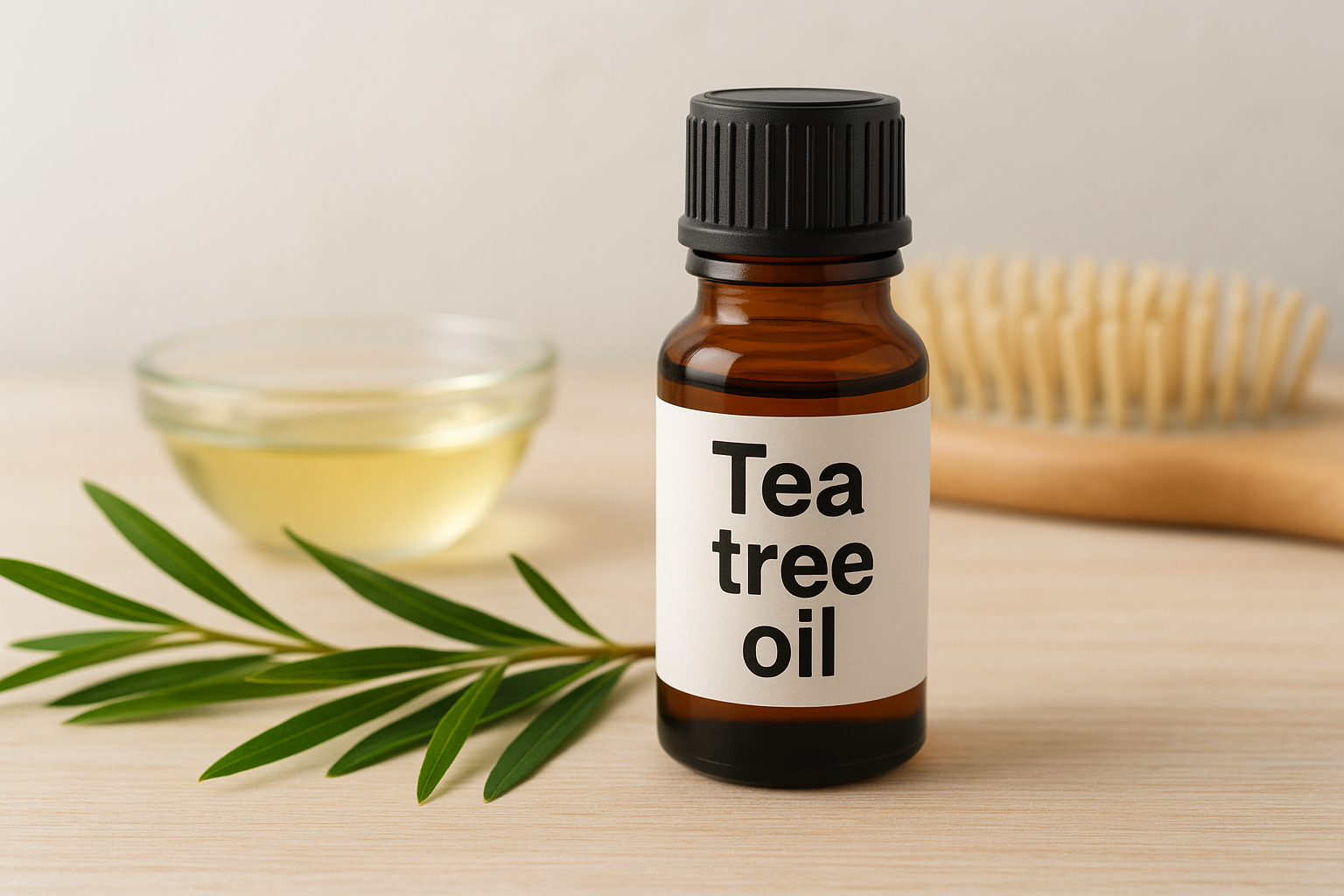
When tea tree oil helps scalp health
Tea tree oil contains terpinen-4-ol, a compound with proven antifungal and antibacterial activity that clears the scalp of microbial overgrowth. Keeping the scalp free from fungal buildup and bacterial irritation allows follicles to operate in a cleaner, less inflamed environment, which directly supports a fuller hair cycle.
A clear, healthy scalp is the foundation that all other hair growth efforts depend on, and tea tree oil addresses that foundation directly.
Best for dandruff-prone and itchy scalps
This oil works best for people dealing with persistent dandruff, flaking, or an itchy scalp that does not respond to standard conditioning treatments. If you notice your shedding increases during flare-ups, inflammation and fungal activity are likely contributing factors that tea tree oil can help reduce.
How to dilute and apply it safely
Dilute tea tree oil at one to two drops per teaspoon of carrier oil such as jojoba or grapeseed. Apply the blend to your scalp, massage gently for three to four minutes, and leave on for 20 minutes before washing out thoroughly.
Common irritation triggers to avoid
Using tea tree oil undiluted on your scalp is the most common cause of chemical burns and prolonged redness. Rinse immediately with cool water if stinging persists beyond a few minutes after application.
Price and quality cues in the UK
Pure tea tree essential oil in the UK typically costs £4 to £12 for a 10ml bottle. Look for products listing 100% Melaleuca alternifolia with no synthetic fragrance or filler ingredients added.
13. Lavender oil
Lavender oil rounds out this list of natural oils for hair growth and thickness by addressing one of the most overlooked contributors to hair loss: chronic scalp stress and inflammation. A 2016 study published in Toxicological Research found that topical lavender oil application significantly increased the number of hair follicles, deepened follicle depth, and thickened the dermal layer in animal models, suggesting genuine growth-promoting potential beyond its well-known calming properties.
How lavender oil supports a calmer scalp environment
Lavender oil contains linalool and linalyl acetate, two compounds that reduce inflammatory markers in scalp tissue and support a more balanced follicle environment. When chronic inflammation compresses follicle activity into shorter growth cycles, even small reductions in irritation can extend the anagen phase and reduce daily shedding noticeably.
Reducing scalp inflammation with lavender oil can lengthen the active growth phase before follicles enter the resting stage.
Best for stress-related shedding and irritation
Lavender oil suits anyone experiencing telogen effluvium, the temporary shedding that follows periods of physical or emotional stress. Its anti-inflammatory action also benefits people with sensitive, reactive scalps that flare up in response to weather changes or product use.
How to dilute and apply it safely
Add two drops of lavender essential oil per teaspoon of a carrier oil such as jojoba. Massage the blend into your scalp for four to five minutes and leave it on for at least 30 minutes before washing out.
How to combine it with other oils
Lavender pairs particularly well with rosemary and peppermint because each oil targets a different growth mechanism. Blend two drops of lavender with two drops of rosemary in one teaspoon of grapeseed oil for a comprehensive scalp treatment that covers circulation, inflammation, and follicle stimulation simultaneously.
Price and quality cues in the UK
Pure lavender essential oil in the UK typically costs £4 to £12 for a 10ml bottle. Look for products listing 100% Lavandula angustifolia with no added synthetic fragrance, as blended versions contain far less active linalool than the pure extract.
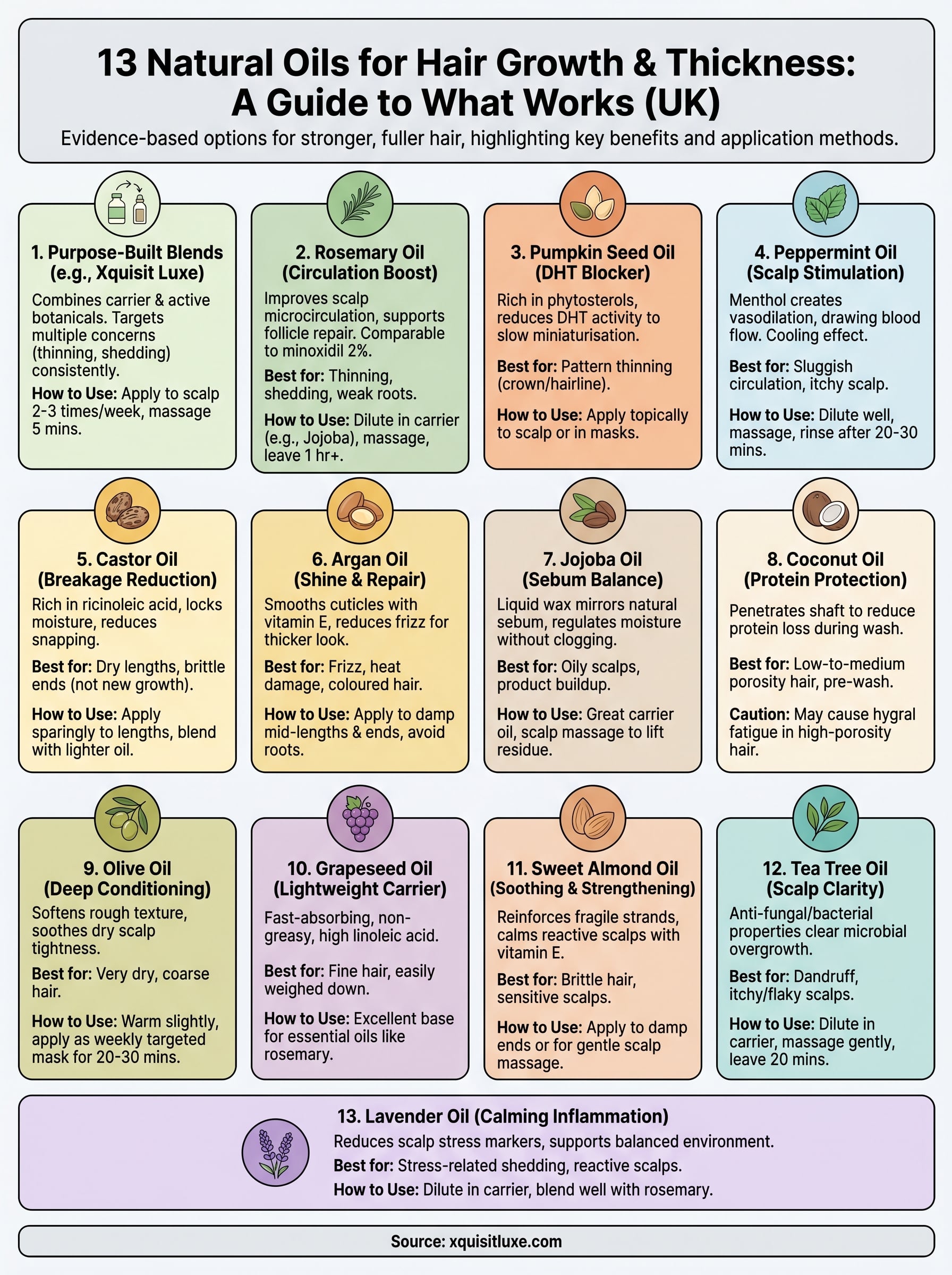
Next steps for healthier hair
You now have a clear picture of how natural oils for hair growth and thickness work and which ones suit your specific concerns. The next step is not collecting every oil on this list but picking two or three that match your hair type and goals, then committing to consistent use over at least four months before judging results.
Start with a rosemary and jojoba blend for growth and scalp health, add lavender if stress-related shedding is a concern, and use castor or sweet almond oil on your lengths to reduce breakage. Pairing these with a purpose-built formula gives your routine the best foundation to build on.
If you want a complete, ready-to-use starting point, explore the Xquisit Luxe Hair Regrowth Bundle, which combines certified natural oils into a targeted routine designed for thinning, shedding, and sluggish growth, with free UK shipping on orders over £25.
