


A dry, flaky scalp is more than just a cosmetic nuisance, it can cause persistent itching, irritation, and even affect your confidence. If you've tried medicated shampoos and still can't find relief, you're not alone. Rosemary oil for dry scalp has gained serious attention in recent years, and for good reason: research supports its ability to improve scalp circulation, reduce inflammation, and encourage a healthier environment for hair growth.
Our Rosemary Oil for Hair Growth is built around exactly this approach — worth a look if you're ready to try it for yourself.
But does it actually work, and how do you use it without irritating your skin further? The short answer is yes, when diluted properly and applied consistently, rosemary oil can help soothe dryness and reduce flakiness at the source. The key lies in understanding the right dilution ratios, choosing a suitable carrier oil, and building a routine that fits your scalp's specific needs.
At Xquisit Luxe, we formulate our hair care range with certified natural ingredients, including rosemary, designed to target concerns like thinning hair and scalp dryness. In this guide, we'll break down exactly how rosemary oil benefits a dry scalp, walk you through safe application methods, and help you decide whether it belongs in your routine.
Dry scalp basics and what rosemary oil can do
A dry scalp and dandruff look similar on the surface, but they have different causes and require different treatments. Dry scalp occurs when your skin produces too little sebum, leaving it tight, itchy, and prone to fine, white flakes. Dandruff, by contrast, is linked to excess oil and a yeast-like fungus called Malassezia. Treating one with the wrong remedy can make the other worse, so it is worth identifying exactly what you are dealing with before reaching for any product.
What actually causes a dry scalp
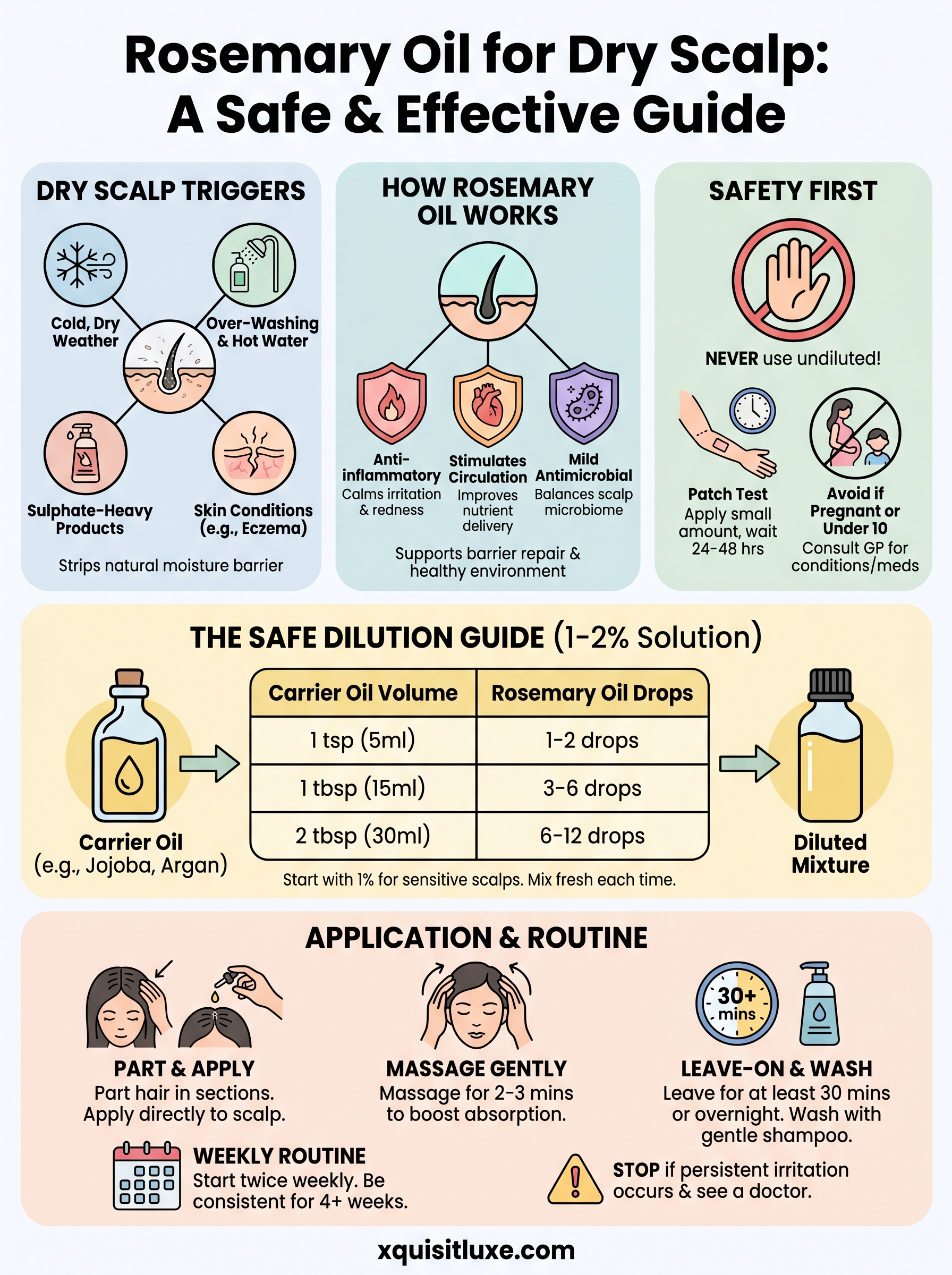
Several factors strip the scalp of its natural moisture barrier, and knowing yours shapes every decision you make about treatment. Cold, dry weather is one of the most common triggers, since low humidity pulls moisture from your skin throughout the day. Other frequent causes include:
- Over-washing your hair, which removes the protective natural oils your scalp produces
- Sulphate-heavy shampoos that disrupt the scalp's acid mantle
- Hot water during washing, which dehydrates skin quickly
- Skin conditions such as eczema or psoriasis, which compromise the skin barrier
- Ageing, which naturally reduces sebum production over time
Pinpointing your specific trigger matters because no oil treatment will deliver lasting results if the underlying habit remains. For example, if you wash your hair daily with a harsh shampoo, your scalp cannot retain moisture regardless of what you apply afterwards. Addressing the cause directly alongside any topical treatment is what actually produces long-term improvement.
How rosemary oil targets the root problem
Rosemary oil works on a dry scalp through three main mechanisms. First, its anti-inflammatory compounds, particularly rosmarinic acid and carnosic acid, calm the irritation and redness that accompany dryness. Second, it stimulates blood circulation in the scalp, helping deliver nutrients and oxygen to skin cells and follicles more effectively. Improved circulation supports a stronger skin barrier, which is exactly what a dry scalp needs to recover.
Research published in the journal Skinmed found that rosemary oil performed comparably to minoxidil 2% for hair growth, with participants reporting less scalp itching during treatment.
Using rosemary oil for dry scalp also brings mild antimicrobial properties that help keep the scalp environment balanced. A disrupted scalp microbiome can worsen both dryness and flakiness, so maintaining that balance matters. Rosemary oil does not replace sebum directly, but by reducing inflammation and improving circulation, it helps your scalp return to regulating its own moisture more effectively. Apply it consistently and correctly, and you address the underlying conditions rather than repeatedly masking the symptoms.
Safety rules before you use rosemary oil
Rosemary oil is a concentrated essential oil, and applying it undiluted directly to your scalp is one of the most common mistakes people make. Pure essential oils can cause irritation, burning, or contact dermatitis, which is the last thing you need when your scalp is already dry and sensitive. Before you start using rosemary oil for dry scalp, two non-negotiable steps will protect your skin: patch testing and correct dilution.
Do a patch test first
Before applying anything to your scalp, test your diluted mixture on a small area of skin, such as the inside of your elbow or wrist. Apply a small amount of the diluted oil and leave it for 24 to 48 hours to monitor for redness, itching, or swelling. If any reaction appears, do not use the oil on your scalp.
Skipping the patch test is the single fastest way to turn a helpful remedy into a prolonged skin irritation problem.
People with eczema, rosacea, or an already compromised scalp barrier face a higher risk of reacting. Inform your GP before using rosemary oil regularly if you take blood thinners or blood pressure medication, since rosemary can interfere with both.
Who should avoid rosemary oil entirely
Some people need to step back from rosemary oil altogether. Pregnant women should avoid it, as rosemary essential oil may stimulate uterine contractions and carries a risk to the pregnancy. Children under ten should not use essential oils on their scalp without direct medical guidance.
If you have open sores, active psoriasis flares, or scalp wounds, wait for the skin to heal before applying any essential oil. Broken skin absorbs substances far more readily, which increases the risk of a systemic reaction rather than just local irritation. The same applies after chemical treatments such as bleach, relaxers, or perms: your scalp barrier needs at least two weeks to recover before you introduce any potent topical.
Step 1. Mix a safe dilution with a carrier oil
Getting your dilution right is the foundation of using rosemary oil for dry scalp safely. The standard guideline for scalp application is a 1–2% dilution, which means 1 to 2 drops of rosemary essential oil per teaspoon (5ml) of carrier oil. Going above this rate does not improve results; it raises your risk of irritation significantly, especially on an already compromised scalp.
Choose the right dilution ratio
Your dilution depends on your scalp's current condition. If your scalp is particularly sensitive or reactive, start at 1% and increase only if you see no response after two weeks. For a standard dry scalp without open sores or eczema, 2% is effective and well-tolerated by most people.
Use this quick reference to mix the correct amount before each application:
| Carrier oil volume | 1% dilution | 2% dilution |
|---|---|---|
| 1 tsp (5ml) | 1 drop | 2 drops |
| 1 tbsp (15ml) | 3 drops | 6 drops |
| 2 tbsp (30ml) | 6 drops | 12 drops |
A 1% dilution is always the safer starting point for first-time users or anyone with sensitive skin.
Pick a carrier oil that suits a dry scalp
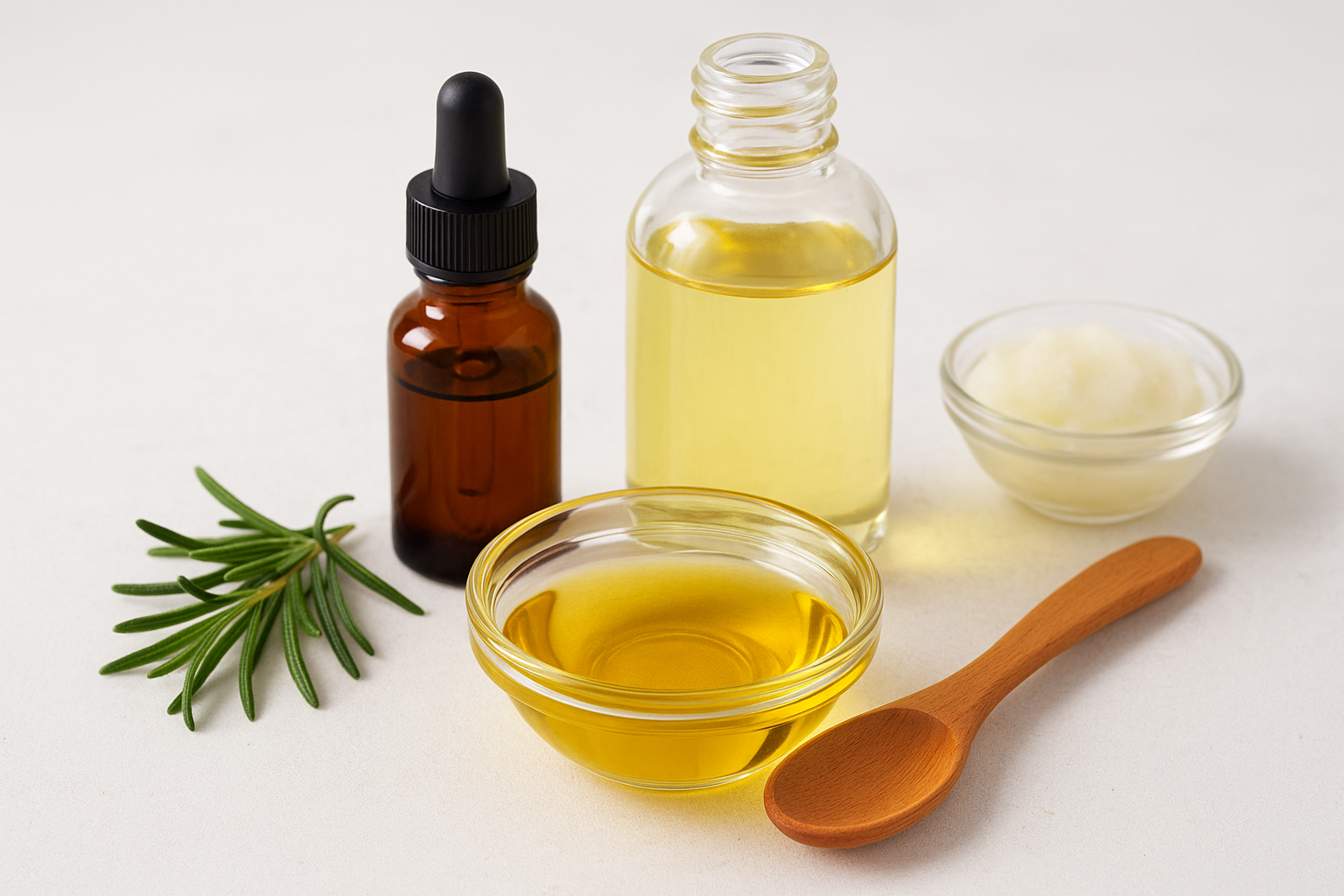
Not all carrier oils behave the same way on a dry scalp, and choosing the wrong one can leave your hair feeling greasy or block your follicles. Jojoba oil is one of the best choices because its molecular structure closely resembles your scalp's natural sebum, making it easy to absorb without residue. Argan oil is another strong option, rich in fatty acids and vitamin E that help restore moisture to dry, tight skin.
Other carrier oils worth considering include:
- Sweet almond oil: lightweight, soothing, and well-suited to sensitive skin
- Coconut oil: deeply moisturising, though heavier and best reserved for very dry scalps
- Grapeseed oil: thin consistency that absorbs quickly and suits scalps with mixed dry and oily patches
Avoid mineral oil and petroleum-based products as your carrier, since they sit on the skin surface rather than absorbing and do nothing to support scalp hydration or barrier repair.
Step 2. Apply it the right way for your scalp type
Once your mixture is ready, the application method shapes how much benefit you actually get. Rosemary oil for dry scalp works best when you apply it directly to the skin, not just the hair shaft, so the active compounds reach the follicles and the skin surface where dryness begins. Part your hair in sections before you start to ensure you cover the scalp evenly rather than concentrating the oil in one spot.
The standard technique for a dry, flaky scalp
Use your fingertips to apply the diluted oil directly to the scalp in small sections. Warm the mixture slightly by rolling the bottle between your palms for 30 seconds before use, since warm oil absorbs more readily into the skin. Once applied, use the pads of your fingers to massage in gentle circular motions for two to three minutes, which stimulates blood flow and helps the oil penetrate deeper than simple contact alone.
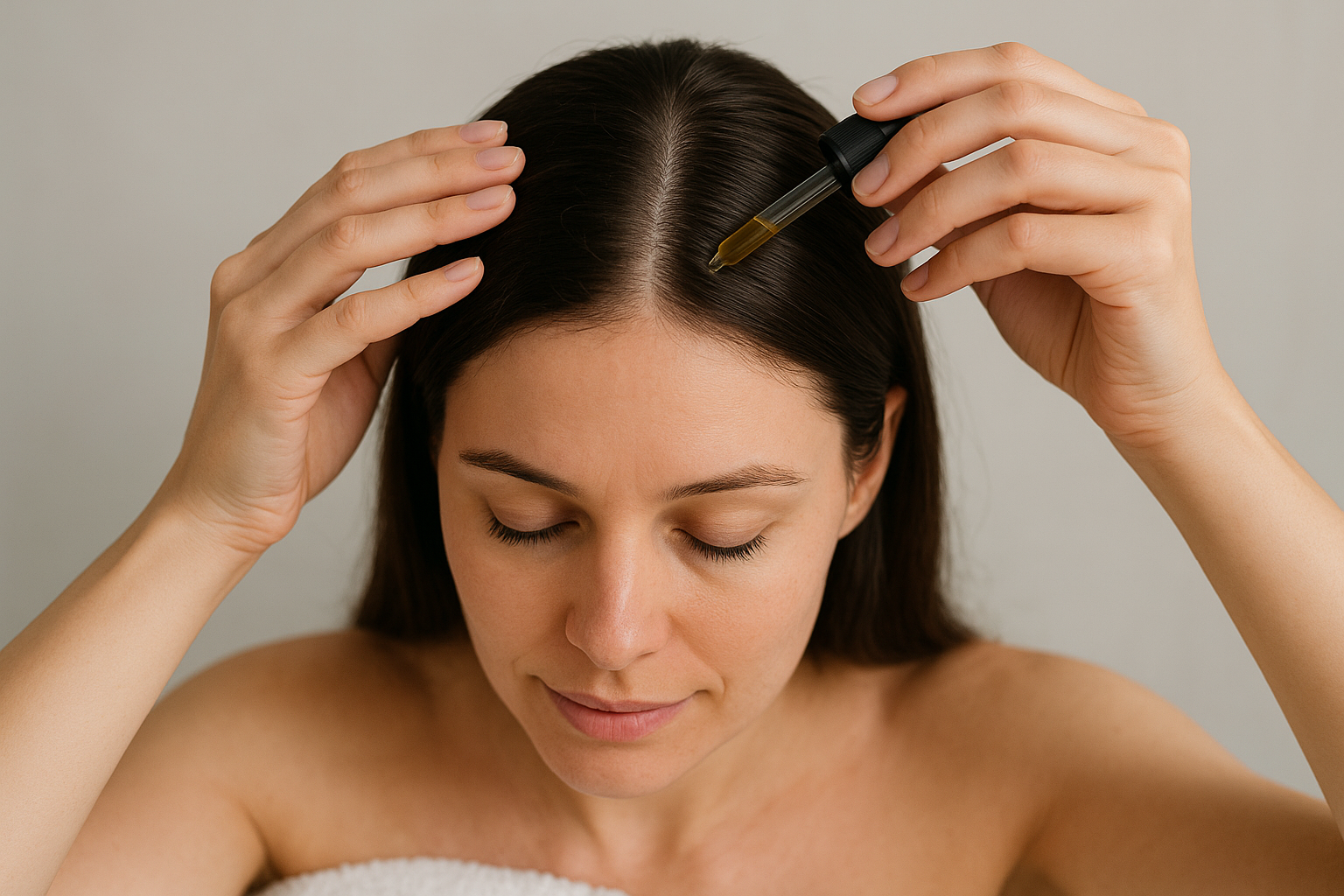
Massaging the oil for at least two minutes consistently produces better results than applying it and leaving it untouched.
After the massage, leave the oil on for a minimum of 30 minutes before washing, or apply it the night before and rinse the next morning for a deeper treatment. Use a gentle, sulphate-free shampoo to remove it without stripping the scalp again.
Adjusting your method for a sensitive or reactive scalp
If your scalp is reactive or prone to flares, reduce the amount you apply and keep your massage pressure light. Heavy-handed application aggravates an already irritated skin barrier rather than soothing it. Apply the mixture only to the driest patches rather than across the entire scalp until your skin adjusts to the oil.
Start by rinsing after 20 minutes on your first few uses rather than leaving it overnight. This shorter contact time lets you see how your skin responds without prolonged exposure, and you can extend the duration gradually as your scalp builds tolerance over the following weeks.
Step 3. Set a routine and know when to get help
Consistency matters more than intensity when you use rosemary oil for dry scalp. A single application rarely produces noticeable results; what actually shifts the condition is repeated, regular treatment over several weeks. Building a clear schedule removes guesswork and makes it far easier to track whether the oil is working for your specific scalp.
Build a consistent weekly routine
Twice a week is the recommended starting frequency for most people. Applying it on alternate days gives your scalp enough time to absorb the oil and respond before the next treatment, and it prevents the build-up that comes with daily over-application. Use the template below to structure your first four weeks:
| Week | Frequency | Leave-on time | Notes |
|---|---|---|---|
| 1 | Twice weekly | 30 minutes | Monitor for any reaction |
| 2 | Twice weekly | 45 minutes | Extend if no irritation |
| 3 | Twice weekly | Overnight | Only if skin is tolerating well |
| 4 | Twice weekly | Overnight | Assess condition and adjust |
Tracking your scalp's response in a simple notes app after each session helps you spot patterns, such as which days your scalp feels less tight or whether flaking has reduced. After four weeks, most people can see clearly whether consistent application is producing improvement and decide if they want to maintain or adjust the schedule.
When to stop and see a doctor
Rosemary oil supports a healthier scalp environment, but it does not treat underlying medical conditions. If your scalp stays heavily inflamed, weeping, or develops crusting despite consistent use, stop applying the oil and book an appointment with a GP or dermatologist. These symptoms can point to psoriasis, seborrhoeic dermatitis, or a fungal infection that requires prescription treatment.
Persistent symptoms that do not improve after four to six weeks of consistent use are a clear signal to seek professional advice rather than increasing application.
Stop immediately if you notice increased hair shedding, burning that lasts beyond the application window, or any signs of an allergic reaction such as hives or swelling.
Your next steps
You now have everything you need to use rosemary oil for dry scalp safely and effectively. Start with a 1–2% dilution, patch test before your first full application, and commit to twice-weekly treatments for at least four weeks before judging the results. Consistency over those four weeks will tell you far more than any single session ever could.
If you want to go further and support your scalp with a complete, certified natural hair care routine, Xquisit Luxe offers a range of products formulated with ingredients like rosemary to target dryness, thinning, and poor scalp health. Every product is cruelty-free, dermatologist-tested, and made in the UK with transparent, safe ingredients. Visit Xquisit Luxe to explore the full range and find products that match your specific scalp concerns. Your scalp responds to what you put on it consistently, so choose ingredients you can trust from the start.
