


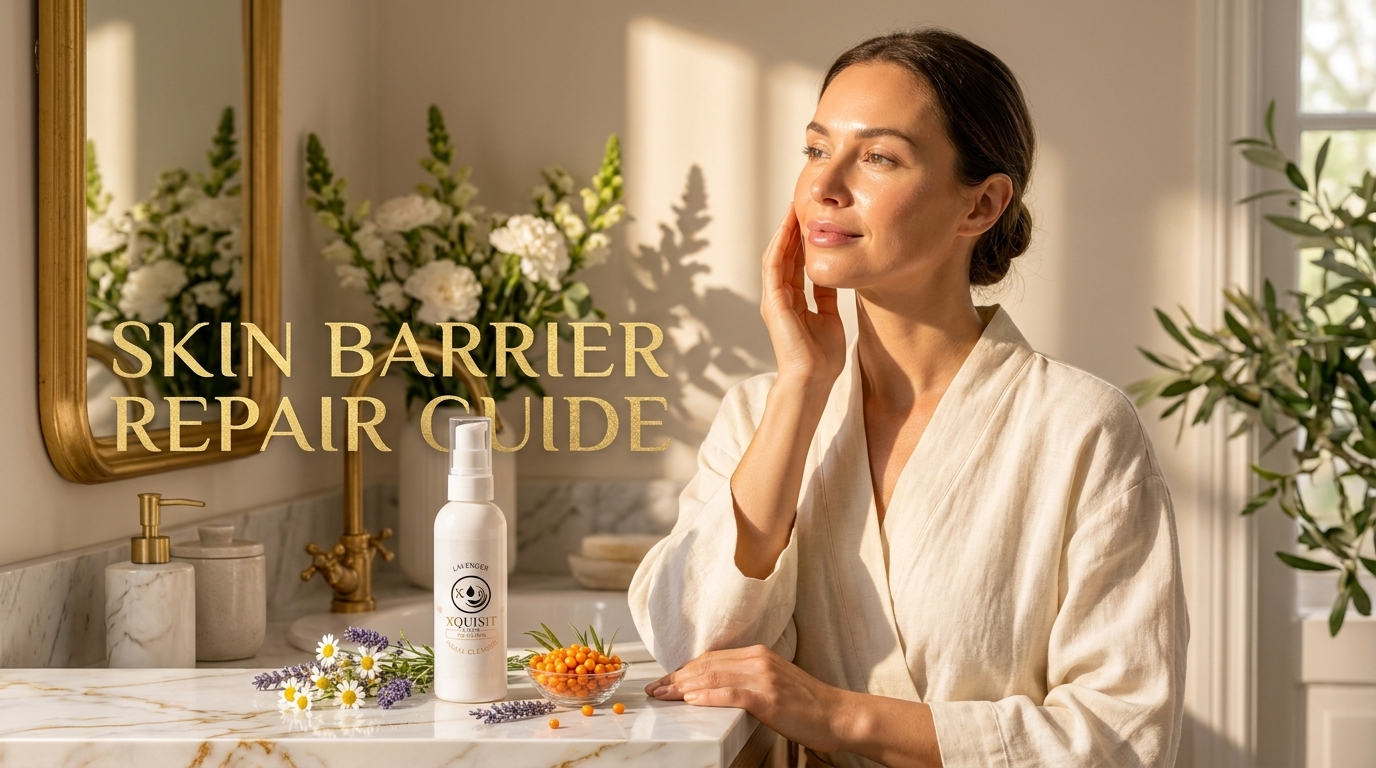
If your skin suddenly feels tight, looks red, or reacts to products it used to love, you're not imagining it. A damaged skin barrier is behind most of these mystery flare-ups — and in 2026 it's the single biggest topic in UK skincare, as experts urge us all to stop over-exfoliating and start protecting.
Looking for a product that gets this right? Start with our Hydrating Cleanser with Lavender, Chamomile & Sea Buckthorn, or browse Sensitive Skin care Collection for the full lineup.
What is your skin barrier, exactly?
Your skin barrier is the outermost layer of your skin — a wall of cells and natural lipids that locks moisture in and keeps irritants out. When it's healthy, skin looks plump and calm. When it's compromised, moisture escapes and irritants get in. The result? Skin that's dry, reactive and unpredictable.
7 signs your skin barrier is damaged
1. Tightness after cleansing — if your face feels "squeaky clean" and tight, your cleanser is stripping the lipids your barrier needs.
2. Redness that won't settle — persistent flushing or blotchiness is inflammation from a barrier that can't defend itself.
3. Stinging when you apply products — even gentle serums shouldn't sting. If they do, your barrier is letting them in too deep.
4. Sudden sensitivity to old favourites — products you've used for years now cause reactions.
5. Flaky, rough patches — moisture is escaping faster than your skin can replace it.
6. Breakouts alongside dryness — a weakened barrier lets bacteria in, so you get spots and dryness at the same time.
7. Dull, papery texture — dehydrated barrier cells reflect light poorly, so skin loses its glow.
Sound familiar? Three or more of these means your barrier needs help — and the fix starts at the sink.
Step 1: Swap to a cleanser that doesn't strip
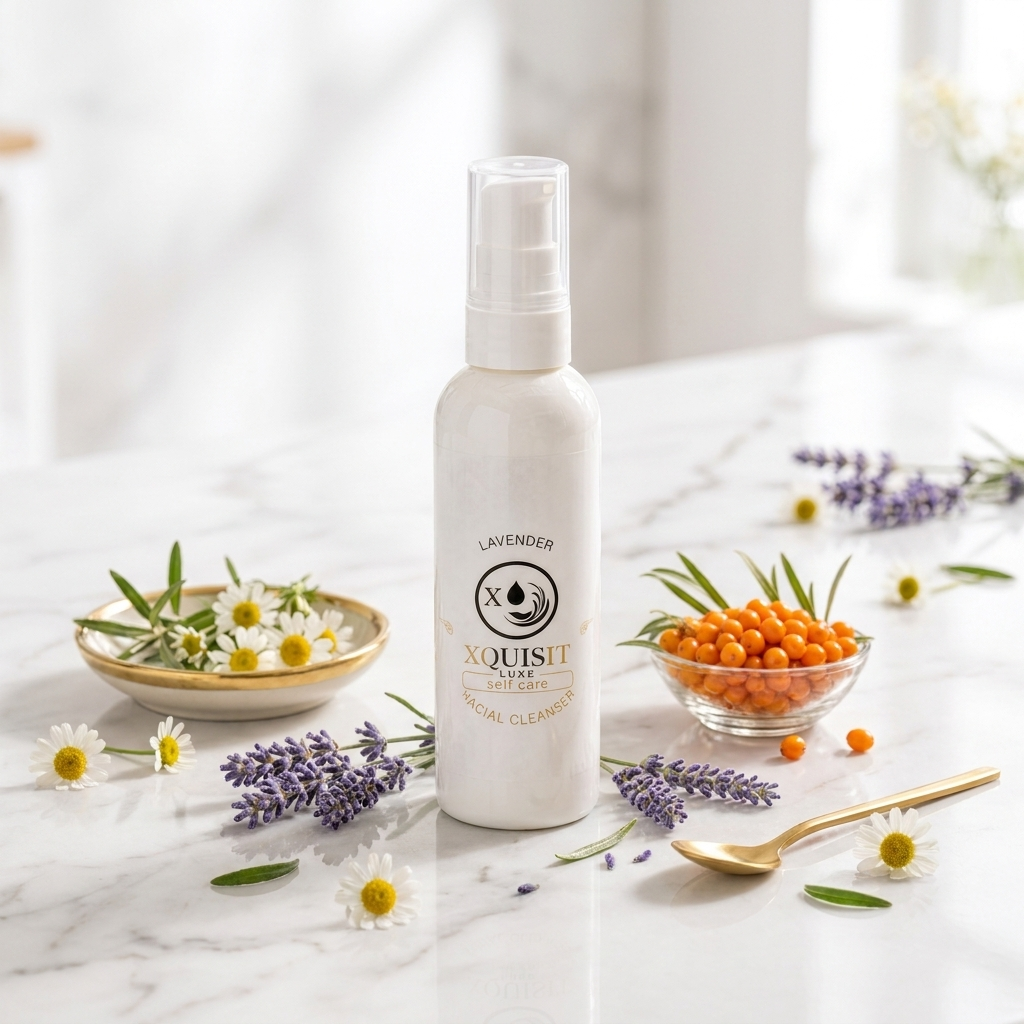
The fastest way to sabotage your barrier is a harsh foaming wash. The fastest way to repair it is a gentle, hydrating one. Our Hydrating Cleanser with Lavender, Chamomile & Sea Buckthorn cleanses without stripping: chamomile and lavender calm redness on contact, while sea buckthorn oil feeds the barrier with the omega fatty acids it's crying out for.
Step 2: Moisturise with zero irritants
While your barrier heals, fragrance is not your friend. A fragrance-free, anti-allergenic moisturiser gives your skin the hydration it needs with nothing that can trigger it. Our Anti-Allergenic Facial Moisturiser pairs aloe vera and chamomile with hyaluronic acid — calming and repairing in one step, with no added scent.
Step 3: Pause the scrubs (for now)
Over-exfoliation is the number-one cause of barrier damage. Park the acids and gritty scrubs for two to four weeks while your skin rebuilds. When your barrier is calm again, reintroduce gentle exfoliation once a week — your skin will actually glow more with less.
The bottom line
Barrier repair isn't a trend to buy more products for — it's a reason to use fewer, kinder ones. Cleanse gently, moisturise simply, and give your skin time. Most people see calmer, more comfortable skin within two to four weeks.
Ready to start? Begin with our barrier-friendly Hydrating Cleanser — 100% natural, UK-made and gentle enough for the most sensitive skin.
