


If you've spent any time researching natural remedies for thinning hair, you've probably come across rosemary oil for hair growth. It's one of the most talked-about botanical ingredients in hair care right now, and unlike many trends, this one actually has published clinical research behind it.
Ready to put this into practice? Our Rosemary Oil for Hair Growth is a solid place to start.
Rosemary oil has been used for centuries in traditional medicine, but modern studies now suggest it may genuinely stimulate hair follicles, improve circulation to the scalp, and even rival certain pharmaceutical treatments. The catch? Results depend heavily on how you use it, and not every product on the market delivers what it promises. Sorting fact from hype matters, especially when your hair, and your confidence, are on the line.
At Xquisit Luxe, we formulate certified natural, cruelty-free hair care products here in the United Kingdom, including our bestselling Hair Regrowth Bundle. So we've done the homework on this ingredient. In this article, we'll break down what the science actually says about rosemary oil, show you exactly how to apply it safely, and help you choose products that deliver real results.
What rosemary oil is and how it may help
Rosemary oil is an essential oil extracted from the leaves and flowering tops of Rosmarinus officinalis, a Mediterranean herb with centuries of use in traditional medicine. Unlike carrier oils such as coconut or jojoba, rosemary essential oil is highly concentrated and should always be diluted before you apply it to your scalp. It ranges in colour from clear to pale yellow, carries a sharp, woody scent, and is widely available in pure form or as part of formulated hair products designed specifically around its benefits.
The active compounds behind the benefits
The potential of rosemary oil for hair growth comes down to its chemical profile. The two most studied compounds are rosmarinic acid and carnosic acid, both of which have demonstrated antioxidant and anti-inflammatory properties in published research. Ursolic acid, another constituent present in rosemary extract, has been shown to support microcirculation when applied topically. These compounds appear to work together rather than in isolation, which helps explain why well-formulated whole rosemary extracts often produce stronger results than synthetic versions of any single component.
The combination of rosmarinic acid and ursolic acid gives rosemary oil a multi-pathway approach to scalp health that few individual synthetic ingredients can match.
How it acts on your scalp and follicles
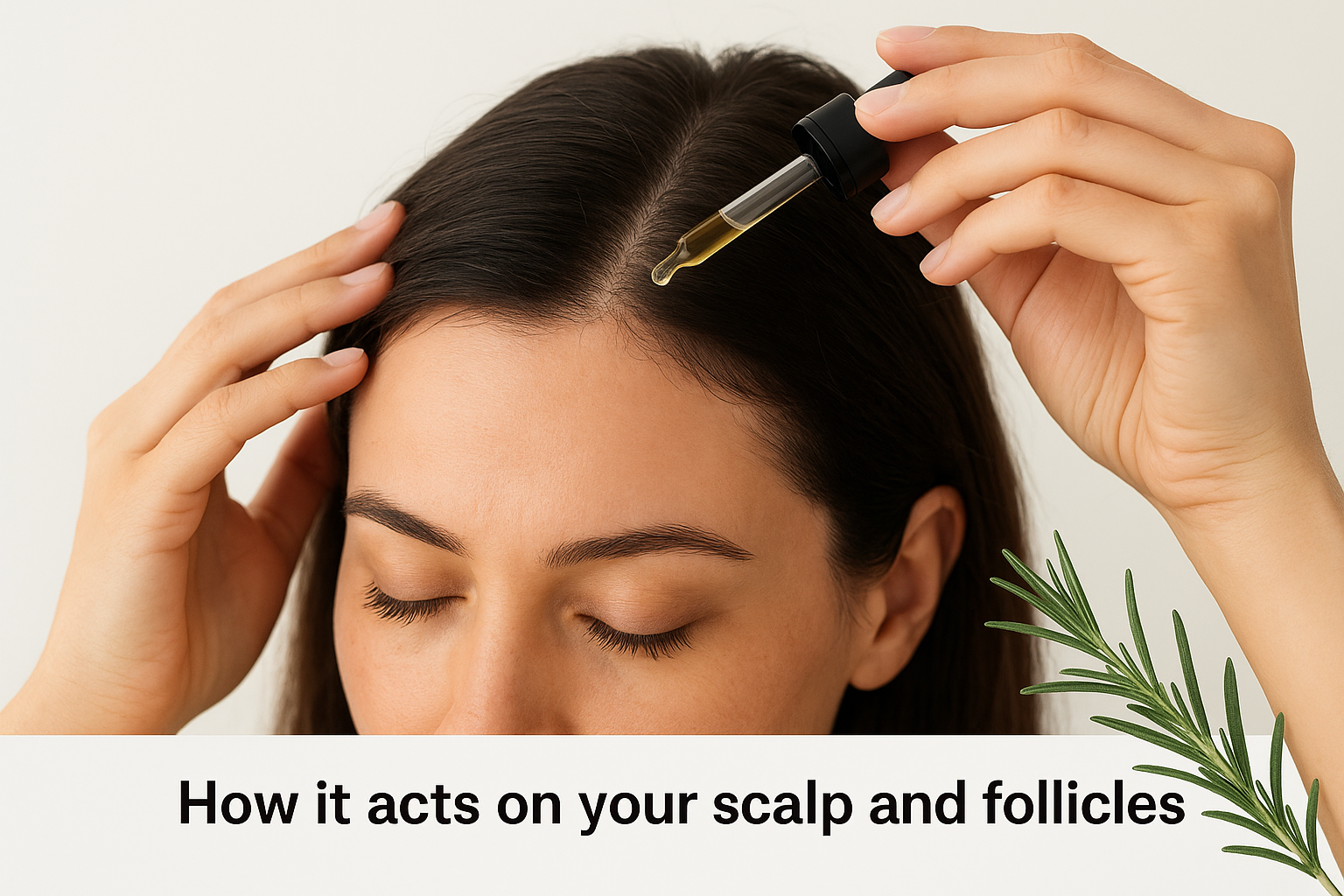
When you apply rosemary oil to your scalp, it appears to work through two primary mechanisms. First, it may enhance blood circulation in the scalp's microvascular network, ensuring that more oxygen and nutrients reach your hair follicles. Restricted circulation is a known contributor to follicle miniaturisation, the gradual shrinkage that drives androgenetic alopecia in both men and women. Second, rosemary oil has shown the ability to inhibit 5-alpha reductase, the enzyme that converts testosterone into dihydrotestosterone (DHT). High DHT levels are strongly associated with follicle shrinkage and progressive hair thinning.
Why scalp inflammation is part of the picture
Chronic low-level scalp inflammation is another driver of hair thinning that often goes unaddressed in standard hair care routines. Your follicles sit within a tissue environment that can become inflamed through oxidative stress, product build-up, or conditions such as seborrheic dermatitis. Rosemary oil's antimicrobial and anti-inflammatory properties may help calm this environment, creating better conditions for sustained follicle activity. If your scalp tends to feel irritated, flaky, or reactive, reducing that baseline inflammation could support more consistent regrowth over time. This is one reason rosemary oil tends to appeal to people with sensitive scalps who cannot tolerate harsher topical treatments.
What the evidence says about hair growth
The scientific case for rosemary oil for hair growth is more substantial than for most natural remedies. Several peer-reviewed studies have tested it directly against pharmaceutical treatments, and the results have been notable enough to bring rosemary oil into mainstream clinical conversations about hair loss.
The landmark study against minoxidil
A 2015 randomised controlled trial published in Skinmed placed rosemary oil head-to-head against 2% minoxidil, one of the most widely prescribed topical treatments for androgenetic alopecia. After six months of twice-daily application, both groups showed comparable increases in hair count. Crucially, the rosemary oil group reported significantly less scalp itching than the minoxidil group, suggesting it may be a better-tolerated option for people with sensitive scalps. This trial is widely cited because it moved rosemary from anecdote into controlled, measurable territory.
A well-designed clinical trial showing rosemary oil producing results equivalent to minoxidil at six months is a meaningful finding, not a marketing claim.
What the broader research tells you
Beyond that landmark trial, laboratory studies on carnosic acid, a key constituent of rosemary, have found that it can stimulate the production of nerve growth factor in the scalp, which plays a role in maintaining active follicle function. Animal studies have also shown that topical rosemary extracts can promote hair shaft elongation, though human trials in this specific area remain limited.
It is worth being clear about what the evidence does not yet confirm. Long-term studies beyond twelve months are sparse, and most trials have focused on pattern hair loss rather than conditions such as alopecia areata or telogen effluvium. Using rosemary oil will not reverse severe or long-standing hair loss, but the available data does support its use as a credible, low-risk addition to a consistent hair care routine aimed at maintaining and improving follicle health over time.
How to use rosemary oil safely on hair
Using rosemary oil for hair growth effectively comes down to two things: correct dilution and consistent application technique. Pure rosemary essential oil is potent enough to cause scalp irritation or contact dermatitis if you apply it undiluted, so following a safe method is not optional.
Dilute it with a carrier oil first
Before you apply rosemary essential oil to your scalp, mix it with a carrier oil such as jojoba, coconut, or argan oil. The standard recommended concentration is 2 to 3 drops of rosemary essential oil per teaspoon (5ml) of carrier oil, which works out to roughly a 2% dilution. This ratio is widely considered safe for most adults, including those with sensitive scalps.
Always do a patch test on your inner arm 24 hours before applying any essential oil blend to your scalp, particularly if your skin tends to react easily.
If you are using a pre-formulated rosemary hair product rather than pure essential oil, check the label for usage instructions and concentration levels. Many ready-made oils and serums come already diluted and will not require an additional carrier.
How to apply it effectively
Warm the diluted oil slightly by rubbing it between your palms, then apply it directly to your scalp using your fingertips rather than the lengths of your hair. Spend two to three minutes massaging the oil in small circular motions across your scalp. This massaging step actively promotes the circulation benefits that support follicle activity, so do not skip it.
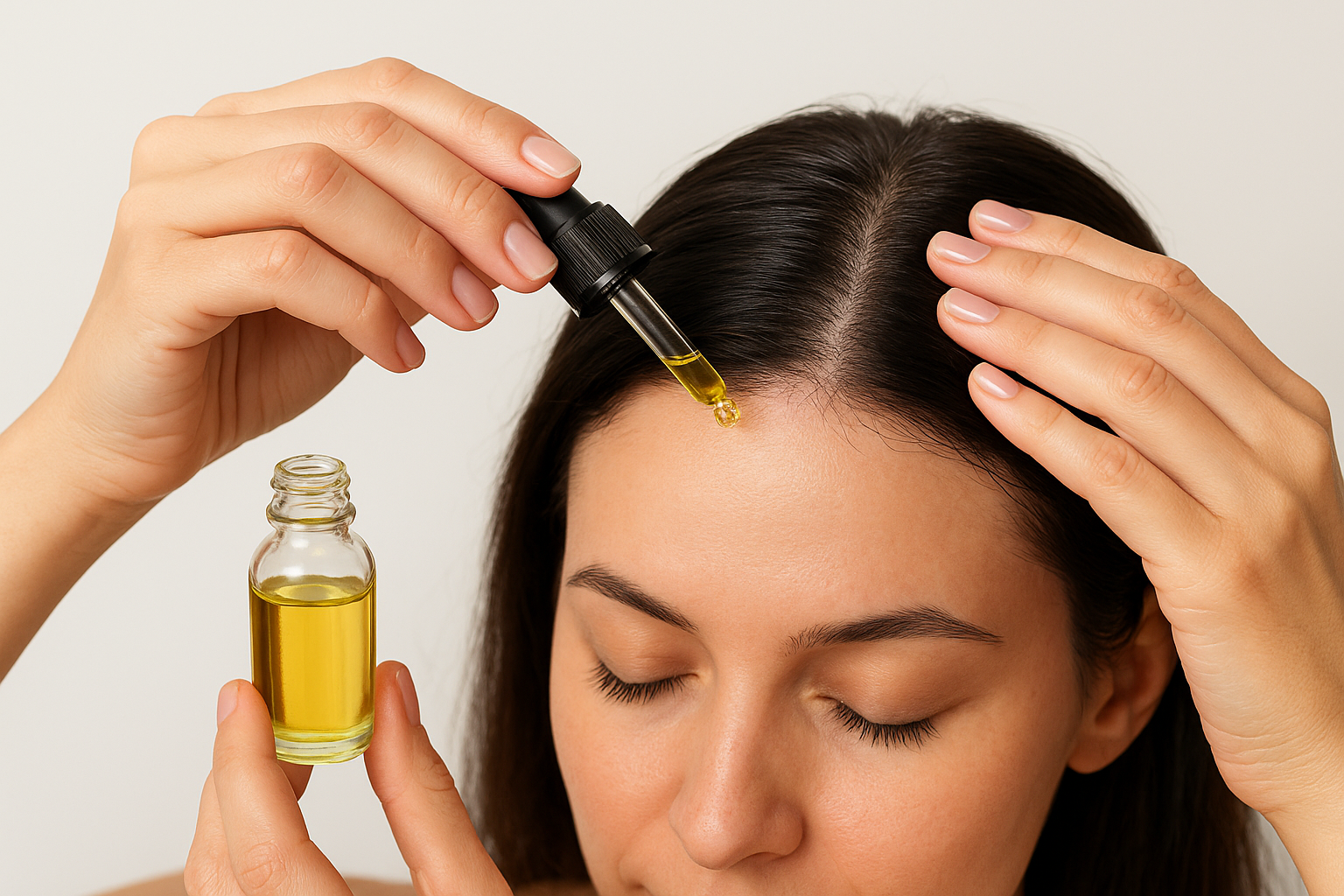
Leave the oil on for at least 30 minutes before washing, or apply it overnight with a towel or cap to protect your pillow. Aim for two to three applications per week rather than daily use. Applying it too frequently will not speed up growth and may cause product build-up on the scalp.
How long it takes and what to expect
One of the most common questions people have about rosemary oil for hair growth is how quickly they will see results. The honest answer is that hair growth is a slow biological process, and no topical treatment, natural or pharmaceutical, changes that fundamental fact. Setting the right expectations from the start will help you stay consistent rather than abandoning a routine that simply needs more time to work.
The early weeks: what you will notice first
During the first four to six weeks, you are unlikely to see visible new growth, but you may notice changes in your scalp itself. Many people report a reduction in itching, flaking, or general scalp discomfort within the first month of consistent use. These early signs indicate that the anti-inflammatory and circulation-boosting properties of rosemary oil are already active at the scalp level.
Noticing less shedding in your brush or shower drain between weeks four and eight is a meaningful early signal that your follicles are responding.
A rough timeline of what to expect looks like this:
- Weeks 1 to 4: Improved scalp comfort, possible reduction in shedding
- Weeks 4 to 8: Reduced daily hair loss, scalp feels healthier
- Months 3 to 4: Fine new growth may become visible at the hairline or temples
- Months 5 to 6: More measurable increases in hair density and thickness
Setting realistic expectations
The landmark 2015 clinical trial showed meaningful results after six months of consistent twice-weekly application, and that timeframe remains the most credible benchmark for judging whether rosemary oil is working for you. Committing to at least six months before evaluating your results is the standard approach used in published research.
Rosemary oil works best as part of a sustained, regular routine rather than an occasional treatment. If you apply it inconsistently or stop after a few weeks, your follicles will not receive the repeated stimulation needed to produce visible change.
How to choose the right rosemary hair product
The market for rosemary hair products has grown rapidly, which means you will find genuinely well-formulated options sitting alongside products that use rosemary mainly as a marketing label. Knowing what to look for on the label and which format suits your routine will save you money and improve your results considerably.
Check the ingredient list before anything else
Rosemary should appear within the first five to seven ingredients on the INCI list, which is ordered by concentration from highest to lowest. If it appears near the bottom, the concentration is likely too low to produce a measurable effect on your scalp. Look specifically for Rosmarinus officinalis leaf oil (pure essential oil) or Rosmarinus officinalis leaf extract, both of which indicate the real active compound rather than a synthetic fragrance.
Avoid any product that lists "rosemary fragrance" or "parfum" as its only rosemary-related ingredient, as fragrance versions do not carry the active compounds responsible for follicle stimulation.
You should also scan for unnecessary scalp irritants such as sulphates, parabens, and artificial colourants. These additives can directly counteract the anti-inflammatory benefits you are trying to gain from rosemary oil for hair growth, particularly if your scalp already leans sensitive or reactive.
Choose the right format for your routine
Scalp serums and leave-in oils are the most effective formats because they deliver rosemary directly to the follicle environment without requiring immediate rinsing. Shampoos and conditioners can support scalp health, but their rinse-off nature limits active contact time, which reduces their standalone effectiveness compared to leave-in treatments.
If your preference is a bundled product approach, look for brands that pair a rosemary-based scalp oil or serum with a complementary scalp-focused shampoo. Using both within the same routine gives you targeted follicle treatment alongside regular scalp maintenance, which reinforces results without making your routine more complicated than it needs to be.
Key takeaways
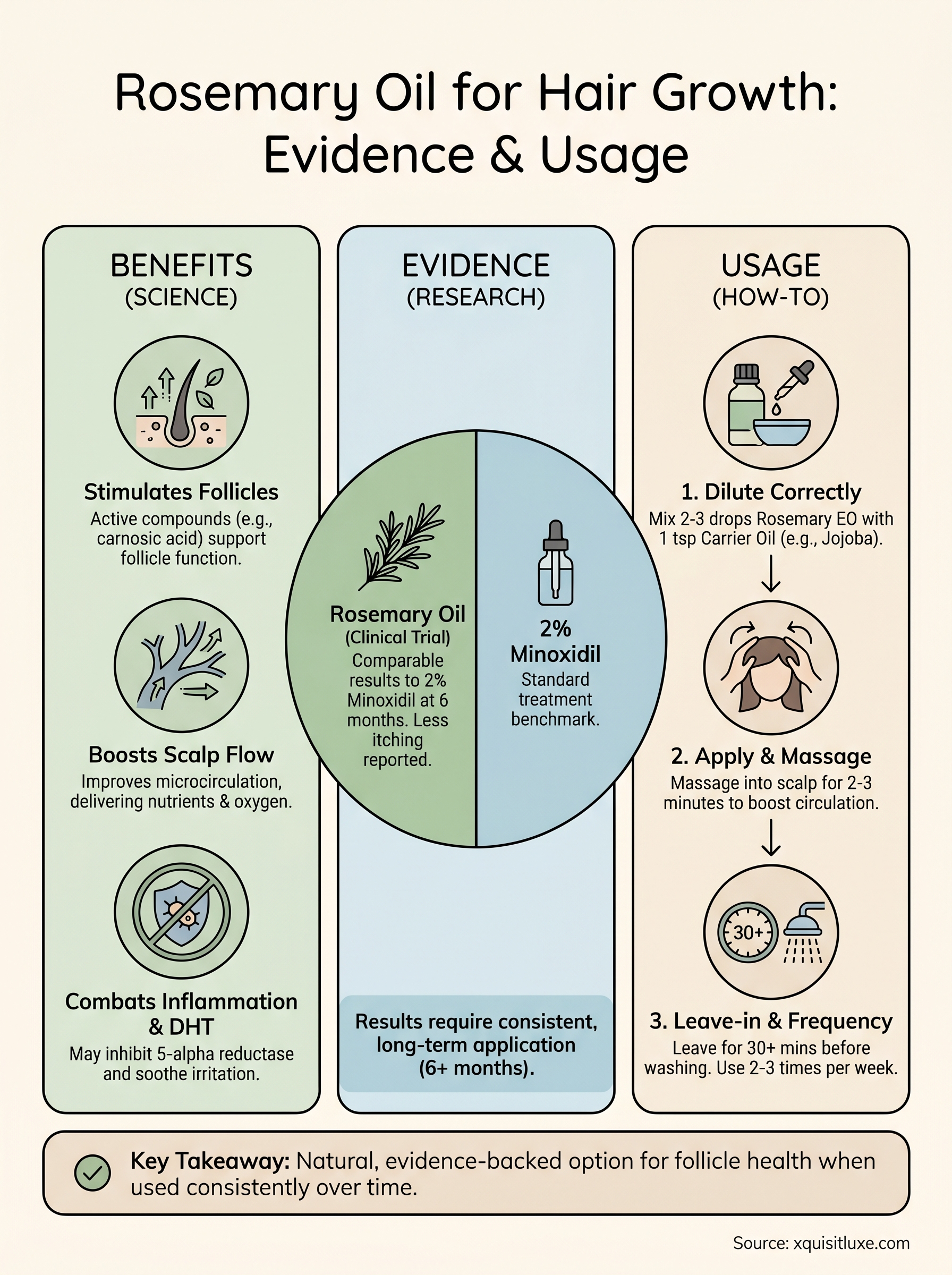
Rosemary oil for hair growth is one of the few natural remedies backed by genuine clinical evidence, including a head-to-head trial against minoxidil. Its active compounds support follicle health by improving scalp circulation, reducing DHT activity, and calming inflammation, three mechanisms that address the most common drivers of hair thinning in both men and women.
Getting results requires the right approach: dilute correctly, apply consistently two to three times per week, and commit to at least six months before judging whether it is working. Choosing a well-formulated product matters just as much as the routine itself, so always check ingredient concentration and avoid products that rely on rosemary fragrance rather than the real extract.
If you want a product that takes the guesswork out of the process, explore the natural hair growth range at Xquisit Luxe, where every formula is certified natural, cruelty-free, and crafted to deliver visible, consistent results.
