

Rosemary oil has gone from kitchen herb to hair care staple, and the science backs it up. A widely cited 2015 study found that rosemary oil matched minoxidil for hair regrowth over six months, without the scalp irritation. That kind of evidence has made finding the best rosemary oil for hair growth a priority for thousands of people across the UK dealing with thinning, shedding, or sluggish growth.
The problem? The market is now packed with options, and they're far from equal. Some contain pure, cold-pressed rosemary oil with supporting ingredients that genuinely nourish the scalp. Others are watered-down formulas riding the trend. At Xquisit Luxe, we develop certified natural hair care products right here in the UK, including our own hair growth oils, so we understand exactly what to look for in a quality formulation: ingredient transparency, proper concentration, and results you can actually see.
We've reviewed and compared eight of the top-performing rosemary oils currently available in the UK for 2026. Each pick is evaluated on ingredients, who it suits, and real-world effectiveness, so you can skip the guesswork and choose a product that genuinely supports thicker, stronger hair.
1. Xquisit Luxe hair growth oil
If you want a ready-to-use, multi-ingredient formula rather than a pure essential oil you need to dilute yourself, the Xquisit Luxe Hair Growth Oil is the strongest UK-made option on this list.
What it is and what makes it different
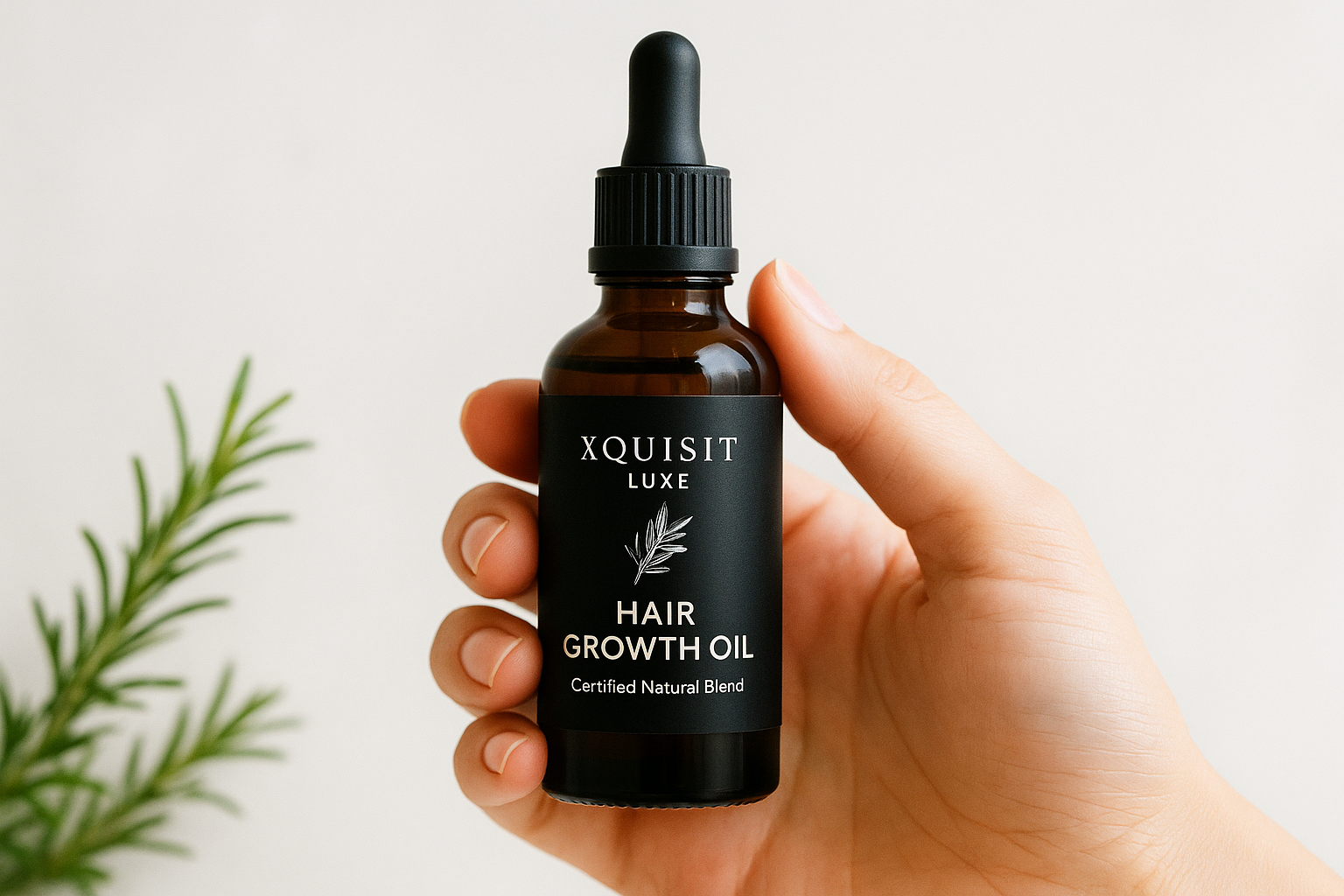
The Xquisit Luxe Hair Growth Oil is a certified natural blend crafted in the United Kingdom, combining rosemary oil with complementary botanicals including castor oil and peppermint extract. Unlike a standalone essential oil, this formula arrives pre-diluted and ready to apply, which removes the guesswork around carrier oil ratios and concentration levels. Every ingredient is transparently listed, and the product is dermatologist tested, cruelty-free, and free from parabens, sulphates, and synthetic fillers.
If you're searching for the best rosemary oil for hair growth and want a formula built around scalp health from the first drop, this blend is designed precisely for that.
Who it suits best
This oil works best for people dealing with thinning hair, slow growth, or a dry and irritated scalp. Because it is dermatologist tested and suitable for sensitive skin, it suits those who have experienced reactions to heavier or synthetics-heavy hair oils before. It works across all hair types, including fine, colour-treated, and natural hair, and is effective for both women and men.
How to use it for hair growth
Apply three to five drops directly to your scalp two to three times per week. Section your hair, then use your fingertips to work the oil in with small circular motions for two to three minutes to encourage blood flow to the follicles. Leave the oil on for at least 30 minutes or overnight before rinsing with a gentle shampoo. Consistency matters more than volume, so lighter and more frequent applications outperform heavy monthly treatments.
Rosemary Oil for Hair Growth — £14.99
Certified natural, made in the UK, dermatologist tested and cruelty-free. Free UK delivery on orders over £25, and a 30-day money-back guarantee if it isn't right for you.
New customers get 10% off a first order when joining the Xquisit Club newsletter.
2. Nature Spell rosemary oil for scalp and hair
Nature Spell is one of the most recognisable budget-friendly brands in UK hair care, and their rosemary oil is a popular choice for anyone searching for the best rosemary oil for hair growth without a high price tag.
What it is and what makes it different
Nature Spell's rosemary oil is a lightweight, pre-blended scalp treatment that pairs rosemary with a sunflower oil base, making it easy to apply and gentle on the scalp. The formula contains no mineral oils or parabens, which keeps it accessible to most hair types and free from common irritants.
Who it suits best
This oil suits anyone looking for an affordable, straightforward entry point into rosemary oil hair care. It works particularly well for those with fine or oily hair who want scalp stimulation without a heavy, greasy residue after application.
How to use it for hair growth
Apply three to four drops directly onto your scalp, focusing on areas of thinning or slow growth. Massage in with your fingertips for two to three minutes, then leave on for at least 30 minutes before washing out. Use two to three times per week for consistent results.
How it compares
This is a two-ingredient approach: rosemary in a carrier oil, nothing more. That simplicity is the appeal, but it also means you miss the supporting botanicals — castor oil, peppermint — that fuller blends use to tackle scalp condition alongside growth. Fine if rosemary alone is all you're after.
3. The Rosemary Company Original rosemary hair oil
The Rosemary Company is a UK-based brand that builds its entire product range around rosemary, which makes their Original Rosemary Hair Oil one of the more specialised options on this list for anyone researching the best rosemary oil for hair growth.
What it is and what makes it different
The Original Rosemary Hair Oil uses a high-concentration rosemary extract blended into a lightweight base oil, making it one of the few UK-market products where rosemary is genuinely the lead ingredient rather than a token addition. The formula is designed to be applied directly to the scalp without requiring extra dilution, which removes the preparation step you get with a pure essential oil.
When a brand centres its entire identity around a single ingredient, you tend to get a more focused and potent formulation.
Who it suits best
This oil works well for people who want a rosemary-forward formula with minimal added ingredients. It suits those with normal to dry scalp types who prefer a straightforward, single-purpose scalp treatment without extras.
How to use it for hair growth
Apply four to five drops directly to your scalp two to three times per week. Work the oil in with circular fingertip motions for two to three minutes, then leave it on for at least 30 minutes before shampooing.
How it compares
A genuinely rosemary-led formula, which is rarer than the marketing on most bottles suggests. The trade-off is scope: it does one job. If your scalp is also dry, irritated or flaking, you'll likely want something that addresses that at the same time rather than layering a second product on top.
4. Mielle Organics rosemary mint scalp oil
Mielle Organics has built a loyal following in the UK natural hair community, and their Rosemary Mint Scalp & Hair Strengthening Oil is one of the most talked-about products for anyone researching the best rosemary oil for hair growth.
What it is and what makes it different
This oil blends rosemary and mint with biotin and a range of botanical extracts to create a formula focused on both scalp stimulation and hair strengthening from root to tip. The mint ingredient adds a noticeable cooling, tingling sensation on application, which many users find confirms the product is actively working on the scalp. It is free from sulphates and parabens, and the brand holds cruelty-free certification.
The biotin addition sets this apart from simpler rosemary oils, giving the formula a broader approach to supporting hair density.
Who it suits best
This oil suits people with natural, coily, or thick hair types who want a richer formula that also nourishes the hair shaft. It works particularly well for those dealing with breakage and brittleness alongside scalp concerns.
How to use it for hair growth
Apply three to five drops directly to your scalp two to three times per week, massaging in with your fingertips for two to three minutes. Leave it on for at least 30 minutes before washing out.
How it compares
The biotin and mint make this a rich, substantial formula that suits thick or coily hair well. That richness works against it elsewhere — fine, low-porosity or colour-treated hair often finds it heavy, and the mint tingle can be uncomfortable on an already irritated scalp.
5. Briogeo Scalp Revival rosemary pre-wash oil
Briogeo is a US-founded brand with strong UK stockist presence, and their Scalp Revival Rosemary + Tea Tree Pre-Shampoo Scalp Treatment Oil brings a different approach to the best rosemary oil for hair growth conversation by focusing on the pre-wash step rather than a leave-in application.
What it is and what makes it different
This oil combines rosemary, tea tree, and peppermint oils in a base formulated specifically to be applied before shampooing. The pre-wash positioning means the product is designed to loosen buildup and stimulate circulation before it gets washed away, rather than sitting on your scalp between wash days. The formula is free from sulphates, parabens, and silicones, and Briogeo holds a cruelty-free certification.
A pre-wash application method suits people who dislike the feeling of oil sitting on their scalp between sessions.
Who it suits best
This oil suits people with oily or buildup-prone scalps who struggle with the residue that leave-in oils can leave behind. It also works well for those on a once or twice weekly wash routine who want their scalp treatment integrated into their washing process.
How to use it for hair growth
Apply generously to your dry scalp before shampooing, massage in for two to three minutes, then leave on for ten minutes before washing out with your normal shampoo.
How it compares
Because it's designed to be washed out, the actives work on your scalp for minutes rather than hours. That's the right choice for an oily scalp, but it does limit contact time. If you'd rather leave a treatment on overnight — which is where most rosemary research points — a leave-in blend is the better fit.
6. Champo weightless hair oil
Champo is a UK-based brand rooted in Ayurvedic hair care traditions, and their Weightless Hair Oil brings a botanical-rich approach to the best rosemary oil for hair growth category. The formula draws on a blend of plant-based ingredients including rosemary, which positions it as a more layered option than a single-ingredient scalp oil.
What it is and what makes it different
Champo's Weightless Hair Oil combines rosemary with a curated selection of Ayurvedic botanicals, including amla and bhringraj, which are traditionally associated with scalp health and hair strength. The formula is designed to absorb quickly without leaving a heavy or greasy residue, which sets it apart from richer oils that sit on the surface of the scalp for hours.
If you want rosemary's scalp benefits alongside centuries-old hair care ingredients, Champo delivers that combination in a single bottle.
Who it suits best
This oil works best for people with fine or low-porosity hair who want a lightweight formula that won't weigh their strands down. It also suits those who want a product built on multiple botanical actives rather than a single primary ingredient.
How to use it for hair growth
Apply four to five drops to your scalp two to three times per week, massaging in with circular motions for two minutes. Leave on for at least 30 minutes before shampooing for best results.
How it compares
Rosemary is one of several actives here rather than the headline, so if you've come looking specifically for rosemary's evidence base, you're getting a diluted version of it inside a broader Ayurvedic blend. Excellent if that tradition appeals; less targeted if it doesn't.
7. Tisserand organic rosemary essential oil
Tisserand is one of the most established aromatherapy brands in the UK, with over 50 years of experience in essential oil production. Their Organic Rosemary Essential Oil brings that heritage directly into the best rosemary oil for hair growth conversation.
What it is and what makes it different
Tisserand's rosemary oil is a 100% pure, organic-certified essential oil sourced using ethically traded botanicals and tested through rigorous gas chromatography to verify purity. Unlike pre-blended scalp treatments, this is a concentrated essential oil that requires dilution before use, giving you full control over the strength of your formula.
The organic certification and third-party purity testing make this one of the most trustworthy standalone rosemary essential oils available in the UK.
Who it suits best
This oil suits people who prefer to build their own hair oil blend from scratch using a known, quality base ingredient. It works well for those who already have a favourite carrier oil and want to add rosemary at a precise concentration tailored to their scalp sensitivity.
How to use it for hair growth
Mix three to five drops of Tisserand rosemary oil into one tablespoon of a carrier oil such as jojoba or castor oil. Apply the blend to your scalp and massage in for two to three minutes, then leave on for at least 30 minutes before shampooing.
How it compares
This is an undiluted essential oil, not a finished product. You are doing the formulating yourself, and rosemary essential oil applied at too high a concentration is a common cause of scalp irritation and burning. Worth it if you're confident blending; a ready-diluted formula removes that risk entirely.
8. Naissance rosemary essential oil
Naissance is a UK-based supplier of pure essential oils and natural ingredients, and their rosemary essential oil is one of the most accessible pure options available for anyone researching the best rosemary oil for hair growth on a tight budget.
What it is and what makes it different
Naissance's rosemary oil is a 100% pure essential oil, free from additives, synthetic ingredients, and carrier oils. Like Tisserand, this is a concentrated formula that requires dilution before scalp application.
For those who want a pure rosemary essential oil in a no-frills bottle, Naissance delivers reliable quality.
Who it suits best
This oil works well for people who mix their own hair care treatments at home and want a dependable rosemary base. It suits anyone building a DIY scalp oil routine who wants a straightforward product without added botanicals.
How to use it for hair growth
Mix three to five drops into one tablespoon of a carrier oil such as coconut or jojoba oil. Apply to your scalp, massage for two to three minutes, then leave on for at least 30 minutes before washing out. Use two to three times per week for consistent results.
How it compares
The same caveat as Tisserand applies: this is a raw ingredient rather than a treatment. Add the cost of a decent carrier oil and the time spent blending each batch, and the gap between DIY and a ready-made formula narrows considerably — without the risk of getting the ratio wrong.
Rosemary oil for specific situations: men's hair loss and postpartum shedding
Rosemary oil works the same way for everyone at the biological level, but two groups searching for it are usually dealing with a specific, different cause of hair loss, and it's worth understanding which one applies to you.
Male pattern hair loss
For men, thinning is most often androgenetic alopecia, driven by dihydrotestosterone (DHT) gradually shrinking hair follicles. The compound in rosemary oil doing the work here is rosmarinic acid, a polyphenol with anti-inflammatory and antioxidant properties that researchers believe interferes with this process. It's also the reason rosemary oil gets compared directly to minoxidil in clinical studies — both target hair regrowth, but rosemary oil doesn't carry minoxidil's common side effects of scalp irritation or the requirement to keep using it indefinitely to avoid losing the gains.
Postpartum shedding
Postpartum hair loss has a completely different mechanism. Oestrogen levels drop sharply after birth, which pushes a large number of follicles into the telogen (resting) phase all at once, rather than shedding gradually as normal. This is why postpartum shedding can feel so sudden and dramatic compared with typical thinning. Rosemary oil's main contribution here is improving scalp circulation, which supports follicles as they move out of the resting phase and back into active growth. If you're using it while breastfeeding, stick to topical application on the scalp only, and check with your GP or midwife before adding any new product to your routine during this period.
Choosing the right rosemary oil for you
The best rosemary oil for hair growth comes down to one question: do you want a finished product, or raw ingredients to blend yourself?
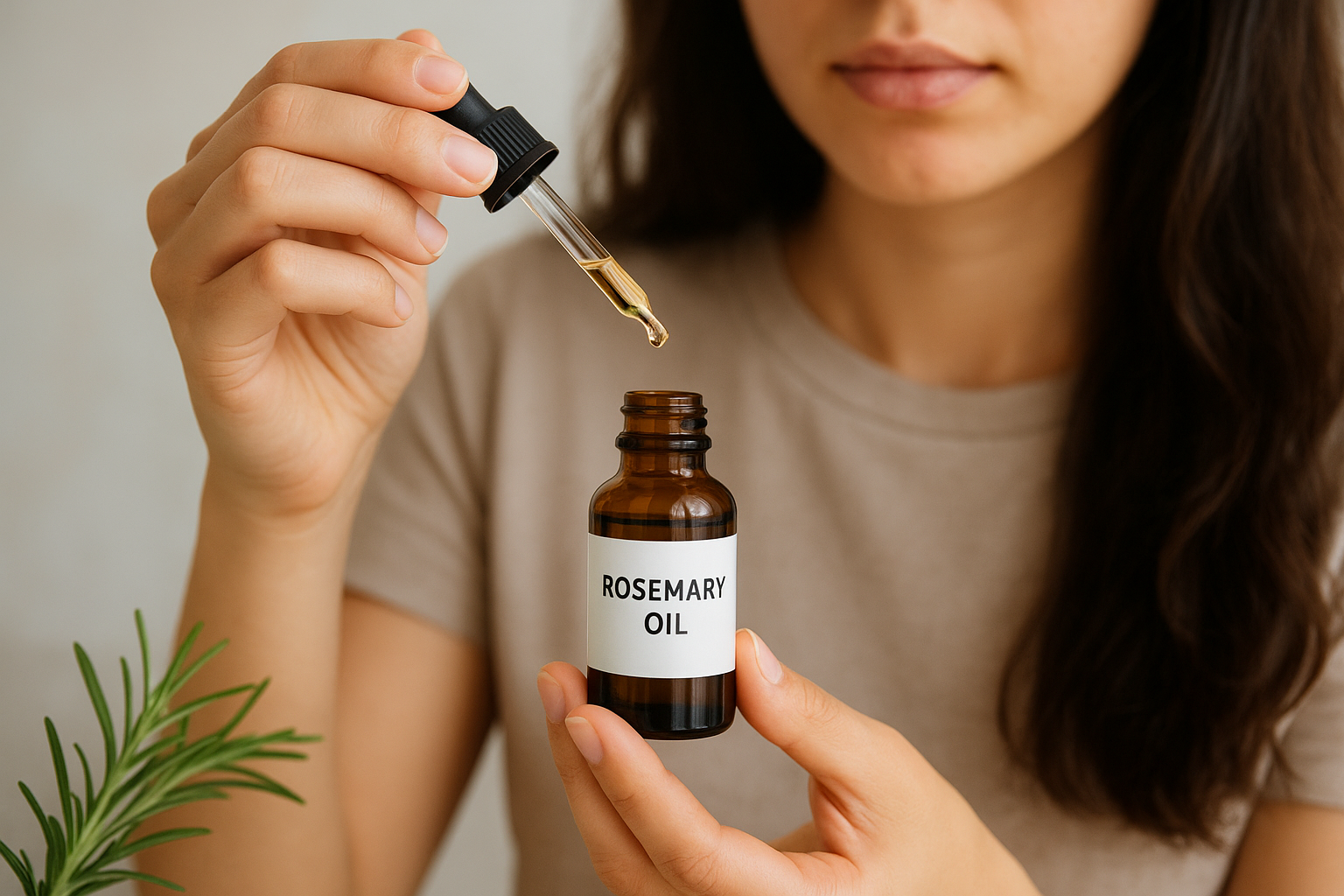
If you're happy measuring carrier oils and mixing each batch, a pure essential oil gives you full control. If you'd rather open a bottle and use it — which is what most people actually do, consistently, for the three months it takes to see results — a ready-diluted blend is the more realistic choice. The best formula is the one you'll still be using in twelve weeks.
Your hair type and scalp condition should drive the decision above brand name. Fine hair benefits from lightweight, fast-absorbing oils. Dry or sensitive scalps need formulas that are dermatologist tested and free from synthetic irritants. Whatever you choose, consistent application two to three times per week matters more than the specific bottle.
Our pick for most people: Xquisit Luxe Rosemary Oil for Hair Growth — £14.99
Ready to use, no measuring or blending. Rosemary with castor oil and peppermint, made in the UK, dermatologist tested, cruelty-free and free from parabens and sulphates.
Free UK delivery over £25 · 30-day money-back guarantee · 10% off your first order with the Xquisit Club newsletter
Shop the Rosemary Hair Growth Oil
Prefer the full routine? The Hair Regrowth Bundle pairs the oil with a matching shampoo and conditioner.
