

Hair loss affects millions of people across the UK, and if you're reading this, chances are you've already tried a few things that didn't deliver. The good news? Hair growth oil for hair loss is one of the most accessible and evidence-backed approaches you can take, when you choose the right one. The challenge is sorting through dozens of options that all claim to work miracles overnight.
Not all oils are created equal. Some contain ingredients with genuine scientific support, think rosemary, castor, and peppermint, while others rely on little more than fancy packaging. What actually matters is the formulation: how the ingredients work together, whether they're naturally derived, and if they've been tested on real people (not just in a lab).
At Xquisit Luxe Self Care, we formulate certified natural hair care products right here in the UK, so we know exactly what goes into an effective hair growth oil. We've used that experience to put together this list of the 9 best hair growth oils for hair loss available in the UK in 2026, including what makes each one worth your money and who they're best suited for.
1. Xquisit Luxe Hair Care Oils and Bundles
Xquisit Luxe sits at the top of this list because it's a UK-made, certified natural brand that formulates its hair care range specifically to tackle thinning hair and scalp health. Rather than offering a single oil, the brand combines active botanical ingredients across targeted products and bundles designed to work together for better results.
What makes it different
Most hair oils on the market rely on one or two hero ingredients. Xquisit Luxe takes a multi-ingredient approach, blending natural botanicals that complement each other rather than working in isolation. Every product is cruelty-free and dermatologist-tested, which matters if you have a sensitive scalp or skin prone to irritation from synthetic additives.
Choosing a hair growth oil for hair loss that has been dermatologist-tested reduces the risk of worsening scalp sensitivity or triggering further shedding.
What to expect for hair loss and regrowth
You won't see results in a week, but customers consistently report visible improvements in hair thickness and density within several weeks of consistent use. The formulations focus on nourishing the scalp environment, which is where lasting regrowth actually starts. Many users also notice reduced daily shedding as one of the earliest signs the products are working.
How to use it in a simple weekly routine
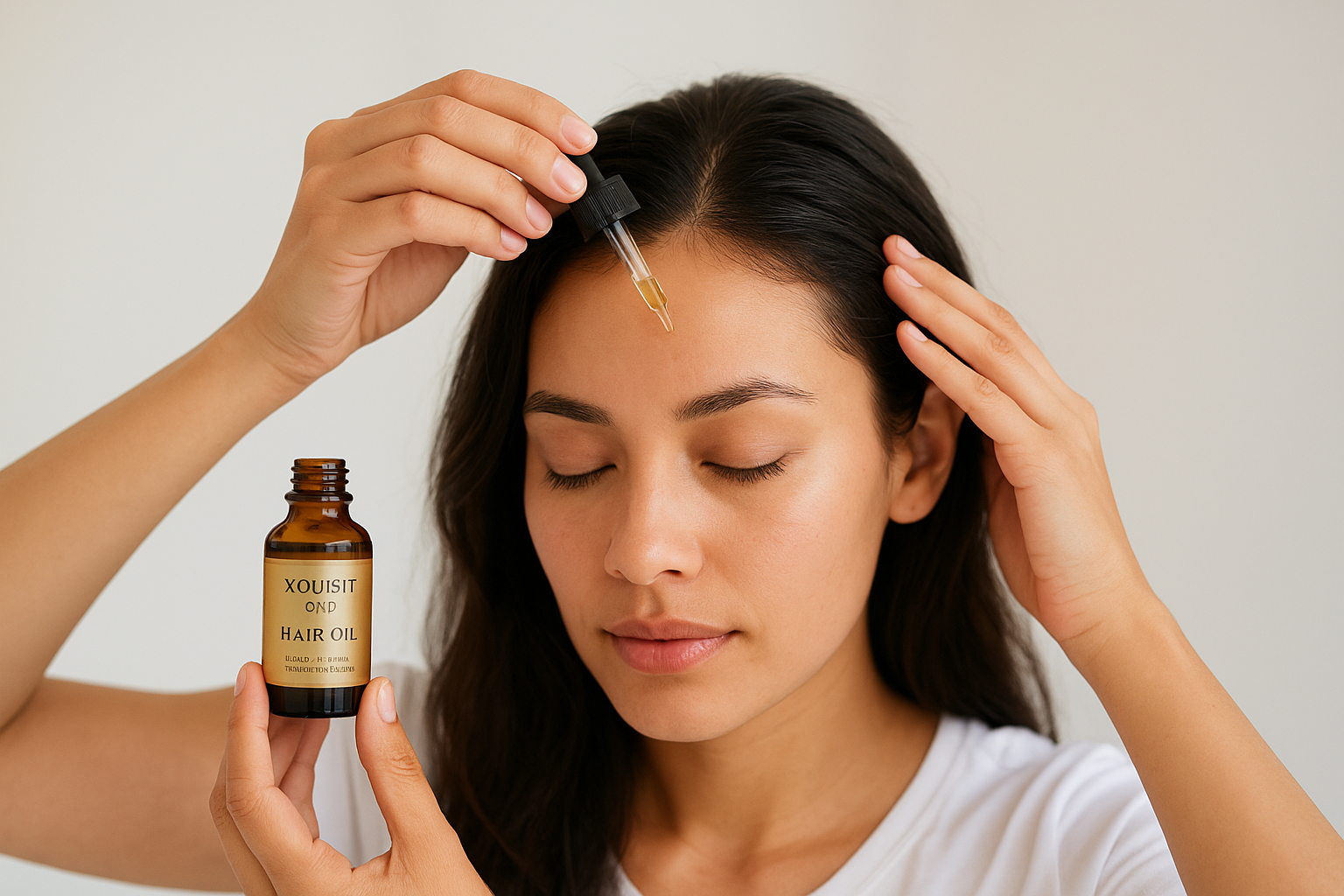
Apply the hair oil to your scalp two to three times per week, massaging it in with your fingertips using circular motions for at least two minutes. This stimulates blood flow to the follicles while helping the oil absorb properly. For a deeper treatment, leave it on overnight under a shower cap and rinse it out the following morning with your usual shampoo.
Best for
Xquisit Luxe hair oils and bundles are best suited for:
- People dealing with general thinning or early-stage hair loss
- Anyone with a dry, irritated, or sensitive scalp
- Shoppers who prioritise natural, cruelty-free, UK-made products
Typical UK price and where to buy
Individual oils start from around £18, with bundles such as the Hair Regrowth Bundle offering stronger value for those committing to a full routine. You can order directly from xquisitluxe.com, where free UK shipping applies on orders over £25 and a 30-day money-back guarantee covers every purchase.
2. Rosemary Oil
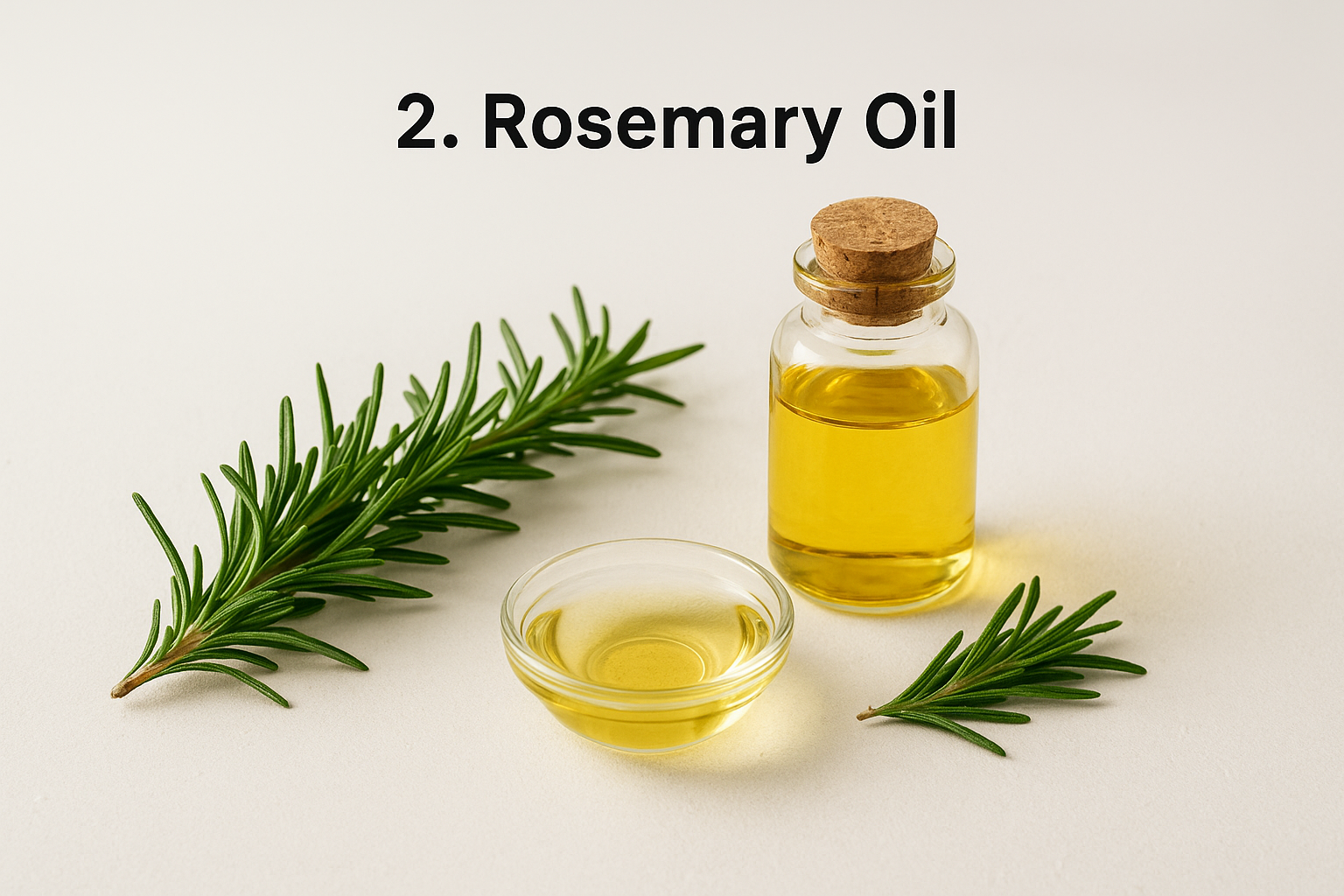
Rosemary oil is one of the most researched natural hair growth ingredients available, and it's widely used across UK households as a standalone treatment or as part of a broader hair growth oil for hair loss routine. The science behind it is more solid than most people expect.
What the evidence says
A 2015 clinical trial published in SKINmed Journal compared rosemary oil directly to minoxidil 2% over six months and found both produced comparable increases in hair count. That's a meaningful result for a plant-based oil that requires no prescription.
Rosemary oil matched minoxidil 2% for hair count improvements in a controlled six-month study, making it one of the most credible natural options currently available.
How it may help with hair loss
Rosemary works primarily by improving blood circulation to the scalp, which helps deliver more oxygen and nutrients directly to hair follicles. It also carries anti-inflammatory properties that may reduce the scalp irritation often linked to androgenetic alopecia.
How to use it safely on the scalp
Always dilute rosemary essential oil in a carrier oil such as jojoba or coconut oil before applying it to your scalp. A safe starting ratio is around 3 to 5 drops per tablespoon of carrier oil. Massage it in gently two to three times per week and leave it on for at least 30 minutes before rinsing.
Best for
Rosemary oil suits people with androgenetic alopecia (pattern hair loss) or anyone who prefers a single-ingredient, research-backed solution.
Typical UK price and where to buy
Rosemary essential oil is affordable, typically £5 to £15 for a quality bottle, and available from major UK retailers including Amazon UK.
3. Pumpkin Seed Oil
Pumpkin seed oil is gaining serious attention as a hair growth oil for hair loss, particularly among men dealing with pattern baldness. It's less mainstream than rosemary oil, but the clinical research behind it is genuinely compelling.
What the evidence says
A 2014 study published in Evidence-Based Complementary and Alternative Medicine found that men taking pumpkin seed oil orally for 24 weeks saw a 40% increase in hair count, compared to just 10% in the placebo group. The study focused specifically on androgenetic alopecia, which is the most common form of hair loss across the UK.
Pumpkin seed oil produced a 40% increase in hair count over 24 weeks in men with androgenetic alopecia, outperforming placebo by a significant margin.
How it may help with hair loss
Researchers believe pumpkin seed oil works by inhibiting 5-alpha reductase, the enzyme that converts testosterone into DHT, the hormone most closely linked to follicle miniaturisation and pattern hair loss. It also delivers zinc and antioxidants that support the overall health of your scalp environment.
How to use it for scalp and hair
Apply pumpkin seed oil directly to your scalp two to three times per week, massaging it in for a couple of minutes to encourage absorption. It blends well with lighter carrier oils like jojoba if you find the texture too heavy for your hair type.
Best for
Pumpkin seed oil is best suited to men dealing with androgenetic alopecia or noticeable DHT-related hair thinning.
Typical UK price and where to buy
Expect to pay around £8 to £20 for a quality bottle, available from Amazon UK or reputable health retailers.
4. Peppermint Oil
Peppermint oil is a well-researched choice in the hair growth oil for hair loss category, and unlike many trending ingredients, it has controlled study data backing its scalp use. The cooling sensation it produces is more than a sensory effect.
What the evidence says
A 2014 study published in Toxicological Research tested peppermint oil against saline, jojoba oil, and minoxidil 3% in mice over four weeks. The peppermint oil group showed the greatest improvement in hair growth metrics, including follicle depth and dermal thickness, outperforming minoxidil in several key measures.
Peppermint oil outperformed minoxidil 3% on multiple hair growth markers in a controlled animal study, making it one of the more credible natural options currently available.
How it may help with hair loss
Menthol, peppermint oil's key active compound, acts as a vasodilator, widening blood vessels beneath the scalp. This drives increased blood flow to hair follicles, delivering more nutrients and oxygen directly where follicle activity occurs. It also carries mild antimicrobial properties that support a cleaner scalp environment.
How to use it safely on the scalp
Never apply peppermint essential oil directly to your scalp, as undiluted use can cause irritation or a burning sensation. Mix 3 to 5 drops into a tablespoon of carrier oil such as jojoba, massage it into your scalp two to three times per week, and rinse thoroughly after 30 minutes.
Best for
This oil suits people with sluggish scalp circulation or diffuse thinning rather than concentrated pattern hair loss.
Typical UK price and where to buy
Expect to pay £5 to £12 for a quality bottle, available from Amazon UK and health stores across the UK.
5. Lavender Oil
Lavender oil is better known for its calming scent, but it also has a growing body of research supporting its use as a hair growth oil for hair loss. It's particularly interesting because the evidence points to real follicle-level activity, not just surface scalp benefits.
What the evidence says
A 2016 study published in Toxicological Research found that topical application of lavender oil produced significantly increased hair follicle count, depth, and thickness in mice over four weeks. The results were comparable to minoxidil 5%, which places lavender oil in a stronger position than most people assume.
Lavender oil produced hair growth results comparable to minoxidil 5% in a controlled four-week study, making it a credible addition to any natural hair care routine.
How it may help with hair loss
Lavender oil appears to stimulate follicle activity and cellular proliferation based on the histological data from the 2016 study. It also carries antimicrobial and anti-inflammatory properties, which can help reduce scalp conditions that contribute to increased daily shedding.
How to use it safely on the scalp
Dilute lavender essential oil at a ratio of 3 to 5 drops per tablespoon of a carrier oil such as jojoba before applying it to your scalp. Massage it in gently two to three times per week and leave it on for 30 to 60 minutes before rinsing thoroughly.
Best for
Lavender oil suits people dealing with stress-related shedding or anyone who wants a gentle, well-tolerated option for regular scalp use.
Typical UK price and where to buy
Quality lavender essential oil typically costs £5 to £14 and is widely available from Amazon UK and health retailers across the country.
6. Tea Tree Oil
Tea tree oil takes a different approach compared to most oils on this list. Rather than directly stimulating follicles, it works by creating a healthier scalp environment that allows existing hair to thrive and reduces shedding driven by scalp conditions.
What the evidence says
The research on tea tree oil for hair loss focuses primarily on its antimicrobial and antifungal properties rather than follicle stimulation. A study published in the Journal of the American Academy of Dermatology found that a 5% tea tree oil shampoo significantly reduced dandruff severity over four weeks, and dandruff is directly linked to increased shedding in many people.
When dandruff or seborrheic dermatitis is contributing to your hair loss, addressing the scalp condition first often produces faster visible results than targeting follicles directly.
When it helps most for shedding and scalp health
Tea tree oil delivers its strongest results when your shedding connects to scalp inflammation, excess sebum, or fungal buildup. If your hair loss comes from androgenetic alopecia alone, tea tree oil works better as a supporting ingredient than a standalone solution.
How to use it safely on the scalp
Always dilute tea tree oil in a carrier oil at a ratio of 3 to 5 drops per tablespoon before applying it to your scalp. Undiluted application causes irritation. For a simpler routine, look for a hair growth oil for hair loss that already includes it as part of a pre-blended formula.
Best for
Tea tree oil suits people dealing with dandruff, seborrheic dermatitis, or excess scalp buildup that contributes to noticeable daily shedding.
Typical UK price and where to buy
Expect to pay around £5 to £12 for a quality bottle, widely available from Amazon UK and high street health retailers.
7. Castor Oil
Castor oil is one of the most widely used natural oils for thinning or brittle hair. While its evidence base for follicle stimulation is thinner than rosemary or pumpkin seed oil, its conditioning and scalp-nourishing properties make it a reliable supporting ingredient in any hair growth oil for hair loss routine.
What the evidence says
Castor oil lacks large-scale clinical trials specifically targeting hair loss, which is worth being upfront about. However, its high ricinoleic acid content (around 90%) carries anti-inflammatory properties that can reduce scalp irritation linked to increased shedding. Some research also suggests ricinoleic acid may improve local blood circulation when massaged regularly into the scalp.
Castor oil works best as a complementary ingredient rather than a standalone solution for significant hair loss.
How it may support thicker-looking hair
Castor oil's thick, emollient texture coats each hair strand and helps lock in moisture, making thinning hair appear visibly fuller and more dense. Regular use also reduces mechanical breakage caused by chronic dryness, which is a commonly overlooked contributor to apparent hair loss.
How to use it without buildup
Because castor oil is heavy, apply it sparingly to your scalp once or twice per week and blend it with a lighter carrier oil like jojoba to prevent residue buildup. Rinse thoroughly with a clarifying shampoo after each treatment to keep your scalp clear.
Best for
Castor oil suits people dealing with dry, brittle hair or a flaky, inflamed scalp who want added moisture and conditioning alongside their primary hair loss treatment.
Typical UK price and where to buy
Quality castor oil typically costs £5 to £15 and is available from Amazon UK and most UK health food retailers and pharmacies.
8. Virgin Coconut Oil
Virgin coconut oil is a kitchen staple for many UK households, but it also earns a legitimate place in any hair growth oil for hair loss routine, particularly for people dealing with breakage and scalp dryness rather than follicle-level loss.
What the evidence says
Research on coconut oil focuses heavily on its protein-loss prevention properties. A study published in the Journal of Cosmetic Science found that coconut oil was the only oil tested that significantly reduced protein loss from both damaged and undamaged hair, outperforming both mineral oil and sunflower oil in the same conditions.
Coconut oil's unique molecular structure allows it to penetrate the hair shaft directly, making it far more effective at preventing protein loss than most surface-coating oils.
How it helps with breakage and scalp balance
Coconut oil's medium-chain fatty acids, particularly lauric acid, bind to hair proteins and reinforce each strand from the inside out. This reduces the brittle texture that leads to visible snapping and breakage, which many people mistake for active follicle-level hair loss.
How to use it on different hair types
Apply virgin coconut oil as a pre-wash treatment by massaging a small amount into your scalp and along the lengths 30 minutes before shampooing. For finer hair types, keep it to the scalp only, as applying it along the lengths can weigh fine strands down noticeably.
Best for
Virgin coconut oil works best for people with:
- Dry, protein-deficient, or chemically treated hair prone to snapping
- Anyone experiencing breakage rather than primary follicle-driven hair loss
Typical UK price and where to buy
Expect to pay around £5 to £14 for a quality jar, widely available from Amazon UK and most UK supermarkets and health food stores.
9. Jojoba Oil
Jojoba oil is technically a liquid wax rather than a true oil, which is what makes it stand out in the hair growth oil for hair loss category. Its molecular structure closely resembles your scalp's own sebum, allowing it to absorb quickly without leaving a greasy residue behind.
What the evidence says
The research base for jojoba focuses more on scalp regulation than direct follicle stimulation. Studies show it effectively removes sebum buildup around follicles, which can block growth when left unchecked. It also carries mild antimicrobial properties that help keep your scalp environment balanced and receptive to other active ingredients.
Because jojoba mimics your scalp's natural sebum, it rarely causes irritation, making it one of the safest oils to use daily without disrupting your skin barrier.
How it supports scalp comfort and conditioning
Jojoba delivers vitamins B and E alongside zinc, all of which contribute to healthier follicle function. If your scalp frequently feels tight, dry, or irritated, regular jojoba application helps restore moisture balance without clogging pores or triggering excess oil production.
How to use it as a lightweight carrier oil
Apply jojoba directly to your scalp two to three times per week, massaging it in for one to two minutes to encourage absorption. Because it's so lightweight, it also serves as an ideal carrier oil for blending heavier or more potent essential oils like rosemary or peppermint.
Best for
Jojoba oil suits people with:
- Oily or sensitive scalps that react poorly to heavier oils
- Anyone looking for a reliable carrier oil to dilute essential oil blends safely
Typical UK price and where to buy
Quality jojoba oil typically costs £6 to £16, and you can find it easily on Amazon UK or from health retailers across the country.
Final thoughts
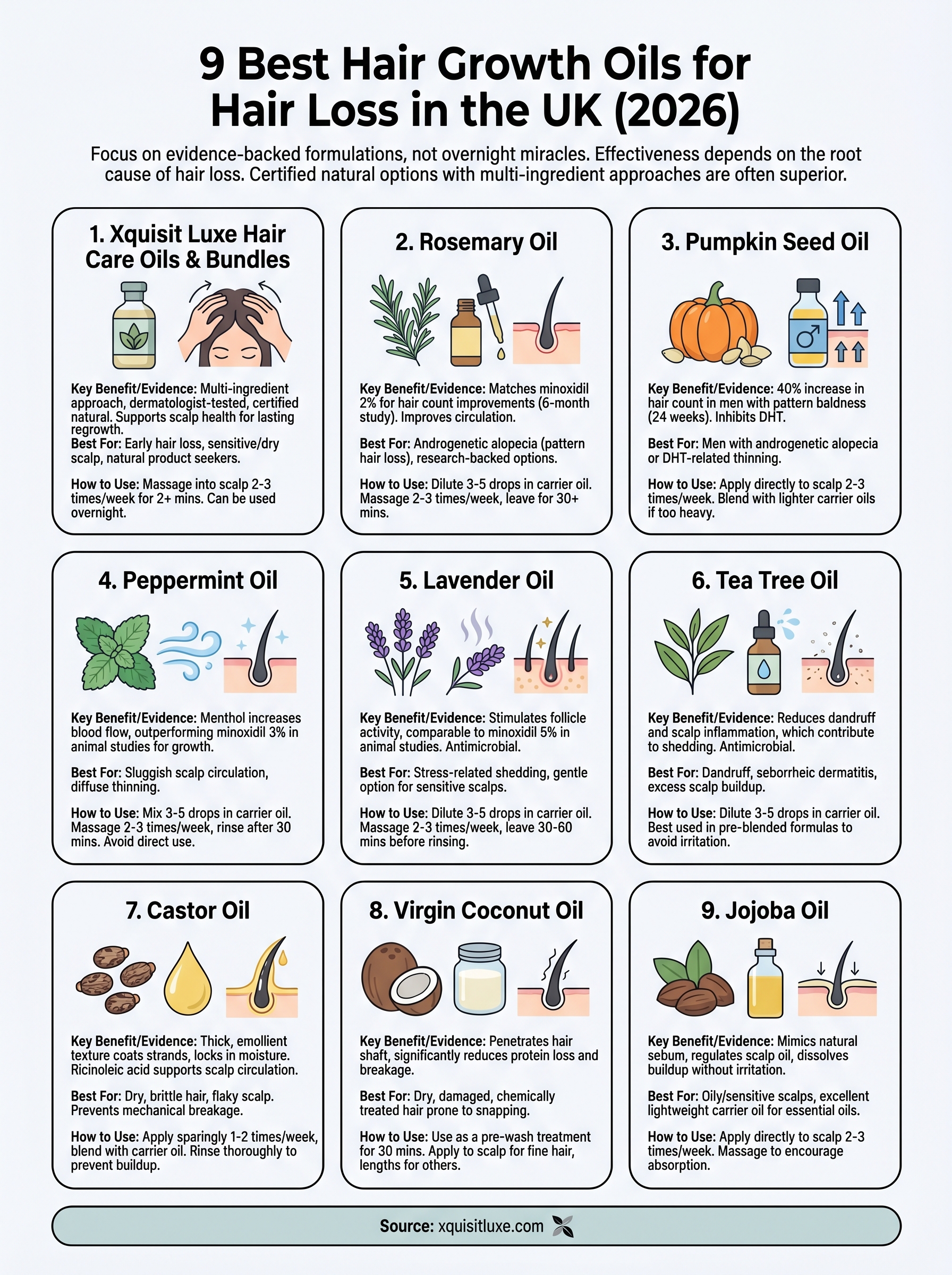
Every oil on this list brings something specific to the table, but the one that delivers results for you depends entirely on what's causing your hair loss and how consistently you apply it. Rosemary and pumpkin seed oil have the strongest clinical backing for follicle-level work, while jojoba, castor, and coconut oil do their best work supporting scalp health and reducing breakage. Combining a targeted active oil with a well-formulated carrier is almost always more effective than using a single ingredient in isolation.
If you want a certified natural, UK-made option that takes the blending work out of your hands, a dedicated hair growth oil for hair loss from a tested, results-focused brand is the most straightforward starting point. Check out the Xquisit Luxe hair care range to find a formulation built around the ingredients that matter, backed by a 30-day money-back guarantee.

