


Trouver une huile de croissance capillaire pour cuir chevelu sensible peut s'avérer un véritable casse-tête. La plupart des formules contiennent des huiles essentielles lourdes, des parfums synthétiques ou des extraits botaniques agressifs qui promettent des cheveux plus épais, mais provoquent plutôt rougeurs, démangeaisons et desquamations. Si votre cuir chevelu réagit à tout, vous savez déjà que toutes les huiles capillaires ne sont pas égales, et que la mauvaise peut vous faire reculer de plusieurs semaines.
La bonne nouvelle ? Un nombre croissant de marques formulent désormais leurs produits en tenant fermement compte des peaux sensibles. Chez Xquisit Luxe Self Care, nous développons notre gamme de soins capillaires pour qu'elle soit certifiée naturelle et testée par des dermatologues, afin de comprendre exactement ce qu'il faut pour créer un produit qui favorise la croissance des cheveux sans agresser votre cuir chevelu. Cette expérience pratique guide notre évaluation des huiles sur le marché, les nôtres comme celles des autres.
Dans ce guide, nous avons sélectionné huit huiles de croissance capillaire suffisamment douces pour les cuirs chevelus réactifs tout en offrant de réels résultats. Chaque produit a été évalué en fonction de la transparence de ses ingrédients, de son potentiel irritant et de son efficacité prouvée. Que vous soyez confronté à des cheveux clairsemés, à une perte de cheveux post-partum ou à une chute liée au stress, vous trouverez ici une option qui agit avec votre cuir chevelu plutôt que contre lui. Découvrons la liste complète et ce qui rend chacun d'eux digne d'être essayé.
1. Huile de croissance capillaire Xquisit Luxe
Xquisit Luxe figure en tête de cette liste car elle a été conçue dès le départ en plaçant les cuirs chevelus sensibles en priorité, et non comme une réflexion après coup. Il s'agit d'une formule certifiée naturelle, fabriquée au Royaume-Uni, qui a été testée par des dermatologues et affinée pour favoriser la croissance des cheveux sans les déclencheurs courants qui irritent les cuirs chevelus réactifs.
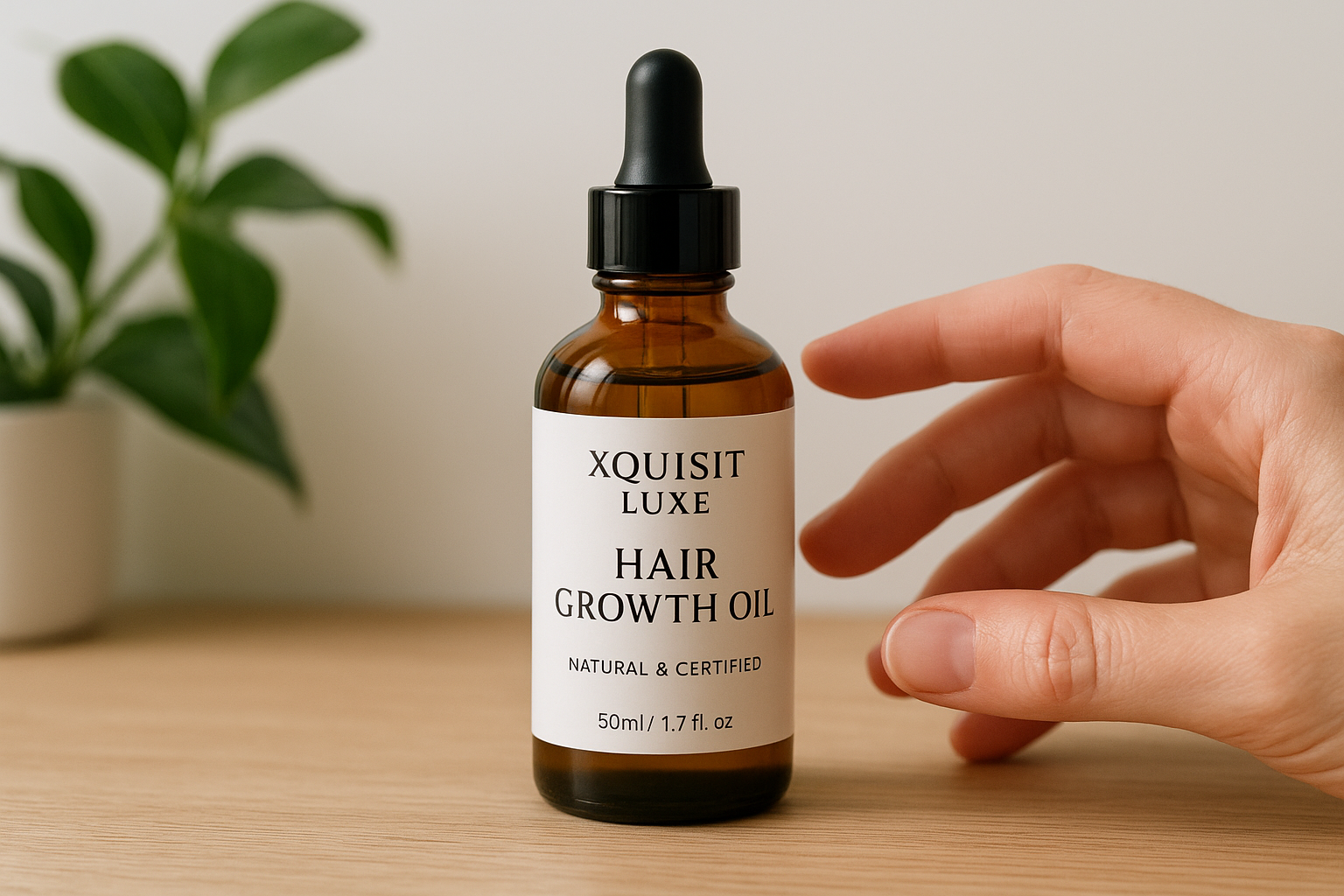
Pourquoi convient-elle aux cuirs chevelus sensibles ?
La formule évite les parfums synthétiques, les sulfates et les extraits botaniques agressifs, qui sont les trois coupables les plus courants des irritations du cuir chevelu. Au lieu de cela, chaque ingrédient a été sélectionné parce qu'il agit avec votre barrière cutanée plutôt que de la perturber. Si vous recherchiez une huile de croissance capillaire fiable pour cuir chevelu sensible qui ne ressemble pas à une expérience de chimie, celle-ci reste simple et ciblée.
Une formulation testée par des dermatologues vous offre une confiance mesurable dans le fait qu'un produit a été évalué pour sa sécurité sur les peaux réactives, et non pas seulement commercialisé comme doux.
Ingrédients clés et leurs actions
Le mélange comprend des huiles végétales nourrissantes qui pénètrent le cuir chevelu sans obstruer les follicules, ainsi que des ingrédients connus pour favoriser la circulation au niveau de la racine. Ces actifs ciblent directement l'environnement du cuir chevelu, aidant à réduire la chute et à encourager une repousse saine après une utilisation constante.
Idéale pour
Cette huile convient aux personnes souffrant de cheveux clairsemés, de perte de cheveux post-partum ou de chute liée au stress qui ont besoin d'un produit favorisant la croissance qu'elles peuvent utiliser régulièrement sans craindre de réactions. Elle convient également à celles qui ont déjà abandonné d'autres huiles capillaires en raison de démangeaisons ou de rougeurs.
Comment l'utiliser sans provoquer d'irritation
Appliquez une petite quantité directement sur le cuir chevelu à l'aide de la pipette ou du bout des doigts, puis massez doucement par mouvements circulaires pendant deux à trois minutes. Commencez par deux à trois applications par semaine avant de passer à une utilisation quotidienne une fois que votre cuir chevelu s'est adapté. Évitez d'appliquer sur une peau déjà irritée ou abîmée, et rangez toujours le flacon à l'abri de la chaleur directe pour préserver les ingrédients actifs.
Prix et tailles au Royaume-Uni
Les produits Xquisit Luxe sont disponibles sur leur site web au Royaume-Uni avec une livraison gratuite pour les commandes de plus de 25 £. Les primo-acheteurs peuvent également bénéficier d'une remise de 10 % en s'abonnant à la newsletter, ce qui en fait un moyen peu risqué d'essayer la gamme.
2. Huile de jojoba 100 % pure
L'huile de jojoba est techniquement une cire liquide plutôt qu'une huile, c'est précisément pourquoi elle se comporte si bien sur les peaux réactives. Sa structure moléculaire ressemble étroitement au sébum naturel de votre cuir chevelu, ce qui en fait l'une des options les plus biocompatibles disponibles pour quiconque recherche une huile de croissance capillaire douce pour cuir chevelu sensible.
Pourquoi convient-elle aux cuirs chevelus sensibles ?
Votre peau reconnaît le jojoba comme familier plutôt qu'étranger, il est donc rapidement absorbé sans déclencher de réponse immunitaire. Il ne contient aucun allergène connu et est exempt de protéines qui peuvent provoquer des réactions chez les personnes sensibles aux huiles à base de noix.
Parce que le jojoba imite si étroitement le sébum, il peut également aider à réguler un cuir chevelu hyperactif sans le dessécher.
Principaux bienfaits pour le cuir chevelu et les follicules
Le jojoba apporte de la vitamine E et des vitamines B directement au follicule, ce qui favorise un cycle de croissance plus sain. Il possède également de légères propriétés antimicrobiennes qui maintiennent l'environnement du cuir chevelu propre et équilibré sans perturber votre microbiome.
Idéale pour
Cette huile convient mieux aux personnes ayant un cuir chevelu sec, squameux ou sujet à l'eczéma qui ont besoin d'hydratation sans lourdeur. C'est également un excellent choix si vous avez un cuir chevelu mixte qui devient gras aux racines mais sec sur le dessus de la tête.
Comment l'utiliser et à quelle fréquence
Chauffez trois à cinq gouttes entre vos paumes et faites-les pénétrer dans des sections de votre cuir chevelu deux à trois fois par semaine. Laissez agir au moins 30 minutes avant de rincer.
Gamme de prix au Royaume-Uni
L'huile de jojoba pure coûte généralement entre 8 £ et 18 £ pour 100 ml au Royaume-Uni, selon la marque et la certification.
3. Huile d'argan 100 % pure
L'huile d'argan s'est forgé une solide réputation tant en soins de la peau qu'en soins capillaires, et la science le confirme. Elle provient des noyaux de l'arganier originaire du Maroc et offre une riche concentration d'acides gras et d'antioxydants bénéfiques pour le cuir chevelu et la tige capillaire. Si vous recherchez une huile de croissance capillaire polyvalente pour cuir chevelu sensible, l'huile d'argan est l'une des options les plus largement disponibles et les mieux étudiées sur le marché.
Pourquoi convient-elle aux cuirs chevelus sensibles ?
Cette huile est non comédogène et légère, ce qui signifie qu'elle est absorbée sans obstruer les follicules ni laisser de sensation lourde sur le cuir chevelu. Sa teneur élevée en acides oléique et linoléique aide à calmer l'inflammation et à réduire l'irritation que de nombreux cuirs chevelus réactifs subissent quotidiennement.
L'huile d'argan pressée à froid et non raffinée conserve le niveau le plus élevé de composés actifs, alors vérifiez toujours l'étiquette avant d'acheter.
Principaux bienfaits pour le cuir chevelu et la fibre capillaire
Au-delà du cuir chevelu, l'huile d'argan revêt la fibre capillaire pour réduire la casse et améliorer l'élasticité. Elle apporte également de la vitamine E directement au follicule, favorisant un environnement de croissance plus sain grâce à une utilisation constante.
Idéale pour
Cette huile convient mieux aux personnes ayant les cheveux secs ou sujets aux frisottis et un cuir chevelu sensible, car elle répond aux deux préoccupations en un seul produit.
Comment l'utiliser sur le cuir chevelu et les longueurs
Appliquez deux à trois gouttes sur votre cuir chevelu et massez, puis répartissez une petite quantité sur les mi-longueurs et les pointes pour conditionner sans alourdir les cheveux.
Gamme de prix au Royaume-Uni
L'huile d'argan pure coûte généralement entre 10 £ et 22 £ pour 100 ml au Royaume-Uni, selon la marque et le niveau de certification.
4. Huile de pépins de raisin 100 % pure
L'huile de pépins de raisin est extraite des graines restantes de la production de vin, ce qui en fait l'une des huiles de support les plus largement disponibles et abordables que l'on puisse trouver au Royaume-Uni. Elle se situe à l'extrémité la plus légère du spectre des huiles, ce qui en fait une candidate solide si vous recherchez une huile de croissance capillaire pour cuir chevelu sensible qui absorbe rapidement et ne laisse aucun résidu.
Pourquoi convient-elle aux cuirs chevelus sensibles ?
L'huile de pépins de raisin a un très faible indice comédogène, ce qui signifie qu'elle n'obstruera pas les follicules ni ne restera à la surface de votre cuir chevelu. Elle est également inodore et exempte d'allergènes courants, ce qui en fait l'une des options les plus sûres pour quiconque dont le cuir chevelu réagit aux parfums ou aux produits botaniques lourds.
Son faible poids moléculaire lui permet de pénétrer la surface du cuir chevelu sans perturber votre équilibre naturel en huile.
Principaux bienfaits pour les cuirs chevelus gras mais sensibles
Cette huile contient une forte concentration d'acide linoléique, dont la recherche suggère qu'il aide à réguler la production de sébum sur les cuirs chevelus qui ont tendance à produire trop de sébum. Elle apporte également de la vitamine E et des proanthocyanidines oligomères, qui favorisent la circulation du cuir chevelu et protègent les follicules du stress oxydatif.
Idéale pour
L'huile de pépins de raisin convient aux personnes ayant des racines grasses et un cuir chevelu réactif qui ont du mal à trouver une huile qui hydrate sans rendre les cheveux gras ou lourds sur le dessus de la tête.
Comment l'utiliser sans résidus ni accumulation
Appliquez deux à trois gouttes directement sur des sections de votre cuir chevelu et faites-les pénétrer du bout des doigts. Laissez agir 20 à 30 minutes, puis rincez avec un shampooing doux sans sulfate.
Gamme de prix au Royaume-Uni
L'huile de pépins de raisin pure coûte généralement entre 5 £ et 14 £ pour 100 ml, selon la marque et la certification pressée à froid.
5. Huile de Squalane d'origine végétale
Le squalane est dérivé de sources végétales telles que la canne à sucre ou les olives et est devenu un ingrédient de premier plan tant dans les soins de la peau que dans les soins capillaires. Contrairement aux huiles plus lourdes, il est absorbé presque instantanément et ne laisse aucun résidu gras, ce qui en fait un excellent choix si vous recherchez une huile de croissance capillaire pour cuir chevelu sensible qui n'alourdira pas vos cheveux ni n'obstruera les follicules.
Pourquoi convient-elle aux cuirs chevelus sensibles ?
Cette huile est hypoallergénique et totalement sans parfum, ce qui élimine deux des déclencheurs les plus courants de réactions du cuir chevelu. Votre cuir chevelu produit déjà naturellement son propre squalène dans le cadre de la barrière lipidique de la peau, de sorte que le squalane d'origine végétale fonctionne avec votre biologie plutôt que d'introduire quelque chose d'inconnu.
Parce qu'il imite un composé que votre peau fabrique déjà, le squalane présente un risque d'irritation exceptionnellement faible par rapport à la plupart des huiles botaniques.
Principaux bienfaits pour le soutien de la barrière cutanée et la sécheresse
Le squalane renforce directement la barrière d'hydratation du cuir chevelu, ce qui aide à retenir l'hydratation et à réduire la desquamation et la sensation de tiraillement qui accompagnent un cuir chevelu sec ou réactif. Il offre également une protection antioxydante aux follicules, aidant à limiter les dommages oxydatifs qui peuvent ralentir le cycle de croissance au fil du temps.
Idéale pour
Cette huile convient aux personnes ayant le cuir chevelu sec, tendu ou squameux qui ont besoin d'une hydratation légère et rapidement absorbée et qui réagissent mal aux produits parfumés ou riches en protéines.
Comment l'utiliser comme option légère sans rinçage
Appliquez deux à trois gouttes sur un cuir chevelu humide après le lavage et faites pénétrer doucement du bout des doigts. Vous pouvez le laisser sans rincer, car il est entièrement absorbé en quelques minutes.
Gamme de prix au Royaume-Uni
Le squalane d'origine végétale coûte généralement entre 10 £ et 20 £ pour 30 ml au Royaume-Uni, selon la marque et l'origine.
6. Huile de graines de citrouille
L'huile de graines de citrouille est pressée à partir des graines de Cucurbita pepo et a suscité une attention croissante dans le monde des soins capillaires ces dernières années. Elle offre un riche mélange d'acides gras, de zinc et d'antioxydants qui ciblent directement l'environnement du cuir chevelu, ce qui en fait une huile de croissance capillaire utile pour cuir chevelu sensible qui apporte également une profondeur nutritionnelle au follicule.
Pourquoi convient-elle aux cuirs chevelus sensibles ?
Cette huile a une odeur douce et terreuse plutôt qu'un parfum vif ou chimique, ce qui réduit le risque d'irritation pour les personnes dont le cuir chevelu réagit aux substances botaniques fortes. Ses propriétés anti-inflammatoires proviennent de sa forte teneur en bêta-sitostérol, qui aide à calmer les rougeurs et la sensibilité à la surface du cuir chevelu sans perturber la barrière cutanée.
Ce que nous savons du soutien à la réduction de la chute des cheveux
La recherche sur l'huile de graines de citrouille est encore en développement, mais les premières études suggèrent qu'elle pourrait inhiber la 5-alpha réductase, une enzyme liée à la chute hormonale des cheveux. Sa teneur en zinc favorise également un environnement sain pour les follicules, car une carence en zinc est un facteur reconnu contribuant à une chute accrue.
Les résultats de l'huile de graines de citrouille ont tendance à s'accumuler progressivement, de sorte qu'une utilisation constante sur plusieurs mois vous donne l'image la plus claire de la façon dont votre cuir chevelu réagit.
Idéale pour
Cette huile convient mieux aux personnes souffrant de chute hormonale ou liée au stress qui ont besoin d'une option douce et riche en nutriments, sans additifs agressifs.
Comment l'utiliser et quels résultats attendre
Appliquez trois à quatre gouttes sur votre cuir chevelu deux à trois fois par semaine et massez pendant deux minutes. Attendez-vous à une réduction de la chute des cheveux dans les huit à douze semaines d'utilisation constante.
Gamme de prix au Royaume-Uni
L'huile de graines de citrouille pure coûte généralement entre 8 £ et 18 £ pour 100 ml, selon la marque et la certification pressée à froid.
7. Huile de ricin mélangée à une huile de support plus légère
Seule, l'huile de ricin est bien trop épaisse pour être utilisée confortablement sur un cuir chevelu réactif. Sa forte teneur en acide ricinoléique la rend puissante, mais sa viscosité provoque des tiraillements qui peuvent aggraver l'irritation. La mélanger avec une huile de support plus légère change tout, transformant un ingrédient difficile en une huile de croissance capillaire utilisable pour cuir chevelu sensible.
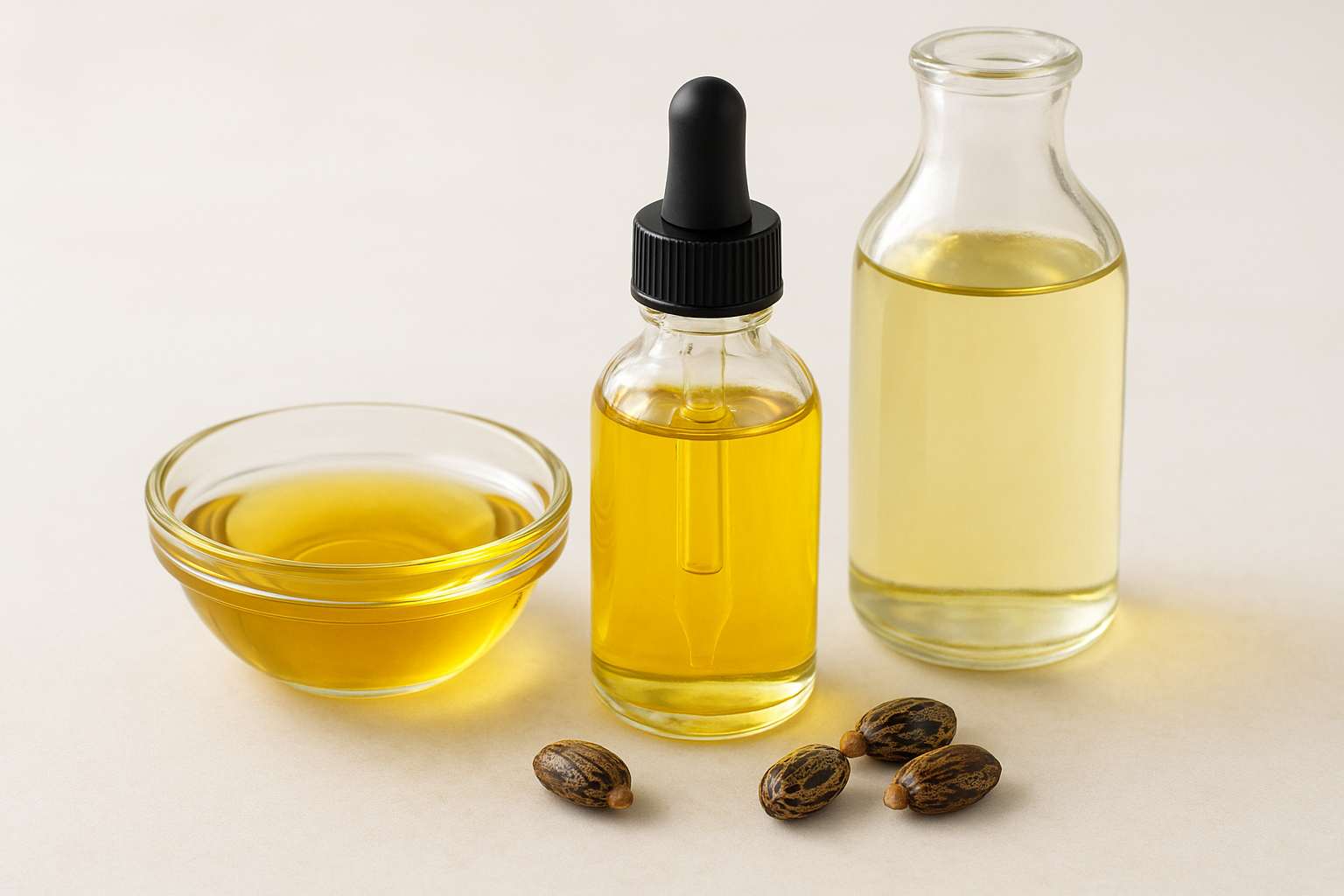
Pourquoi peut-elle fonctionner pour les cuirs chevelus sensibles lorsqu'elle est diluée
L'acide ricinoléique possède de puissantes propriétés anti-inflammatoires et antimicrobiennes qui bénéficient directement à un cuir chevelu sujet aux rougeurs ou à la sensibilité. Lorsqu'il est dilué à un ratio de 1:3 avec quelque chose comme l'huile de jojoba ou de pépins de raisin, l'épaisseur diminue considérablement tandis que les bienfaits actifs demeurent.
La dilution réduit le risque de congestion folliculaire, ce qui est l'une des principales raisons pour lesquelles l'huile de ricin pure provoque des éruptions cutanées et des irritations du cuir chevelu chez de nombreuses personnes.
Idéale pour les tempes, les zones clairsemées et les coiffures protectrices
Ce mélange fonctionne particulièrement bien pour les tempes clairsemées, les zones dégarnies et l'entretien des coiffures protectrices, où une application ciblée est plus importante que la couverture globale du cuir chevelu.
Comment la mélanger pour une meilleure étalement et moins de tiraillement
Mélangez une partie d'huile de ricin avec trois parties d'huile de jojoba ou de pépins de raisin dans un petit flacon compte-gouttes. Appliquez avec l'embout du compte-gouttes directement sur le cuir chevelu par sections pour contrôler le placement et minimiser la friction.
Comment la rincer sans décaper le cuir chevelu
Appliquez une petite quantité de revitalisant ou de co-wash doux sur cheveux secs avant d'ajouter de l'eau, puis rincez et suivez avec un shampooing sans sulfate pour éliminer l'huile proprement.
Gamme de prix au Royaume-Uni
L'huile de ricin coûte généralement entre 5 £ et 12 £ pour 100 ml, faisant d'une formule mélangée l'une des options les plus abordables disponibles.
8. Huile pour cuir chevelu et cheveux Mielle Romarin Menthe
L'huile de romarin-menthe de Mielle Organics est l'une des huiles de croissance capillaire les plus populaires sur le marché actuellement. La formule contient des huiles essentielles de menthe poivrée et de romarin à des niveaux qui donnent des résultats pour de nombreuses personnes, mais peuvent déclencher des réactions sur les cuirs chevelus plus réactifs.
Qui devrait l'éviter sur un cuir chevelu sensible ?
Si votre cuir chevelu s'irrite au contact de produits à base de menthe ou de menthol, cette huile est susceptible de provoquer des picotements, des rougeurs ou des démangeaisons. Les personnes atteintes d'eczéma, de psoriasis ou de dermatite de contact devraient l'aborder avec une grande prudence avant de l'appliquer directement sur le cuir chevelu.
Les huiles essentielles font partie des déclencheurs les plus courants d'irritation du cuir chevelu, donc la concentration et la dilution importent plus que l'ingrédient lui-même.
Pourquoi certaines personnes la choisissent encore pour leurs routines de croissance capillaire
Malgré sa teneur en huile essentielle, de nombreux utilisateurs rapportent que le romarin favorise efficacement la circulation au niveau du cuir chevelu. Il reste une huile de croissance capillaire populaire pour les cuirs chevelus sensibles, pour ceux qui sont prêts à la diluer et à surveiller la réaction de leur cuir chevelu au fil du temps.
Comment faire un test cutané et diluer si nécessaire
Appliquez une petite quantité sur votre poignet et attendez 24 heures avant de l'utiliser sur votre cuir chevelu. Si vous constatez une réaction, mélangez-la avec une huile de support neutre comme le jojoba dans un rapport de 1:2 pour réduire la concentration.
Comment l'utiliser et à quelle fréquence
Appliquez trois à quatre gouttes sur des sections de votre cuir chevelu deux à trois fois par semaine. Massez doucement pendant une à deux minutes et laissez agir sans rincer.
Prix et tailles au Royaume-Uni
L'huile de romarin et de menthe Mielle coûte généralement entre 10 et 15 £ pour 118 ml et est largement disponible chez les principaux détaillants britanniques, en magasin et en ligne.
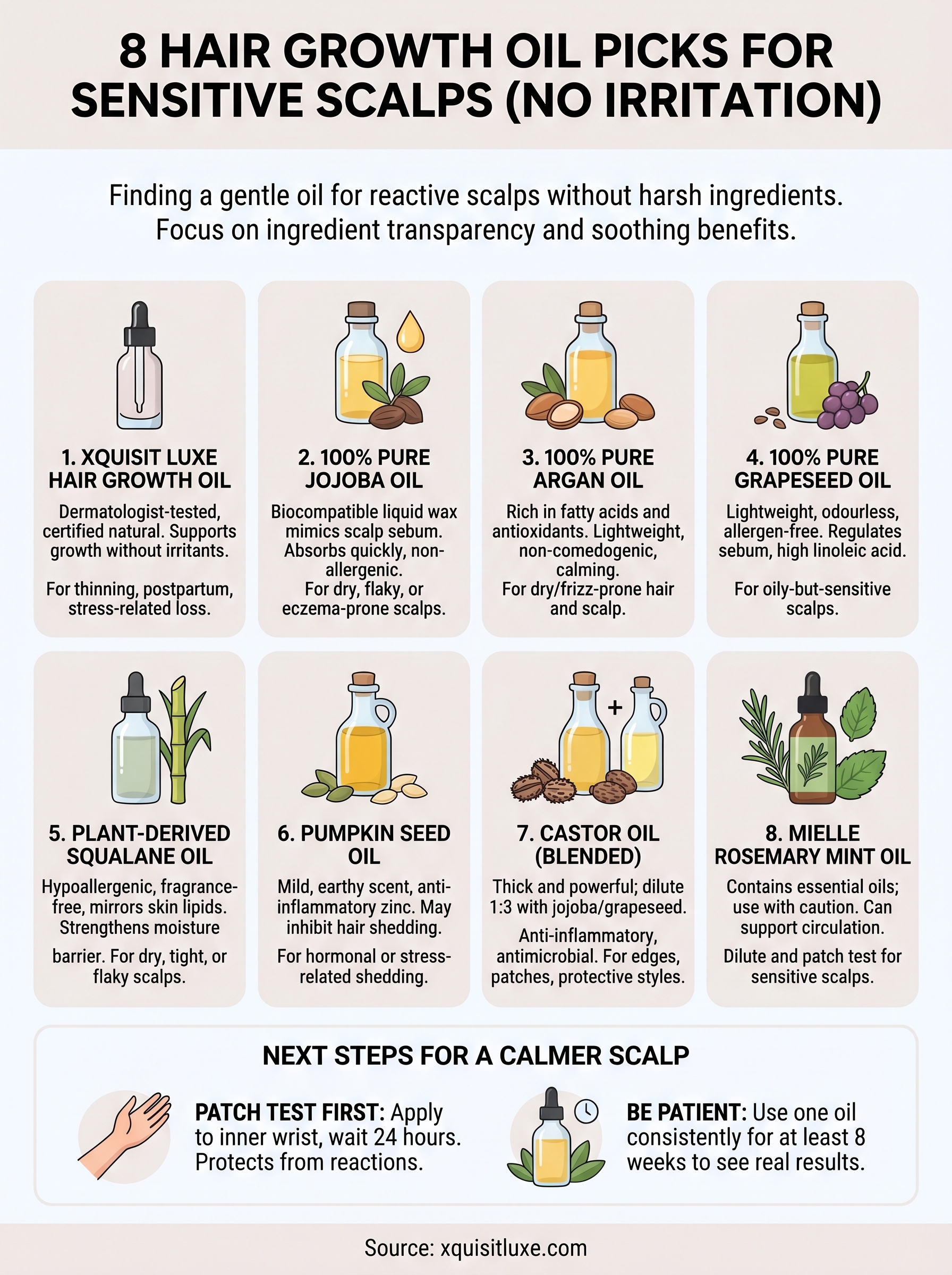
Prochaines étapes pour un cuir chevelu plus calme
Vous avez maintenant huit options solides à votre disposition, chacune adaptée à un problème de cuir chevelu et à un niveau de sensibilité différents. L'étape la plus importante est de commencer par une huile et de l'utiliser de manière constante pendant au moins huit semaines avant de juger de son efficacité. Changer de produits trop rapidement est l'une des principales raisons pour lesquelles les gens n'obtiennent jamais de résultats réels avec une routine d'huile de croissance capillaire pour cuir chevelu sensible, donc la patience est vraiment essentielle ici.
Le test cutané prend deux minutes et vous protège des réactions inutiles et de l'argent gaspillé. Appliquez une petite quantité sur votre poignet, attendez 24 heures, puis engagez-vous avec confiance envers l'huile choisie. Suivez les changements chaque semaine avec une simple note sur votre téléphone afin d'avoir quelque chose de concret à comparer. Si votre cuir chevelu est particulièrement réactif ou si vous souhaitez un point de départ certifié naturel et testé par un dermatologue, la gamme de soins capillaires naturels Xquisit Luxe élimine la plupart des incertitudes du processus.
