


Des cheveux clairsemés, une pousse lente et un cuir chevelu terne peuvent miner votre confiance en vous, et le nombre impressionnant de remèdes disponibles rend difficile de savoir ce qui fonctionne réellement. La bonne nouvelle ? La recherche continue de confirmer ce que de nombreuses cultures pratiquent depuis des siècles : les huiles naturelles appliquées sur le cuir chevelu peuvent réellement favoriser des cheveux plus forts et plus épais. Comprendre les véritables bienfaits de l'huile de croissance capillaire commence par savoir pourquoi ces huiles fonctionnent, et pas seulement se fier à une étiquette. De la stimulation de la circulation sanguine à la nutrition des follicules avec des acides gras essentiels, la bonne huile fait bien plus qu'ajouter de la brillance.
Mais toutes les huiles n'offrent pas les mêmes résultats, et toutes les allégations ne résistent pas à un examen minutieux. Des huiles comme le romarin, le ricin et la menthe poivrée apportent chacune des propriétés distinctes à votre routine de soins capillaires, certaines étayées par des études cliniques, d'autres par des décennies de résultats anecdotiques cohérents. La clé est d'associer la bonne huile à vos problèmes spécifiques de cuir chevelu et de cheveux.
Chez Xquisit Luxe, nous formulons notre Huile de Croissance Capillaire et notre Pack de Repousse des Cheveux en utilisant des ingrédients naturels certifiés et testés par des dermatologues, car nous pensons que des soins capillaires efficaces ne devraient pas s'accompagner d'une liste de compromis synthétiques. Dans cet article, nous décortiquons sept bienfaits spécifiques des huiles de croissance capillaire afin que vous puissiez comprendre exactement comment elles fonctionnent et décider si elles ont leur place dans votre routine. Pas de promesses vagues, juste des raisons claires et fondées sur des preuves pour envisager de faire le changement.
1. Soutenir la santé du cuir chevelu avec Xquisit Luxe
L'un des bienfaits de l'huile de croissance capillaire les plus négligés est ce qui se passe au niveau du cuir chevelu, avant même qu'un seul cheveu ne pousse. Votre cuir chevelu est une peau, et comme la peau de votre visage, il a besoin de soins constants pour bien fonctionner. Sans un environnement de cuir chevelu sain et équilibré, même les follicules les plus forts sous-performeront.
Ce que signifie réellement un "cuir chevelu sain" pour la croissance
Un cuir chevelu sain maintient une production de sébum équilibrée, une bonne circulation et une barrière cutanée forte. Lorsque le cuir chevelu devient trop sec, enflammé ou obstrué par l'accumulation de produits, les follicules ont du mal à faire pousser les cheveux à un rythme normal. Un flux sanguin adéquat vers chaque follicule détermine la quantité de nutriments qui atteignent la racine.
Comment les huiles capillaires améliorent l'environnement du cuir chevelu
Masser l'huile sur votre cuir chevelu fait deux choses à la fois : elle délivre des composés nourrissants directement à la peau, et l'acte physique de masser augmente la circulation sanguine. Une étude de 2016 publiée dans ePlasty a révélé qu'un massage standardisé du cuir chevelu augmentait l'épaisseur des cheveux sur 24 semaines. L'application régulière d'une huile bien formulée favorise également l'équilibre du sébum sans décaper les défenses naturelles du cuir chevelu.
Le massage du cuir chevelu combiné à une huile capillaire de qualité est l'une des étapes les plus accessibles et les plus étayées par des preuves que vous pouvez ajouter à votre routine.
Ingrédients à rechercher dans une huile capillaire naturelle
Recherchez l'huile de romarin, qui a montré des résultats comparables au minoxidil dans les premières recherches, ainsi que l'huile de ricin pour sa teneur en acide ricinoléique qui peut réduire l'inflammation du cuir chevelu. Les huiles de support comme le jojoba imitent étroitement le sébum naturel et s'absorbent sans résidu lourd.
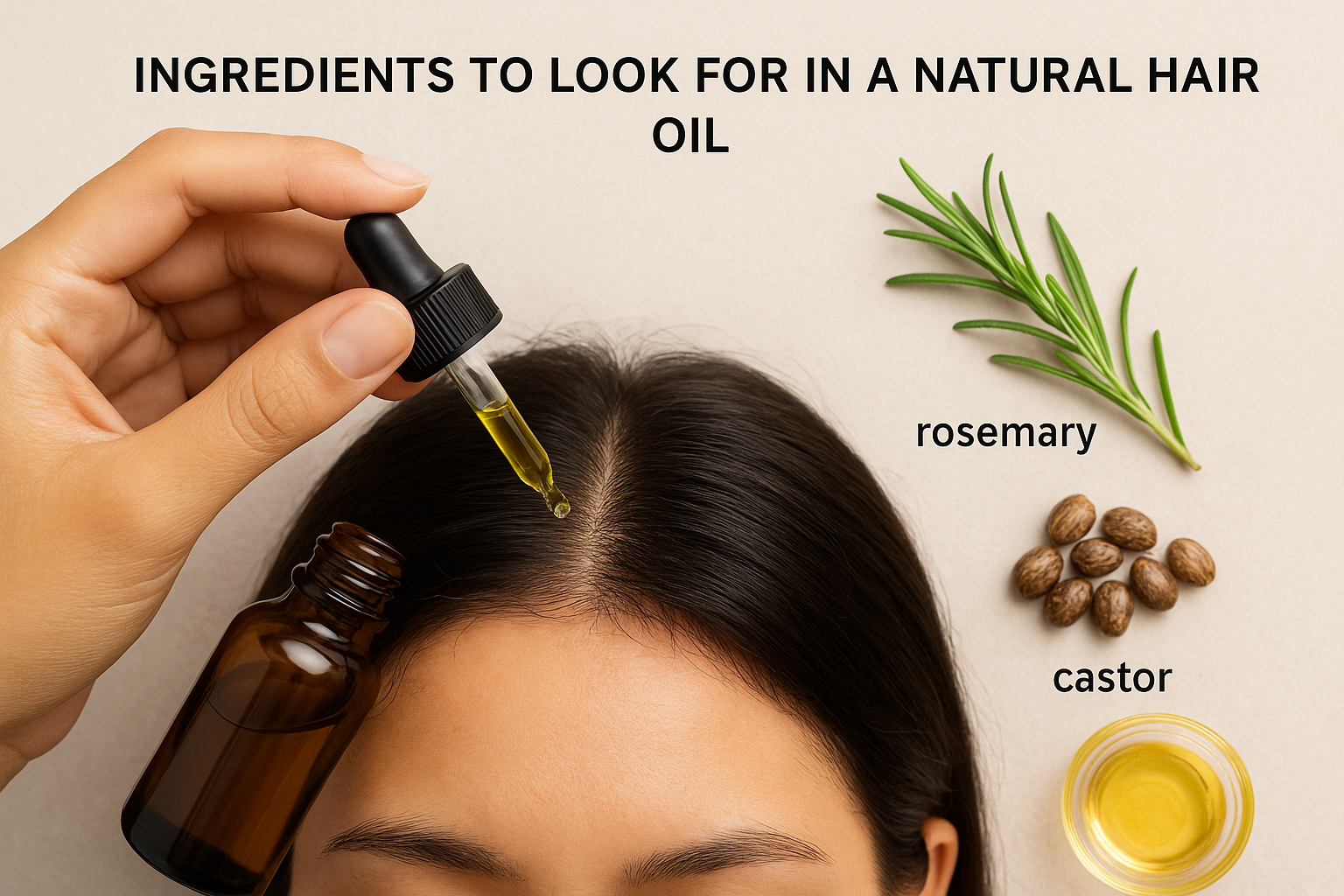
- Huile de romarin : soutient la circulation et la stimulation des follicules
- Huile de ricin : anti-inflammatoire, riche en acide ricinoléique
- Huile de jojoba : équilibre le sébum sans obstruer les pores
L'Huile de Croissance Capillaire d'Xquisit Luxe réunit ces ingrédients naturels certifiés dans une formule testée par des dermatologues conçue pour les cuirs chevelus sensibles.
Comment l'utiliser sans obstruer ni irriter
Appliquez une petite quantité directement sur le cuir chevelu, pas sur les longueurs, et massez en mouvements circulaires pendant deux à trois minutes. Moins, c'est vraiment plus ici : trop d'huile peut obstruer les follicules plutôt que de les soutenir. Rincez après 30 à 60 minutes, ou laissez agir toute la nuit avec un bonnet de protection.
Quand consulter un médecin généraliste ou un dermatologue pour la perte de cheveux
Si vous remarquez une perte de cheveux soudaine ou inégale, une chute quotidienne significative au-delà de la normale de 50 à 100 cheveux, ou toute douleur et lésion du cuir chevelu, prenez rendez-vous avec votre médecin généraliste. Les huiles soutiennent la santé du cuir chevelu mais ne sont pas un traitement contre l'alopécie, la perte de cheveux hormonale ou les conditions médicales sous-jacentes.
2. Réduire la casse et aider les cheveux à conserver leur longueur
L'un des bienfaits de l'huile de croissance capillaire les moins évidents est la protection des cheveux que vous avez déjà. Beaucoup de gens supposent que leurs cheveux poussent lentement, alors qu'en réalité ils se cassent à un rythme similaire à la croissance. La protection des mèches existantes est tout aussi importante que la stimulation de nouvelles mèches au niveau du follicule.
Pourquoi moins de casse ressemble à une croissance plus rapide
Les cheveux poussent environ de 1,25 cm par mois, mais une casse au même rythme annule complètement ce progrès. Réduire la casse permet à la longueur de s'accumuler visiblement au fil du temps, c'est pourquoi une lubrification constante produit souvent des résultats notables en quelques mois sans rien changer d'autre.
Comment les huiles réduisent la friction, les nœuds et la rupture
Les huiles recouvrent chaque mèche d'une fine couche protectrice qui amortit la friction due au brossage, au coiffage et au contact avec les tissus. Cela réduit l'accrochage mèche contre mèche où la plupart des dommages mécaniques commencent. Des cheveux plus lisses s'emmêlent moins et résistent mieux aux manipulations quotidiennes.
Le brossage des cheveux secs et non huilés est l'une des causes les plus courantes et évitables de casse mécanique.
Meilleures huiles pour cheveux cassants et pointes fourchues
L'huile d'argan est légère et riche en acide oléique, ce qui adoucit les mèches sèches et cassantes sans résidu lourd. L'huile de coco pénètre la tige et réduit la perte de protéines pendant le lavage, réduisant la fragilité à la source.
Où appliquer l'huile pour contrôler la casse
Appliquez l'huile sur les mi-longueurs et les pointes, là où les cheveux sont les plus vieux et les plus fragiles. Gardez les huiles plus lourdes loin des racines si vos cheveux sont fins ou sujets à l'excès de sébum, car cela évite un poids inutile sur la mèche.
Erreurs qui aggravent la casse
Appliquer de l'huile sur des cheveux mouillés sans une couche à base d'eau en dessous peut déclencher une fatigue hydrique chez les cheveux à haute porosité, où le gonflement répété affaiblit la tige au fil du temps. Évitez également de brosser immédiatement après avoir huilé avant que le produit n'absorbe, car cela crée un poids inégal qui sollicite les racines et augmente la casse.
3. Fixer l'humidité et réduire les frisottis
Les frisottis et la sécheresse signalent que vos cheveux ont du mal à retenir l'humidité, et cette perte est directement liée à la façon dont vos cheveux poussent et conservent leur longueur. Parmi les principaux bienfaits de l'huile de croissance capillaire, le scellement de l'hydratation dans la mèche est très important car les cheveux secs et cassants se cassent avant de pousser longs.
Comment l'humidité et la croissance sont liées
Les cheveux hydratés restent souples plutôt que de se casser sous la tension quotidienne. Les mèches déshydratées perdent leur élasticité, ce qui augmente la casse lors du brossage et du coiffage et annule les gains de longueur visibles que vous accumulez au fil du temps.
Huiles hydratantes vs huiles scellantes
Toutes les huiles ne fonctionnent pas de la même manière. Les huiles pénétrantes comme le marula et le tournesol s'absorbent partiellement dans le cortex, tandis que les huiles scellantes comme le ricin et la noix de coco restent à la surface pour retenir l'humidité existante. Savoir laquelle vous utilisez vous aide à la placer à la bonne étape.
Utiliser le bon type d'huile à la bonne étape change la façon dont vos cheveux retiennent l'hydratation tout au long de la journée.
Meilleures huiles pour cheveux secs, bouclés et crépus
Les textures bouclées et crépues perdent de l'humidité plus rapidement que les cheveux raides car le motif de la boucle ralentit le sébum naturel qui descend le long de chaque mèche. L'huile d'argan et d'avocat conviennent bien à ces textures, grâce à leurs profils riches en acides gras qui adoucissent sans ajouter de raideur.
Comment superposer l'huile avec des produits à base d'eau
Appliquez d'abord un après-shampoing sans rinçage à base d'eau, puis scellez immédiatement avec de l'huile pendant que les cheveux sont encore humides. Cette séquence emprisonne l'hydratation existante plutôt que de reposer sur une mèche sèche sans avoir d'effet.
Signes que vous avez utilisé trop d'huile
Si vos cheveux sont lourds ou gras après le séchage, vous en avez trop utilisé. Commencez avec deux ou trois gouttes et n'augmentez que si vos cheveux restent visiblement secs après l'absorption de l'huile.
4. Protéger les mèches de la perte de protéines et des dommages
Parmi les bienfaits des huiles de croissance capillaire les moins discutés, la protection de la tige capillaire contre les dommages internes se distingue car elle affecte directement la sensation d'épaisseur et de force de vos cheveux au fil du temps. Chaque lavage, séance de chaleur et processus chimique élimine les protéines de kératine de la mèche, affaiblissant sa structure de l'intérieur.
Ce que la perte de protéines fait à l'épaisseur et à la force
Lorsque vos cheveux perdent des protéines, les mèches deviennent molles, poreuses et sujettes à la casse même sous une légère tension. Au fil du temps, cette perte continue crée un cycle où les cheveux poussent mais ne conservent jamais une épaisseur ou une longueur significative avant de se casser.
Pourquoi certaines huiles pénètrent mieux la tige capillaire
Toutes les huiles ne restent pas en surface. L'huile de coco a un faible poids moléculaire et une structure en chaîne droite qui lui permet de pénétrer le cortex, réduisant la quantité de protéines qui se lavent pendant le shampooing. Les huiles de tournesol et de marula montrent également une pénétration partielle, offrant une protection interne significative en plus du conditionnement de surface.
Huiles qui aident à protéger les cheveux pendant le lavage
L'application d'huile avant le shampooing limite le gonflement et la friction à l'intérieur de la tige lorsque l'eau pénètre. Cette étape de pré-lavage réduit le stress mécanique qui relâche les liaisons protéiques pendant le lavage.
Comment utiliser les huiles comme traitement avant-lavage
Appliquez une quantité généreuse d'huile pénétrante sur cheveux secs, en vous concentrant sur les mi-longueurs et les pointes, au moins 30 minutes avant le lavage. Couvrez avec un bonnet de douche pour stimuler l'absorption avec une chaleur douce.
Une routine d'huilage avant-lavage constante est l'un des moyens les plus efficaces de réduire la perte de protéines cumulative sur plusieurs mois.
Quand l'huilage peut avoir un effet négatif sur les cheveux à faible porosité
Les cheveux à faible porosité ont des cuticules étroitement scellées qui résistent à l'absorption, ce qui signifie que les huiles lourdes peuvent rester à la surface et provoquer une accumulation plutôt que de pénétrer. Si vos cheveux sont cireux après l'huilage, passez à des huiles plus légères comme l'argan ou le pépins de raisin et appliquez uniquement sur cheveux humides.
5. Apaiser les pellicules et soutenir l'équilibre du cuir chevelu
Un cuir chevelu squameux et irrité constitue une mauvaise base pour une croissance saine des cheveux, ce qui en fait l'un des bienfaits des huiles de croissance capillaire les plus pratiques à aborder. Réduire l'inflammation et le déséquilibre du cuir chevelu soulage vos follicules, permettant aux cheveux de pousser sans interruption constante à la racine.
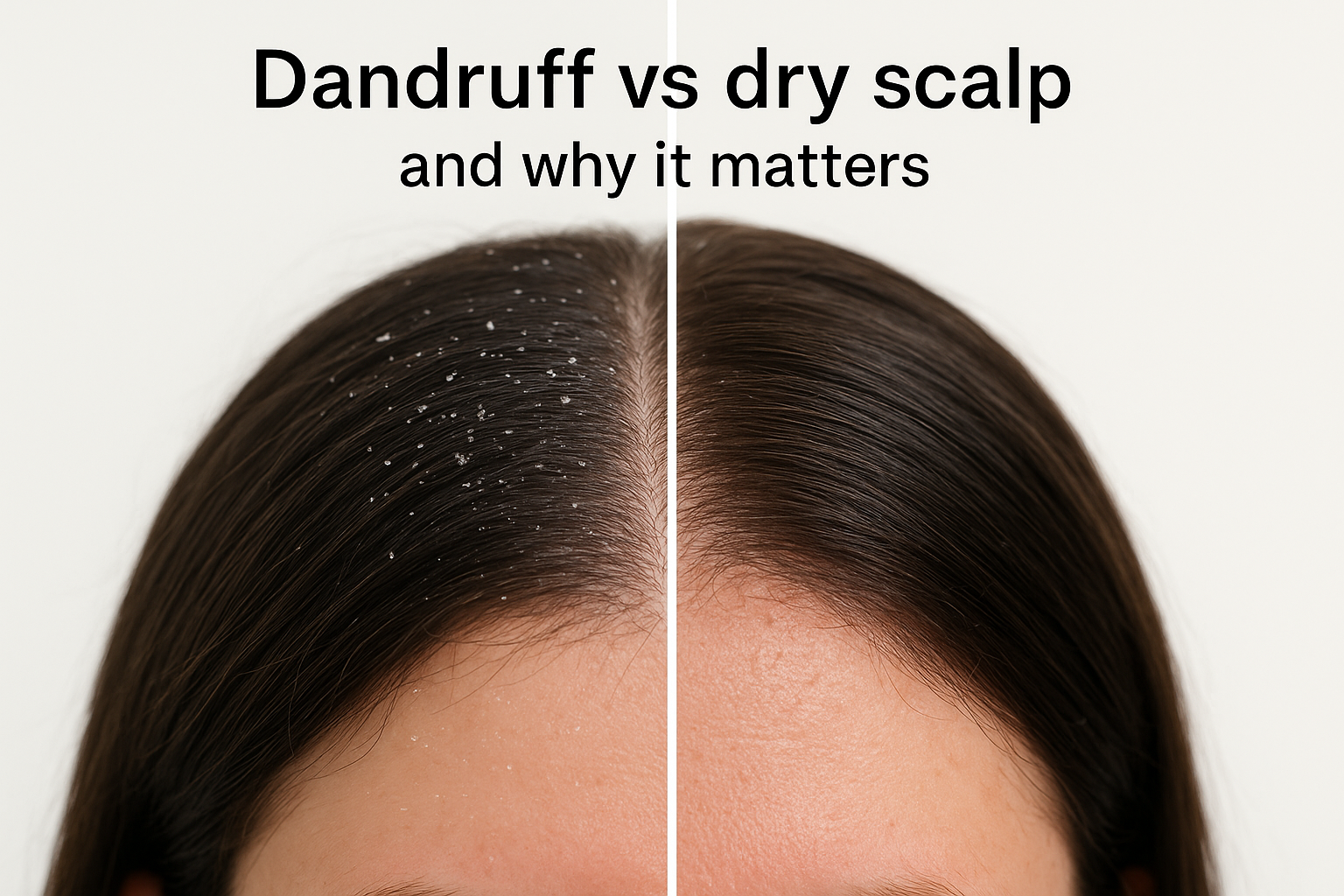
Pellicules vs cuir chevelu sec et pourquoi c'est important
Ces deux affections se ressemblent mais nécessitent des approches différentes. Les pellicules sont liées à une prolifération de levures Malassezia sur votre cuir chevelu, tandis qu'un cuir chevelu sec résulte d'une perte d'humidité dans la peau elle-même. Traiter la mauvaise condition ne fera rien ou aggravera vos symptômes.
Comment les huiles peuvent soutenir le microbiome du cuir chevelu
Certaines huiles ont des propriétés antimicrobiennes et antifongiques qui aident à contrôler les populations de levures. L'huile d'arbre à thé a montré une activité anti-Malassezia dans la recherche, ce qui signifie qu'elle cible le déclencheur sous-jacent des pellicules plutôt que de simplement calmer l'irritation de surface.
Choisir des huiles avec une action antimicrobienne avérée s'attaque à la source des pellicules au lieu de masquer temporairement les squames.
Huiles et ingrédients que les gens utilisent pour les squames
- Huile d'arbre à thé : antifongique, a montré une réduction de la prolifération de Malassezia
- Huile de romarin : anti-inflammatoire, apaise les irritations du cuir chevelu
- Huile de jojoba : équilibre la production de sébum sans obstruer les pores
Comment combiner l'huilage avec une routine anti-pelliculaire
Appliquez votre huile avant le shampooing plutôt que de la laisser agir toute la nuit en complément d'un shampooing médicamenteux. Utiliser un shampooing anti-pelliculaire ciblé après votre traitement à l'huile vous apporte les deux avantages sans neutraliser l'un ou l'autre.
Signes d'alerte nécessitant un traitement médical
Des squames épaisses jaunes ou grasses, des douleurs au cuir chevelu ou une inflammation qui s'étend peuvent signaler une dermatite séborrhéique ou un psoriasis. Ces deux affections nécessitent une évaluation médicale appropriée plutôt qu'un simple traitement à l'huile à domicile.
6. Ajouter de la brillance et de la douceur sans coiffage intense
L'un des bienfaits de l'huile de croissance capillaire les plus visibles est la rapidité avec laquelle vos cheveux semblent et se sentent différents. La brillance et la douceur ne sont pas seulement des avantages cosmétiques ; elles reflètent la santé de la cuticule, ce qui affecte directement la capacité de vos cheveux à gérer le stress quotidien sans se casser.
Comment la brillance est liée à la santé de la cuticule
La cuticule est la couche protectrice la plus externe de chaque mèche. Lorsqu'elle est plate, la lumière se réfléchit uniformément et vos cheveux paraissent brillants. Des cuticules soulevées ou endommagées diffusent la lumière, produisant un aspect terne et une texture rugueuse que vous pouvez sentir avec vos doigts.
Comment les huiles lissent la cuticule et réduisent la rugosité
L'application d'huile comble les espaces microscopiques entre les écailles de la cuticule soulevées, aplatissant temporairement la surface. Ce lissage physique réduit la rugosité et donne aux cheveux une apparence nettement plus brillante sans chaleur ni produits coiffants lourds.
Une huile légère appliquée sur les pointes sèches ou humides lisse la cuticule en quelques secondes et ne nécessite aucune étape de coiffage supplémentaire.
Huiles légères pour cheveux fins et racines grasses
Les cheveux fins ont besoin d'huiles légères comme l'argan ou le pépins de raisin pour éviter d'alourdir les mèches. Appliquez uniquement sur les mi-longueurs et les pointes, en gardant l'huile loin de vos racines pour préserver le volume naturel tout au long de la journée.
Comment utiliser l'huile comme finition sans graisser
Chauffez deux ou trois gouttes entre vos paumes et pressez-les sur les longueurs après le coiffage. Frotter plutôt que presser provoque une répartition inégale et un aspect gras, alors pressez toujours le produit doucement sur vos cheveux.
Déclencheurs d'accumulation et comment les prévenir
Les huiles lourdes ou à base de silicone s'accumulent sur la cuticule et bloquent l'absorption d'humidité au fil du temps. Clarifiez une fois par semaine avec un shampooing doux pour réinitialiser votre cuir chevelu et restaurer la brillance naturelle sans priver vos cheveux de ce dont ils ont besoin.
7. Favoriser la densité capillaire avec des huiles essentielles éprouvées
L'un des avantages les plus convaincants des huiles de croissance capillaire est le potentiel de soutenir directement la densité capillaire grâce à des huiles essentielles spécifiques. Contrairement aux bienfaits hydratants ou brillants, les améliorations de la densité ciblent le follicule lui-même, ce qui en fait le bienfait le plus directement lié à la croissance de cette liste.
Ce que la recherche suggère que les huiles peuvent et ne peuvent pas faire
La recherche est encore en développement, mais plusieurs études montrent des résultats significatifs avec des huiles essentielles spécifiques. Une étude de 2015 publiée dans SKINmed a révélé que l'huile de romarin correspondait au minoxidil pour l'augmentation du nombre de cheveux sur six mois. Les huiles essentielles soutiennent la stimulation des follicules plutôt que d'inverser les conditions médicales sous-jacentes, elles fonctionnent donc mieux comme outils préventifs ou complémentaires plutôt que comme traitements autonomes.
Les preuves concernant les huiles essentielles sont vraiment prometteuses, mais elles fonctionnent en parallèle avec une routine de cuir chevelu sain, et non à la place d'un traitement médical.
Huiles essentielles avec les meilleures preuves jusqu'à présent
L'huile de romarin mène la recherche, suivie de l'huile de menthe poivrée, qu'une étude animale de 2014 a liée à une augmentation de la profondeur des follicules et de l'épaisseur du derme. Les deux montrent des effets mesurables sur la circulation du cuir chevelu.
Huiles porteuses qui fonctionnent bien pour la dilution
Les huiles de jojoba et de pépins de raisin constituent d'excellents supports car elles s'absorbent proprement sans obstruer les follicules. L'huile de ricin convient aux types de cheveux plus épais qui tolèrent une base plus lourde.
Comment diluer, tester sur une petite zone et éviter l'irritation
Mélangez deux à trois gouttes d'huile essentielle par cuillère à soupe d'huile porteuse. Effectuez toujours un test sur une petite zone de votre bras pendant 24 heures avant toute application sur le cuir chevelu pour vérifier les réactions de sensibilité.
Qui devrait éviter les huiles essentielles sur le cuir chevelu
Évitez les huiles essentielles si vous êtes enceinte ou si vous allaitez, ou si vous souffrez d'une affection diagnostiquée du cuir chevelu, sans en parler au préalable à votre médecin traitant.
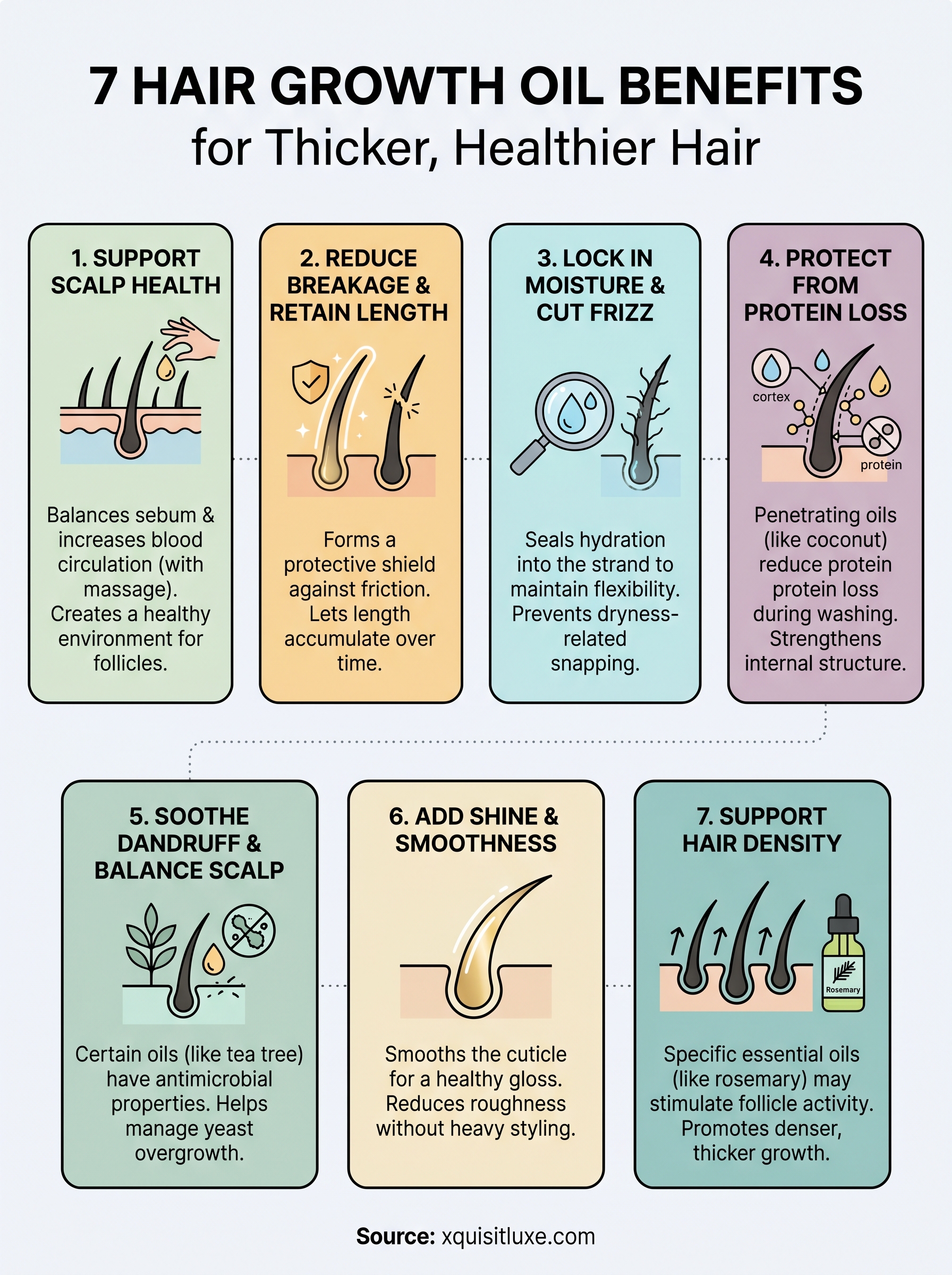
Prochaines étapes
Les sept bienfaits des huiles pour la pousse des cheveux abordés dans cet article ont un point commun : les résultats proviennent de la constance, et non d'applications ponctuelles. Que votre objectif soit de réduire la casse, d'apaiser votre cuir chevelu ou de stimuler l'activité des follicules, les huiles qui donnent les meilleurs résultats sont celles que vous appliquez régulièrement avec la bonne technique et les bons ingrédients.
Votre prochaine étape consiste à choisir un ou deux bienfaits qui correspondent à votre plus grande préoccupation actuelle et à vous engager dans une routine basée sur ceux-ci. Commencez par une formule naturelle certifiée et de qualité qui combine des ingrédients éprouvés comme le romarin, le ricin et le jojoba plutôt que d'expérimenter avec plusieurs huiles individuelles à la fois. Cela rendra votre routine gérable et facilitera le suivi de ce qui fonctionne réellement.
Si vous souhaitez une formule conçue spécifiquement à cet effet, explorez les Huile de croissance capillaire et Kit de repousse capillaire Xquisit Luxe et commencez votre routine avec des ingrédients testés par des dermatologues et sans cruauté animale fabriqués au Royaume-Uni.

