


Rosemary oil has been used for centuries in traditional remedies, but only recently has science started catching up with what herbalists always suspected. The evidence behind rosemary oil hair benefits is now stronger than ever, with clinical studies showing it can rival minoxidil for stimulating hair growth, minus many of the harsh side effects. If you've been dealing with thinning hair, a sluggish scalp, or breakage, this essential oil deserves a serious look.
So what exactly makes rosemary oil so effective, and how should you actually use it? Those are the questions this guide answers. We'll break down the science, compare it to conventional treatments, and walk you through practical application methods that fit into a real routine. You'll also learn what to look for in quality formulations, because not all rosemary oil products are created equal, and concentration matters more than most people realise.
At Xquisit Luxe Self Care, we formulate our hair care range with certified natural ingredients like rosemary oil, designed to support hair growth and scalp health without synthetic fillers. Every product is cruelty-free, dermatologist tested, and proudly crafted in the United Kingdom, so you know exactly what you're putting on your hair and where it comes from. Here's what the research says about this remarkable oil.
Why rosemary oil helps the hair and scalp
Rosemary oil isn't effective by accident. Rosmarinus officinalis contains several bioactive compounds that act on hair follicles and scalp tissue through different but complementary pathways. Understanding what those compounds do helps you make smarter choices about how and when to use it.
The active compounds doing the work
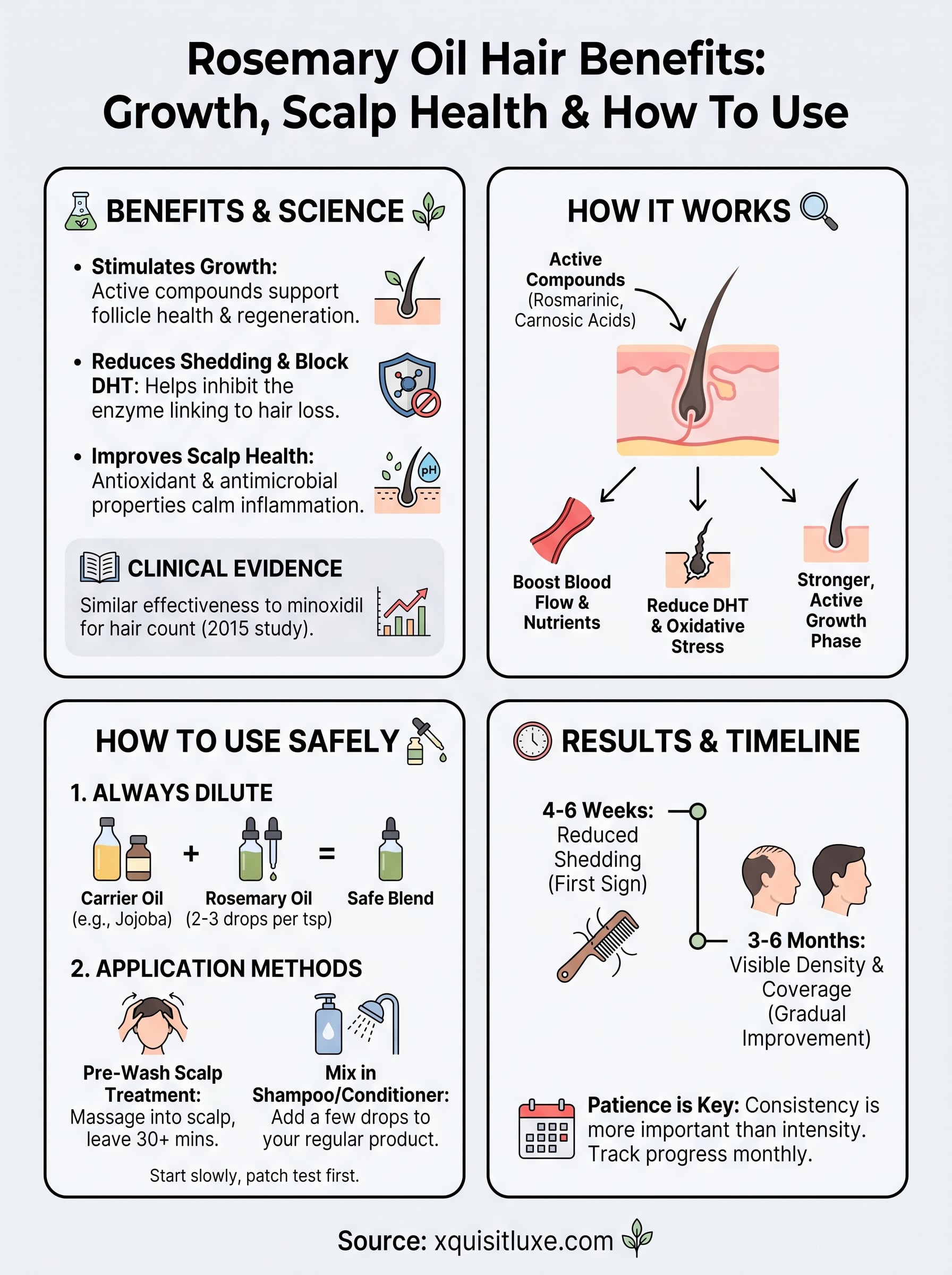
The two most studied compounds in rosemary oil are rosmarinic acid and carnosic acid. Rosmarinic acid acts as a potent antioxidant and anti-inflammatory agent, shielding hair follicles from oxidative stress that can disrupt growth cycles. Carnosic acid has been shown in research to stimulate nerve growth factor (NGF) production in the scalp, which plays a direct role in regenerating tissue around follicles and keeping them in an active growth phase.
Rosemary oil also contains ursolic acid, a compound that inhibits 5-alpha reductase, the enzyme that converts testosterone into dihydrotestosterone (DHT). Elevated DHT levels are a primary driver of androgenic alopecia, the most common form of hair thinning in both men and women. By reducing DHT activity at the scalp, rosemary oil targets one of the root causes of hair loss rather than just treating surface symptoms.
Blocking DHT at the follicle level is one of the core reasons rosemary oil hair benefits go beyond conditioning to actual growth support.
How it improves scalp circulation and reduces inflammation
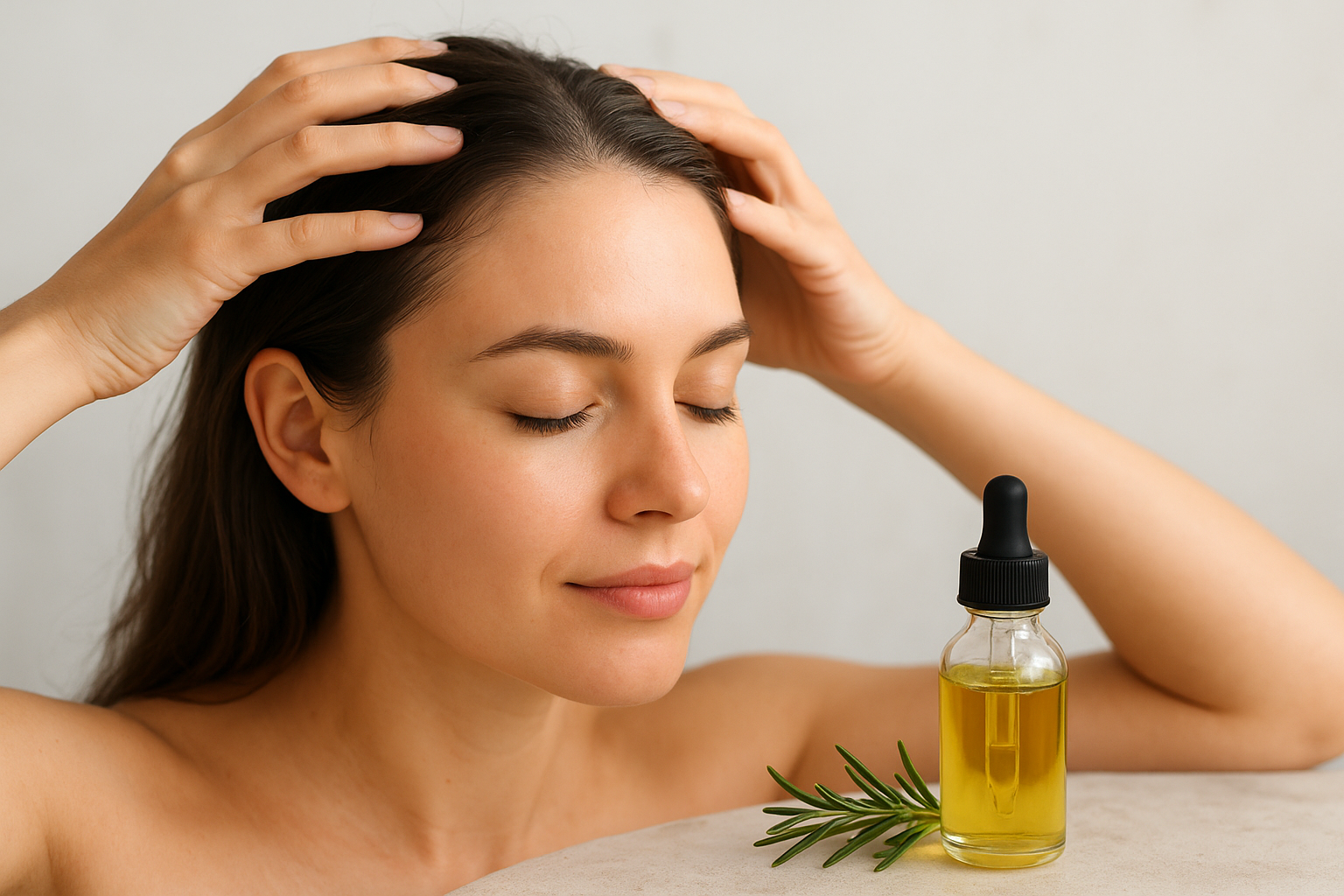
Scalp circulation is fundamental to hair growth because follicles depend on a steady supply of oxygen and nutrients delivered through blood flow. Rosemary oil stimulates peripheral circulation when applied topically, meaning more blood reaches the follicles sitting within scalp tissue. When you massage the oil in, the mechanical pressure of massage works alongside the oil's active compounds to dilate blood vessels and reinforce that effect at a cellular level.
An equally important factor that often goes overlooked is scalp inflammation. Conditions like seborrhoeic dermatitis and folliculitis disrupt the hair growth cycle by creating a hostile environment at the follicle. Rosemary oil's antimicrobial properties, driven by compounds including 1,8-cineole, reduce bacteria and fungi on the scalp that trigger these conditions. Clearing that inflammation doesn't just relieve visible symptoms like flaking or itching; it removes a biological barrier that was actively slowing your hair's growth potential.
What the evidence says about hair growth
The clinical research on rosemary oil and hair growth is more compelling than most people realise. For years, anecdotal reports dominated conversations about herbal hair remedies, but peer-reviewed studies have now put those claims to a proper test, and the results hold up well enough to change how dermatologists and consumers alike think about this ingredient.
The minoxidil comparison study
The most cited piece of research is a 2015 randomised controlled trial published in SKINmed Journal, which compared rosemary oil directly to 2% minoxidil, one of the only over-the-counter treatments clinically approved for hair loss. Participants applied either rosemary oil or minoxidil to their scalp daily for six months. By the end of the trial, both groups showed a similar increase in hair count, meaning rosemary oil matched minoxidil's results without a significant difference in efficacy.
What made the rosemary group's outcome particularly notable was that participants reported significantly less scalp itching compared to the minoxidil group, suggesting a better tolerability profile for everyday use.
What these findings mean in practice
This study matters because minoxidil is the benchmark treatment for androgenic alopecia, so matching its results places rosemary oil in a different category from most natural alternatives. The research does not claim rosemary oil outperforms prescription-strength treatments, but it does confirm that rosemary oil hair benefits for growth are measurable and clinically relevant, not just folklore.
You should also know that the study used a standardised rosemary oil preparation, which highlights why product quality and consistent daily application matter. Occasional use or heavily diluted formulas are unlikely to replicate those results, so how you use it is just as important as whether you use it.
Rosemary oil hair benefits in plain English
The science is useful, but what does it actually mean for your hair day-to-day? Cutting through the technical language, rosemary oil hair benefits come down to a handful of reliable outcomes you can realistically expect with consistent use. These are not dramatic overnight changes, but gradual, measurable improvements that build over weeks and months of regular application.
It supports hair growth and reduces shedding
Rosemary oil works on two fronts that directly affect how much hair you keep and how quickly new strands come through. First, it blocks DHT at the follicle level, which slows the most common form of hair thinning in both men and women. Second, improved blood flow means your follicles receive better nutrition, so the hairs already growing have stronger support throughout their full growth cycle. The practical result is less shedding during washing and a gradual increase in visible density over time.
Reduced shedding is usually the first sign most users notice, often appearing within four to six weeks of consistent daily use.
It improves scalp condition and hair texture
A healthier scalp produces healthier hair. When rosemary oil reduces inflammation and controls microbial imbalances on the skin surface, the environment your follicles sit in becomes far less hostile. That shift translates into less flaking, less itchiness, and stronger hair shafts that resist breakage along the length.
Your hair may also feel cleaner for longer between washes. A balanced scalp regulates sebum output more consistently, so you avoid the cycle of excess oil followed by dryness that disrupts both your scalp health and your styling routine. That is a meaningful quality-of-life improvement beyond the growth benefits alone.
How to use rosemary oil safely on hair
Using rosemary oil correctly makes the difference between getting real results and irritating your scalp. Pure essential oils are highly concentrated, so applying undiluted rosemary oil directly to your skin can cause redness, burning, or contact dermatitis. A few simple steps keep your routine both effective and safe.
Dilute it before applying to your scalp
Always mix rosemary oil with a carrier oil before it touches your scalp. A ratio of 2 to 3 drops of rosemary oil per teaspoon of carrier oil is the standard starting point for most adults. Good carrier options include jojoba oil, coconut oil, sweet almond oil, and argan oil. Each of these carries the active compounds into your scalp while adding their own conditioning properties.
If you have sensitive skin, start at the lower end of that range and do a patch test on your inner arm 24 hours before full application.
Two practical methods that work
The first method is a pre-wash scalp treatment. Mix your diluted rosemary oil, apply it directly to your scalp using your fingertips, and massage gently in circular motions for two to three minutes. Leave it on for at least 30 minutes before shampooing as normal. This gives the active compounds time to absorb without residue building up on your strands.
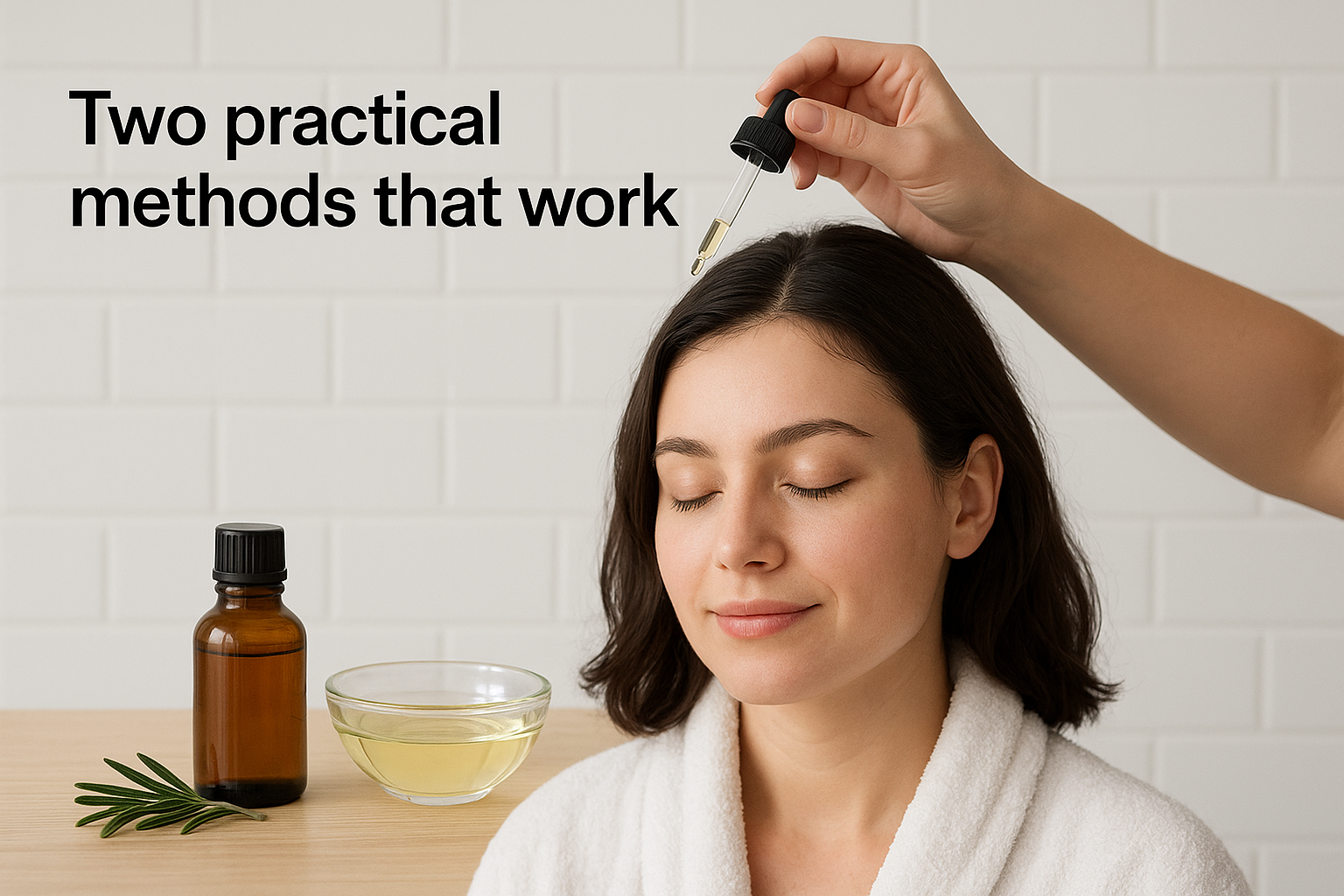
Another practical method adds diluted rosemary oil to your existing shampoo or conditioner, typically two to three drops per pump of product. This approach is simpler and suits people who want to access rosemary oil hair benefits without adding an extra step to their routine. Both methods are effective, so your choice comes down to how much time you have and how your scalp responds.
How often to use it and what results to expect
Most people see the best rosemary oil hair benefits when they commit to a consistent frequency rather than applying it sporadically whenever they remember. Like any topical treatment that works by gradually shifting your scalp environment, regularity matters far more than intensity, and managing your expectations about the timeline keeps you on track long enough to see real change.
How frequently you should apply it
Applying your diluted rosemary oil blend three to four times per week is the right starting frequency for most people. Daily use is also safe for the majority of users once your scalp has tolerated the oil well, and daily application more closely mirrors the protocol used in the minoxidil comparison trial. If you find your scalp becoming sensitive or your hair feeling weighed down between washes, stepping back to every other day resolves both issues without sacrificing meaningful progress over time.
Consistent application across several months matters far more than applying larger amounts in a single session.
What a realistic timeline looks like
Patience is the single most important variable when using rosemary oil for hair health. Most people notice reduced shedding within four to six weeks, which is often the earliest measurable signal that the oil is influencing the follicle environment. Visible improvements in density and coverage typically take three to six months to become obvious, which aligns directly with the natural length of a complete hair growth cycle.
Expecting faster results than that leads to unnecessary disappointment and premature abandonment of a routine that would have worked with more time. Track your progress by photographing your scalp every four weeks under consistent lighting. That approach removes guesswork and gives you clear, comparable evidence of change without relying on daily impressions that are easy to misread.
Key takeaways and next steps
Rosemary oil hair benefits are real, clinically supported, and accessible to anyone willing to apply it consistently. The research confirms it can match minoxidil for hair count improvement, reduce DHT activity at the follicle, improve scalp circulation, and clear the inflammation that holds hair growth back. None of those outcomes happen overnight, but four to six weeks of regular use gives you your first measurable signal, and three to six months reveals the fuller picture.
Your success with rosemary oil comes down to two things: diluting it correctly before every application and sticking to a consistent routine long enough for the growth cycle to respond. If you want a formulation that does that groundwork for you, with certified natural ingredients and the right concentrations already built in, the Xquisit Luxe Self Care hair care range is a strong starting point. Every product is cruelty-free, dermatologist tested, and made in the UK.

