


If you've ever wanted a single product that removes makeup, cleanses dirt, and tones your skin without stripping it dry, micellar water is exactly that. Originally a staple in French pharmacies, this gentle cleanser uses microscopic oil molecules suspended in soft water to lift away impurities, no harsh rubbing or rinsing required. It's become a go-to for people with sensitive, dry, or breakout-prone skin who need something effective but kind.
Our Argan Oil Micellar Water is built around exactly this approach — worth a look if you're ready to try it for yourself.
So what actually makes it work, and is it right for your routine? This article breaks down the science behind micellar water, its proven benefits, and how to use it properly, morning and night. We'll also cover common mistakes that limit its effectiveness and who benefits most from adding it to their regimen.
At Xquisit Luxe, every product in our range is certified natural, cruelty-free, and dermatologist tested, designed for people who care about what goes onto their skin. Whether you're building a full skincare routine or refining the one you have, understanding micellar water is a solid place to start.
What micellar water is and how it works
Micellar water is a water-based cleansing solution containing tiny molecular structures called micelles, which are clusters of surfactant molecules arranged in a sphere. The outer layer of each micelle is hydrophilic, meaning it attracts water, while the inner core is hydrophobic, meaning it repels water and binds to oil instead. When you apply micellar water to your skin, those micelles latch onto makeup, excess sebum, and surface impurities, drawing them away from your skin and into the cotton pad, without any scrubbing, lathering, or rinsing needed.
The science behind micelles
Surfactants are compounds that reduce the surface tension between two substances, in this case water and oil. In most conventional cleansers, surfactants appear at high concentrations that strip the skin's natural moisture barrier, which is why your face often feels tight or dry after washing it. Micellar water uses a far lower concentration of surfactants, enough to form those oil-attracting clusters but not enough to disrupt the protective lipid layer your skin relies on to stay hydrated and healthy.
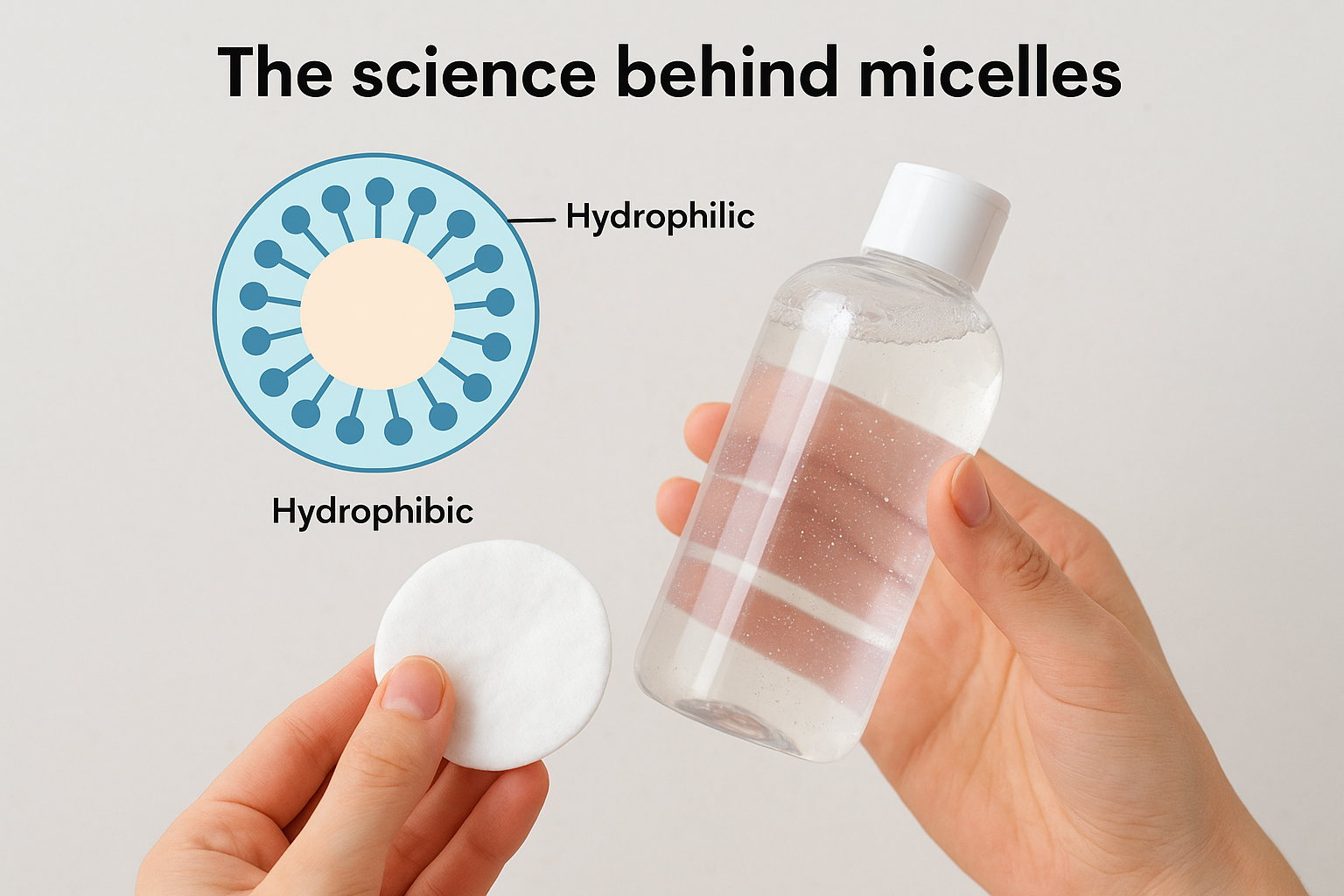
The gentleness of micellar water comes directly from this low surfactant concentration, not from added soothing ingredients alone.
Each micelle functions like a microscopic magnet. The hydrophobic core binds to oily residue, sunscreen, and makeup pigments, while the hydrophilic exterior keeps the whole structure suspended in the water base. When you move the cotton pad across your face, those micelles roll along the skin surface, capturing debris as they go and lifting it clean away, leaving your skin feeling balanced rather than stripped or greasy.
How micellar water differs from standard cleansers
Most traditional face washes require water to activate, produce a lather, and then need thorough rinsing to remove the product itself. Micellar water skips all of that entirely. You apply it directly to a cotton pad, wipe it across your face, and the cleansing happens through molecular attraction on immediate contact. There is no foam, no rinsing step, and no soapy residue left behind that could block pores or irritate skin.
This no-rinse mechanism makes micellar water genuinely distinct from foaming, gel, or oil cleansers, which rely on mechanical action and water to lift impurities. Because it works through attraction rather than abrasion or chemical stripping, it suits people who need a low-irritation daily option, including those managing rosacea, eczema, or consistently reactive skin. It also makes it a practical, time-saving choice for anyone who wears heavy makeup regularly, travels frequently, or simply wants a thorough cleanse without a full sink routine morning and night.
Why people use micellar water
People reach for micellar water for one core reason: it gets the job done without punishing your skin. Whether you're removing a full face of makeup at the end of a long day or clearing away overnight buildup before your morning routine, it delivers a thorough cleanse while keeping your skin's moisture barrier intact. That combination of effectiveness and gentleness is rare in a single product, and it explains why it has moved far beyond French pharmacy shelves into everyday routines globally.
It removes makeup and impurities without effort
Micellar water is one of the most consistent makeup removers you can use daily, including on stubborn products like waterproof mascara and long-wear foundation. The micelle structure pulls pigment and surface residue away without requiring harsh wiping that drags and stretches delicate skin. You saturate a cotton pad, press it gently against your skin for a few seconds, and the micelles do the lifting. No foam, no water, no aggressive rubbing required.
For eye makeup removal in particular, avoiding friction matters because repeated tugging on thin eyelid skin accelerates the appearance of fine lines over time.
It suits sensitive and reactive skin types
For people managing dry, sensitive, or reactive skin, most traditional cleansers create problems from the very first use. They either deposit a residue that irritates or strip away the natural oils your skin needs to stay protected and balanced. Micellar water avoids both issues because its low surfactant concentration removes impurities effectively without breaking down the lipid layer.
Your skin barrier acts as your first defence against pollutants, irritants, and moisture loss. When a cleanser weakens that barrier day after day, your skin becomes more reactive over time, not less. Using micellar water as your daily cleanser keeps that barrier strong while still giving your skin the thorough cleanse it needs to stay healthy and clear.
How to use micellar water daily
Using micellar water correctly takes less than a minute and fits naturally into both morning and evening routines. The method stays consistent regardless of when you use it: saturate a clean cotton pad generously, press it against your skin for two to three seconds before wiping, and use light strokes rather than heavy pressure. That brief pause lets the micelles bind to oil and impurities before you move the pad, which means less friction and more thorough cleansing in fewer passes.
In the morning
Your skin accumulates sebum, dead skin cells, and residue from overnight products while you sleep, so starting the day with a gentle cleanse creates a clean base for whatever you apply next. Micellar water works well here because it clears that overnight buildup without stripping your skin's natural oils before you layer on moisturiser, serum, or SPF. Sweep one soaked pad across your face and neck, working outward from the centre, and follow immediately with your hydrating products while your skin is still slightly damp.
Morning use is especially helpful if your skin consistently feels congested or oily when you wake up, even after washing the night before.
In the evening
Evening is where micellar water carries its heaviest workload, lifting off SPF, makeup, pollution particles, and the general grime a full day deposits on your skin. Start with your eye area by pressing the pad gently against closed lids for a few seconds before wiping downward in one soft stroke. Then cleanse your face and neck using the same low-pressure technique, working in sections rather than rushing across everything at once. If you wear heavy or waterproof products, use a second fresh pad to confirm you have removed everything before continuing with the rest of your evening routine. Skipping that second pass is the most common reason people wake up with clogged pores or dull skin despite using micellar water regularly.
Choosing the right micellar water for your skin
Not all micellar waters are formulated the same way, and picking the wrong one can leave your skin feeling irritated or under-cleansed. The formula you choose should reflect your skin type and daily concerns, whether that means extra hydration, oil control, or a fragrance-free option for reactive skin. Taking a few minutes to read the ingredient list before you buy saves you weeks of trial and error.
Matching the formula to your skin type
Dry and sensitive skin responds best to micellar waters enriched with glycerin or aloe vera, which replenish moisture as they cleanse. If your skin tends to feel tight or flaky, avoid formulas that contain alcohol, which accelerates moisture loss even in small concentrations. Oily and combination skin types benefit from lightweight, water-forward formulas without added emollients that could contribute to congestion.
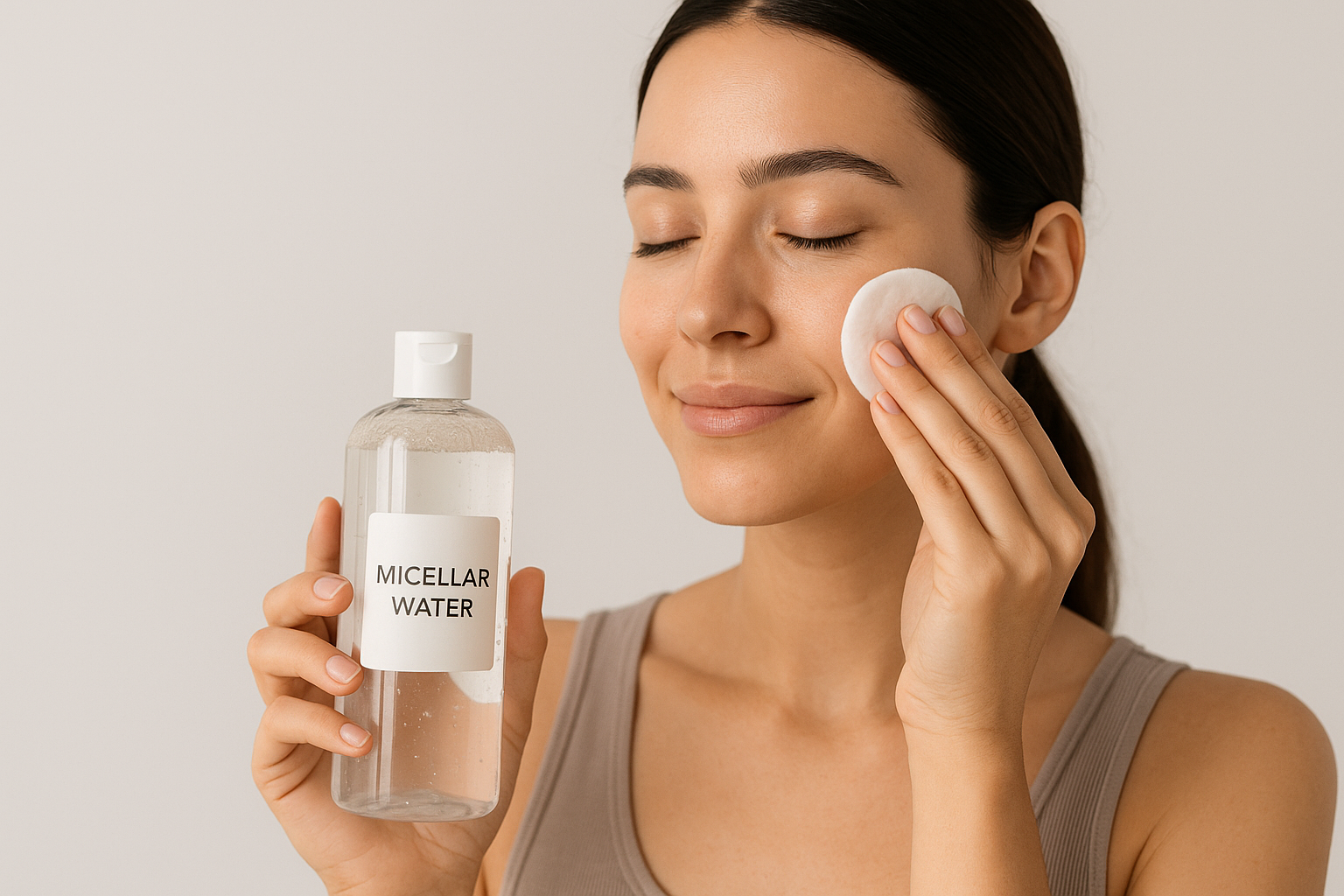
If your skin reacts to multiple products, choosing a fragrance-free micellar water with a minimal ingredient list is the safest starting point.
For acne-prone skin, look for formulas that include soothing actives such as niacinamide or zinc, which help calm inflammation and regulate sebum without clogging pores. Avoid heavy oil-infused versions designed for dry skin, as these can contribute to blocked pores over time.
Ingredients to look for and avoid
Glycerin and panthenol are consistently skin-friendly additions that support hydration without causing reactions across all skin types. Niacinamide adds brightening and barrier-support benefits, making it a useful active in a daily cleanser. On the other hand, synthetic fragrances, parabens, and high concentrations of alcohol are the ingredients most likely to trigger sensitivity or disrupt your skin's protective layer.
Natural formulas, like those in the Xquisit Luxe range, use certified natural ingredients that deliver effective results without the additives your skin does not need. Checking that a micellar water is dermatologist tested gives you additional confidence that it has been assessed for safety before it ever reaches your face.
Common questions and downsides to know
Micellar water is widely recommended, but it does come with limitations that are worth understanding before you commit to it as your only cleansing step. Knowing what it handles well and where it falls short helps you use it more effectively rather than expecting it to do everything a full skincare routine requires.
Does micellar water replace your regular cleanser?
For light days where you wear minimal makeup and no heavy SPF, micellar water alone is often sufficient. But if you regularly wear full-coverage foundation, waterproof products, or a high-SPF sunscreen, using micellar water as a first cleanse followed by a gentle face wash is the more thorough approach. This double-cleanse method ensures you remove every layer of product before applying your actives and moisturiser.
Leaving sunscreen residue on your skin overnight is one of the most common causes of congestion and dullness, even when you think you've cleansed properly.
What are the actual downsides?
The most significant drawback is that some micellar waters leave a light film of surfactant on the skin, particularly if you use too little product on the cotton pad or skip rinsing after use. This residue is unlikely to cause serious irritation for most people, but those with highly reactive or compromised skin may notice a mild tingling or tightness after repeated use without rinsing. If that applies to you, a quick rinse with cool water after applying micellar water resolves the issue entirely.
Cotton pad waste is another practical downside worth noting. Using reusable cotton rounds rather than single-use pads reduces the environmental impact significantly and makes your routine more sustainable without changing how the product performs. Beyond those two points, micellar water has very few genuine drawbacks for regular, daily use.
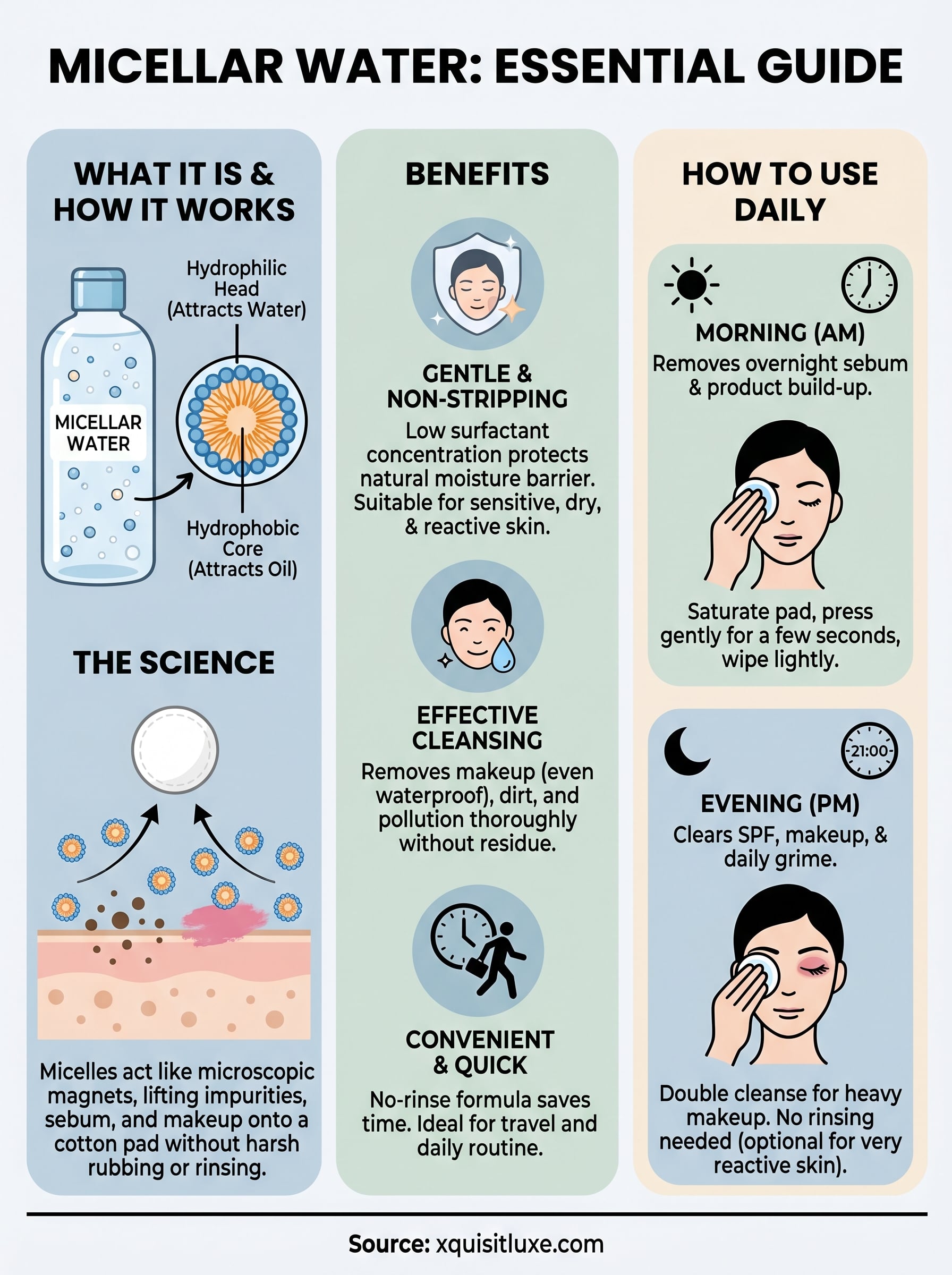
Key takeaways
Micellar water works by using tiny micelle structures to attract and lift makeup, oil, and surface impurities from your skin without harsh rubbing, lathering, or rinsing. Its low surfactant concentration is what makes it gentle enough for daily use across all skin types, including sensitive and reactive skin. Choose a formula matched to your skin type, avoid synthetic fragrances and alcohol if your skin reacts easily, and look for dermatologist-tested, certified natural formulas for the safest results.
Use it both morning and evening for a clean base, and apply it with a gentle pressing motion rather than aggressive wiping. On heavy makeup days, follow it with a second cleanse to remove every trace of SPF and foundation before your actives and moisturiser go on. Done consistently, it keeps your skin barrier strong and your pores clear.
If you want skincare built around certified natural ingredients, browse the full natural skincare range at Xquisit Luxe and find what works for your skin.
