


You catch your reflection in the mirror and there they are again: those dark shadows under your eyes making you look tired even after a full night's sleep. Learning how to prevent dark circles matters more than covering them up every morning, because concealer only hides the problem, it never fixes it.
The truth is, dark circles usually come down to a handful of daily habits, not bad genes you're stuck with. Sleep quality, hydration, sun exposure, and even how you rub your eyes all play a part. Small, consistent changes to your routine can genuinely reduce that discolouration and puffiness over time, and you don't need an expensive clinic treatment to see results.
In this guide, we'll walk through the practical, everyday habits that actually make a difference, from adjusting your sleep position to choosing the right eye cream ingredients. We'll also cover lifestyle triggers worth avoiding and where a targeted, natural formula fits into your routine. If you're ready to stop the shadows before they start rather than just masking them, this is where to begin.
What causes dark circles under your eyes
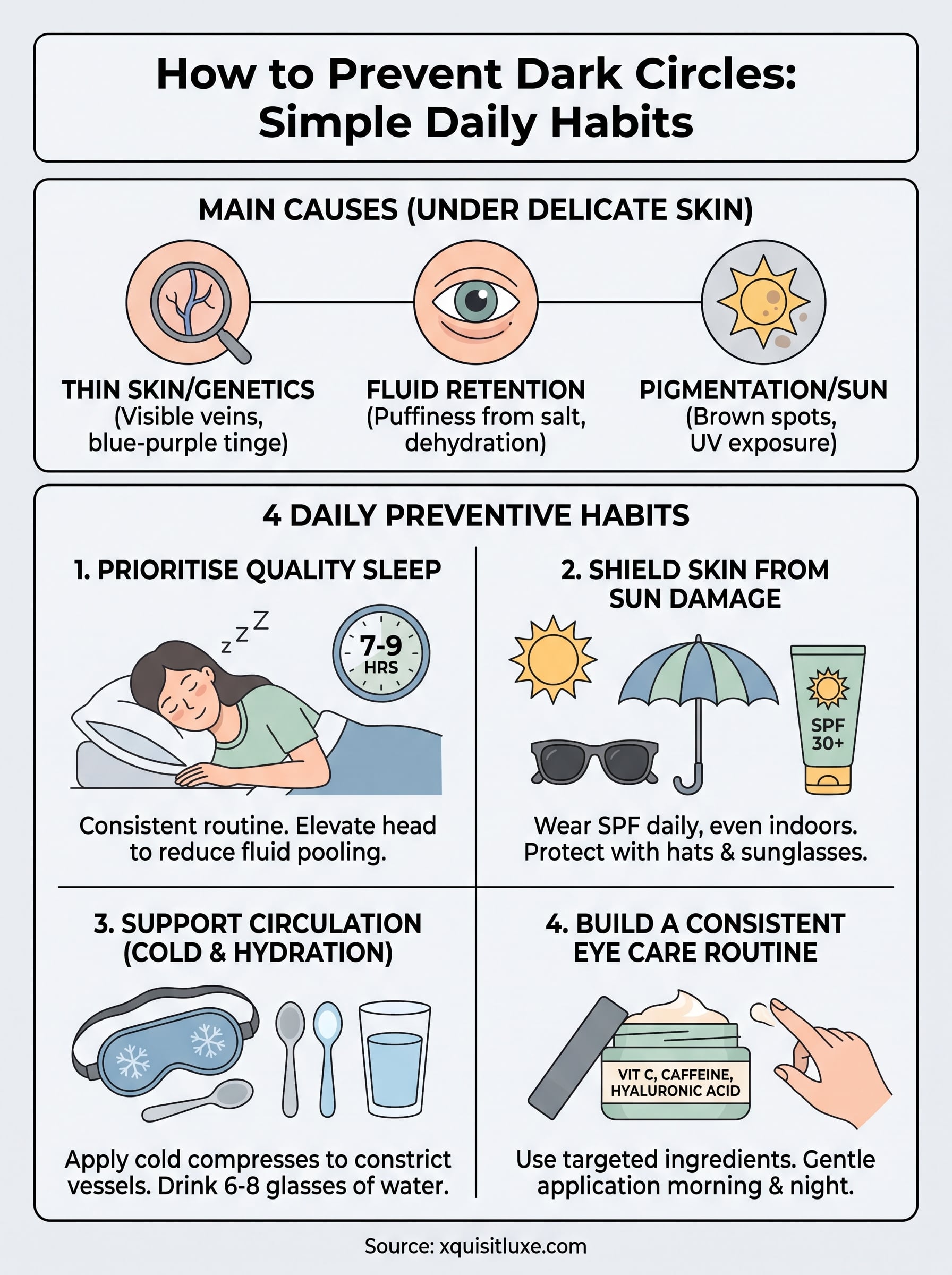
Dark circles aren't one single problem, they're usually a mix of factors working together under skin that's already thinner and more delicate than anywhere else on your face. The under-eye area has very little fat and collagen compared to the rest of your face, so blood vessels sit close to the surface and show through as a bluish or purple tinge, especially if you're pale or have fair skin. Add in a bit of fluid retention, some pigmentation, and a poor night's sleep, and those shadows become impossible to ignore.
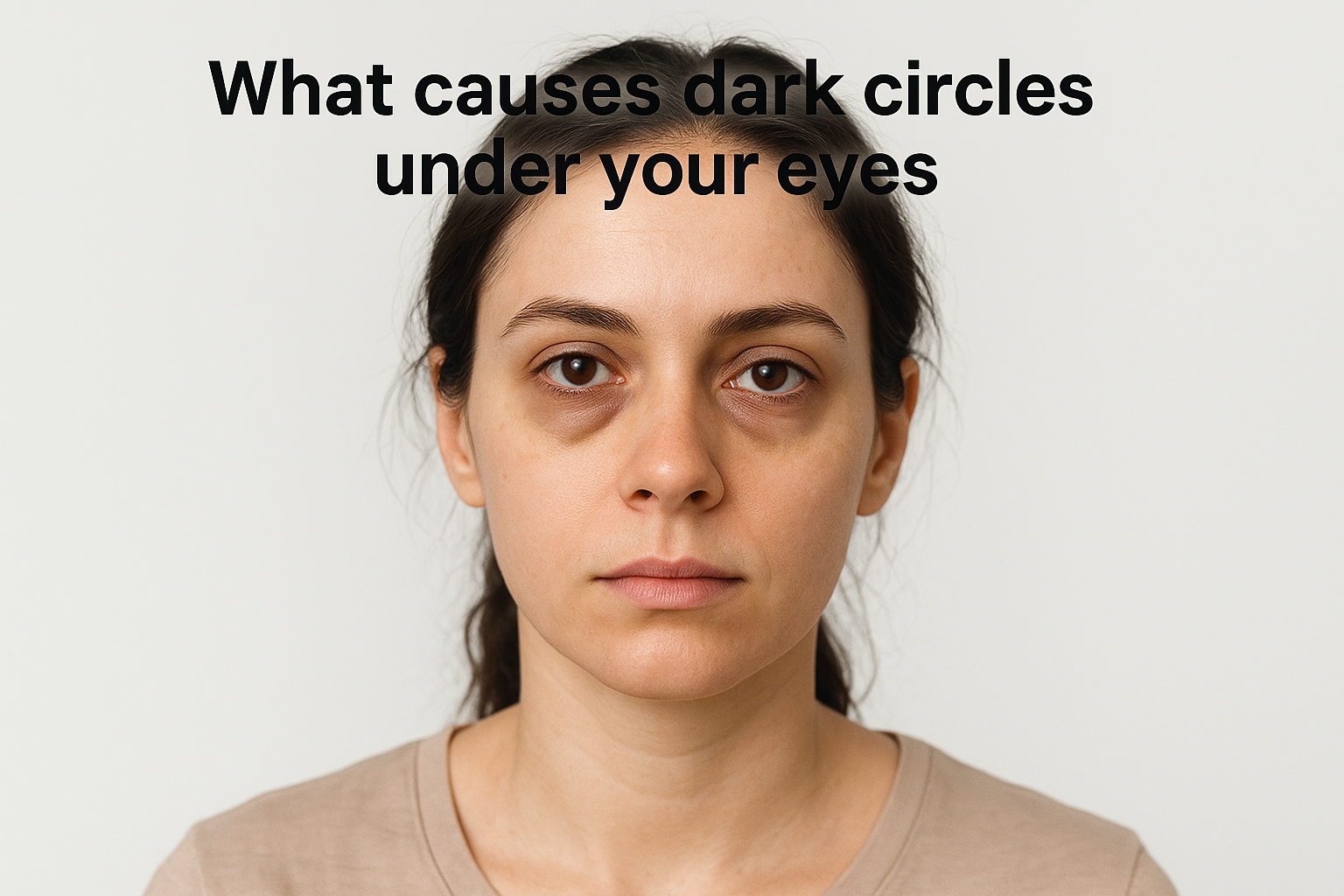
Thin skin and visible blood vessels
Genetics play a real role here. Some people are simply born with thinner under-eye skin or blood vessels positioned closer to the surface, which makes visible veins more noticeable from a young age. This type of dark circle tends to look more blue or purple and doesn't necessarily mean anything is wrong with your health, it's just how your skin is built.
Fluid retention and puffiness
Salty food, dehydration, allergies, and sinus congestion can all cause fluid to pool under your eyes overnight. This creates puffiness that casts its own shadow, making the area look darker even without a genuine pigment issue. Rubbing your eyes when they're itchy or tired makes this worse, as it irritates the skin and can trigger a release of histamine that swells the tissue further.
Pigmentation and sun exposure
Over time, UV exposure stimulates melanin production, and the thin under-eye skin can develop excess pigment faster than the rest of your face. This shows up as brownish discolouration rather than the blue tone linked to blood vessels, and it tends to get worse with age and repeated sun exposure without protection.
Most dark circles are caused by a combination of thin skin, poor circulation, and sun damage, not by a single lifestyle mistake.
| Cause | Typical colour | Main trigger |
|---|---|---|
| Genetics/thin skin | Blue-purple | Inherited skin structure |
| Fluid retention | Puffy, shadowed | Salt, dehydration, allergies |
| Pigmentation | Brown | Sun exposure, ageing |
| Fatigue | Dull, grey | Poor sleep quality |
Once you know which of these applies to you, it's much easier to pick the right daily habits to tackle it.
Step 1. Prioritise quality sleep
Poor sleep is the most obvious trigger behind dark circles, and it's usually the easiest one to fix. When you don't get enough rest, blood flow slows and vessels dilate under the thin skin beneath your eyes, making that bluish tinge far more obvious. Aim for seven to nine hours most nights, and try to keep your bedtime and wake time consistent, even at weekends. The NHS recommends a regular sleep routine as one of the simplest ways to improve overall sleep quality.
Sleep position matters more than you'd think
Sleeping flat on your back with an extra pillow helps stop fluid pooling under your eyes overnight, which reduces morning puffiness and shadowing. Side or stomach sleepers often wake up with more visible bags simply because gravity pulls fluid toward the face.
Build a simple wind-down routine
Going to bed overtired or overstimulated makes deep, restorative sleep harder to reach. Try these habits before switching off the light:
- Dim screens and lights an hour before bed
- Skip caffeine after early afternoon
- Keep your bedroom cool and dark
- Elevate your head slightly with a firmer pillow
Fixing your sleep habits does more for dark circles than any concealer ever will.
Consistency here beats the occasional early night, so give it a few weeks before judging results.
Step 2. Shield your skin from sun damage
UV exposure quietly builds up pigmentation under your eyes long before you notice the brown tinge in the mirror. Because the skin there is thinner than anywhere else on your face, it produces excess melanin faster when it's unprotected, which is why sun damage often shows up first as dark circles rather than wrinkles. Protecting this area daily is one of the most effective preventive habits you can build, and it costs far less than treating pigmentation once it's set in.
Wear SPF every day, even indoors
UV rays pass through windows and cloud cover, so a sunny beach day isn't the only risk. Apply a broad-spectrum SPF30 or higher every morning, and reapply if you're outdoors for long stretches. The NHS advises using sunscreen alongside shade and clothing for proper protection, not as a standalone fix.
Daily SPF around your eyes prevents pigmentation before it starts, which is far easier than correcting it later.
Choose eye-safe sun protection
Standard sunscreen can sting sensitive under-eye skin, so pick formulas designed for the face and eye area:
- Mineral SPF sticks for easy, mess-free reapplication
- Sunglasses with UV400 protection to reduce squinting and pigmentation
- Wide-brimmed hats for extra shade on bright days
- Eye creams containing antioxidants like vitamin C to support sun defence
Consistent protection here keeps existing dark circles from deepening while you work on the other habits in this guide.
Step 3. Support circulation with cold and hydration
Sluggish blood flow under your eyes makes vessels dilate and pool, which is exactly what turns mild shadowing into a noticeable dark circle by midday. Cold temperatures and proper hydration both work directly on this mechanism, making them two of the most practical tools when you're working out how to prevent dark circles long term rather than just masking them each morning.

Cold compresses tighten blood vessels
Applying something cold constricts the tiny vessels near the surface, reducing puffiness and that bluish tinge almost instantly. Keep a few options in the fridge so you can reach for one whenever your eyes look tired:
- Chilled metal eye rollers or spoons
- A cold, damp flannel held for five minutes
- Refrigerated gel eye masks
- Cooled green tea bags, gently squeezed dry
Cold and hydration work on the same mechanism, they both keep blood vessels from pooling under thin skin.
Hydration from inside and out
Dehydration thickens under-eye skin, making it look duller and shadows more obvious, so drinking enough water throughout the day supports circulation from within. The NHS guidance on fluid intake suggests six to eight glasses daily as a sensible baseline, more if you're active or it's warm. Pair that with a hydrating eye cream containing hyaluronic acid to plump the skin topically, since well-hydrated tissue reflects light more evenly and hides minor discolouration far better than dry, tight skin ever will.
Step 4. Build a consistent eye care routine
Sleep, sun protection, and circulation all set the foundation, but a dedicated eye care routine is what locks in the results and answers the wider question of how to prevent dark circles for good rather than just some of the time. Applying the right product twice daily, morning and night, gives your skin a steady supply of the actives it needs to strengthen collagen and even out tone, instead of relying on occasional fixes.
Pick ingredients backed by results
Not every eye cream targets the same cause, so match the formula to your specific concern:
- Vitamin C for brightening pigmentation and brown-toned circles
- Caffeine to constrict vessels and reduce puffiness
- Hyaluronic acid for plumping and reflecting light more evenly
- Peptides to support collagen in thinning skin over time
Xquisit Luxe's Glow Up Skincare Bundle pairs several of these actives together, which suits people dealing with more than one cause at once.
Apply with the right technique
Technique matters almost as much as the formula itself. Use your ring finger, the weakest one, to gently pat product from the inner to outer corner, never rubbing or dragging the delicate skin.
A consistent, gentle routine morning and night does more long-term good than an expensive cream used sporadically.
Stick with one routine for at least six weeks before switching products, since skin needs time to show visible change.
Keeping dark circles at bay for good
Dark circles rarely come from one bad night, they build up from small habits repeated over months and years. Sorting your sleep routine, wearing SPF daily, keeping circulation moving with cold compresses and water, then backing it all up with a proper eye care routine gives you a real shot at fading them for good, not just hiding them until tomorrow morning. None of these steps require drastic changes, just consistency stacked on consistency.
Give these habits six to eight weeks before you judge results, since skin renewal takes time and shortcuts rarely stick. Patience pays off here far more than switching products every fortnight ever will.
If you want a formula that already brings vitamin C, caffeine, and hyaluronic acid together in one place, take a look at Xquisit Luxe's natural skincare range and give your eyes the consistent support they need to finally look as rested as you feel.

