


Thinning patches, a receding hairline, or a crown that's not as thick as it used to be. If any of that sounds familiar, you've probably already searched for a hair growth serum for men and got lost in a sea of products promising miracle regrowth in weeks. Some deliver, most don't, and telling the difference from a product page is nearly impossible.
Our Biotin Hair Serum with Caffeine 10% is built around exactly this approach — worth a look if you're ready to try it for yourself.
This guide cuts through that noise. We've compared the most effective formulas on the UK market right now, looking at what actually sits inside the bottle, whether it's minoxidil, biotin, caffeine, or a blend of natural botanicals, and how each ingredient is backed by research on hair growth results. You'll see which serums suit early-stage thinning, which are built for more stubborn hair loss, and what kind of consistency you need before expecting visible change.
Below, you'll find nine serums worth your money in 2026, including where natural, dermatologist-tested formulas like our own Hair Regrowth Bundle fit into the picture. Each entry covers ingredients, price, and who it's best suited for, so you can pick a serum that matches your hair, your budget, and your patience for results.
1. Xquisit Luxe Hair Regrowth Bundle
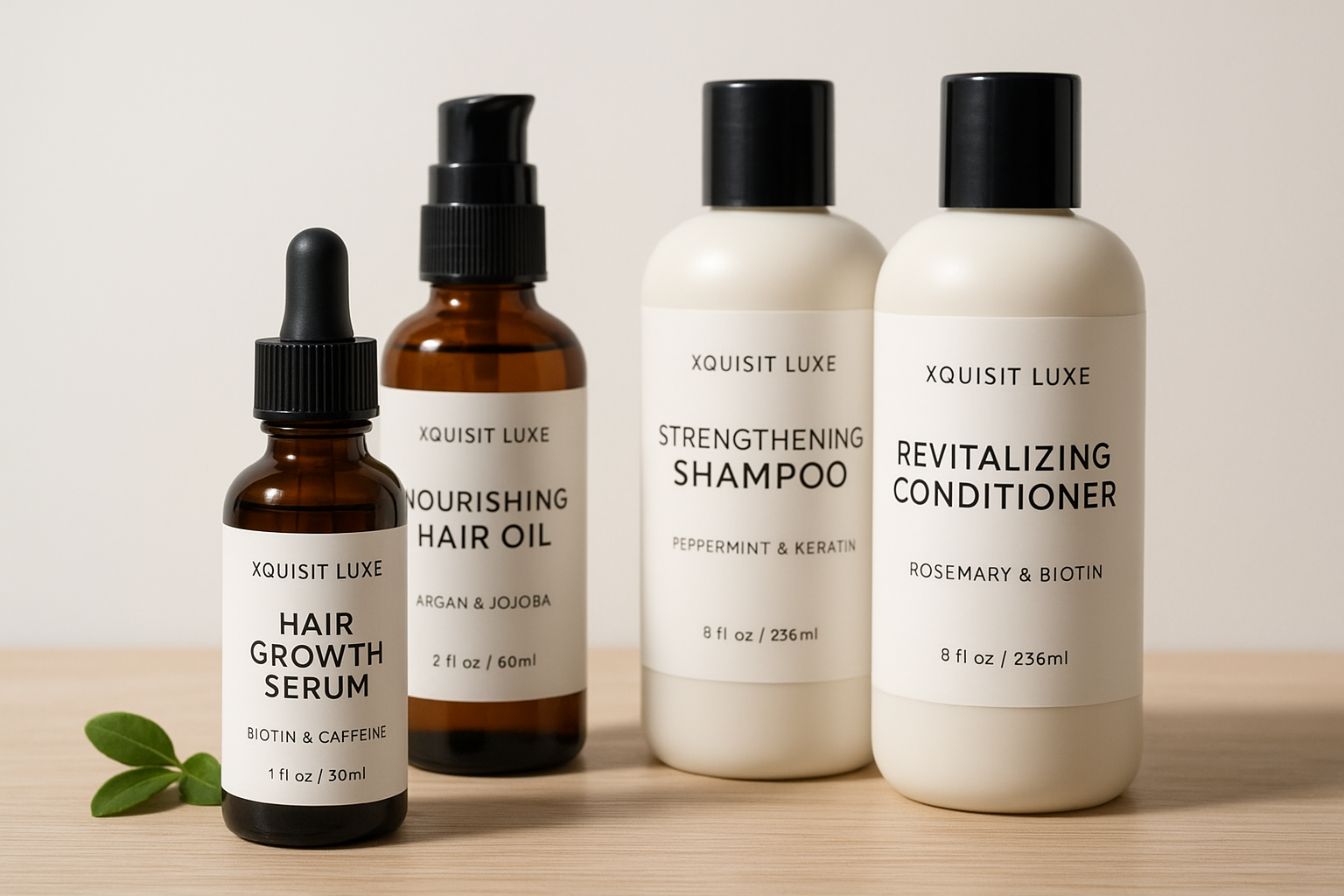
Xquisit Luxe's Hair Regrowth Bundle sits top of this list because it tackles thinning hair from more than one angle instead of relying on a single serum. The bundle pairs a hair growth serum with a nourishing hair oil and supporting wash products, giving your scalp what it needs to support thicker, healthier hair without leaning on harsh chemicals or minoxidil.
How it works
The serum inside the bundle uses a blend of natural actives, including biotin and caffeine, alongside plant extracts chosen to strengthen hair from the root and calm an irritated scalp. Caffeine is included because research suggests it can help extend the hair growth phase and counteract the shrinking of follicles linked to androgenetic alopecia, working alongside biotin, which supports keratin production, the protein your hair is largely made from. You apply the serum directly to the scalp, massage it in, and let it absorb, ideally as part of a nightly routine rather than a one-off treatment.
Consistent daily use over 8 to 12 weeks matters more than any single ingredient in the bottle.
Every formula in the bundle is dermatologist-tested and cruelty-free, made in the UK under strict safety checks, so it suits men with sensitive scalps who've reacted badly to stronger pharmaceutical options before.
Who it's for
This bundle suits men in the early to moderate stages of hair thinning who want a natural alternative to minoxidil or prescription treatments. It's also a solid fit if you've tried harsher formulas and ended up with scalp irritation, flaking, or dryness. If you're after a low-commitment single product rather than a full routine, this bundle asks a bit more of you, since it works best when you use all the included products together rather than just the serum alone.
Hair Regrowth Bundle — £50.99
A complete routine that pairs a biotin and caffeine hair growth serum with a nourishing hair oil and supporting wash products, so your scalp is supported from more than one angle. Made in the UK, dermatologist tested and cruelty-free.
Free UK delivery on orders over £25, and a 30-day money-back guarantee. New customers get 10% off a first order with the Xquisit Club newsletter.
2. Regaine for men extra strength scalp foam
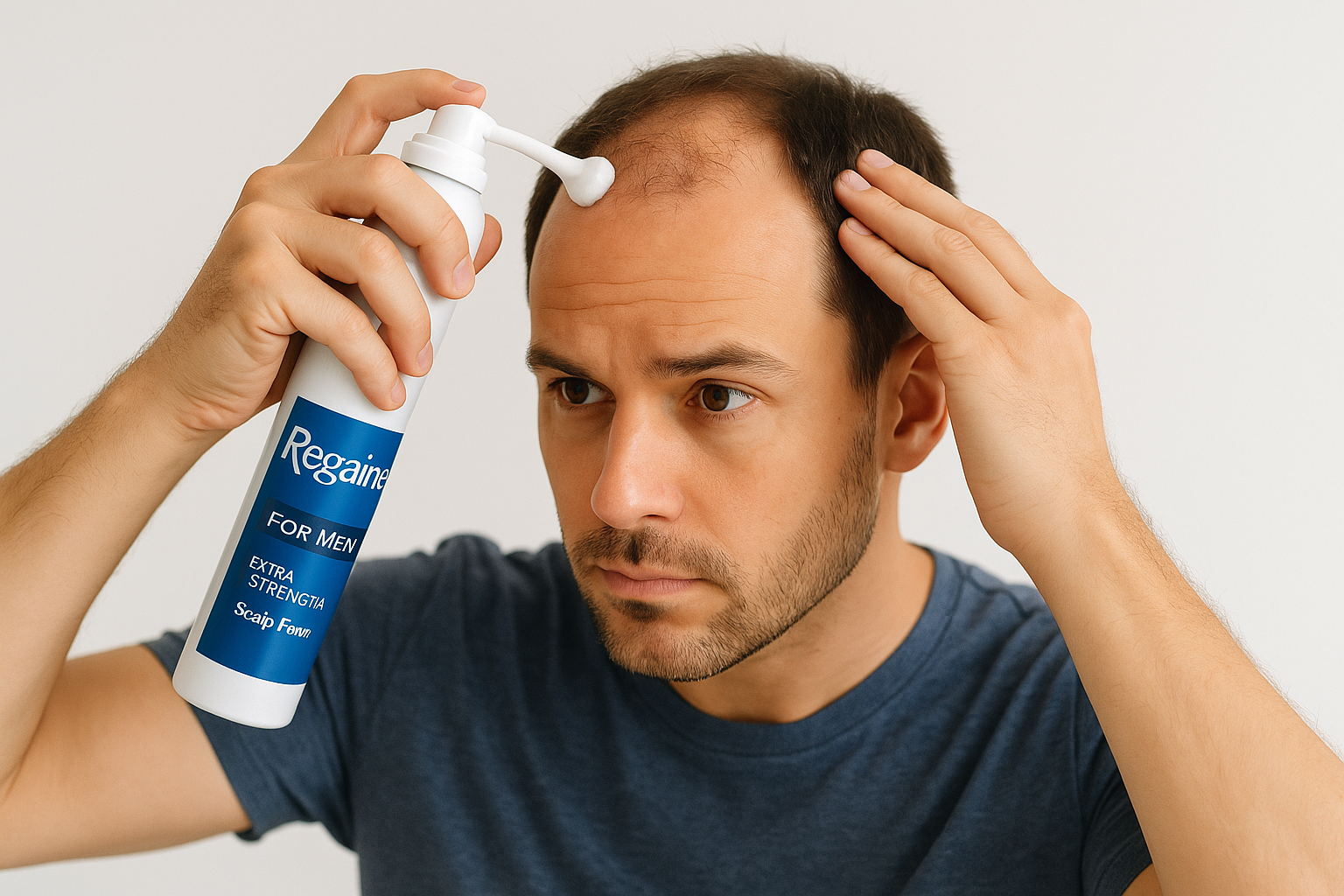
Regaine is the name most men recognise when they think of hair loss treatment, and for good reason. It's one of the few products on this list backed by decades of clinical data and is a licensed minoxidil treatment, not a cosmetic serum, which puts it in a different category from most entries here.
How it works
The foam contains 5% minoxidil, a vasodilator that widens blood vessels in the scalp and pushes more oxygen and nutrients to hair follicles. This is thought to prolong the growth phase of the hair cycle and slow the shrinking of follicles caused by genetic hair loss. You apply the foam twice daily to a dry scalp, and the NHS notes that results typically take at least four months of consistent use to appear, if they appear at all.
Minoxidil works while you use it, and hair loss usually resumes within months of stopping.
Who it's for
Regaine suits men with male pattern baldness who want a clinically proven option and are comfortable with a lifelong commitment, since stopping treatment reverses the gains. It's less suited to men wanting a natural formula or those with sensitive skin, as minoxidil can cause scalp irritation, itching, or unwanted facial hair growth in some users.
How it compares
Regaine's real strength is evidence: 5% minoxidil is a licensed medicine with decades of clinical data behind it, and for established male pattern baldness nothing else here matches that track record. The trade-offs are commitment and tolerance — twice-daily application to a dry scalp, at least four months before anything shows, gains that reverse once you stop, and a genuine risk of irritation or itching on sensitive skin. A ready-to-use UK-made natural formula doesn't claim minoxidil's clinical results, but it asks far less of a reactive scalp and slots into a simpler nightly routine.
3. Hims 4-in-1 hair loss spray
Hims built its reputation on convenience, letting men get hair loss treatment through an online consultation rather than a GP visit. The 4-in-1 spray combines prescription-strength minoxidil and finasteride with biotin and other supporting actives in a single daily application, which appeals to anyone who finds juggling multiple bottles a hassle.
How it works
Finasteride works internally by blocking the conversion of testosterone into DHT, the hormone most responsible for shrinking hair follicles in male pattern baldness, while topical minoxidil widens blood vessels to boost follicle nutrition. Combining both in one spray means you're tackling hair loss from two directions at once, something single-ingredient serums can't match. Because finasteride is a prescription medicine in the UK, you can't just add it to a basket, you need a short online consultation with a Hims clinician first.
Combining minoxidil with finasteride tackles hair loss from two angles, which single-ingredient serums simply can't do.
Who it's for
This spray suits men who've confirmed genetic hair thinning and want a stronger, medically-backed option than serums or foams alone. It's not suitable for anyone uncomfortable with prescription medication, potential side effects like reduced libido, or ongoing dependency on treatment to maintain results.
How it compares
This is the most aggressive option on the list, and it earns that: pairing prescription-strength minoxidil with finasteride tackles hair loss topically and hormonally at the same time, which no single-ingredient serum can do. What it costs you is access and acceptance — finasteride is a prescription medicine in the UK, so there's a clinician consultation before you can start, and you're taking on possible side effects and ongoing dependency to keep the results. A ready-to-use UK-made natural formula skips the consultation and the hormonal risk entirely, but it isn't trying to compete on pharmaceutical strength.
4. Scandinavian Biolabs hair growth serum for men
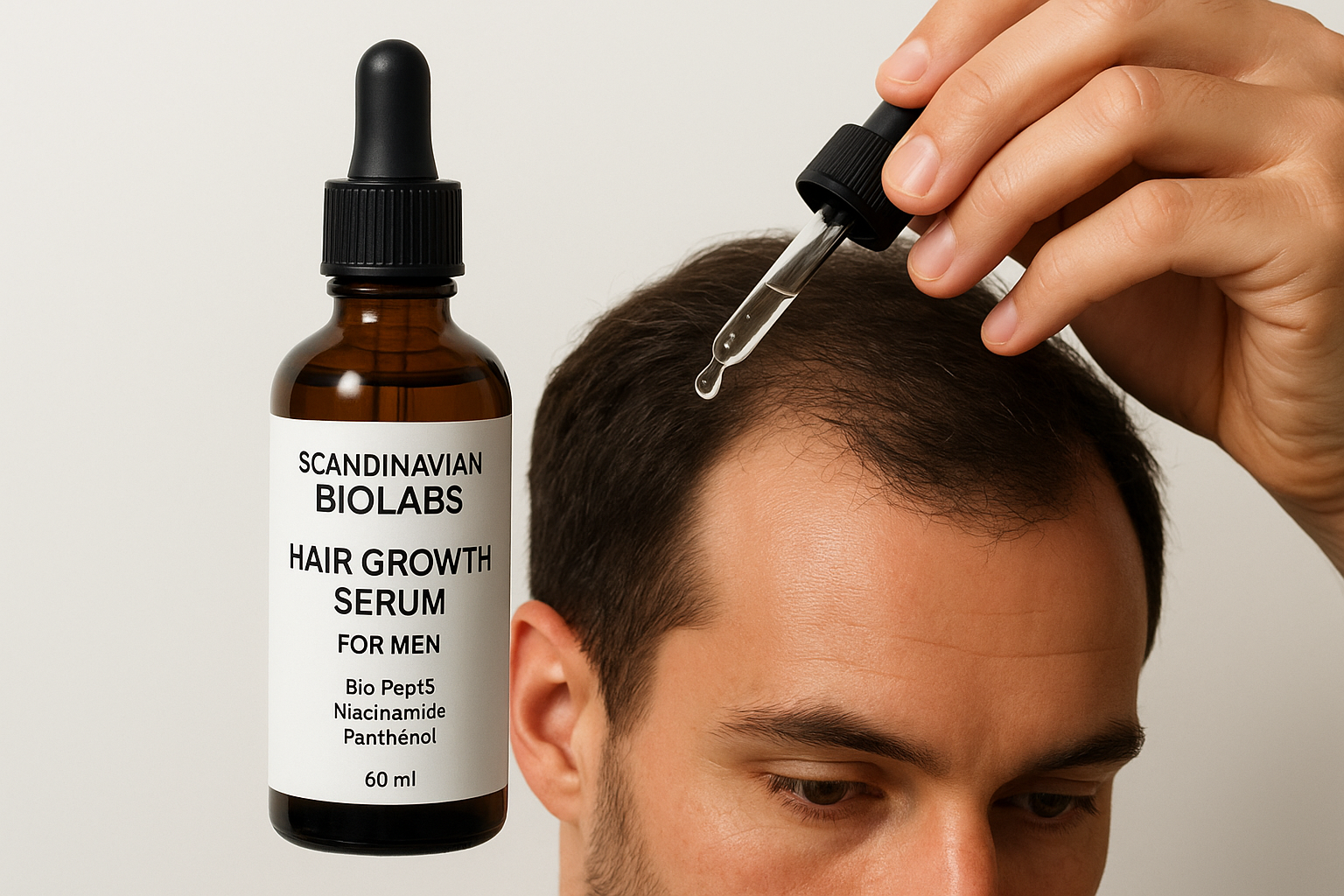
Scandinavian Biolabs has built a name around scalp microbiome science, positioning itself as the research-driven alternative to both minoxidil and simple biotin serums. Its hair growth serum for men leans on a patented probiotic-derived complex rather than pharmaceutical actives, aiming at men who want visible results without the side-effect profile that comes with minoxidil or finasteride.
How it works
The formula centres on Bio-Pep15, a peptide complex the brand says targets the scalp's bacterial balance, which it links to inflammation and follicle miniaturisation over time. Alongside this sits niacinamide and panthenol, ingredients chosen to calm irritation and support the scalp barrier rather than force growth chemically. You massage a few drops into the scalp daily, and the brand recommends pairing it with their scalp-cleansing shampoo for the microbiome angle to work as intended.
A healthy scalp environment, not just active ingredients, is the theory this serum is built on.
Who it's for
This suits men drawn to science-backed but non-pharmaceutical options, particularly those wary of minoxidil's side effects or finasteride's hormonal risks. It's a reasonable middle ground between purely natural serums and prescription treatments, though men wanting fast, dramatic results may find the pace slower than minoxidil delivers.
How it compares
This one sits deliberately between natural and pharmaceutical, and it's a credible middle ground: a peptide complex aimed at the scalp's bacterial balance, with niacinamide and panthenol calming irritation and supporting the barrier rather than forcing growth chemically. Two things to weigh up — the brand recommends running their own scalp-cleansing shampoo alongside it for the microbiome approach to work as intended, and progress is slower than minoxidil. A ready-to-use UK-made formula works on similar ground, putting scalp health first, but as a single step you can apply and forget.
5. The Ordinary multi-peptide serum for hair density
The Ordinary rarely misses when it comes to value, and its foray into hair care follows the same formula: strip out the marketing, keep the actives, drop the price. The Multi-Peptide Serum for Hair Density is a budget-friendly option built on peptide technology rather than minoxidil or biotin, appealing to men who already trust the brand's skincare line and want the same approach applied to their scalp.
How it works
The serum combines redensifying peptides with caffeine and biotinoyl tripeptide, ingredients selected to support the scalp environment and encourage stronger, denser-looking hair over time. Unlike minoxidil, it doesn't widen blood vessels; instead it targets the proteins and signalling pathways involved in follicle health. You apply it to a dry or towel-dried scalp once daily, focusing on areas where density has visibly dropped.
Peptide serums work slowly and quietly, so patience matters more than speed here.
Who it's for
This suits men after a low-cost entry point into hair serums, particularly those who've never used an active treatment and want to test the waters before committing to pricier subscriptions. It's not aimed at advanced hair loss or receding hairlines, since the formula focuses on density and thickness rather than regrowth in bald patches.
How it compares
The appeal is straightforward and honest: real actives, no marketing padding, and one of the easiest ways into hair serums if you've never used one. Peptides with caffeine and biotinoyl tripeptide target follicle health and the look of density rather than widening blood vessels the way minoxidil does. The limitation is scope — it's built for density and thickness, not regrowth in bald patches or a receding hairline, and peptide serums move slowly. A ready-to-use UK-made formula covers similar early-stage ground with a biotin and caffeine base, made and dermatologist-tested in the UK.
6. Nioxin hair fall defense serum
Nioxin has been a fixture in salons for years, mostly known for its scalp-care system rather than a standalone serum. The Hair Fall Defense Serum extends that reputation into a leave-in treatment aimed at men who notice more hair in the shower drain than they'd like, without wanting to jump straight to minoxidil or a prescription route.
How it works
The formula relies on peptides and a booster complex designed to strengthen the hair at the point where it's most likely to snap or shed, the root and the early shaft. Rather than pushing follicles into an active growth phase like minoxidil, it works on reducing breakage and hair fall caused by weakened strands, which makes it more of a defensive than a regenerative product. You apply it to towel-dried hair and scalp daily, and Nioxin recommends pairing it with their matching shampoo and conditioner for the full system to work as intended.
Nioxin's serum protects existing hair from falling out rather than regrowing what's already gone.
Who it's for
This suits men noticing early hair shedding or thinning rather than established bald patches, particularly those who want a salon-grade product without committing to pharmaceutical actives. It's less useful for anyone with advanced male pattern baldness looking for regrowth in already-bare areas.
How it compares
Nioxin is defensive rather than regenerative, and it's upfront about that. Peptides and a booster complex strengthen hair at the root and early shaft to cut breakage and shedding, which is genuinely useful if you're seeing more hair in the drain than you used to. What it won't do is push follicles into an active growth phase or fill in areas that are already bare, and the brand expects you to run their matching shampoo and conditioner alongside it for the system to work as intended. A ready-to-use UK-made serum applied daily on its own is a smaller commitment to keep up.
7. Nutrafol hair serum
Nutrafol made its name with supplements, but its topical serum brings the same wellness-driven philosophy to the scalp. The Nutrafol hair serum targets stress-related and hormonal thinning, positioning itself as a companion to the brand's oral capsules rather than a standalone fix for pattern baldness.
How it works
The formula pairs caffeine and biotin with botanical extracts like ashwagandha and curcumin, ingredients chosen for their anti-inflammatory and stress-modulating properties rather than direct follicle stimulation. The theory behind this is that chronic stress and cortisol spikes contribute to hair thinning, so calming that response supports a healthier growth cycle alongside the caffeine's follicle-boosting effect. You massage a small amount into the scalp each morning, and Nutrafol recommends combining it with their supplement range for the most noticeable results.
Nutrafol treats hair thinning as a whole-body issue, not just a scalp problem.
Who it's for
This suits men whose thinning seems tied to stress, poor sleep, or lifestyle factors rather than purely genetic hair loss, and who are open to a slower, holistic approach over a fast pharmaceutical one. It's less suited to men after quick, dramatic regrowth, since results depend heavily on consistency across both the serum and the wider Nutrafol routine.
How it compares
Nutrafol takes the whole-body view, and if your thinning genuinely tracks with stress, poor sleep or lifestyle, that reasoning holds up — caffeine and biotin alongside ashwagandha and curcumin, chosen for anti-inflammatory and stress-modulating effects rather than direct follicle stimulation. The catches are pace and scope: results are slow, and the brand expects the serum to sit inside a wider routine with their supplements for the most noticeable effect. A ready-to-use UK-made formula uses the same caffeine and biotin base without asking you to buy into a whole supplement regime around it.
8. Watermans Grow More density serum
Watermans built its reputation on beard growth products before expanding into scalp care, and the Grow More Density Serum carries that same grooming-brand DNA. It's aimed squarely at men who want a straightforward, no-nonsense serum rather than a full skincare-style routine or a prescription commitment.
How it works
The formula leans on caffeine, biotin, and niacinamide, a familiar trio that turns up across most non-prescription serums on this list, plus a blend of essential oils meant to stimulate circulation at the follicle. Caffeine and niacinamide work together here to support blood flow and strengthen the hair shaft, while biotin backs up keratin production from within the strand itself. You apply a few drops directly to the scalp and massage it in daily, ideally after washing when the scalp can absorb it more easily.
A simple caffeine and biotin base won't outperform minoxidil, but it's a low-risk starting point for early thinning.
Who it's for
This suits men after a budget-friendly, low-fuss serum, particularly those already using Watermans beard products who want to extend the same grooming routine upward. It's not the right pick for anyone with advanced hair loss or a receding hairline, since the actives here support maintenance rather than driving noticeable regrowth in bare patches.
How it compares
This is a low-fuss serum on a familiar caffeine, biotin and niacinamide base, with essential oils to stimulate circulation at the follicle — a sensible, low-risk starting point for early thinning, and an easy addition if you already use the brand's grooming products. It's maintenance rather than regrowth, though: it won't outperform minoxidil, and it isn't the pick for a receding hairline or bare patches. A ready-to-use UK-made formula works from the same actives, with the added reassurance of being made and dermatologist-tested in the UK.
9. Kérastase Genesis Homme anti-hair-fall serum
Kérastase closes out this list with a salon-brand serum built for men who already spend money on decent haircare and want their hair-fall treatment to sit in the same category. The Genesis Homme serum targets weakened, fatigued hair caused by daily stress on the scalp rather than genetic thinning alone, so it reads more as premium maintenance than a regrowth treatment.
How it works
The formula uses Ciment Anti-Chute, a fortifying complex combined with vitamin B6 and amino acids designed to strengthen the hair fibre at the root and reduce fall caused by weakened attachment. It's applied to a clean, towel-dried scalp daily, massaged in, and left without rinsing, working best as part of the wider Genesis Homme range rather than as a standalone fix. There's no minoxidil or finasteride here, so it won't reverse established male pattern baldness.
Kérastase treats hair fall as a fibre-strength problem, not a follicle-stimulation one.
Who it's for
This suits men already loyal to salon-grade haircare who notice increased shedding rather than visible bald patches, and who don't mind paying a premium for a recognisable name. It's a poor fit for anyone after clinically proven regrowth, since the brand doesn't position it as a treatment for advanced hair loss.
How it compares
Kérastase treats hair fall as a fibre-strength problem — a fortifying complex with vitamin B6 and amino acids to strengthen hair at the root and reduce fall from weakened attachment. For someone already invested in salon-grade haircare who's shedding rather than balding, it fits neatly into a routine they're already running. There's no minoxidil or finasteride in it, so it won't reverse established male pattern baldness, and it's designed to work best as part of the wider Genesis Homme range rather than alone. A ready-to-use UK-made serum is a standalone product that doesn't need the rest of a line around it to make sense.
10. Do peptide hair serums actually work?
Peptides have gone from a skincare ingredient to one of the most searched terms in men's hair care, and UK interest has nearly tripled in the past year. Three of the serums above build on them, so it's worth understanding what they do before you pay for one.
What a peptide actually is
A peptide is a short chain of amino acids — the same building blocks that make up keratin, the protein your hair is largely constructed from. In hair products they don't force anything to happen the way minoxidil does. They act as signals, binding to receptors around the follicle and nudging the cells there to behave differently: to stay in the growth phase longer, to produce more keratin, or to calm inflammation that's shortening the hair cycle.
Minoxidil pushes the follicle. Peptides ask it nicely. That difference explains both the gentler side-effect profile and the slower results.
The three you'll actually see on labels
Biotinoyl tripeptide-1 is the most common in men's serums — biotin bonded to a peptide chain so it penetrates the scalp more readily than biotin alone. It's the active behind The Ordinary's density serum.
Copper peptides, usually listed as GHK-Cu, are the most researched of the three. Originally studied for wound healing, they appear to support the blood supply around follicles and are the reason copper peptide serums carry a premium price.
Acetyl tetrapeptide-3 targets the tissue anchoring hair in the scalp, aiming to reduce shedding rather than stimulate growth — which is why it turns up in anti-hair-fall products like Nioxin's.
What the evidence honestly says
This is where you should be careful, because peptide marketing outruns peptide research. The clinical evidence base is considerably thinner than minoxidil's, and much of what exists comes from manufacturer-funded studies on small groups. What the research does reasonably support is improvement in hair density and thickness — existing hairs growing stronger and appearing fuller. What it does not support is regrowth in areas that are already bare.
If your hairline has genuinely receded, a peptide serum is not going to bring it back. If your hair is thinning but still present across the scalp, peptides are a credible option with far less irritation risk than minoxidil.
Peptides or caffeine and biotin?
These are less different than the marketing suggests, and plenty of formulas use both. Caffeine works on circulation and appears to help counteract the follicle shrinkage driven by DHT. Biotin supports keratin production. Peptides operate on the signalling layer above both.
For a straight answer: if you are at the early-thinning stage and want one bottle and one step, a well-made caffeine and biotin serum covers the same ground at lower cost, and our own Biotin Hair Serum with Caffeine 10% is built on exactly that base rather than peptides. If you have used caffeine and biotin consistently for four months with nothing to show, adding a peptide serum is a sensible next move rather than jumping straight to minoxidil.
11. Serum, spray or oil — does the format matter?
Searches for hair growth sprays have climbed sharply this year, which raises a fair question: does the delivery format change the result, or is it just packaging?
What each format is good at
Serums are the most concentrated. Applied by dropper directly to the scalp, they let you target thinning areas precisely and waste very little product. The trade-off is that they take a moment to work in properly.
Sprays win on coverage and speed. If your thinning is diffuse across the crown rather than concentrated in one patch, a spray reaches more of the scalp in seconds. The cost is precision — a good deal lands on hair rather than skin, which is where it needs to be.
Oils are the least targeted of the three and the most nourishing for the hair shaft itself. They suit dry, brittle hair and irritated scalps, and they work best as a pre-wash treatment rather than a leave-in active.
Format affects how much active reaches your scalp and whether you'll keep using it. It doesn't change what the active does once it gets there.
The honest answer
Format matters far less than two other things: whether the active ingredients are present at a meaningful concentration, and whether you will genuinely apply it every day for three months. A spray you use nightly beats a serum you abandon in week three. Choose the format that fits the routine you already have, not the one with the newest packaging.
12. How to choose the right hair growth serum for men
Picking the right hair growth serum for men starts with an honest look at how far your hair loss has progressed. Early thinning responds well to lighter formulas built on caffeine, biotin, and peptides, while a receding hairline or visible bald patches usually needs the stronger pull of minoxidil or finasteride. Guessing your stage wrong wastes months on a product that was never going to shift established hair loss.
Sensitivity matters just as much as strength. Men with reactive skin often do better starting with a natural, dermatologist-tested formula before testing anything pharmaceutical, since minoxidil and finasteride carry a real risk of irritation or side effects that natural blends avoid.
The strongest serum on paper isn't the right one if your scalp can't tolerate it.
Budget and commitment level shape the decision too. A monthly subscription to a prescription spray suits men who want fast, measurable results and don't mind the ongoing cost, while a one-off bundle purchase suits anyone testing the waters first.
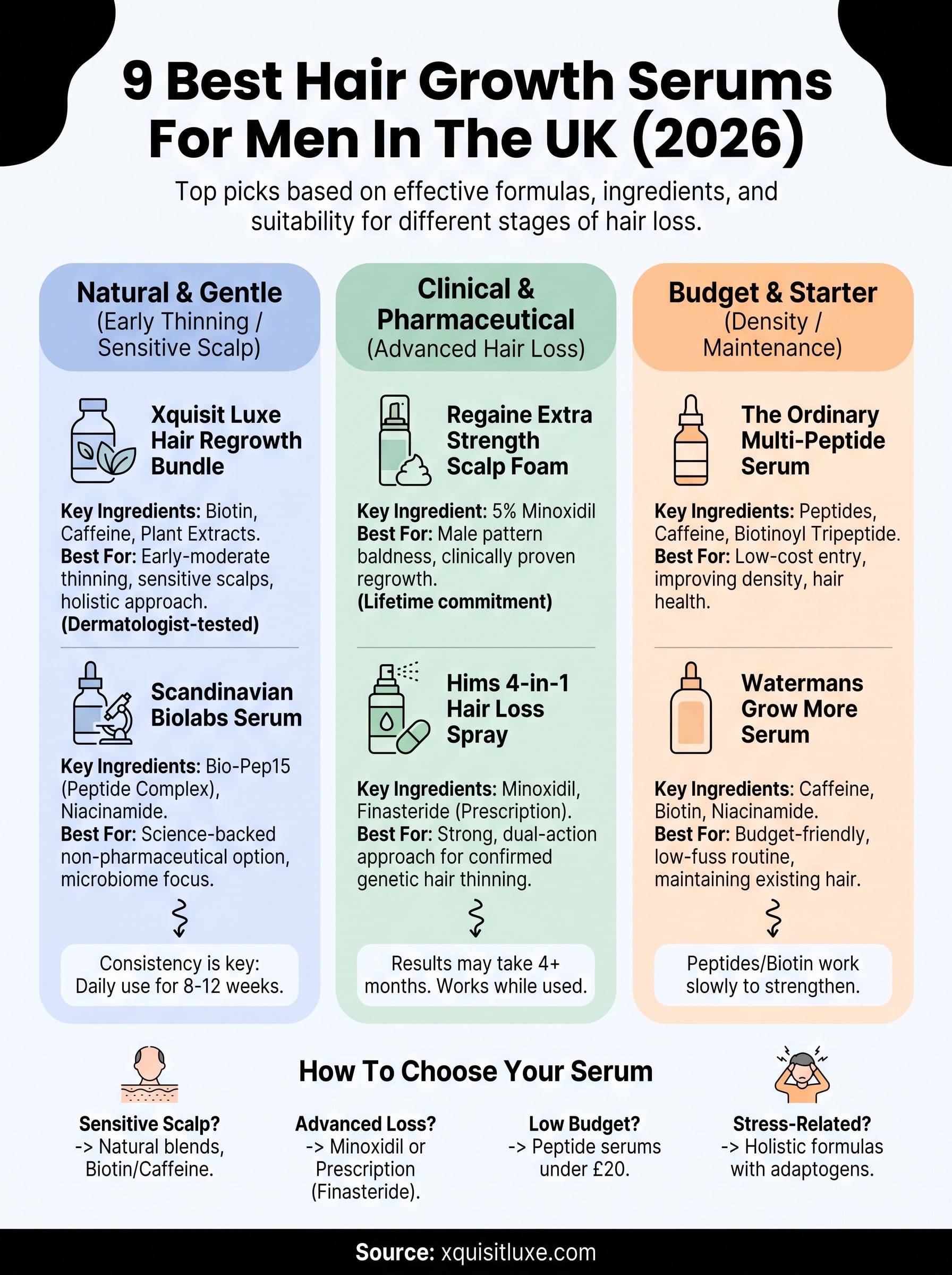
| Priority | Best serum type |
|---|---|
| Sensitive scalp | Natural, biotin/caffeine blend |
| Advanced hair loss | Minoxidil or minoxidil + finasteride |
| Low budget | Peptide or biotin serum under £20 |
| Stress-related thinning | Holistic formula with adaptogens |
Finally, check the application routine you're actually willing to stick to. A serum you abandon after three weeks won't beat a simpler one used consistently for three months.
13. Common questions about hair growth serums for men
How long before a hair growth serum for men actually works?
Most men see the first signs of change between 8 and 16 weeks, depending on the formula and how thin the hair already is. Minoxidil-based products tend to show results fastest, sometimes within four months, while peptide and biotin serums move slower since they work by strengthening existing hair rather than forcing new growth. Stopping early is the biggest reason people conclude a serum "didn't work" when it simply never got a fair trial.
Can you use a hair growth serum every day?
Yes, and daily use is exactly what most brands recommend, since follicles respond to consistent stimulation rather than occasional treatment. Skipping days repeatedly is one of the most common reasons a promising serum never delivers.
Daily application isn't optional advice, it's the difference between a serum working and a serum sitting unused in a bathroom cabinet.
Do natural serums work as well as minoxidil?
Natural formulas won't match minoxidil's clinical track record for advanced hair loss, but they hold up well for early thinning and scalp health, often with far less irritation risk.
Can you combine two serums at once?
Combining a natural serum with a pharmaceutical treatment like minoxidil is common and generally safe, provided you introduce one product at a time to spot any reaction. Layering two heavy actives simultaneously without testing first raises the odds of scalp irritation.
The bottom line on hair growth serums for men
Nine serums, nine different approaches, but the same underlying truth runs through all of them: consistency beats potency every time. A prescription-strength spray used sporadically will underperform a gentle biotin serum applied nightly without fail. Match the product to your stage of hair loss, your scalp's sensitivity, and your realistic tolerance for a daily routine, then give it the full 8 to 16 weeks before judging results.
Our own pick for most men starting out is the Biotin Hair Serum with Caffeine, precisely because it removes the guesswork: one bottle, one step, formulated without harsh chemicals and dermatologist-tested. If you'd rather run the full routine, the Hair Regrowth Bundle is the step up, pairing the same serum with a hair oil and supporting wash products. Either way you're covered by a 30-day money-back guarantee, and that safety net matters when you're still working out what your hair actually needs.
Our pick for most people: Biotin Hair Serum with Caffeine 10% — £16.99
A natural scalp serum you massage in nightly, using caffeine to help support the hair growth phase and biotin to support the keratin your hair is largely made from. Made in the UK, dermatologist tested and cruelty-free.
Free UK delivery on orders over £25, and a 30-day money-back guarantee. New customers get 10% off a first order with the Xquisit Club newsletter.
