


You've tried cold spoons, extra sleep, and every concealer on the shelf, yet those stubborn shadows under your eyes refuse to budge. You're not alone. Dark circles affect people of all ages and skin types, and they're one of the most common cosmetic complaints dermatologists hear. Understanding dark circles causes and treatment options is the first step toward actually fixing the problem, rather than just masking it each morning.
The truth is, dark circles rarely have a single cause. Genetics, lifestyle habits, skin thinning, and even allergies can all play a role, sometimes at the same time. That's why a one-size-fits-all eye cream or a single home remedy seldom delivers lasting results. You need to identify what's driving your specific discolouration before you can choose a treatment that genuinely works.
This guide breaks down every major cause of under-eye circles, from the medical to the mundane. It then walks you through proven home remedies, targeted skincare ingredients, and clinical procedures, so you can decide what makes sense for your skin and your budget. At Xquisit Luxe, we formulate certified natural, dermatologist-tested skincare specifically to address concerns like these, using safe, transparent ingredients that deliver visible results. Where relevant, we'll point to products from our range that can help. But first, let's get clear on why those dark circles are there in the first place.
Why dark circles happen and why they are tricky
The under-eye area is one of the most structurally delicate parts of your face. The skin beneath your eyes is roughly 0.5mm thick, compared to around 2mm elsewhere on your face, which means anything happening beneath the surface shows through far more easily. Blood vessels, pigment deposits, and shifts in fat distribution can all create that characteristic shadow, and understanding the underlying mechanism is essential before you can approach dark circles causes and treatment effectively.
The anatomy makes the under-eye area vulnerable
The periorbital skin sits over a complex structure of muscle, fat, and bone. Collagen and elastin fibres keep this skin firm and plump when you're younger, but both proteins break down gradually with age. As the fat pads that cushion the eye socket shrink or shift, hollows form that cast a literal shadow across the under-eye, producing darkness that has nothing to do with pigmentation at all. This structural change is what makes dark circles in older adults particularly resistant to topical creams alone.
The darkness you see under your eyes is not always a skin problem. Sometimes it is a shadow problem, and that distinction changes everything about how you treat it.
Three separate mechanisms can cause the same look
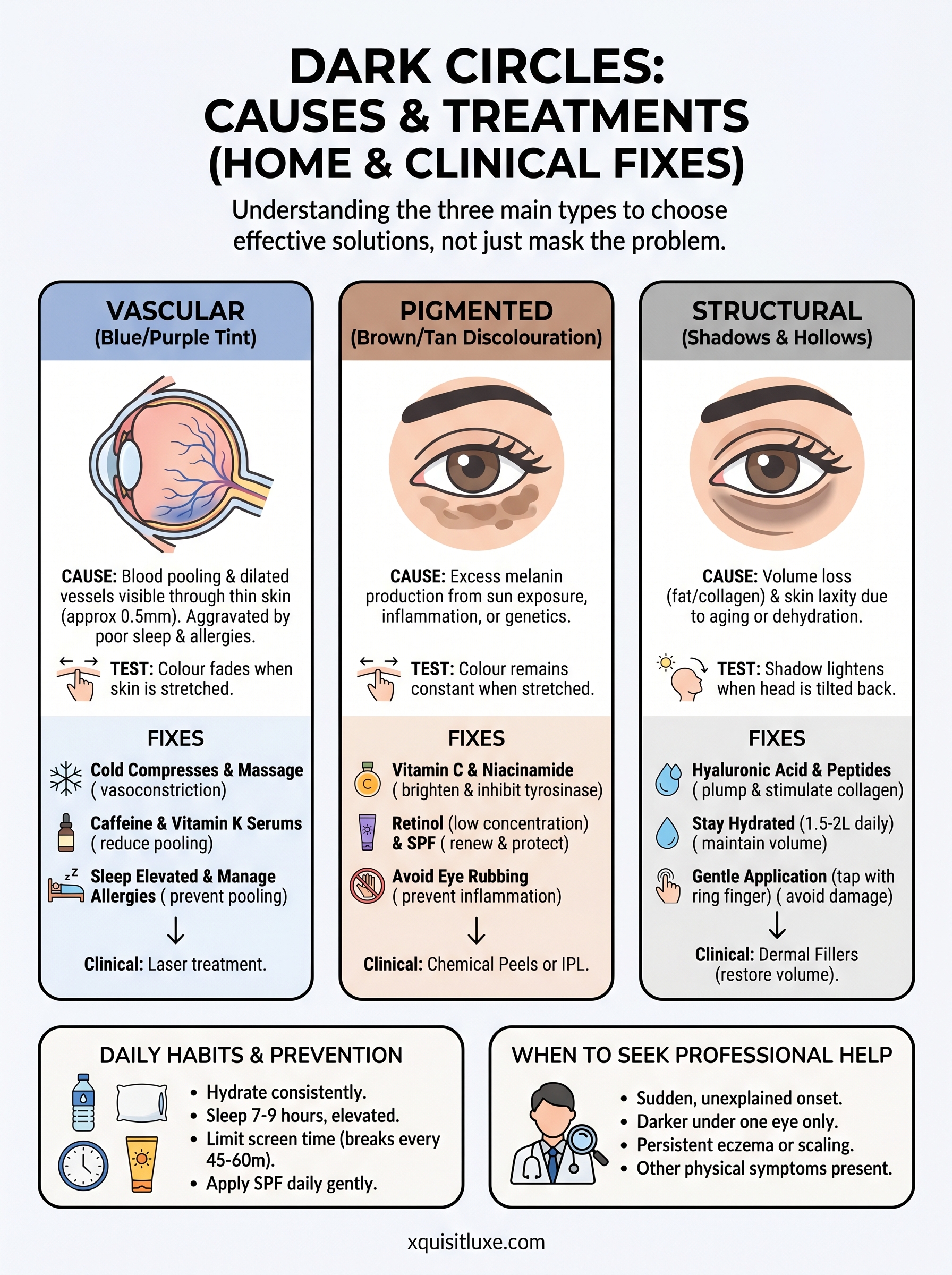
This is where dark circles become genuinely tricky. Discolouration under the eyes can stem from at least three distinct biological processes, and each one looks broadly similar on the surface. First, hyperpigmentation occurs when excess melanin accumulates in the under-eye skin, often triggered by sun exposure, inflammation, or genetics. Second, vascular dark circles appear when blood pools in the small capillaries beneath the skin, giving the area a bluish or purplish tone that becomes especially visible through thin skin. Third, structural shadows form when volume loss or loose skin creates indentation and shade, regardless of the skin's actual colour.
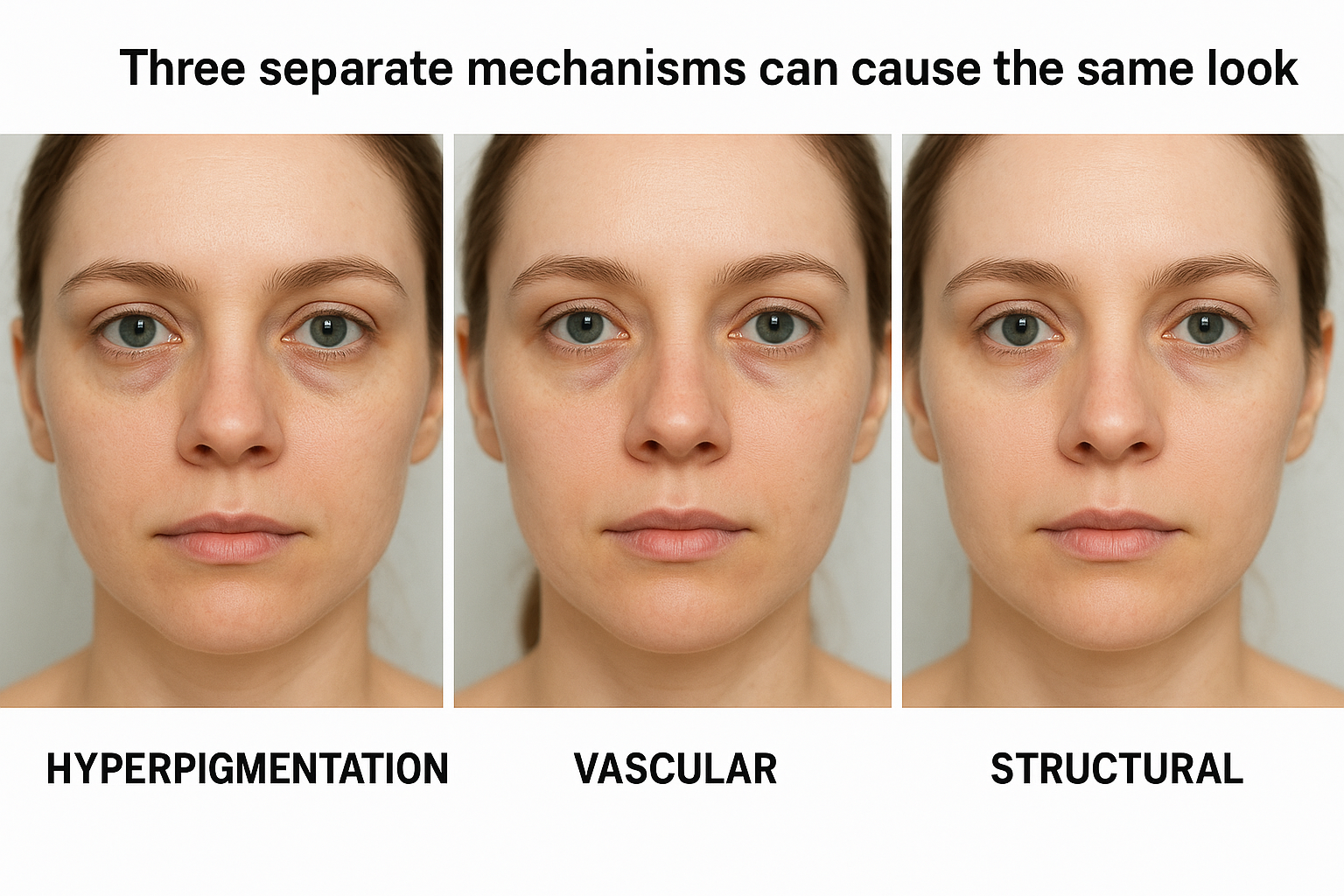
Each mechanism responds to a completely different set of treatments. A serum packed with vitamin C will help fade melanin-based pigmentation but will do very little for a structural hollow. A filler treatment can correct volume loss but will not address congested blood vessels or chronic hyperpigmentation. Treating the wrong type is the most common reason people feel their efforts are wasted, which is why identifying your specific type matters before you spend money on products or procedures.
Why lifestyle and genetics complicate things further
Your baseline risk for dark circles is partly inherited. Genetic factors influence skin thickness, melanin distribution, and the structure of the orbital fat pad, which is why some families seem to have deep-set eyes and dark circles across generations. Beyond genetics, several lifestyle factors can worsen any of the three mechanisms described above. Poor sleep raises cortisol, which increases fluid retention around the eyes and dilates blood vessels. Chronic dehydration reduces skin plumpness, making structural shadows more pronounced. Allergies trigger histamine release, causing blood vessels to swell and leak, which adds a reddish or purplish cast to the under-eye.
Prolonged screen time also plays a role. Staring at a screen for extended hours strains the tiny muscles around the eye, increases localised blood flow, and can make vascular circles visibly worse by the end of the day. When you layer genetic predisposition on top of sleep debt, dehydration, and screen exposure, the result is a problem that shifts in appearance week to week. That variability is one more reason a single product or habit change rarely produces lasting results on its own.
How to identify your dark circle type at home
Before you invest in any dark circles causes and treatment plan, you need to know which type you are actually dealing with. The good news is that a simple two-step home test carried out in a well-lit bathroom can give you a reliable answer in under two minutes. Most people skip this step entirely, which is why they end up buying products that do nothing for their specific problem and give up before they find something that genuinely works.
The stretch test for vascular versus pigmented circles
The stretch test is the most reliable home method for distinguishing vascular circles from pigment-based ones, and it costs nothing. Using one clean index finger, gently pull the skin beneath your eye taut until it stretches slightly across the orbital bone. Hold it there for a few seconds and observe carefully what happens to the shadow underneath.
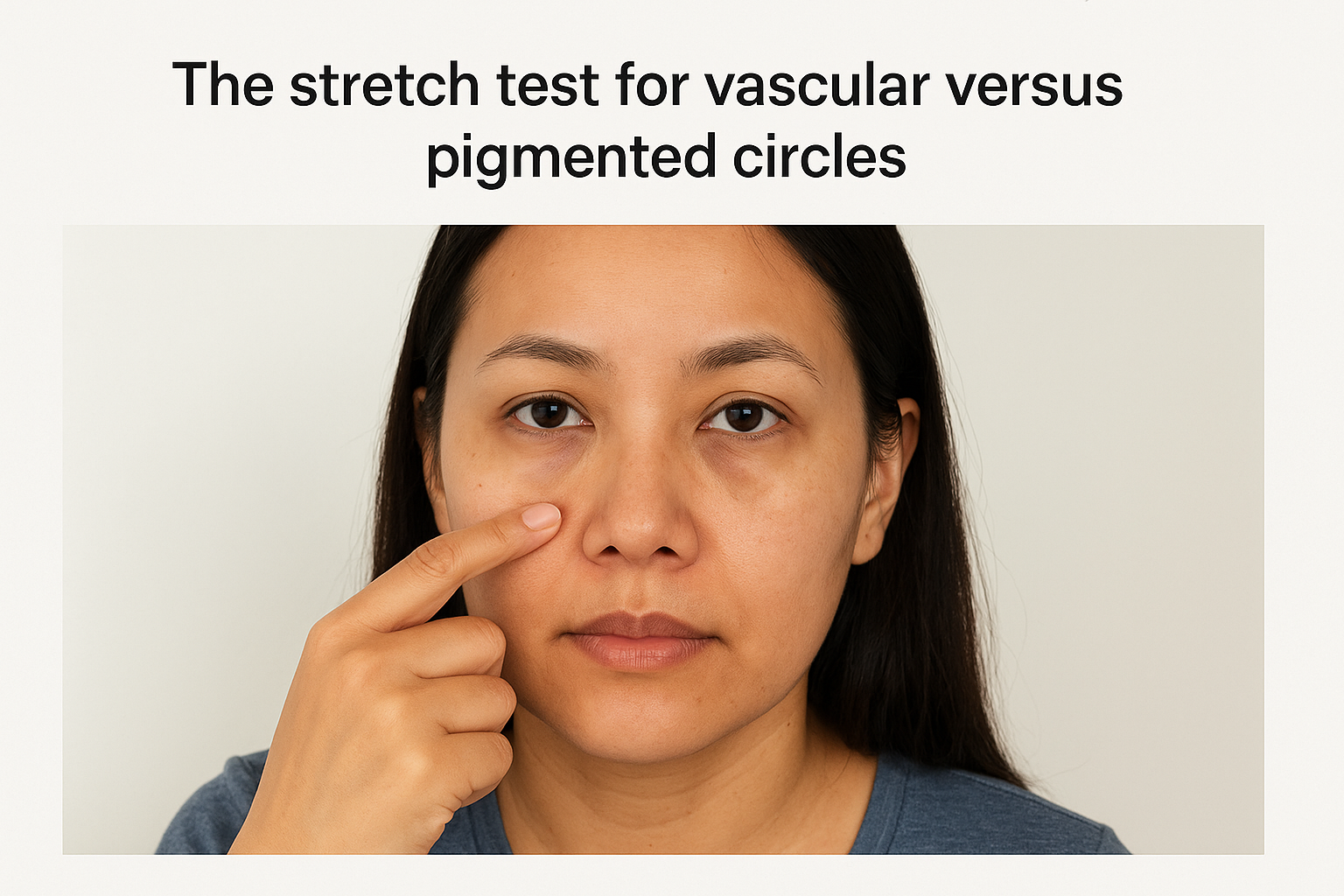
If the darkness fades noticeably or disappears entirely while the skin is stretched, you are dealing with a primarily vascular cause. Blood is pooling in dilated capillaries close to the surface, and stretching temporarily disperses it, reducing the colour you see. If the darkness stays constant or appears sharper and more defined, the problem is most likely melanin-based hyperpigmentation. The pigment sits within the skin cells themselves rather than in the blood vessels below, so it does not move when you pull the skin.
Record which result you get before moving on. Many people find they have a dominant type with a secondary contributor, and knowing that shapes every treatment decision that follows.
Using light and colour to spot structural shadows
Colour observation works hand in hand with the stretch test to complete your at-home assessment. Examine the shadow in natural daylight rather than artificial bathroom lighting, which can significantly distort undertones. Brown or tan discolouration points to hyperpigmentation, while a blue or purple tint indicates vascular pooling. A colourless or grey shadow that appears to shift depending on the angle you view it from suggests a structural hollow caused by volume loss or skin laxity rather than any change in pigment.
To test for a structural cause specifically, tilt your head back in front of a window so that natural light falls across the under-eye area from a higher angle. A true hollow will visibly lighten because the shadow it casts changes with the light source. Pigmented or vascular circles will remain largely unchanged regardless of your head position, which makes this a straightforward and reliable way to separate a structural problem from a colour-based one without spending a penny.
The main causes of dark circles under the eyes
Once you know your circle type, the next logical step in understanding dark circles causes and treatment is pinning down the specific trigger. Knowing why your circles developed in the first place stops you from pouring money into treatments that address the wrong problem entirely.
Genetics and inherited skin traits
Your DNA plays a larger role in dark circles than most people realise. Inherited skin thickness, melanin distribution, and orbital bone structure can all predispose you to visible under-eye shadows regardless of how well you sleep or how much water you drink. People with deeper skin tones are more prone to post-inflammatory hyperpigmentation around the eyes because their skin produces melanin more readily in response to any irritation, including rubbing. Families with deep-set eyes pass on a structural shadow that appears from early childhood and barely shifts throughout life. If your parents and siblings share the same under-eye darkness, genetics is almost certainly a primary contributor.
Sleep deprivation, stress, and screen exposure
Poor sleep is the cause most people think of first, and it genuinely does make a measurable difference. When you sleep fewer than seven hours consistently, cortisol levels rise and blood vessels dilate, which pushes more blood to pool beneath the thin under-eye skin. Chronic stress compounds this by keeping cortisol elevated even when you do rest. Screen exposure adds another layer because staring at a monitor for extended periods increases localised blood flow around the eye muscles, making vascular circles visibly darker by evening.
Cutting screen time by an hour before bed addresses both the quality of your sleep and the direct vascular strain on your under-eye area at the same time.
Allergies, inflammation, and sun damage
Seasonal allergies cause the body to release histamine, which swells and dilates blood vessels near the surface of the skin, producing a reddish or purplish cast under the eyes. Rubbing your eyes when they itch worsens the situation by triggering localised inflammation and breaking down delicate capillaries over time. Sun exposure compounds pigment-based circles because UV radiation stimulates excess melanin production in already thin periorbital skin, deepening the discolouration with every unprotected outing.
Age and volume loss
As you get older, collagen production slows and facial fat pads diminish, leaving the skin thinner and less supported over the orbital bone. The hollow that forms underneath casts a persistent shadow that grows more defined year by year. Dehydration accelerates this process by shrinking tissue volume, so the structural shadow becomes more pronounced even in younger adults who consistently underhydrate throughout the day.
How to reduce dark circles at home
Home remedies work best when you match them to the circle type you identified in the previous section. Applying the wrong fix to the wrong cause is the fastest way to spend weeks on a routine that delivers no visible change. Once you understand the dark circles causes and treatment relationship specific to your situation, home-based approaches can produce noticeable improvement without any clinical intervention.
Cold compresses and targeted eye massage
Cold temperatures constrict blood vessels quickly, which makes cold compresses the most effective immediate option for vascular circles. Wrap a few ice cubes in a clean cloth or chill two metal spoons in cold water for five minutes, then press them gently against your closed eyes for around ten minutes each morning. The vasoconstriction effect is temporary, lasting a few hours, but consistent daily use reduces baseline vessel dilation over time, particularly if allergies or poor circulation are contributing factors.

Gentle lymphatic drainage massage is the logical companion to cold therapy. Using your ring finger, apply light circular pressure from the inner corner of the eye outward, working along the orbital bone rather than pressing directly onto the eyeball. This encourages fluid that has pooled overnight to move away from the under-eye hollow and reduces the puffiness that exaggerates structural shadows. Keep the pressure light because the skin in this area tears and sags more easily than anywhere else on your face.
Ten minutes of cold compress followed by two minutes of gentle drainage massage in the morning costs nothing and outperforms many over-the-counter eye creams for vascular circles.
Sleep, hydration, and allergen management
Sleeping on your back with your head slightly elevated prevents fluid from pooling around the eye socket overnight, which is one of the simplest structural changes you can make for noticeable results within a week. Side and stomach sleeping allows gravity to push fluids into the periorbital tissue, so the puffiness and shadow you wake up with is partly positional rather than inevitable.
Hydration affects how plump and supported the under-eye skin looks throughout the day. Drinking at least 1.5 to 2 litres of water daily keeps the tissue volume consistent and reduces the depth of any structural hollow. If seasonal allergies are a known trigger, addressing them directly through antihistamines or nasal rinses reduces the histamine-driven vascular response that darkens the under-eye area. Avoiding known allergens and keeping windows closed during high pollen periods removes one of the most underrated contributors to persistent dark circles before any skincare product enters the equation.
Skincare ingredients that can help and what to avoid
Not every ingredient marketed for the eye area actually does what the label claims. Understanding which actives genuinely address dark circles causes and treatment at a biological level, and which ones irritate more than they help, saves you time and protects one of the most delicate areas on your face.
Ingredients that target pigmentation and vascular circles
Vitamin C is the most evidence-backed ingredient for melanin-based hyperpigmentation under the eyes. It inhibits the enzyme tyrosinase, which your skin uses to produce melanin, and it also brightens existing discolouration through its antioxidant action. Look for it listed as ascorbic acid or sodium ascorbyl phosphate in eye serums, and keep concentrations between three and ten percent to avoid irritation on thin periorbital skin.
Caffeine is equally well-studied for vascular circles. It constricts blood vessels and reduces fluid retention when applied topically, which visibly reduces the blue or purple cast caused by pooling blood. Niacinamide complements both actives by strengthening the skin barrier, reducing water loss, and gently lightening pigmentation over consistent use. Retinol in low concentrations stimulates collagen production, which thickens skin over time and makes underlying blood vessels less visible, though it requires a slow introduction to avoid redness.
Layering vitamin C in the morning and a low-dose retinol at night addresses both pigmentation and structural thinning simultaneously, covering two of the three main circle types within a single daily routine.
Ingredients that help with structural and volume concerns
Peptides such as palmitoyl tripeptide-1 and acetyl hexapeptide-3 signal your skin to produce more collagen and relax the small muscles around the eye that contribute to puffiness and fine lines over time. Hyaluronic acid draws moisture into the skin and plumps it temporarily, which softens the appearance of hollows and reduces shadow depth without any clinical procedure required.
Applying your eye products with your ring finger using light tapping motions rather than rubbing protects the integrity of the skin and helps the actives absorb without causing mechanical damage to capillaries.
What to avoid around the eye area
Fragrance is the single most common cause of periorbital irritation, whether synthetic or natural in origin. It triggers localised inflammation that worsens both pigmentation and vascular circles over time. Alcohol-heavy formulas strip the lipid barrier and accelerate dehydration in skin that is already thin. High-strength exfoliating acids, including glycolic acid above five percent, are too aggressive for the periorbital zone and can cause redness, peeling, and a rebound increase in melanin production if used carelessly.
In-clinic treatments that work and their risks
When home remedies and targeted skincare have reached their limit, clinical procedures can address what topical products cannot. The specific treatment that makes sense for you depends entirely on which dark circles causes and treatment pathway applies to your situation, which is why a consultation with a qualified dermatologist or aesthetic practitioner should always come before booking any procedure. Rushing into a clinic without that assessment is a reliable way to spend significant money on a treatment that does nothing for your particular type of discolouration.
Dermal fillers for structural shadows
Hyaluronic acid fillers are currently the most effective clinical option for structural hollows, where volume loss beneath the eye creates a shadow rather than a true colour change. A practitioner injects a small amount of filler into the tear trough area to restore the natural contour of the orbital rim, which physically eliminates the shadow by removing the hollow that cast it. Results typically last between nine and eighteen months before the hyaluronic acid breaks down and the treatment needs repeating.
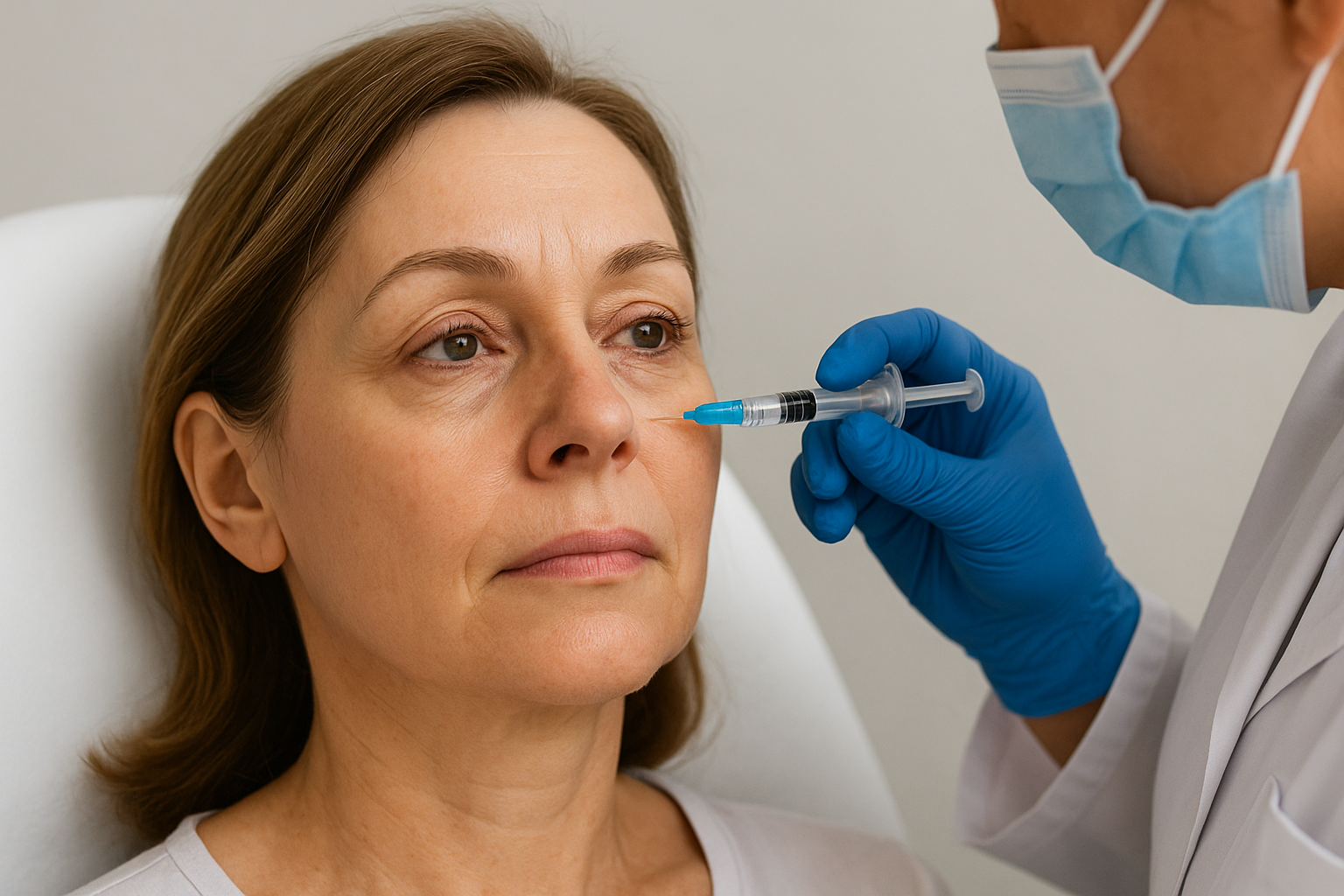
The risks are real and worth understanding clearly before you commit. Bruising and swelling are common in the days immediately after treatment because the periorbital area has a dense network of small blood vessels. In rare but serious cases, filler can be accidentally injected into a blood vessel, causing tissue damage or, in extreme cases, vision complications. Only ever have this procedure performed by a fully qualified medical professional registered with a recognised body such as the Joint Council for Cosmetic Practitioners, not at an unregulated aesthetic clinic.
The tear trough is one of the highest-risk areas on the face for filler complications, so the practitioner's qualifications matter far more than the price of the appointment.
Laser and light-based therapies for pigmentation
Laser resurfacing and intense pulsed light (IPL) treatments target melanin deposits in the skin directly, breaking up pigmentation and triggering collagen remodelling over a course of sessions. These are most effective for hyperpigmentation-based circles and show limited results for vascular or structural types. Fractional laser treatments also stimulate new collagen, which thickens the periorbital skin over time and reduces the visibility of underlying vessels.
Side effects include temporary redness, skin sensitivity, and in people with deeper skin tones, a risk of post-inflammatory hyperpigmentation if the energy settings are too aggressive. Multiple sessions spaced four to six weeks apart are typically required before you see full results, and ongoing sun protection is essential to prevent pigmentation returning.
Chemical peels for surface discolouration
Superficial to medium-depth chemical peels using ingredients such as lactic acid or kojic acid can lighten melanin-based dark circles by accelerating cell turnover in the periorbital skin. A trained clinician applies the peel in a controlled concentration far higher than anything available over the counter, producing more reliable results than retail skincare alone.
The key risk with peels around the eye is barrier disruption, which can leave the skin temporarily more reactive and prone to sensitivity. Downtime varies from mild flaking with superficial peels to several days of redness with medium-depth options, so factor that into your schedule before booking.
How to prevent dark circles from coming back
Treating dark circles successfully once does not guarantee they stay away. The same combination of genetics, lifestyle patterns, and environmental triggers that caused them initially will bring them back quickly if you return to your previous habits. Understanding your specific dark circles causes and treatment history gives you a clear map of exactly what to protect against going forward.
Build daily habits that reduce your baseline risk
Consistent sleep and hydration are the two easiest levers to pull for long-term prevention. Aim for seven to nine hours of sleep on your back with your head slightly elevated, and drink at least 1.5 litres of water throughout the day. These habits directly address fluid pooling and tissue volume loss, the two mechanisms that make circles look significantly worse from one week to the next.
Limiting prolonged screen exposure also makes a measurable difference over time. Taking a proper break from your screen every 45 to 60 minutes reduces the localised blood flow increase that aggravates vascular circles by the end of the day. Pairing this with a consistent bedtime reduces cortisol enough to stop chronic vessel dilation from becoming your new baseline.
Prevention is not about perfection. It is about removing enough of the recurring triggers that your skin does not have to recover from the same insult repeatedly.
Protect the under-eye skin from known triggers
Sunscreen applied daily to the periorbital area is the single most impactful step for anyone whose circles are driven by hyperpigmentation. UV exposure continuously stimulates melanin production in skin that is already thin and reactive, so skipping SPF reverses brightening progress within days of sun exposure. Choose a mineral SPF 30 or above formulated for the face, and apply it gently with your ring finger to avoid dragging the delicate skin.
If seasonal allergies are a known contributor for you, managing them proactively rather than reactively prevents the histamine-driven vascular response before it darkens the under-eye area. Antihistamines taken during peak pollen season and avoiding eye rubbing when irritation flares up both reduce the cumulative inflammation that deepens pigmentation over repeated allergy cycles.
Keep a maintenance skincare routine in place
Stopping your active eye skincare once you see improvement is the most common reason circles return within weeks. Caffeine and vitamin C formulations work best as ongoing maintenance tools rather than short-term fixes, because the underlying mechanisms that produce dark circles continue operating regardless of how good your skin currently looks. Apply your eye products consistently morning and night, and protect the progress you have already made.
When to see a GP or dermatologist
Most dark circles respond well to consistent home care and targeted skincare, but some situations genuinely require a professional opinion. Knowing when to escalate beyond self-managed dark circles causes and treatment saves you from months of ineffective guesswork and, in some cases, catches an underlying health issue before it becomes more serious. The general rule is simple: if the discolouration is new, sudden, or accompanied by other physical symptoms, book an appointment rather than trying another eye cream.
Signs that need professional evaluation
Several specific changes signal that your dark circles deserve medical attention rather than a product swap. Sudden onset of pronounced under-eye darkness that appears without an obvious lifestyle explanation is worth discussing with your GP, particularly if you have also noticed unusual fatigue, swelling elsewhere in your body, or changes in your urine colour, as these can point to kidney or thyroid dysfunction. Circles that are markedly darker under one eye only can occasionally indicate localised inflammation, a structural abnormality, or, rarely, a vascular issue that a doctor should assess.
If your dark circles have been present for years and change gradually, that pattern is far less concerning than discolouration that appears noticeably within days.
You should also seek a professional opinion if your under-eye skin shows persistent eczema, scaling, or contact dermatitis, as repeated inflammatory episodes accelerate pigmentation and cause long-term barrier damage that worsens with every flare-up. A GP can refer you to a dermatologist or allergy specialist who will identify the trigger and prescribe a targeted treatment plan rather than leaving you cycling through over-the-counter products that manage symptoms without resolving the cause.
What to expect at your appointment
Your GP will typically begin with a few questions about when the discolouration started, your sleep patterns, and any recent changes to your health or medication, since several prescription drugs affect skin pigmentation and fluid retention around the eyes. They may refer you to a dermatologist if the problem appears primarily cosmetic but has not responded to standard advice, or to another specialist if an internal health cause seems likely.
A dermatologist will conduct a more detailed skin assessment, potentially using a Wood's lamp or dermoscopy to distinguish between superficial and deeper pigmentation, which informs whether topical actives, laser, or another treatment pathway is appropriate. Arriving at your appointment with a brief record of what you have already tried, including product names and how long you used them, helps the clinician give you a faster and more accurate recommendation.
Key takeaways and next steps
Dark circles rarely have a single cause, and that is precisely why a targeted approach outperforms generic solutions every time. Identifying your specific circle type first, whether vascular, pigment-based, or structural, sets every subsequent decision on firmer ground. The right combination of consistent sleep, proper hydration, and evidence-backed actives like vitamin C and caffeine addresses dark circles causes and treatment far more effectively than cycling through random eye creams without a clear plan.
Taking action now is straightforward. Start with the stretch test at home, commit to one evidence-backed skincare routine for at least eight weeks, and protect your progress daily with SPF. If you want products formulated with safe, transparent ingredients and tested by dermatologists, explore the Xquisit Luxe skincare range for natural options designed to target the root causes directly. Small, consistent changes to both your daily habits and your product choices produce the visible, lasting results you are looking for.

