


Vous vous êtes probablement regardé dans le miroir en vous demandant ce qui cause les cernes sous les yeux, et pourquoi ils semblent persister, peu importe la quantité de sommeil que vous obtenez. Vous n'imaginez pas des choses. Les cernes sont l'une des préoccupations les plus courantes en matière de soins de la peau, et le manque de sommeil n'est qu'une partie du problème.
La vérité est que plusieurs facteurs contribuent à créer cet aspect sombre et fatigué sous vos yeux. La génétique, le vieillissement, les habitudes de vie, les allergies et même votre teint jouent tous un rôle. Comprendre la cause réelle de vos cernes est la première étape vers un traitement efficace, plutôt que d'utiliser des produits au hasard en espérant le meilleur.
Chez Xquisit Luxe, nous formulons des soins de la peau certifiés naturels et testés par des dermatologues, spécifiquement conçus pour cibler des préoccupations telles que les cernes, les ridules et le teint irrégulier. Ce guide détaille toutes les causes connues des cernes, explique ce qui se passe sous la surface de la peau, et vous présente des solutions éprouvées, des simples changements de mode de vie aux traitements ciblés qui offrent des résultats visibles.
Pourquoi les cernes apparaissent-ils ?
Comprendre ce qui cause les cernes sous les yeux commence par la structure de la peau elle-même. La peau sous vos yeux est nettement plus fine que la peau du reste de votre visage, avec une épaisseur moyenne d'environ 0,5 mm contre environ 2 mm ailleurs. Comme cette peau est si délicate, les structures sous-jacentes comme les vaisseaux sanguins, les muscles et les os se trouvent beaucoup plus près de la surface et sont beaucoup plus visibles. C'est pourquoi la zone sous les yeux est l'un des premiers endroits de votre visage à révéler des signes de fatigue, de vieillissement et de déséquilibres internes.
Le rôle de la peau fine et des vaisseaux sanguins
Lorsque le sang s'accumule dans les capillaires sous vos yeux, il transparaît à travers la peau fine sous forme de teinte bleuâtre ou violette. Cela se produit lorsque vous êtes fatigué, déshydraté ou que vous avez une mauvaise circulation sanguine, car un flux sanguin lent provoque la dilatation des vaisseaux et les rend plus proéminents. La teinte que vous voyez dépend de votre teint et de la profondeur de ces vaisseaux, c'est pourquoi les cernes peuvent apparaître violets sur les peaux claires et gris-brun sur les peaux plus foncées. Les températures froides, l'alcool et le tabagisme réduisent tous la circulation sanguine et aggravent visiblement ce type de décoloration.
Plus votre peau sous les yeux est fine, plus la décoloration sous-jacente devient visible, quelle que soit la quantité de sommeil que vous obtenez.
Comment le vieillissement et la perte de collagène y contribuent
En vieillissant, votre peau perd du collagène et de l'élasticité, ce qui rend la zone sous les yeux progressivement plus fine avec le temps. Les coussinets adipeux sous les yeux se déplacent également vers le bas et diminuent de volume, créant des creux et des ombres qui ressemblent à des cernes, même lorsqu'il n'y a pas de changement de pigmentation réel. Beaucoup de gens remarquent que cela devient plus prononcé à partir de la trentaine, et cela s'accélère si la protection solaire a été négligée au fil des ans.
La vallée des larmes, le sillon allant du coin interne de l'œil vers l'os de la joue, devient plus définie à mesure que le volume diminue avec l'âge. La lumière frappant cette zone concave projette une ombre, et cette ombre est fréquemment confondue avec une décoloration pigmentaire. Reconnaître si vos cernes sont basés sur l'ombre ou sur le pigment est extrêmement important pour choisir les traitements qui fonctionneront réellement pour vous.
Pourquoi la mélanine est importante
Certaines personnes produisent un excès de mélanine dans la zone sous les yeux, ce qui entraîne une décoloration brune ou bronzée qui se situe dans les couches superficielles de la peau plutôt qu'en dessous. C'est particulièrement courant chez les personnes aux carnations sud-asiatiques, moyen-orientales ou africaines, et c'est souvent héréditaire. L'exposition quotidienne aux UV déclenche également la production de mélanine autour des yeux, c'est pourquoi l'application constante d'un écran solaire fait une réelle différence pour empêcher ce type de noircissement de s'aggraver.
Contrairement aux cernes vasculaires, la décoloration basée sur la mélanine réagit bien aux actifs éclaircissants comme la niacinamide et la vitamine C, car ces ingrédients ciblent directement le pigment dans la peau. La combinaison d'un sérum éclaircissant ciblé avec une protection solaire constante donne à ce type de cerne les meilleures chances de s'estomper avec le temps.
Les principales causes des cernes sous les yeux
La génétique, le mode de vie, le vieillissement et les facteurs spécifiques à la peau contribuent tous à la décoloration sous les yeux, et la plupart des gens sont confrontés à une combinaison de plusieurs causes à la fois. Savoir ce qui cause les cernes sous les yeux dans votre cas spécifique vous permet de ne plus gaspiller d'argent sur des solutions génériques et de commencer à résoudre le problème réel.
Génétique et type de peau
Votre structure cutanée héritée et vos niveaux naturels de mélanine sont souvent le facteur le plus important dont personne ne parle. Si les cernes sont héréditaires dans votre famille, vous avez probablement une tendance génétique à avoir une peau plus fine sous les yeux, une concentration plus élevée de mélanine dans cette zone, ou les deux. Malheureusement, la génétique établit la base, ce qui signifie que vous pouvez gérer la décoloration mais que vous ne pouvez pas complètement annuler ce que vous avez hérité.
Déclencheurs liés au mode de vie
Plusieurs habitudes quotidiennes aggravent directement les cernes en perturbant la circulation, en augmentant l'inflammation ou en accélérant la dégradation du collagène. Les contributeurs les plus courants liés au mode de vie sont :
- Manque de sommeil : moins de sept heures augmente la rétention d'eau et dilate les vaisseaux sanguins
- Déshydratation : réduit la turgescence de la peau et rend les vaisseaux plus visibles sous la peau fine
- Alcool et tabac : les deux restreignent la circulation et accélèrent la perte de collagène
- Temps d'écran excessif : la fatigue oculaire provoque le plissement des yeux et augmente les poches
- Exposition solaire non protégée : déclenche la production de mélanine autour des yeux au fil du temps
Traiter même deux ou trois de ces déclencheurs de manière constante peut faire une différence notable en quelques semaines.
Allergies et affections cutanées
Les réactions allergiques et l'eczéma provoquent la libération d'histamine, ce qui dilate les vaisseaux sanguins et incite à se frotter les yeux. Ce frottement répété endommage les capillaires délicats et augmente à la fois la décoloration et les poches. Le rhume des foins, les allergies à la poussière et la dermatite de contact sont des coupables fréquents, et la gestion de l'allergie sous-jacente réduit souvent les cernes en même temps.
Comment déterminer le type de cernes que vous avez
Avant de dépenser de l'argent en traitements, identifier ce qui cause les cernes sous vos yeux dans votre cas spécifique est l'étape la plus importante que vous puissiez faire. Les trois principaux types sont vasculaires (bleu-violet), pigmentaires (bruns) et structurels (ombre due à la perte de volume), et la bonne solution pour chacun est complètement différente. Se tromper est la raison la plus courante pour laquelle les gens essaient produit après produit sans voir de résultats.
Le test du pincement
Pincez doucement la peau directement sous votre œil et soulevez-la légèrement de votre visage. Si la couleur foncée disparaît ou devient significativement plus claire lorsque vous soulevez la peau, vos cernes sont probablement de nature vasculaire ou structurelle, ce qui signifie que les vaisseaux sanguins ou les ombres sont la cause principale plutôt que le pigment situé dans la peau elle-même. Ce test simple ne coûte rien et ne prend que quelques secondes, mais il réduit immédiatement le champ d'action de votre traitement.
Le contrôle de la couleur
Regardez la zone sous vos yeux à la lumière naturelle du jour, pas sous un éclairage de salle de bain, qui déforme régulièrement ce que vous voyez. Les tons bleus ou violets indiquent des cernes vasculaires causés par des vaisseaux sanguins visibles proches de la surface. Les tons bruns ou bronzés suggèrent une pigmentation basée sur la mélanine dans les couches superficielles de la peau. Une ombre gris-brun qui change en fonction de l'angle de la lumière est généralement structurelle, causée par un creusement à mesure que le volume diminue avec l'âge.
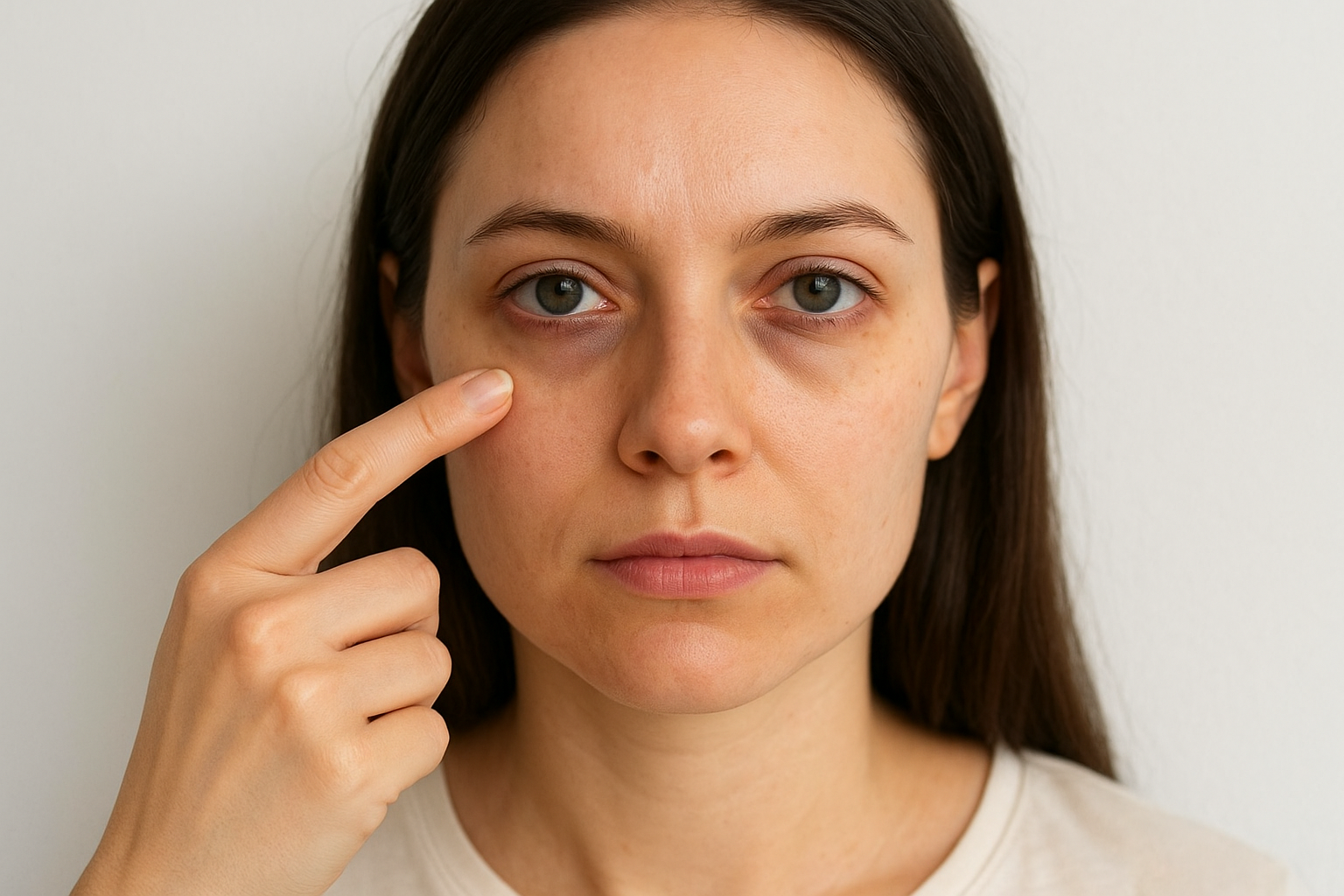
Si vos cernes changent de couleur en fonction de votre fatigue ou de votre déshydratation, les causes vasculaires sont probablement le facteur dominant.
Lorsque vos cernes sont un mélange de types
Beaucoup de gens sont confrontés à plusieurs types en même temps, c'est pourquoi un seul produit résout rarement le problème entièrement. Si la zone sous vos yeux présente à la fois une pigmentation brunâtre et une teinte bleuâtre, vous avez probablement affaire à la fois à une surproduction de mélanine et à une visibilité vasculaire. Superposer un sérum éclaircissant avec une hydratation constante et un SPF quotidien vous offre la meilleure couverture dans cette situation.
Comment réduire les cernes à la maison
Savoir ce qui cause les cernes sous les yeux vous donne un avantage direct pour choisir les traitements à domicile, car vous pouvez adapter la solution au problème réel plutôt que de deviner. La plupart des gens constatent une amélioration significative en quatre à huit semaines lorsqu'ils combinent les bons ingrédients de soins de la peau avec quelques changements de mode de vie constants, plutôt que de compter sur un seul produit pour faire tout le travail.
Ingrédients de soins de la peau qui ciblent la décoloration
Les ingrédients que vous appliquez sont bien plus importants que la catégorie de produit dans laquelle ils se trouvent. La niacinamide et la vitamine C sont les deux actifs éclaircissants les plus éprouvés pour les cernes à base de mélanine, agissant en interrompant la production de pigment dans les couches superficielles de la peau. La caféine et les peptides traitent respectivement les causes vasculaires et structurelles, la caféine resserrant les vaisseaux sanguins dilatés et les peptides stimulant le collagène pour épaissir la peau fine sous les yeux avec le temps.
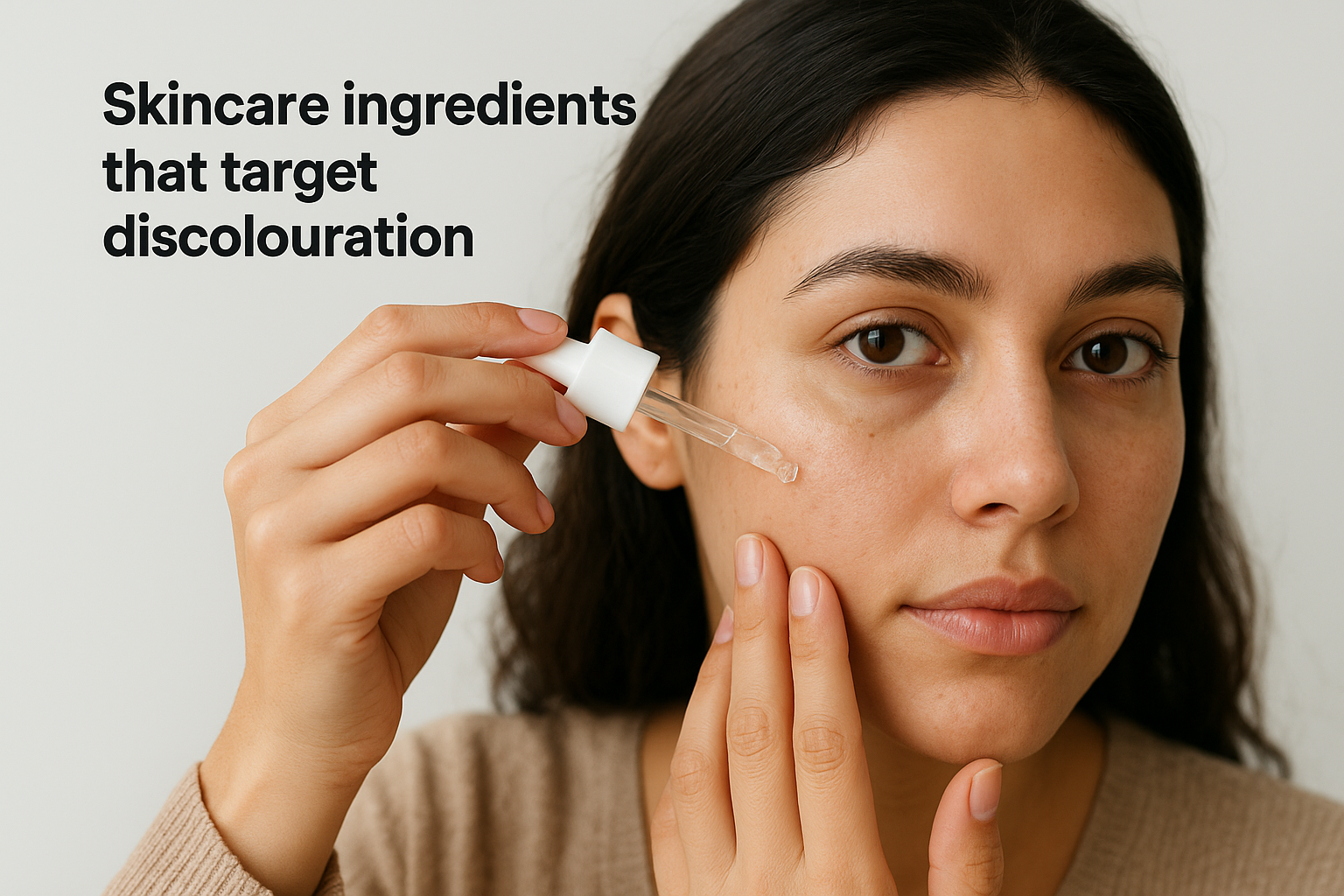
L'application d'un sérum contour des yeux ciblé deux fois par jour sur une peau propre et légèrement humide permet une meilleure absorption des actifs et des résultats visibles plus rapides.
Les ingrédients à rechercher dans un produit efficace pour le contour des yeux incluent :
- Niacinamide : réduit la pigmentation et renforce la barrière cutanée
- Vitamine C : éclaircit et protège contre la production de mélanine déclenchée par les UV
- Caféine : réduit les poches et resserre les vaisseaux sanguins visibles
- Rétinol (faible concentration) : favorise la production de collagène et épaissit la peau délicate sous les yeux
- Acide hyaluronique : repulpe la peau et réduit l'apparence des ombres creuses
Simples ajustements de style de vie
Quelques habitudes quotidiennes font une différence mesurable sans rien coûter. Élever légèrement votre tête pendant le sommeil réduit l'accumulation de liquide pendant la nuit, et appliquer une compresse froide pendant cinq minutes chaque matin resserre les vaisseaux sanguins et réduit visiblement les poches avant de quitter la maison.
L'application d'un SPF 30 ou plus autour des yeux chaque matin est particulièrement importante si la décoloration basée sur la mélanine est votre principale préoccupation, car l'exposition aux UV est l'un des déclencheurs les plus constants de l'aggravation de la pigmentation dans cette zone.
Quand consulter un médecin généraliste ou un dermatologue
Les traitements à domicile fonctionnent bien pour la plupart des cas de décoloration sous les yeux, mais il y a des situations où une évaluation professionnelle vous apporte des réponses qu'aucun sérum ou changement de mode de vie ne peut fournir. Si vous avez essayé de comprendre ce qui cause les cernes sous les yeux par auto-évaluation et remèdes maison pendant huit à douze semaines sans amélioration, prendre rendez-vous est une étape logique plutôt que de continuer à deviner.
Signes nécessitant une attention professionnelle
Certains symptômes accompagnant les cernes indiquent un problème de santé sous-jacent qui justifie une visite chez le médecin généraliste. Un gonflement persistant qui ne diminue pas pendant la nuit, combiné à une décoloration foncée, peut occasionnellement indiquer un dysfonctionnement rénal ou thyroïdien, tous deux entièrement gérables s'ils sont détectés tôt. De même, si vos cernes sont apparus soudainement plutôt que progressivement, et que vous avez remarqué d'autres changements comme de la fatigue, des variations de poids ou des changements de texture de la peau ailleurs, un test sanguin pour vérifier les marqueurs de fer, de thyroïde et de reins est un bon point de départ.
Les allergies sévères qui provoquent des frottements et une inflammation constants autour des yeux sont une autre raison de consulter un professionnel. Un médecin généraliste peut vous orienter vers des tests d'allergie ou vous prescrire des antihistaminiques qui réduisent directement la réponse vasculaire due à l'histamine, cause de votre décoloration.
Si vos cernes sont apparus rapidement ou sont accompagnés de gonflements et d'autres symptômes physiques, consultez votre médecin généraliste avant d'investir davantage dans des traitements de soins de la peau.
Ce qu'un dermatologue peut offrir
Un dermatologue peut vous fournir un diagnostic précis de votre type de cernes et vous donner accès à des traitements cliniques qui vont au-delà de ce que les produits en vente libre peuvent offrir. Des options telles que les peelings chimiques, la thérapie au laser et les rétinoïdes sur ordonnance sont utilisées selon que vos cernes sont pigmentaires, vasculaires ou structurels. Ces traitements ne sont pas nécessaires pour tout le monde, mais ils offrent une amélioration significative lorsque les soins à domicile ont atteint leurs limites.
Points clés et prochaines étapes
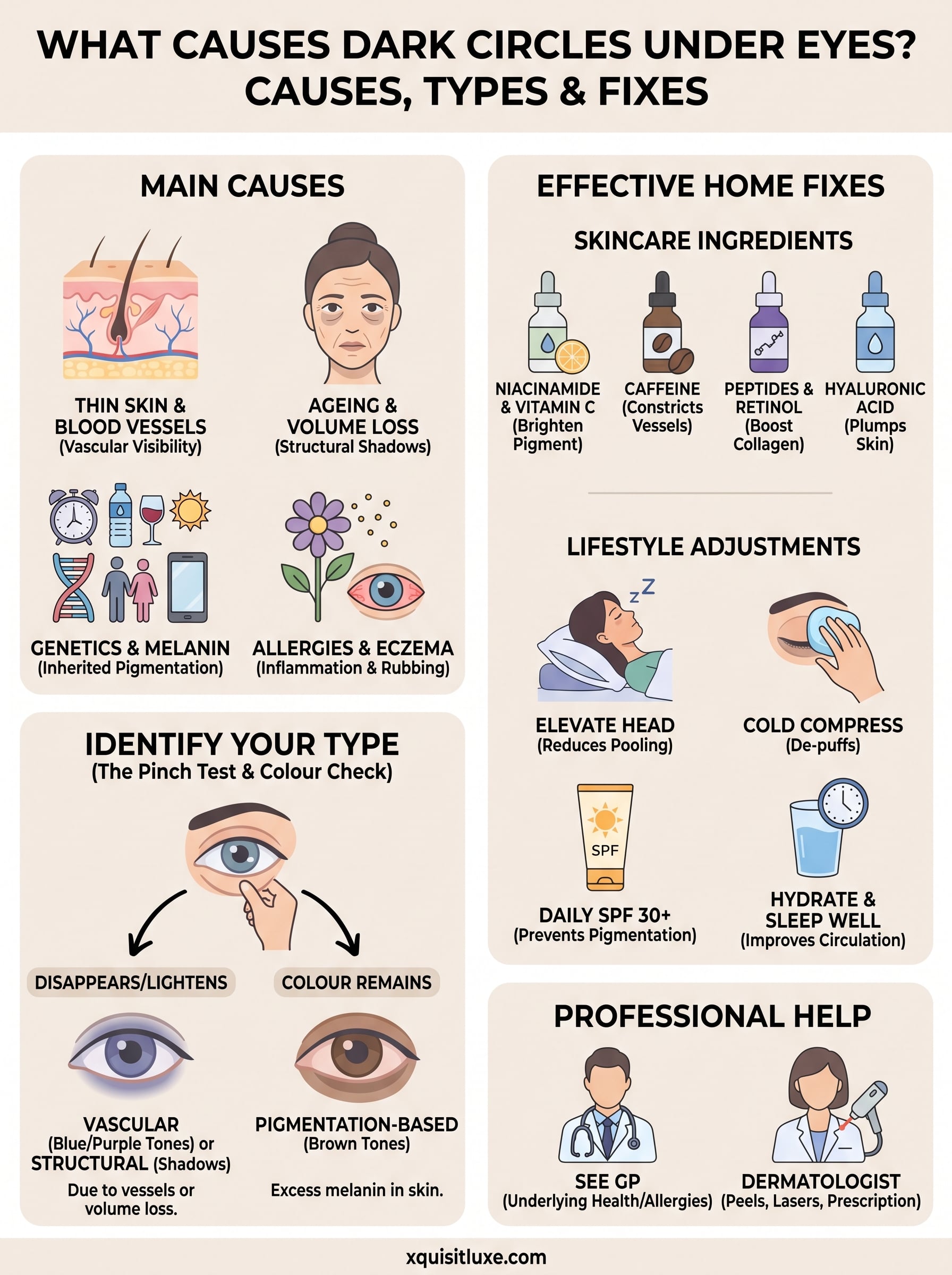
Comprendre ce qui cause les cernes sous les yeux est vraiment l'étape la plus importante, car le bon traitement dépend entièrement du type auquel vous êtes confronté. Les cernes vasculaires, pigmentaires et structurels nécessitent chacun une approche différente, et combiner le test du pincement avec une vérification de la couleur à la lumière naturelle vous donne un point de départ fiable sans dépenser un sou.
La plupart des gens constatent une réelle amélioration en ciblant deux ou trois déclencheurs liés au mode de vie, en ajoutant les bons actifs comme la niacinamide, la caféine et la vitamine C à leur routine, et en appliquant un SPF chaque matin sans faute. La constance sur quatre à huit semaines est bien plus importante que l'utilisation de plusieurs produits à la fois.
Si vous êtes prêt à agir, explorez la gamme de soins naturels Xquisit Luxe pour trouver des produits certifiés naturels et testés par des dermatologues, formulés spécifiquement pour cibler la décoloration sous les yeux, les taches brunes et le teint irrégulier, tous fabriqués au Royaume-Uni avec des ingrédients transparents et sans danger pour la peau.

