


You've seen the jars of coconut oil in every haircare tutorial, and you're wondering if it's worth the mess on your bathroom shelf. So, can coconut oil help hair growth, or is this another trend built on hope rather than proof? It's a fair question, especially if you're dealing with thinning patches, slow growth, or hair that just won't cooperate anymore.
Our Rosemary Oil for Hair Growth is built around exactly this approach — worth a look if you're ready to try it for yourself.
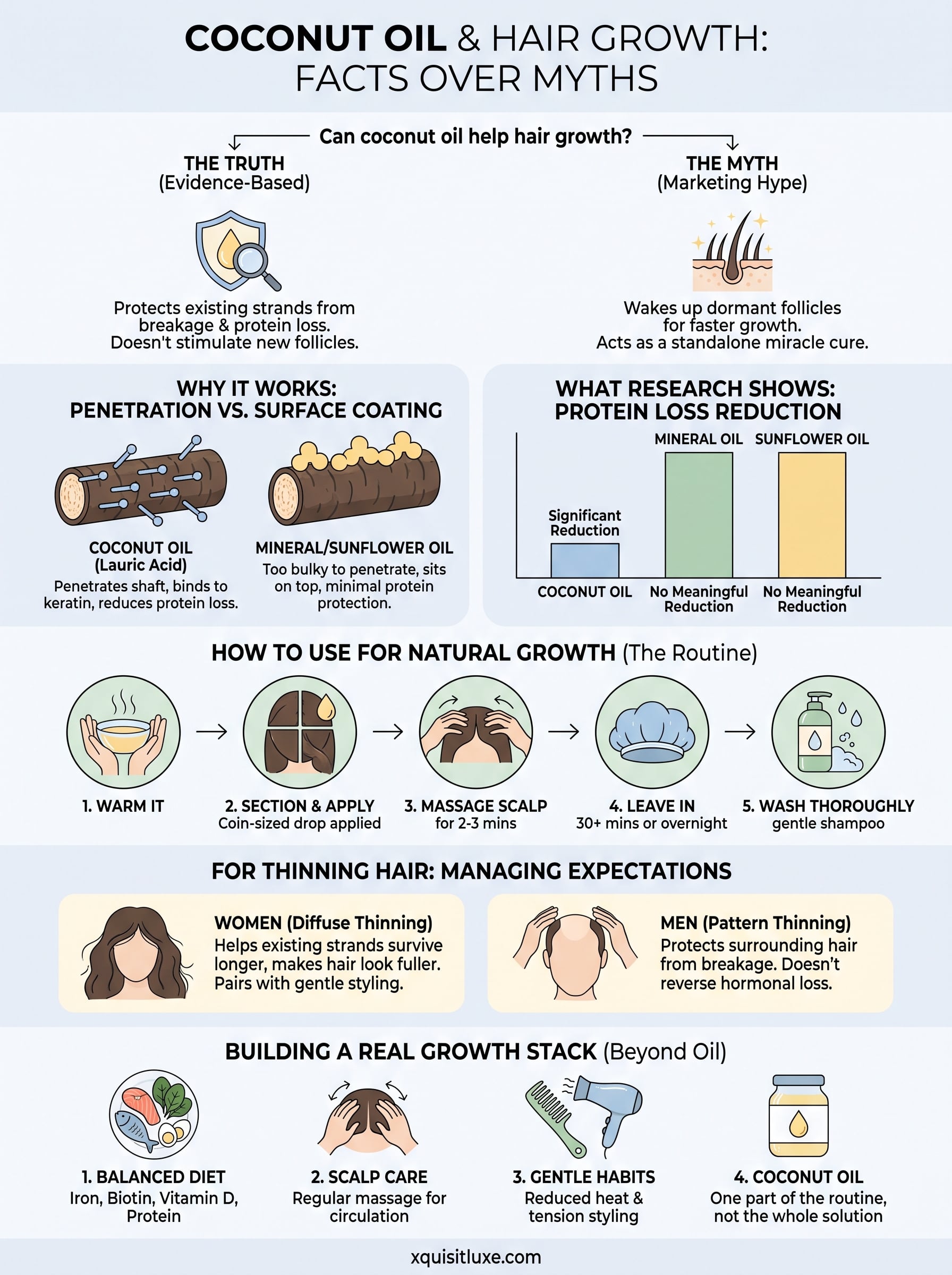
Here's the honest answer: coconut oil won't make hair grow faster on its own, but it does something valuable that most other oils don't. It penetrates the hair shaft rather than just sitting on top, reducing protein loss and breakage that stops hair reaching its full length. That's a real, studied effect, and it's different from claims about stimulating new growth from the follicle itself.
In this article, we'll walk through what the research actually shows, how coconut oil compares for thinning hair versus genuine growth support, and practical ways to use it, whether you're a woman rebuilding length or a man tackling a receding hairline. No fluff, just what works.
Why coconut oil is linked to hair growth
The short version is this: does coconut oil help hair growth in the way most people imagine, by waking up dormant follicles? No. What it does instead is stop the hair you already have from snapping off before it reaches its potential length. That distinction matters more than most marketing admits, and it's the reason coconut oil keeps showing up in every haircare routine while still confusing people about what it's actually for.
The fatty acid that makes the difference
Coconut oil is rich in lauric acid, a medium-chain fatty acid with a straight molecular structure. That shape lets it slip past the hair's outer cuticle and bind directly with the keratin protein inside the shaft, something oils like mineral oil or sunflower oil simply can't do because their molecules are too bulky. This shaft penetration is what separates coconut oil from most bottles sitting next to it on the shelf, and it's a well-documented mechanical property, not a marketing claim.
What the research actually shows
A frequently cited study published via the National Library of Medicine compared coconut oil, mineral oil, and sunflower oil applied both before and after washing. Coconut oil significantly reduced protein loss in both cases, while the other two oils showed no meaningful effect. That's the strongest evidence behind claims that coconut oil helps with hair growth indirectly, by preventing the kind of damage that makes hair look thin and stalled at a certain length.
| Oil | Effect on protein loss | Penetrates the shaft? |
|---|---|---|
| Coconut oil | Significant reduction | Yes |
| Mineral oil | No meaningful reduction | No |
| Sunflower oil | No meaningful reduction | No |
Protection, not stimulation
Understanding this table changes how you should use coconut oil. It won't out-perform something formulated to increase blood flow to the scalp or block hormones linked to shrinking follicles, and it isn't a substitute for treatments with that kind of clinical backing. What it will do is reduce breakage, split ends, and the daily wear from brushing, heat, and friction that makes hair look like it's stopped growing when it's actually just breaking off at the same rate it grows.
Coconut oil doesn't grow new hair. It protects the hair you already have so it can actually reach its full length.
Realistically, this is why so many people report thicker-looking, longer hair after months of consistent use. They haven't triggered new follicle activity; they've simply stopped losing length to damage. Knowing that difference helps you set the right expectations and pair coconut oil with the right complementary steps, which we'll get into next.
How to use coconut oil for natural hair growth
Knowing how to use coconut oil for natural hair growth matters more than which brand you buy. The oil needs proper contact time and the right technique to actually reduce breakage, otherwise you're just left with greasy strands and no real benefit. Getting this right is what separates people who see genuine length retention from those who give up after two uses.
Warm it, work it in, leave it
Applying coconut oil cold makes it harder to spread evenly, especially through thicker or coarser hair. Warming a small amount between your palms or in a bowl of hot water for a minute softens it into a workable consistency that coats each strand rather than clumping at the roots. This even coverage is what allows the lauric acid to actually reach the shaft instead of sitting on the surface.
A simple weekly routine
Following a consistent pattern gets better results than random, occasional use. Try this:
- Section your hair into four parts to make application manageable
- Apply a coin-sized amount per section, working from mid-length to ends first
- Massage a small amount into the scalp for two to three minutes to boost circulation
- Leave it on for at least 30 minutes, or overnight under a shower cap for deeper penetration
- Wash out thoroughly with a gentle shampoo, since residue can weigh hair down
- Repeat once or twice a week, not daily, since overuse can leave hair feeling coated
Consistency over months, not a single overnight treatment, is what makes coconut oil worth the effort.
Pre-wash versus leave-in
Using coconut oil as a pre-wash treatment protects hair from the moisture swelling that happens during shampooing, which is when breakage risk is highest. Some people also use a tiny amount as a leave-in on dry ends to smooth frizz and add shine, though this works better for length maintenance than for anything tied to actual growth. Either way, patience matters here. Nobody sees results in a week, but most people testing whether coconut oil is good for natural hair growth notice less shedding and fewer split ends within six to eight weeks of steady use.
Coconut oil for thinning hair in men and women
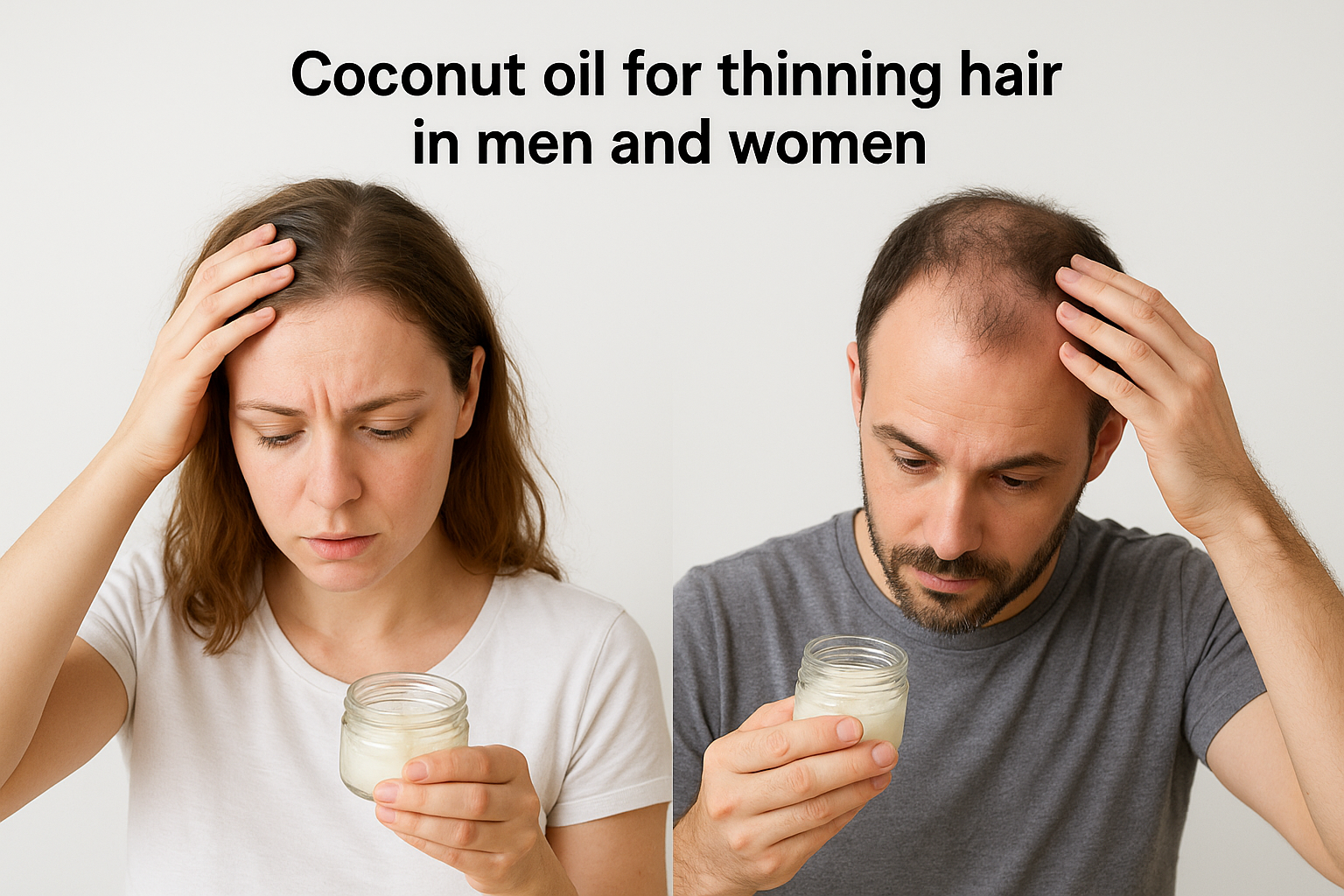
Coconut oil for thinning hair works the same way regardless of gender, by cutting breakage, but the causes of thinning differ enough that your expectations should too. Women often see diffuse thinning linked to hormones, stress, or postpartum shedding, while men typically deal with pattern thinning at the crown or hairline driven by DHT sensitivity. Coconut oil doesn't touch either underlying cause directly, so treating it as a standalone fix for thinning hair in either case sets you up for disappointment.
Thinning hair in women
For women, thinning often shows up as reduced density rather than bald patches, which makes breakage prevention genuinely useful. Regular use of coconut oil for thinning hair helps existing strands survive longer, so the hair you have looks fuller instead of snapping off mid-length. It pairs well with gentler styling habits, like avoiding tight ponytails and reducing heat tool use, since both contribute heavily to the kind of mechanical damage coconut oil is actually designed to prevent.
Hair growth coconut oil for men
Men searching for hair growth coconut oil for men are usually hoping it slows a receding hairline or thickens a crown that's visibly thinning. It won't reverse pattern hair loss, and no oil will, since that process is hormonal and needs a treatment with actual clinical evidence behind it, such as minoxidil, which the NHS recognises as an established option. What coconut oil for hair growth in men can do is protect the surrounding hair from further breakage while you address the root cause elsewhere.
If pattern thinning is hormonal, coconut oil supports the hair you keep, it doesn't restart the hair you've lost.
Ultimately, both men and women get the same realistic benefit: stronger, less damaged strands rather than a reversal of the underlying thinning process. Recognising that difference upfront saves months of frustration and points you toward pairing coconut oil with treatments that actually target the cause.
What else supports hair growth alongside coconut oil
Coconut oil handles one job well: protecting the hair you have from breaking off. Genuine hair growth, the kind that comes from follicles cycling properly and producing new strands, depends on factors coconut oil can't touch. If you're serious about results, you need to look at what's happening beneath the scalp, not just what's coating the shaft.
Feed the follicle from the inside
Nutrition plays a bigger role than most people expect. Follicles are metabolically active tissue, and deficiencies in iron, biotin, and vitamin D are commonly linked to shedding and slow regrowth, according to guidance from the NHS. Protein intake matters too, since hair is built almost entirely from keratin, so a diet low in protein shows up in your hair before almost anywhere else. Getting bloodwork done if you suspect a deficiency is far more useful than adding another oil to your shelf.
Scalp care and circulation
Beyond diet, the scalp itself needs attention. Massaging the scalp regularly, something you're already doing when applying coconut oil, may support circulation to the follicles, giving them better access to nutrients carried in the blood. Reducing scalp inflammation from product buildup, harsh sulphates, or tight styles also matters, since a stressed scalp environment isn't conducive to healthy growth cycles regardless of what oil you're using.
Coconut oil works best as one piece of a routine, not the whole strategy.
Building a realistic stack
Think of coconut oil as one layer in a broader approach rather than a complete solution:
- A balanced diet with adequate protein, iron, and biotin
- Regular scalp massage, with or without oil, for a few minutes daily
- Gentle, sulphate-free washing to avoid stripping natural oils
- Reduced heat and tension styling, which cause the breakage coconut oil is trying to prevent
- Medical evaluation if thinning is sudden, patchy, or hormonal in nature
Combining these habits gives coconut oil something worth protecting, rather than asking one ingredient to do a job it was never designed for.
Possible drawbacks and who should be cautious
Coconut oil isn't risk-free for everyone, even though it's marketed as gentle and natural. Comedogenic buildup on the scalp is the most common complaint, especially for people with fine hair or naturally oily skin, since coconut oil sits heavy and can clog follicles rather than protect them. If you've ever noticed more scalp itchiness or small bumps after a few weeks of regular oiling, that's usually the cause, and it's worth stopping to let your scalp reset.
Hair type matters more than the marketing admits
Fine, low-porosity hair often reacts badly to coconut oil because the cuticle is already tightly packed, so the oil struggles to absorb and instead coats the surface. This creates the exact opposite of what you want: weighed-down, limp strands rather than the strengthened shaft the research actually supports. If this sounds like your hair, a lighter oil applied sparingly, or reserved strictly as a pre-wash treatment, works better than daily use.
If your hair feels greasy rather than stronger after using coconut oil, that's a sign it's the wrong fit for your hair type, not a lack of patience.
Protein sensitivity and allergic reactions
Because coconut oil binds with keratin, hair that's already protein-sensitive, often from chemical treatments or over-processing, can end up feeling brittle and straw-like rather than smoother. A genuine coconut allergy is rare but real, and the NHS advises patch testing any new topical product on a small area of skin before wider use, particularly if you have sensitive skin or a history of contact dermatitis.
Who should be especially cautious
- People with oily scalps or existing dandruff, since coconut oil can worsen product buildup
- Those with fine or low-porosity hair, who often see limp results rather than strength
- Anyone with a known coconut or tree nut allergy
- People experiencing sudden or patchy hair loss, which needs medical assessment rather than home remedies
Recognising these limits keeps expectations grounded and stops a genuinely useful oil from becoming another disappointing routine.
Where this leaves your hair care routine
So, can coconut oil help hair growth? Not by waking up dormant follicles, but by protecting the strands you already have from breaking off before they reach their potential length. That's a genuine, evidence-backed benefit, not a marketing myth, and it's worth building into your routine alongside proper nutrition, gentle styling, and scalp care rather than treating it as a cure-all. Whether you're managing thinning hair or simply chasing longer, healthier length, coconut oil earns its place as one part of a bigger picture, not the whole solution.
If you're ready to pair that protective effect with products actually formulated for growth and vitality, it's worth looking at options designed with real ingredients and proven results in mind. Explore Xquisit Luxe's hair care range to find natural, dermatologist-tested formulas that support the strands you're working so hard to protect.
