


If you've noticed more hair in the shower drain than you'd like, you've probably come across pumpkin oil and hair growth claims while searching for answers. Social media and beauty forums are full of people swearing by it, but that doesn't tell you whether there's any real science behind the hype or if you're just wasting money on another trend.
We put this thinking directly into our Rosemary Oil for Hair Growth, if you'd like to try it yourself.
The short answer: there's genuine clinical evidence that pumpkin seed oil for hair growth works, not just anecdote. A well-cited 2014 study found men using pumpkin seed oil supplements saw a 40% increase in hair count over six months, and the oil's fatty acids and phytosterols may help block the DHT that shrinks hair follicles. It's not a miracle cure, but it's one of the more scientifically backed natural options out there.
In this article, we'll walk through what the research actually shows, how pumpkin seed oil and hair growth are connected biologically, and practical ways to add it to your routine, whether through scalp application, supplements, or hair oil blends. We'll also cover realistic expectations, so you know what results to look for and by when.
Why pumpkin seed oil could support hair growth
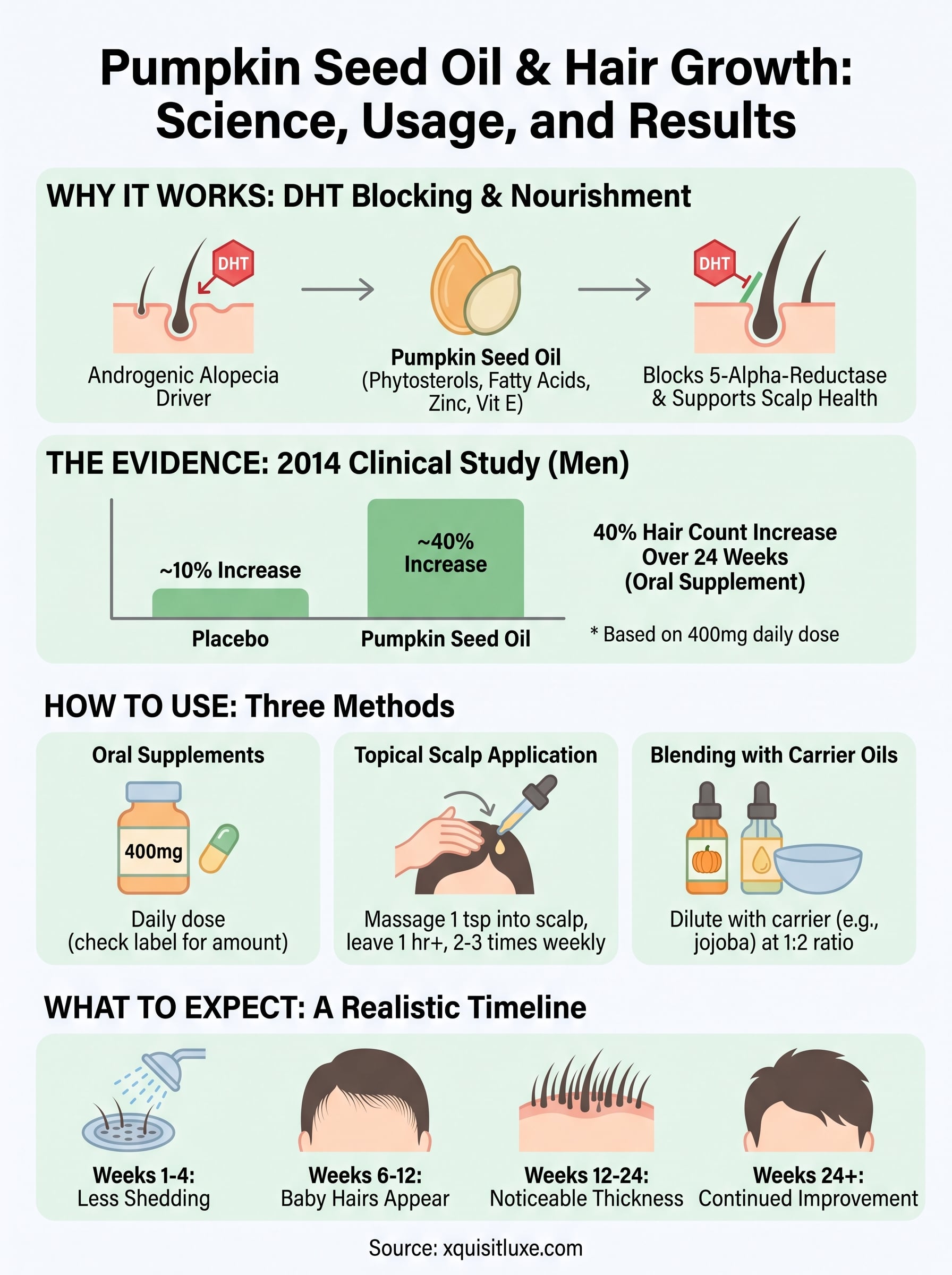
Androgenic alopecia, the most common cause of thinning hair in both men and women, is largely driven by a hormone called dihydrotestosterone (DHT). DHT binds to receptors in your hair follicles and gradually shrinks them, a process called miniaturisation, until they stop producing visible hair. Pumpkin seed oil for hair growth works, in theory, because it contains compounds that interfere with this exact process, which is why it's attracted more serious research attention than most trending natural remedies.
How pumpkin seed oil may block DHT
Pumpkin seeds are rich in phytosterols, plant compounds that structurally resemble cholesterol and appear to inhibit 5-alpha-reductase, the enzyme responsible for converting testosterone into DHT. This is the same mechanism targeted by prescription drugs like finasteride, just via a gentler, plant-based route. Alongside phytosterols, the oil contains omega-3 and omega-6 fatty acids, zinc, and vitamin E, all of which support scalp circulation and reduce the inflammation that can accelerate follicle damage.
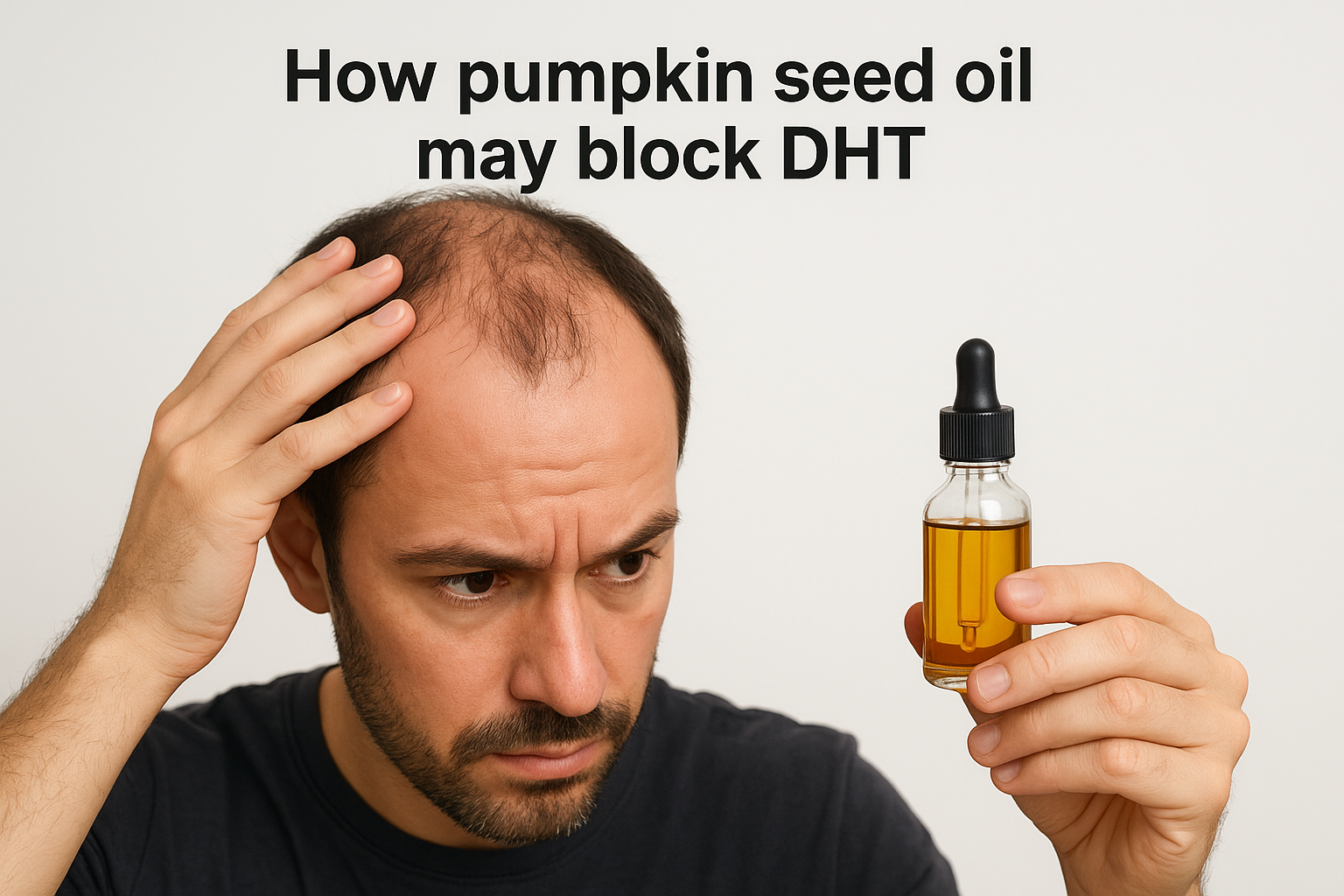
Pumpkin seed oil doesn't replace medical hair loss treatment, but its DHT-blocking action gives it a genuine biological reason to work.
What the clinical evidence actually shows
The most frequently cited study, published in Evidence-Based Complementary and Alternative Medicine, followed men with mild to moderate hair loss over 24 weeks. Participants taking 400mg of pumpkin seed oil daily saw a 40% average increase in hair count, compared to roughly 10% in the placebo group. That's a meaningful gap, and it's part of why pumpkin seeds oil for hair growth keeps coming up in dermatology discussions rather than fading as a fad.
| Factor | Placebo group | Pumpkin seed oil group |
|---|---|---|
| Duration | 24 weeks | 24 weeks |
| Daily dose | Inactive capsule | 400mg oil |
| Hair count increase | ~10% | ~40% |
It's worth noting this study focused on oral supplementation in men, so the results don't automatically translate to topical scalp oils or to women's hair loss patterns, which often have different hormonal drivers. Still, the underlying mechanism, reducing DHT's grip on follicles, applies regardless of how the oil is delivered, which supports the broader claims around pumpkin seed oil and hair growth even outside that single trial.
Beyond DHT: nourishing the scalp environment
Hair growth isn't just about hormones. A healthy scalp needs steady blood flow and protection from oxidative stress, and this is where pumpkin seed oil's fatty acid profile earns its keep. Massaging the oil into your scalp can improve local circulation, delivering more oxygen and nutrients to the follicle, while its antioxidants help counter the free radical damage linked to premature shedding. Combined, these effects explain why so many people report thicker-feeling hair even before any dramatic regrowth becomes visible.
How to use pumpkin seed oil for hair growth
Once you've decided to give pumpkin seed oil for hair growth a try, the next question is how. You've got three realistic options: oral supplements, topical scalp application, or a blend that combines pumpkin seed oil with other carrier oils. Each has a slightly different approach, and you don't need to pick just one.
Oral supplements
Supplements mirror the dosage used in the clinical trial, which makes them the most evidence-backed route. Daily supplementation at 400mg is the benchmark most dermatologists reference when discussing this oil, so look for capsules that state this dose clearly on the label rather than vague "pumpkin seed extract" blends with no figures.
Topical scalp application
Applying the oil directly targets the follicle and scalp environment without going through digestion first. A simple routine looks like this:
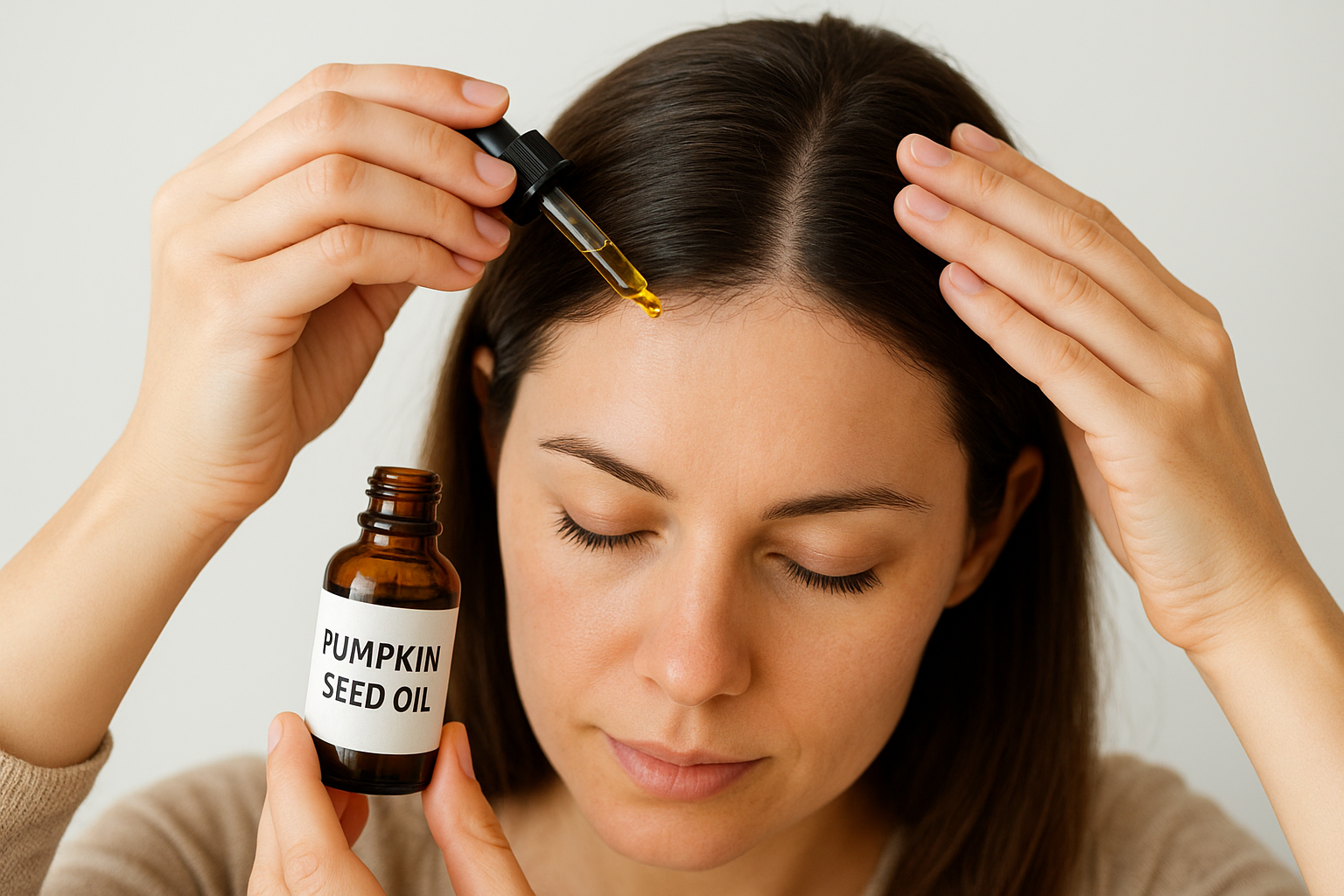
- Warm a small amount (roughly a teaspoon) between your palms
- Section your hair and massage the oil into your scalp using circular motions for 5 to 10 minutes
- Leave it in for at least an hour, or overnight if your scalp isn't prone to breakouts
- Wash out thoroughly with a gentle shampoo
- Repeat two to three times a week
Consistency matters more than quantity: a small amount used regularly beats a heavy application done once a month.
Blending with carrier oils
Pure pumpkin seed oil can feel heavy on its own, so many people dilute it with a lighter carrier like jojoba or argan oil at a ratio of roughly one part pumpkin seed oil to two parts carrier. This makes it easier to spread through longer hair and reduces the risk of an overly greasy scalp. If you're using a pre-blended hair oil, check the ingredients list to confirm pumpkin seed oil sits near the top, since further down the list usually means a token amount rather than a functional dose.
Whichever method you choose, pair it with a scalp massage. The combination of pumpkin seed oil and hair growth benefits works best when circulation and active compounds arrive at the follicle together, not as separate, unrelated steps.
What results to expect and how long they take
Hair growth is a slow process, and pumpkin seed oil for hair growth is no exception to that rule. Follicles cycle through growth and rest phases over months, not days, so expecting visible change within a fortnight sets you up for disappointment. Give it at least three months before judging whether it's working for you.
The realistic timeline
According to the clinical trial referenced earlier, meaningful hair count improvements showed up over a 24-week period, with the most noticeable gains appearing after the 12-week mark. Early on, you might notice less shedding in the shower or on your pillow before you see any actual regrowth. That's a genuine sign of progress, not a placebo effect, since reduced shedding usually precedes new growth by several weeks.
Don't judge pumpkin oil and hair growth results before three months; follicles simply don't move faster than that.
What progress actually looks like
Results vary from person to person, but here's a rough guide to what people commonly report:
- Weeks 1 to 4: Less hair in the drain, slightly improved scalp condition
- Weeks 6 to 12: Fine, baby hairs appearing along the hairline or crown
- Weeks 12 to 24: Noticeably thicker density in photos taken from the same angle
- Beyond 24 weeks: Continued improvement if you stick with consistent use
Photographing your scalp under the same lighting every few weeks beats relying on memory, since gradual change is hard to spot day to day.
Managing expectations
Understand that pumpkin seeds oil for hair growth works best as a supportive measure rather than a dramatic fix. Someone with advanced, long-standing bald patches shouldn't expect full regrowth. Those catching thinning early, particularly diffuse thinning linked to DHT sensitivity, tend to see the most encouraging results.
Safety, side effects and who should be cautious
Compared to prescription hair loss treatments, pumpkin seed oil for hair growth carries a much lower risk profile, which is part of its appeal. It's a food-derived product that's been eaten for centuries, so serious adverse reactions are rare. That said, rare doesn't mean impossible, and topical use in particular can cause minor scalp irritation in some people, especially if you're using an undiluted, cold-pressed oil straight from the bottle.
Common side effects to watch for
Generally, the issues people report are mild and manageable rather than dangerous. Keep an eye out for:
- Scalp itching or mild redness after topical application
- Greasy build-up if you're using too much or not washing it out thoroughly
- Digestive upset, such as bloating, when taking oral supplements on an empty stomach
- Rare allergic reactions in people with a pumpkin or seed allergy
If you notice any of these, cut back on frequency or dilute the oil further before giving up on it entirely.
Who should be more cautious
Particular caution applies if you're pregnant or breastfeeding, since pumpkin seed oil and hair growth research hasn't specifically tested safety for these groups, and it's better to check with a GP first. Anyone with a known seed allergy should avoid it altogether, both orally and topically, since reactions can affect the scalp as easily as the gut. People on hormone-related medication, including treatments for prostate conditions, should also speak to a doctor before adding a supplement that influences DHT, even a mild one.
Pumpkin seed oil is low-risk for most people, but low-risk isn't the same as risk-free, so a patch test and a chat with your doctor cost nothing.
Before starting any new routine, patch-testing on a small area of skin for 24 hours remains the simplest way to catch a reaction before it spreads across your whole scalp.
Choosing a quality pumpkin seed oil for your hair
Not all bottles labelled pumpkin seed oil deliver the same results, and picking a poor-quality one is the fastest way to conclude that pumpkin oil for hair growth doesn't work when the real problem is the product itself. The oil's active compounds, phytosterols and fatty acids, degrade with heat and light, so how it's extracted and stored matters as much as the plant it came from.
What to check on the label
Look past the front of the bottle and read the small print before you buy. A genuinely useful oil should tick these boxes:
- Cold-pressed extraction, since heat processing destroys many of the beneficial compounds
- 100% pumpkin seed oil, not a blend where it's listed after several filler oils
- Dark glass packaging, which protects against light degradation
- A recent harvest or bottling date, ideally within the last 12 months
- Third-party testing or certification where available, giving some assurance of purity
A cheap, clear-bottled pumpkin seed oil sitting on a sunny shelf has likely lost much of its potency before it even reaches your scalp.
Cold-pressed versus refined oil
Refined pumpkin seed oil is cheaper and has a longer shelf life, but the processing strips out much of what makes pumpkin seed oil and hair growth claims credible in the first place. Cold-pressed versions retain more phytosterols and vitamin E, which is exactly what you're paying for.
| Feature | Cold-pressed | Refined |
|---|---|---|
| Nutrient retention | High | Lower |
| Colour and smell | Deep green, nutty | Pale, mild |
| Shelf life | Shorter, needs cool storage | Longer |
| Suitability for scalp use | Better | Acceptable but weaker |
Storing your oil in a cool, dark cupboard rather than a bright bathroom shelf keeps it effective for longer, and a quick smell test, rancid rather than nutty, tells you when it's time to replace the bottle.
Where pumpkin seed oil fits into your hair routine
Pumpkin seed oil isn't a magic fix, but it's one of the few natural options with actual clinical backing behind it. The evidence points to a real, biologically sound mechanism, and the low risk profile means there's little downside to giving it a proper three-month trial. Consistency beats intensity here: a small amount used regularly, whether through scalp massage, supplements, or a blended hair oil, does more than sporadic heavy applications ever will.
Think of it as one part of a wider routine rather than a standalone cure. Pair it with a gentle, nourishing haircare regimen, manage stress, and eat well, and you give your follicles the best possible environment to thrive in. If you're ready to build that routine with products designed around real ingredients and visible results, explore our Hair Care range and see what fits your hair's needs.
