


You've probably seen rosemary oil recommended everywhere, from social media to wellness blogs, as a natural fix for thinning hair. But can rosemary oil regrow hair, or is it just another overhyped trend? It's a fair question, especially when you're dealing with something as personal and frustrating as hair loss.
The short answer: yes, there is genuine scientific evidence behind rosemary oil's ability to support hair regrowth. Clinical studies have compared it directly to minoxidil (a common hair loss treatment), and the results may surprise you. But how well it works depends on why you're losing hair, how you use it, and whether you stick with it long enough to see changes.
At Xquisit Luxe Self Care, hair vitality is something we care about deeply. Our certified natural Hair Regrowth Bundle was formulated with botanicals like rosemary at its core, because the science genuinely supports it. In this article, we'll walk you through the research, realistic results you can expect, and exactly how to use rosemary oil safely and effectively on your scalp.
Why rosemary oil gets attention for hair regrowth
Rosemary oil has moved well beyond the kitchen shelf. Over the past few years, it has become one of the most searched natural remedies for hair thinning, driven largely by viral content showing before-and-after results. But the buzz is not purely anecdotal. There is a specific reason why researchers, dermatologists, and natural beauty brands have started taking it seriously: rosemary oil contains active compounds that interact directly with scalp health at a cellular level.
The active compound behind the results
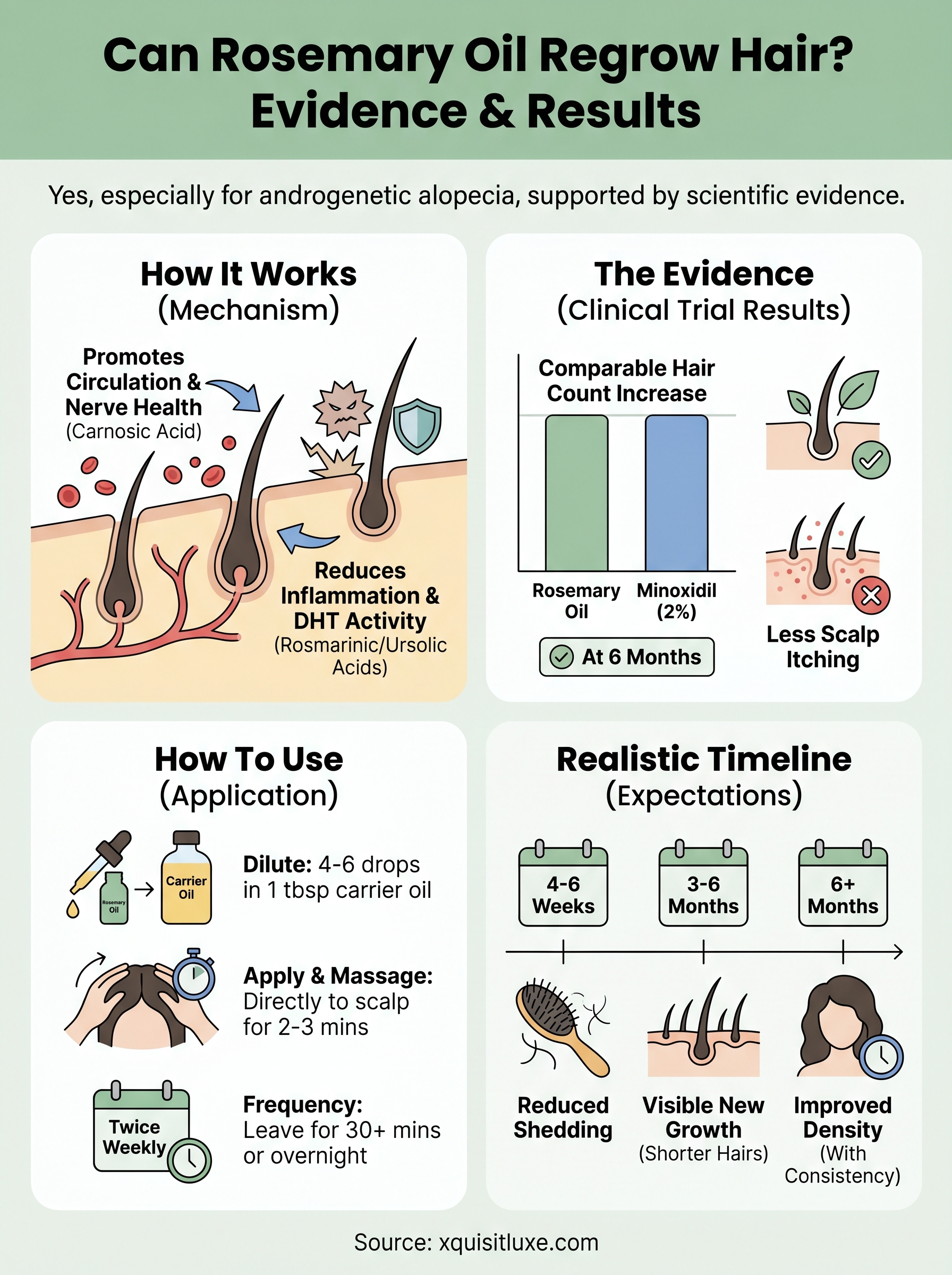
The compound most linked to rosemary oil's hair benefits is carnosic acid, a natural antioxidant found in the plant. Research suggests carnosic acid can help repair nerve tissue in the scalp, which in turn promotes circulation to the hair follicles. Better circulation means more nutrients and oxygen reach the root of each strand, which is where growth actually starts. This is not a vague wellness claim; it is the specific mechanism that researchers pointed to when designing clinical trials comparing rosemary oil to pharmaceutical treatments.
Carnosic acid's ability to stimulate nerve growth activity in scalp tissue is the primary reason rosemary oil outperformed expectations in early hair loss research.
Rosemary oil also contains rosmarinic acid and ursolic acid, both of which carry anti-inflammatory properties. Chronic scalp inflammation is a known contributor to conditions like androgenetic alopecia (pattern hair loss), so reducing that inflammation may help slow or reverse the process. When you ask whether can rosemary oil regrow hair, this is part of why the answer leans towards yes for certain hair loss types.
A long history before the science caught up
Long before clinical studies existed, Mediterranean and Middle Eastern cultures used rosemary topically for scalp health. Herbalists in these regions applied rosemary-infused oils and rinses to stimulate the scalp and strengthen hair roots. This traditional knowledge pointed researchers in the right direction, and modern studies have since validated what practitioners observed for centuries.
The fact that rosemary oil carries both a documented historical track record and a growing body of modern research sets it apart from many other natural hair remedies. While herbs like nettle or saw palmetto still rely mostly on anecdotal support, rosemary has genuine peer-reviewed backing. That combination of traditional use and clinical evidence is exactly why natural skincare formulations increasingly include it as a key active ingredient.
What the evidence says about rosemary oil regrowth
The most significant study behind the question of can rosemary oil regrow hair was published in 2015 in the journal SKINmed. Researchers compared rosemary oil directly against 2% minoxidil, one of the most widely used pharmaceutical treatments for androgenetic alopecia, over a six-month period. Both groups saw comparable increases in hair count by the end of the trial, which was a genuinely unexpected finding for a plant-based oil.
The 2015 clinical trial breakdown
Participants applied either rosemary oil or minoxidil to their scalp twice daily for six months. By month three, the minoxidil group showed slightly more regrowth, but by month six, rosemary oil had matched those results. Notably, the rosemary group reported significantly less scalp itching, a common side effect associated with minoxidil use. These findings positioned rosemary oil as a credible, lower-irritation alternative for people experiencing early to moderate hair thinning.
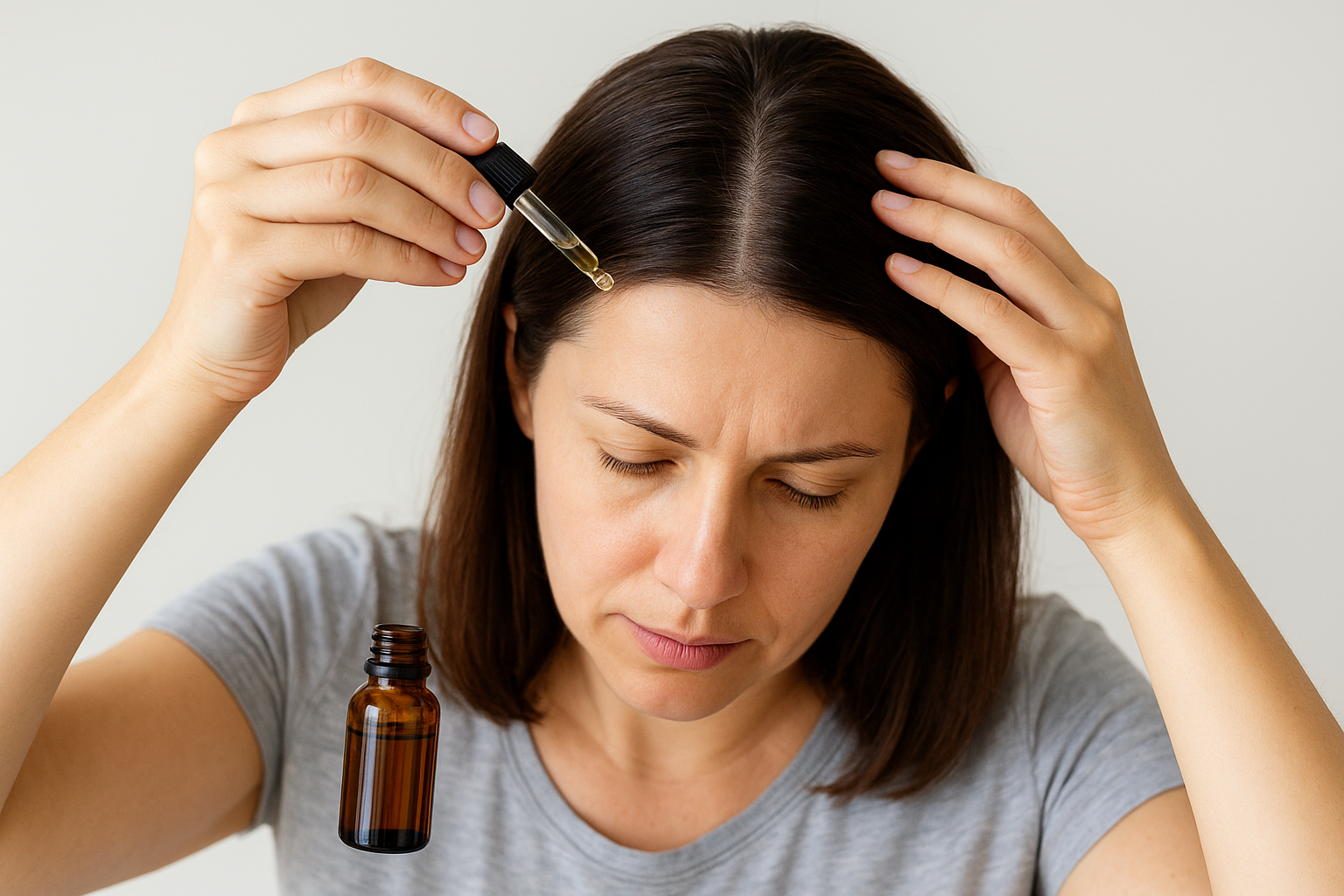
The fact that rosemary oil matched minoxidil results at six months, without the associated scalp irritation, is what made this trial a turning point for natural hair care research.
What the research does not claim
The evidence is promising, but it comes with important context. The studies conducted so far have focused primarily on androgenetic alopecia, which is hormonal pattern hair loss. If your hair loss stems from a different cause, such as nutrient deficiency, stress, or autoimmune conditions, the evidence is less clear-cut.
Researchers also acknowledge that larger, longer-term trials are still needed to fully confirm rosemary oil's efficacy across a broader population. The current evidence is strong enough to support regular use, but you should set realistic expectations rather than treating it as a guaranteed solution.
How rosemary oil may work on the scalp
Understanding the mechanism helps you decide whether rosemary oil is likely to work for your specific situation. Hair follicles depend on a consistent blood supply and a hormone-friendly environment to produce healthy strands. Rosemary oil appears to influence both of these factors, which is why researchers keep returning to it when asking whether can rosemary oil regrow hair for people with pattern thinning.
Stimulating blood circulation
When you apply rosemary oil to your scalp, its active compounds dilate the small blood vessels beneath the skin surface. This improves local circulation, delivering more oxygen and nutrients directly to the base of each follicle. Dormant or weakened follicles respond to this increased supply by reactivating growth cycles that may have slowed down considerably over time.
Better circulation at the follicle level is one of the most consistent mechanisms cited in studies linking rosemary oil to measurable hair count increases.
A scalp that receives strong blood flow also clears away metabolic waste more efficiently. This creates a cleaner environment at the root, reducing the build-up that can block follicle activity over successive growth cycles.
Blocking DHT at the follicle
Dihydrotestosterone (DHT) is a hormone by-product that gradually shrinks hair follicles in people with androgenetic alopecia. Ursolic acid, found naturally in rosemary oil, has shown an ability to inhibit 5-alpha reductase, the enzyme responsible for converting testosterone into DHT. By reducing DHT activity locally, rosemary oil may slow the miniaturisation process that leads to thinner, shorter strands with each passing cycle.
This DHT-blocking action also explains why consistent, long-term use matters far more than occasional application. The effect accumulates gradually at the scalp, which directly aligns with the six-month timeline observed in clinical trials before significant regrowth became measurable.
How to use rosemary oil for hair regrowth safely
Applying rosemary oil correctly matters just as much as using it regularly. Pure rosemary essential oil is highly concentrated, which means applying it directly to your scalp without diluting it first can cause irritation or even chemical burns. To get the benefits safely, you need to dilute it in a carrier oil before every application.
Diluting and applying correctly
Mix 4 to 6 drops of rosemary essential oil with one tablespoon of a carrier oil such as jojoba, coconut, or castor oil. Part your hair into sections, apply the mixture directly to your scalp using your fingertips or a dropper, then massage gently for two to three minutes. This massage step is not optional: it actively boosts blood circulation and helps the oil absorb into the scalp tissue where it needs to work.

Massaging the scalp for at least two minutes after application significantly increases the circulatory benefits that support the hair regrowth mechanism.
Before committing to full scalp coverage, do a patch test on a small area of skin, such as your inner wrist, and wait 24 hours to check for any reaction. If redness, itching, or swelling appears, discontinue use immediately.
Building a consistent routine
If you are asking whether can rosemary oil regrow hair in your specific situation, consistency is what determines the answer in practice. Apply the diluted mixture twice weekly at minimum, leaving it on for at least 30 minutes before washing it out with your regular shampoo. Some people leave it on overnight, which is fine as long as you protect your pillow with a towel. Stick to this routine for at least three months before evaluating your results.
What results to expect and when to see them
One of the most common questions people have when starting rosemary oil is how long it actually takes to work. If you are wondering can rosemary oil regrow hair within a few weeks, the honest answer is no. Hair growth is a slow biological process, and realistic expectations are essential to staying consistent enough to see genuine change.
The typical timeline for visible changes
Most people begin to notice reduced shedding before they see any new growth. This often happens around the four to six week mark, as the scalp environment starts to improve. Visible new growth, such as shorter strands appearing along the hairline or parting, typically becomes noticeable between three and six months of twice-weekly application. The clinical trial that compared rosemary oil to minoxidil used a full six-month window, which is the benchmark worth following.
Setting a six-month commitment before evaluating results gives rosemary oil enough time to work through multiple hair growth cycles.
Here is a rough guide to what you might observe at each stage:
- Weeks 1 to 4: Scalp feels less irritated, shedding may reduce slightly
- Months 1 to 3: Follicle activity begins to increase, minimal visible change
- Months 3 to 6: New shorter hairs appear, density begins to improve
- Beyond 6 months: Continued use maintains and builds on initial results
Why some people see better results than others
Your results depend heavily on the type and stage of hair loss you are experiencing. People with early-stage androgenetic alopecia tend to respond better than those with advanced thinning, because more follicles are still active and capable of recovery.
Factors like age, overall scalp health, and how consistently you apply the oil also play a significant role. Pairing rosemary oil with a nutrient-rich diet and a solid hair care routine gives your follicles the best possible environment to recover.
Key takeaways and next steps
So, can rosemary oil regrow hair? The evidence says yes, particularly for androgenetic alopecia, where clinical trials showed it matched 2% minoxidil results at six months with far less scalp irritation. The key active compounds, including carnosic acid and ursolic acid, work by improving scalp circulation and reducing DHT activity at the follicle level. Neither benefit delivers overnight results, but both produce measurable change when you stay consistent.
Your best results come from twice-weekly application of properly diluted rosemary oil, a six-month commitment, and pairing it with a supportive hair care routine. The earlier you start, the more responsive your follicles are likely to be. If you want a formulation that brings these botanicals together with everything your hair needs in one place, explore the natural hair care range at Xquisit Luxe Self Care, where certified natural ingredients and real results sit at the centre of every product.
