


Patchy patches. Slow growth. A beard that looks thin no matter how long you leave it. If you're searching for how to grow a fuller beard, you've probably already tried waiting it out, and that alone rarely works. Genetics set your baseline, but what you do daily has more influence over thickness and density than most men realise.
If you'd rather not guess, our Natural Beard Oil takes the guesswork out of it — see the rest of the Beard range too.
The honest answer involves a mix of factors working together, not one miracle product. Diet and hydration feed the follicle from the inside, while consistent grooming keeps existing hair healthy enough to reach its full length instead of breaking off early. Add targeted stimulation, the right oils, and patience, and you get visible change within a few months rather than false promises overnight.
Below are nine tips that actually move the needle, covering what to eat, how to care for your skin underneath the beard, and which grooming products genuinely support growth rather than just masking a thin patch. Whether you're starting from stubble or trying to thicken an established beard, these steps give you a practical routine to follow, starting today.
1. Nourish your beard daily with a natural oil
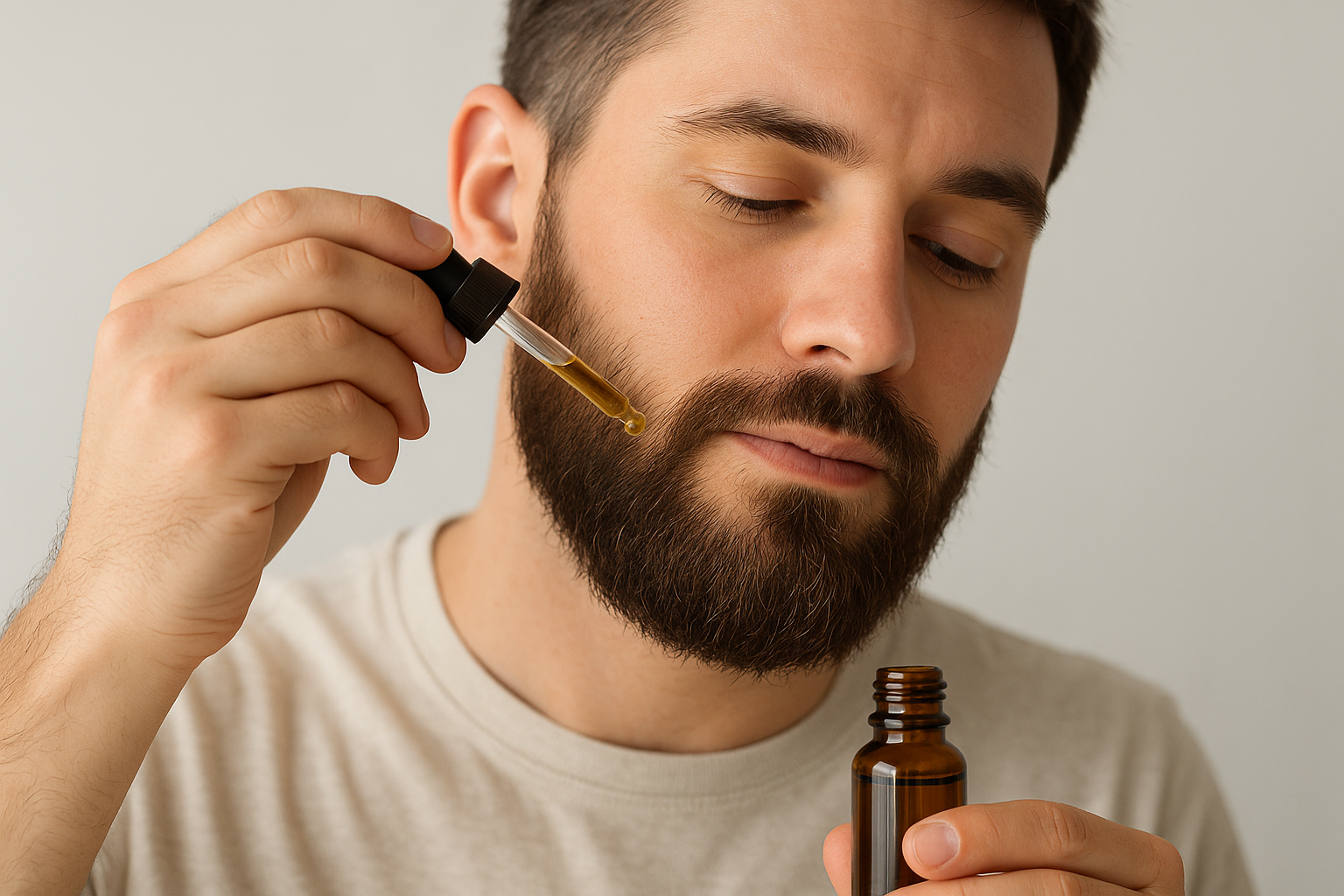
A dry, brittle beard breaks before it ever gets the chance to look full. That's why the first and most important habit is applying a natural beard oil every single day. Oil doesn't force hair to grow faster, but it stops the strands you already have from snapping off, splitting, or curling awkwardly, which is often the real reason a beard looks patchy rather than genuinely lacking follicles.
Why it matters
Facial hair sits further from your body's natural oil supply than the hair on your scalp, so it dries out quicker and looks coarser as it grows past a centimetre or two. Dry, unmanaged hair snaps mid-shaft, leaving you with uneven lengths that create the illusion of thin patches even when growth underneath is perfectly normal. A good oil also calms the skin beneath, reducing the itching and flaking that tempt men to shave the whole thing off just as it's starting to fill in.
A beard oil won't grow new hair, but it stops you sabotaging the hair you've already got.
How to do it
Look for oils built around ingredients with a track record for conditioning coarse hair and calming irritated skin, rather than anything loaded with synthetic fragrance or silicones that just sit on the surface.
- Jojoba oil mimics your skin's natural sebum, so it absorbs without leaving a greasy film.
- Argan oil is rich in vitamin E and fatty acids, which soften wiry strands and add shine.
- Castor oil is thicker and often used at the roots to support a healthier growing environment.
- Tea tree or rosemary extract helps with flaking and mild irritation on sensitive skin underneath.
Apply a few drops to clean, slightly damp skin each morning after cleansing, working it right down to the roots with your fingertips, not just over the surface hair. Two to three drops is enough for stubble; a fuller beard needs more to cover the extra surface area. Stick with the same routine daily rather than switching products every few weeks, since your skin needs time to adjust and show the benefit. This single habit, done consistently, is one of the most practical answers to how to grow a fuller beard that doesn't involve waiting for genetics to do all the work.
2. Give your beard time to grow before touching it
Patience beats every product on the market, yet it's the step most men skip. Reaching for the trimmer at the two or three week mark, when the beard looks uneven and itchy, is the single biggest reason growth stalls before it ever gets going. Every hair on your face grows at a slightly different rate, so an uneven beard in the early stages is normal, not a sign that you're missing follicles somewhere.
Why it matters
Facial hair grows in visible phases, and the patchy, scraggly look between weeks two and six is simply the shorter hairs catching up to the longer ones. Shave or trim during that awkward stretch and you reset the whole process, which is why so many men convince themselves they can't grow a fuller beard when really they've never let one finish growing out. Waiting also lets you see your actual pattern of density before you start shaping anything.
The patchy phase isn't a verdict on your beard, it's just the middle of the process.
How to do it
Commit to a minimum of four to six weeks with zero shaping, trimming, or lining up. Use this stretch to build your oil and cleansing routine instead.
- Ignore stray hairs on the cheeks and neck for now, they fill in the frame later.
- Resist the urge to trim anything below the jawline until week four at the earliest.
- Photograph your beard weekly so you can track genuine growth instead of judging it day to day.
- Talk to a dermatologist if you notice bald patches with no stubble at all after eight weeks, as that can point to a separate skin issue worth checking.
3. Cleanse and exfoliate the skin underneath
Hair doesn't grow well through clogged pores. Underneath every beard sits ordinary facial skin that still produces oil, sheds dead cells, and collects dirt, sweat, and product residue throughout the day. Skip cleansing there and you're effectively growing hair through a layer of buildup that slows new growth and irritates the follicles you already have.
Why it matters
A neglected beard skin routine leads to clogged follicles, beardruff (the beard version of dandruff), and ingrown hairs that stunt growth in specific patches. This is especially true once your beard passes the stubble stage, because longer hair traps more debris against the skin and makes it harder for natural oils to reach the surface. Exfoliating regularly clears away that dead skin so follicles stay open and healthy, giving each strand a proper environment to grow from rather than fighting through blocked pores.
A fuller beard starts with clean skin, not just longer hair.
How to do it
Wash your beard two to three times a week with a gentle, sulphate-free cleanser rather than ordinary bar soap, which strips too much natural oil and leaves skin tight and flaky. Exfoliate once a week using a soft-bristled beard brush or a mild scrub, focusing on the jawline and neck where ingrown hairs are most common.
- Wash with lukewarm water, not hot, to avoid stripping natural oils further.
- Brush daily in the direction of growth to lift dead skin and distribute oil evenly.
- Pat dry, don't rub, to avoid irritating sensitive skin underneath.
- Follow every wash with oil while skin is still slightly damp, since this locks in moisture far better than applying it to bone-dry skin.
4. Eat a beard-friendly diet
What you put on your plate matters just as much as what you rub into your skin. Facial hair is made largely of keratin, a protein your body can only build if you're supplying the right raw materials. A diet heavy in processed food and light on protein leaves your follicles undernourished, no matter how much oil you apply on top.

Why it matters
Beard growth depends on a steady supply of protein, vitamins, and minerals, particularly biotin, zinc, and vitamin D, all of which support keratin production and follicle health. Deficiencies in these areas show up as brittle hair, slow growth, and thinner coverage, which is why some men who train hard but eat poorly still struggle with patchy facial hair despite decent testosterone levels. Getting your nutrition right is one of the most overlooked ways to grow a fuller beard, because no topical product can compensate for a body that's short on building blocks.
You can't oil your way out of a nutrient deficiency.
How to do it
Build meals around whole foods that directly support hair structure rather than relying on supplements alone.
- Eggs and lean meat supply protein and biotin for keratin production.
- Spinach and nuts provide zinc and iron, both linked to healthy follicles.
- Oily fish like salmon delivers omega-3s that support scalp and skin health.
- Eggs, mushrooms, and sunlight help maintain vitamin D levels.
Aim for consistent protein at every meal rather than one large dose, and cut back on sugar and ultra-processed snacks that offer little for growth.
5. Exercise to boost testosterone and circulation
Sitting still all day does nothing for your jawline. Regular training gives your body two things a beard depends on: healthy testosterone levels and strong blood flow to the skin. Neither of these appears overnight, but men who train consistently tend to notice thicker, more even coverage than those who rely on diet and oil alone.
Why it matters
Testosterone and its derivative DHT both play a role in facial hair density, and resistance training is one of the few lifestyle factors proven to support healthy hormone levels naturally. Strength training in particular triggers short-term testosterone spikes, while any form of cardio improves circulation to the skin, carrying oxygen and nutrients straight to the follicles working underneath your beard. Poor circulation starves hair of what it needs before it even reaches the surface, which is one of the quieter reasons some men grow a fuller beard on one side of the face than the other.
Better blood flow means better delivery, and better delivery means a fuller beard.
How to do it
You don't need a punishing routine, just consistency across the week.
- Lift weights two to three times a week, focusing on compound movements like squats and deadlifts that produce the biggest hormonal response.
- Add cardio twice a week, even brisk walking, to keep circulation strong.
- Massage your jawline for a minute or two daily to encourage local blood flow directly to the follicles.
- Avoid overtraining, since chronic fatigue and excessive exercise can actually suppress testosterone rather than boost it.
6. Prioritise quality sleep
Skimping on sleep undoes half the work you put in during the day. Most of the repair and regrowth your body does happens overnight, so a beard that never gets a proper recovery window struggles to reach the density it's genetically capable of. If you're chasing how to grow a fuller beard while running on five hours a night, sleep is probably the missing piece.
Why it matters
Growth hormone, the compound responsible for tissue repair and cell turnover, is released mainly during deep sleep, and follicles rely on that same repair process to keep producing healthy strands. Cut your sleep short and you also disrupt testosterone production, since studies on sleep-restricted men consistently show lower morning testosterone after just a week of poor rest. Add in the fact that tired skin heals slower and looks duller, and you've got a direct line between poor sleep quality and a beard that looks tired right along with you.
A beard grows while you sleep, not while you scroll.
How to do it
Treat sleep as part of your grooming routine rather than something separate from it.
- Aim for seven to nine hours most nights, since consistency matters more than the occasional long lie-in.
- Keep a fixed bedtime, even at weekends, to protect your natural hormone rhythm.
- Cut caffeine after early afternoon, as it lingers in your system far longer than most men assume.
- Dim screens an hour before bed to help your body wind down and reach deep sleep faster.
Few changes cost nothing and pay off this widely, both for your beard and everything else your body is trying to repair.
7. Manage stress levels
Constant pressure at work or home doesn't just wear you down mentally, it shows up on your face, quite literally. Chronic stress pushes your body into survival mode, and hair growth sits low on the priority list when cortisol is running high. If you've been wondering why your beard stalled the moment life got busy, stress is worth investigating before you blame genetics again.
Why it matters
Elevated cortisol levels interfere with testosterone production and can push hair follicles into a resting phase earlier than they should, a condition called telogen effluvium that affects facial hair just as easily as scalp hair. Left unmanaged, chronic stress also tightens blood vessels near the skin, restricting the same circulation your follicles rely on for nutrients. Some men even develop stress-related bald patches on the jawline, a form of alopecia areata that dermatologists link directly to prolonged psychological strain. None of this means occasional bad weeks will ruin your beard, but sustained, unmanaged stress absolutely can.
A stressed body puts beard growth last on its to-do list.
How to do it
You don't need a complete lifestyle overhaul, just habits that keep cortisol from staying elevated for weeks at a time.
- Build in daily downtime, even fifteen minutes without screens or notifications.
- Try slow breathing or short meditation sessions, both shown to lower cortisol measurably within minutes.
- Get outside daily, since natural light and movement together reduce stress hormones more than either alone.
- Talk to someone, whether a friend, partner, or professional, rather than letting pressure build silently.
Managing stress won't transform a thin beard overnight, but it removes one more obstacle standing between you and consistent, even growth.
8. Stay properly hydrated
Water does more for your skin than any serum sitting in your bathroom cabinet. Every follicle producing a beard hair sits inside skin tissue that's roughly 60% water, and when that supply runs low, the whole system underperforms before you even notice you're thirsty. Men chasing how to grow a fuller beard often overlook this because hydration feels too basic to matter, yet it's one of the cheapest fixes on this list.
Why it matters
Dehydrated skin produces weaker, more brittle hair, and it also struggles to deliver the nutrients your follicles need to keep pushing out healthy strands. Chronic dehydration thickens blood slightly and reduces circulation efficiency, which ties directly back to the same nutrient delivery problem covered earlier with exercise and sleep. Skin that's short on water also flakes more, trapping dead cells around the follicle opening and making beardruff worse, undoing some of the cleansing work from earlier steps. Put simply, a well-hydrated body gives every other tip on this list a better chance of actually working.
Dry skin grows dry, brittle hair, no oil can fully fix what dehydration causes.
How to do it
Getting this right doesn't require tracking every glass, just building a few habits into your day.
- Drink water consistently through the day rather than large amounts in one sitting.
- Limit alcohol and excess caffeine, both of which pull water from your system faster than most men realise.
- Eat water-rich foods like cucumber, watermelon, and oranges alongside plain water.
- Moisturise skin underneath the beard as a topical backup, especially in colder or drier weather.
Regular hydration keeps skin supple and follicles fed, quietly supporting every other habit in your routine.
9. Trim and shape to create the illusion of fullness
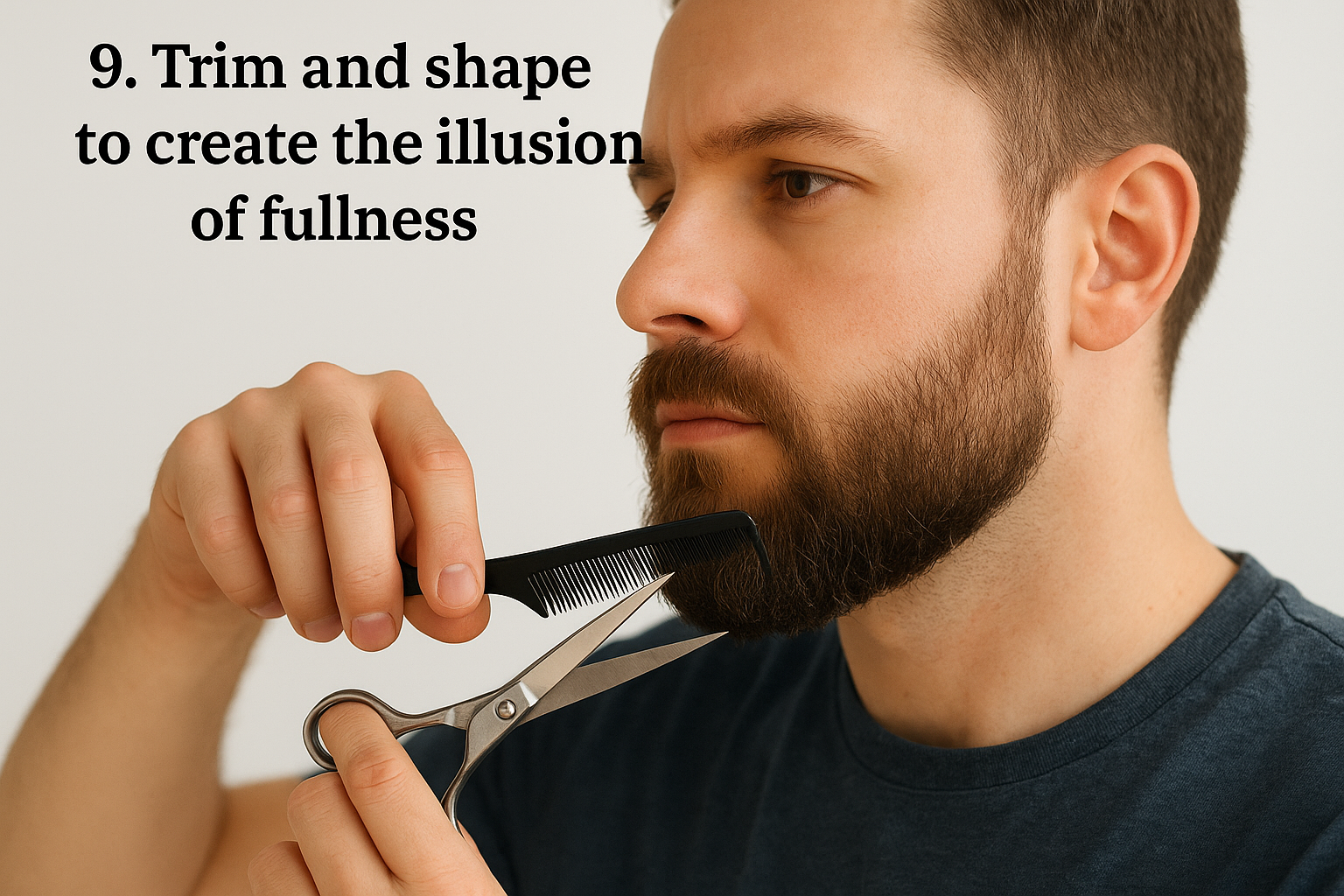
Sometimes growth isn't the actual problem, shape is. A beard can be perfectly healthy and still look thinner than it is simply because it's the wrong shape for your face or growing in uneven directions. Trimming isn't the enemy of a fuller beard, sloppy or premature trimming is. Done properly, a good shape tricks the eye into seeing density that raw length alone never delivers.
Why it matters
A sharp, well-defined beard line draws attention away from naturally sparser areas like the cheeks and creates a clean contrast that reads as fuller overall. Left completely untouched, stray hairs on the neck and cheeks blur that line and make the whole beard look scraggly rather than intentional, even when growth underneath is fine. Strategic beard shaping also lets you train hair to lie in one direction, which reduces the wild, uneven texture that makes patches stand out in the first place.
A well-shaped beard looks fuller than an unshaped one, even with the exact same amount of hair.
How to do it
Once you've cleared the four to six week growing-in period from tip two, start light shaping rather than aggressive cutting.
- Define your neckline just above the Adam's apple, never higher, to avoid shrinking your beard's visible surface area.
- Trim the cheek line gradually, following your natural growth pattern instead of forcing a straight edge.
- Use a comb and scissors for length control rather than clippers alone, which can take off more than intended.
- Trim every two to three weeks once shaped, keeping split ends off without undoing the fullness you've built.
Small, regular adjustments beat rare drastic ones for maintaining the appearance of density.
Consistency is the real secret
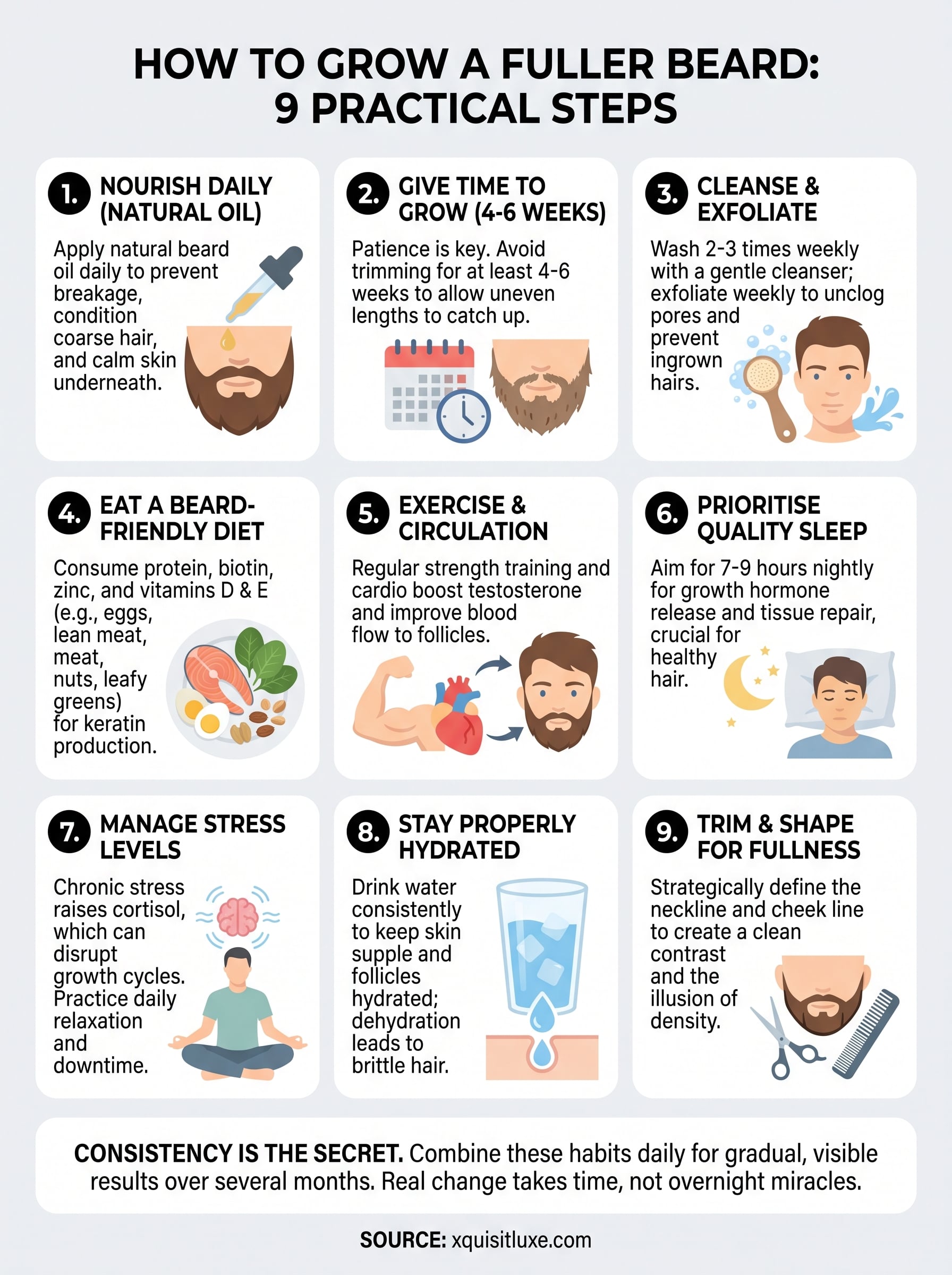
No single tip on this list works in isolation. Oiling daily matters far less if you're skipping sleep, and eating well won't compensate for constant stress or a dehydrated body starving your follicles of what they need. Growing a fuller beard comes down to stacking small, unglamorous habits and repeating them for months, not weeks. Real change shows up gradually, usually somewhere between eight and twelve weeks of sticking with a routine rather than jumping between products.
Think of it as maintenance for your whole body, not just your face. Your beard is simply reflecting what's happening underneath, so the men with the fullest, healthiest-looking beards aren't necessarily the luckiest with genetics, they're just the most consistent. Start with one or two habits from this list, build them properly, then layer in the rest.
If you want a genuinely natural, cruelty-free oil to build that daily routine around, explore Xquisit Luxe's grooming range and give your beard the consistent care it needs to fill in properly.
