


Scrub too often and your skin turns red, tight and sore. Scrub too little and you're left with dull patches, ingrown hairs and body lotion that just sits on the surface instead of sinking in. If you've ever wondered how often should you use a body scrub, you're not alone, and the answer depends on your skin type rather than a one-size-fits-all rule.
Our Coffee Body Scrub is built around exactly this approach — worth a look if you're ready to try it for yourself.
The short answer: most people do best exfoliating two to three times a week, giving skin enough time to repair its barrier between sessions. Dry or sensitive skin needs less, oily or rough patches like elbows and knees can handle more. Getting this exfoliation frequency right is what separates smooth, glowing skin from irritated, flaky skin.
In this guide, we'll break down exactly how to work out the right schedule for your skin type, what signs tell you you're overdoing it, and how to pair your scrubbing routine with proper aftercare. We'll also share how our dermatologist-tested, natural body scrubs fit into a healthy, sustainable exfoliation habit.
Why getting your body scrub frequency right matters
Your skin renews itself roughly every 28 to 40 days, shedding dead cells from the surface as fresh ones move up from below. When that process runs smoothly, skin looks bright and feels soft. When dead cells build up faster than they shed, you get the dull, flaky texture that makes fake tan patchy and moisturiser feel useless. Regular exfoliation speeds up that natural turnover, but only when you do it at the right pace for your skin.
Getting the frequency wrong causes problems in both directions. Scrub too rarely and dead skin cells accumulate, clogging pores and trapping hairs beneath the surface, which is exactly how ingrown hairs and rough patches on the arms and thighs form. Scrub too often and you strip away the skin's protective barrier before it's had a chance to rebuild, leaving it more vulnerable to moisture loss, redness and sensitivity. Dermatologists at the NHS note that over-exfoliating can actually damage the skin's surface and increase irritation rather than improve it, which is why moderation matters more than intensity.
Smooth, healthy skin comes from consistency, not from scrubbing harder or more often.
There's also a knock-on effect for everything else in your routine. Body oils, lotions and serums absorb far better into freshly exfoliated skin, so if your skincare products aren't sinking in the way they should, an overdue or overdone scrub session is often the reason. Nailing your frequency isn't just about the scrub itself, it's what makes the rest of your routine actually work.
Finally, your skin's needs shift over time. Hormones, weather, stress and even the products you're using alongside your scrub all affect how much exfoliation your skin can handle in a given week. Treating exfoliation as a fixed, unchanging habit ignores how dynamic skin actually is, which is why the next section walks through how to build a routine that flexes with what your skin is telling you.
How to build the right exfoliation routine for your skin
Start by figuring out your baseline. Most skin types settle into a rhythm of two to three sessions a week, but the only way to find your number is to test it. Begin with two sessions in your first week and watch how your skin responds over the following days before deciding whether to add a third.
Match frequency to skin type
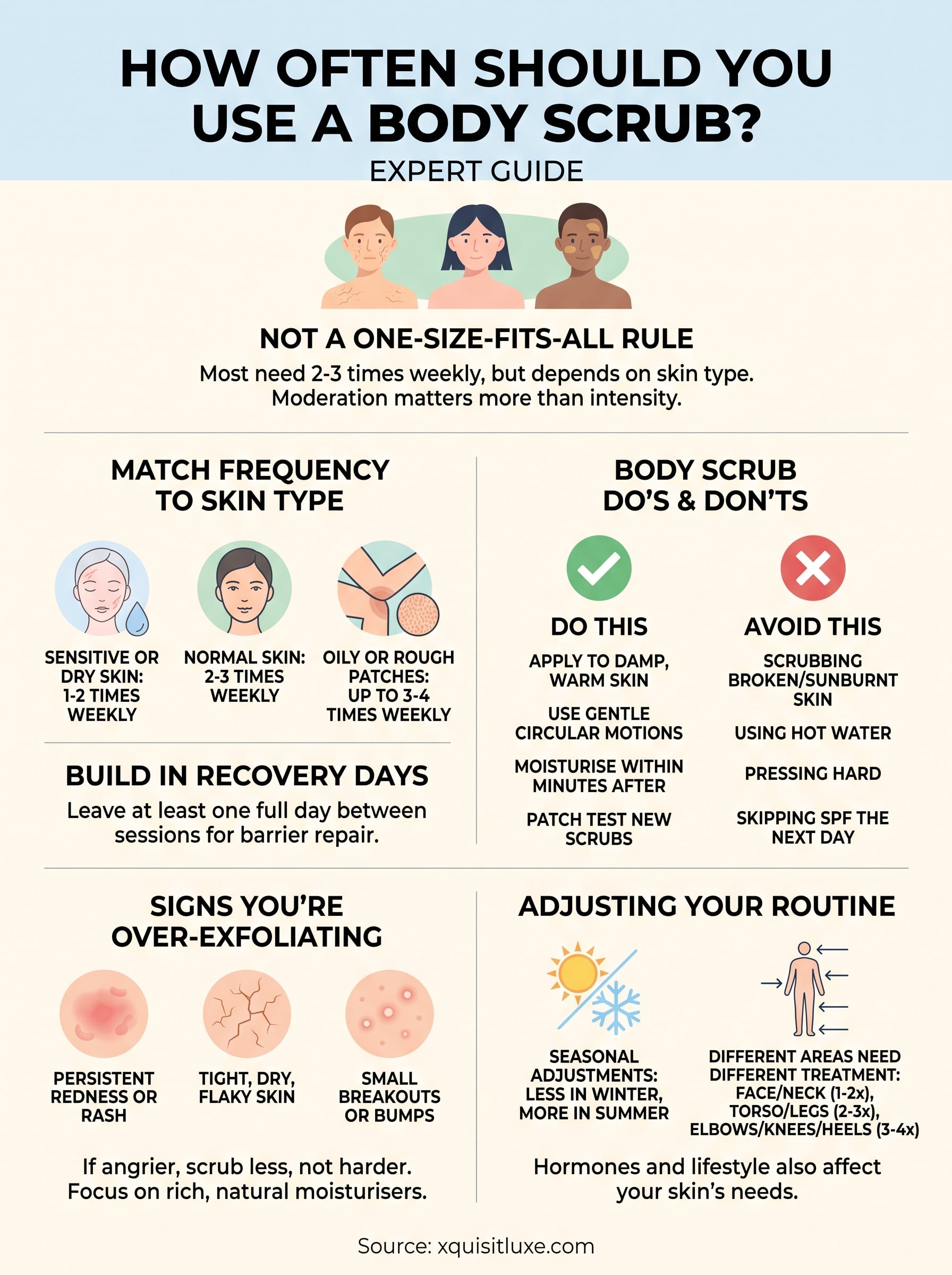
Dry or sensitive skin should stick to once or twice weekly, since barrier repair takes longer. Normal to oily skin tolerates three sessions well, especially on thicker areas like elbows, knees and heels. Use this as a starting point rather than a fixed rule:
- Sensitive or dry skin: 1 to 2 times weekly
- Normal skin: 2 to 3 times weekly
- Oily or rough patches: up to 3 to 4 times weekly on those areas only
Build in recovery days
Gaps between sessions matter as much as the scrub itself. Leaving at least one full day between exfoliation sessions gives your skin barrier time to rebuild before you disturb it again.
A good routine leaves room for your skin to recover, not just room for the next scrub.
Pair every session with a rich, natural moisturiser afterwards to lock in hydration while pores are still open. Consistency beats intensity here. A steady twice-weekly habit with proper aftercare will outperform an aggressive daily scrub every time, and it's far kinder to your skin's natural barrier in the long run.
Signs you're over-exfoliating and how to dial it back
Your skin usually tells you when you've pushed exfoliation too far, and the signs show up fast. Tightness right after a shower, patches of redness that don't fade within an hour, or a stinging sensation when you apply moisturiser are all early warnings that your exfoliation frequency has outpaced your skin's recovery time.
Watch for these warning signs
- Persistent redness or a rash-like texture, especially on thin-skinned areas like inner arms
- Skin that feels tight, dry or flaky even straight after moisturising
- Small breakouts or bumps where the barrier has broken down
- Increased sensitivity to products you've used for months without issue
- A shiny, raw look rather than the soft glow healthy exfoliation gives
Catching these early makes recovery straightforward. Drop back to once weekly for two weeks, skip anything with fragrance or alcohol, and focus purely on rich, natural moisturisers to rebuild the barrier.
If your skin looks angrier after scrubbing, that's your cue to scrub less, not harder.
Dialling back doesn't mean giving up exfoliation altogether. Rebuilding trust with your skin takes patience: reintroduce your scrub gradually, starting with gentler pressure and shorter sessions, and only increase frequency once redness and tightness have fully settled. Sensitive skin, in particular, benefits from switching to a finer-grain scrub during this recovery phase rather than cutting exfoliation out completely.
Adjusting your routine by skin type, season and body area
Winter air strips moisture faster than your skin can replace it, so cold months call for scaling back to once weekly with a richer, oil-based scrub. Summer heat and sweat clog pores more quickly, which means you can often push back up to three sessions a week without irritation. Seasonal adjustment isn't optional if you want consistent results year-round, since the same routine that worked in July can leave skin raw by January.
Different body areas need different treatment
Your face, body and feet don't renew at the same speed, so treating them identically wastes product and risks irritation. Use this as a rough guide:

- Face and neck: 1 to 2 times weekly with a gentle formula
- Torso and legs: 2 to 3 times weekly
- Elbows, knees and heels: 3 to 4 times weekly, these areas are thicker and recover faster
- Chest and back (prone to breakouts): 2 times weekly, more if oily
Treat your elbows like your face and you'll either over-scrub one or under-scrub the other.
Hormonal shifts matter too. Many women notice skin gets more reactive around their cycle, so dropping to once weekly during that window prevents unnecessary sensitivity. Men with coarse body hair on the chest or back often need slightly more frequent exfoliation there to prevent ingrown hairs, even while keeping other areas at a lighter pace.
Body scrub do's and don'ts for lasting results
Getting the frequency right only pays off if the technique around it is solid too. Small habits, like the water temperature you shower in or how hard you press the scrub against your skin, decide whether your routine builds healthy skin or quietly damages it.
Do this
- Apply scrub to damp, warm skin rather than dry skin, since warmth softens dead cells and makes them easier to lift away
- Use gentle, circular motions rather than dragging the scrub back and forth
- Moisturise within minutes of rinsing off to lock in hydration while pores are still open
- Patch test new scrubs on your inner arm before using them across your whole body
- Choose natural, biodegradable exfoliants over harsh synthetic beads that can micro-tear skin
Avoid this
- Scrubbing broken, sunburnt or freshly shaved skin, all of which are already compromised
- Using hot water, which strips natural oils faster than warm water
- Pressing hard to feel like it's working, pressure doesn't speed up results, it just causes irritation
- Skipping SPF the next day, since freshly exfoliated skin is more sun-sensitive
Technique matters as much as timing, a gentle scrub used correctly beats an aggressive one used on schedule.
Stick to these basics and your exfoliation routine becomes something your skin looks forward to, not something it has to recover from.
Your path to smoother, healthier skin
Getting exfoliation right isn't about finding one magic number and sticking to it forever. It's about starting with two to three sessions a week, watching how your skin responds, and adjusting for the season, your skin type and which part of your body you're treating. Your elbows and your face were never going to want the same schedule, and now you know why.
Remember that recovery days matter as much as the scrub itself, and that redness or tightness is your skin asking you to slow down, not push harder. Pair a sensible frequency with gentle technique and proper aftercare, and you'll see the difference within weeks rather than months.
If you're ready to put this into practice, explore our range of natural, dermatologist-tested body scrubs and give your skin the consistent, gentle care it's been asking for.
