


Dry skin doesn't just feel uncomfortable, it makes every other skincare step harder. Foundation clings to flaky patches, fine lines look deeper by mid-afternoon, and that tight sensation after cleansing never quite goes away. If you're searching for a proper skincare routine for dry skin, you've probably already tried a random assortment of creams that promised the world and delivered very little.
If you'd rather not guess, our Day & Night Facial Hydrating Serum takes the guesswork out of it — see the rest of the Effective Dry Skin Care Collection range too.
The real fix isn't buying more products, it's using the right ones in the right order, consistently. A good routine works with your skin's natural barrier rather than stripping it, layering gentle, hydrating formulas so moisture actually stays put instead of evaporating within the hour. That means rethinking your cleanser, adding the right serum, and never skipping moisturiser, even in summer.
In this guide, we'll walk you through building a routine step by step, from morning cleansing to night-time repair, with practical product choices at each stage. We'll also flag common mistakes that keep dry skin dry, like over-exfoliating or using hot water. By the end, you'll have a clear, repeatable routine designed to leave your skin properly hydrated, not just temporarily soothed.
Why dry skin needs a dedicated routine
Dry skin isn't simply a cosmetic annoyance, it's a sign that your skin barrier isn't doing its job properly. This outer layer, made up of skin cells and natural lipids, normally keeps moisture in and irritants out. When it's compromised, water escapes faster than your skin can replace it, leaving you with that tight, flaky, sometimes itchy feeling that no amount of face wiping seems to fix. A generic routine built for normal or combination skin simply won't address this, which is why a proper skincare routine for dry skin needs its own approach from cleanser through to SPF.
Your barrier needs repair, not just water
Many people assume dry skin just needs more water, so they reach for a lightweight lotion and call it done. Actually, dry skin usually needs lipid-replenishing ingredients like ceramides, fatty acids, and cholesterol, the same building blocks your barrier is missing in the first place. Without them, any water you apply evaporates within minutes, and you're back to square one by lunchtime. Rebuilding a compromised barrier takes weeks of consistent care, not a single rich cream applied on the worst days.
Fixing dry skin isn't about drowning it in water, it's about repairing the barrier that lets water stay in.
Dry skin vs dehydrated skin
Before building your routine, work out which condition you're actually dealing with, because dry skin and dehydrated skin need different fixes even though they feel similar. Dry skin lacks oil, or sebum, and tends to be a long-term skin type shaped by genetics and hormones. Dehydrated skin lacks water and can affect anyone, including people with naturally oily skin, usually as a temporary condition caused by weather, diet, or harsh products.
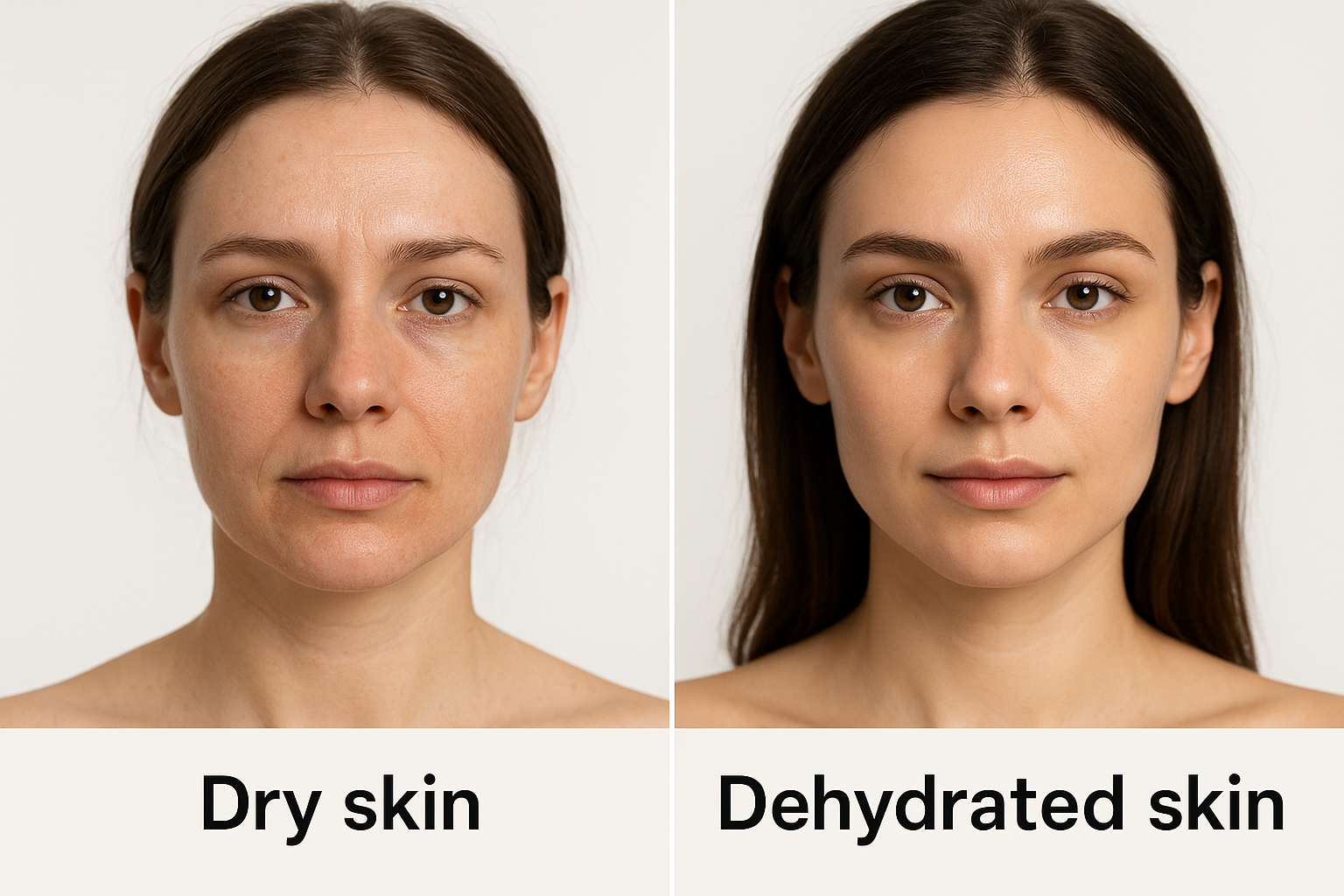
| Symptom | Dry skin | Dehydrated skin |
|---|---|---|
| Feels like | Rough, flaky, tight all over | Tight, but sometimes still shiny |
| Root cause | Low sebum production | Low water content in cells |
| How long it lasts | Ongoing skin type | Temporary, comes and goes |
| What helps | Oil-based moisturisers, ceramides | Humectants like hyaluronic acid |
| Common triggers | Genetics, ageing, cold weather | Poor diet, low water intake, alcohol |
Once you know which one you're dealing with, and many people with dry skin also have a layer of dehydration on top, you can pick products that actually solve the problem instead of guessing.
What happens if you skip the right steps
Ignoring dry skin's specific needs doesn't just leave you uncomfortable, it accelerates visible ageing. Skin without adequate lipids shows fine lines more prominently, because the surface isn't smooth or plump enough to soften them. Sensitivity increases too, since a weakened barrier lets irritants and allergens penetrate more easily, which is why so many people with dry skin also deal with redness or occasional breakouts, something that surprises them given how dry their skin actually feels.
Left unaddressed, this becomes a cycle. Skin gets drier, you reach for harsher products to compensate, and the barrier weakens further still. Persistent, severe dryness can also point to underlying conditions like eczema or psoriasis, so if a solid home routine isn't improving things after a few weeks, it's worth checking with your GP or a dermatologist, as advised by the NHS.
Building the right routine breaks this cycle before it starts, using gentle, barrier-supporting products in the correct order, both morning and night. That's exactly what the next six steps will help you put together.
Step 1. Cleanse without stripping your skin
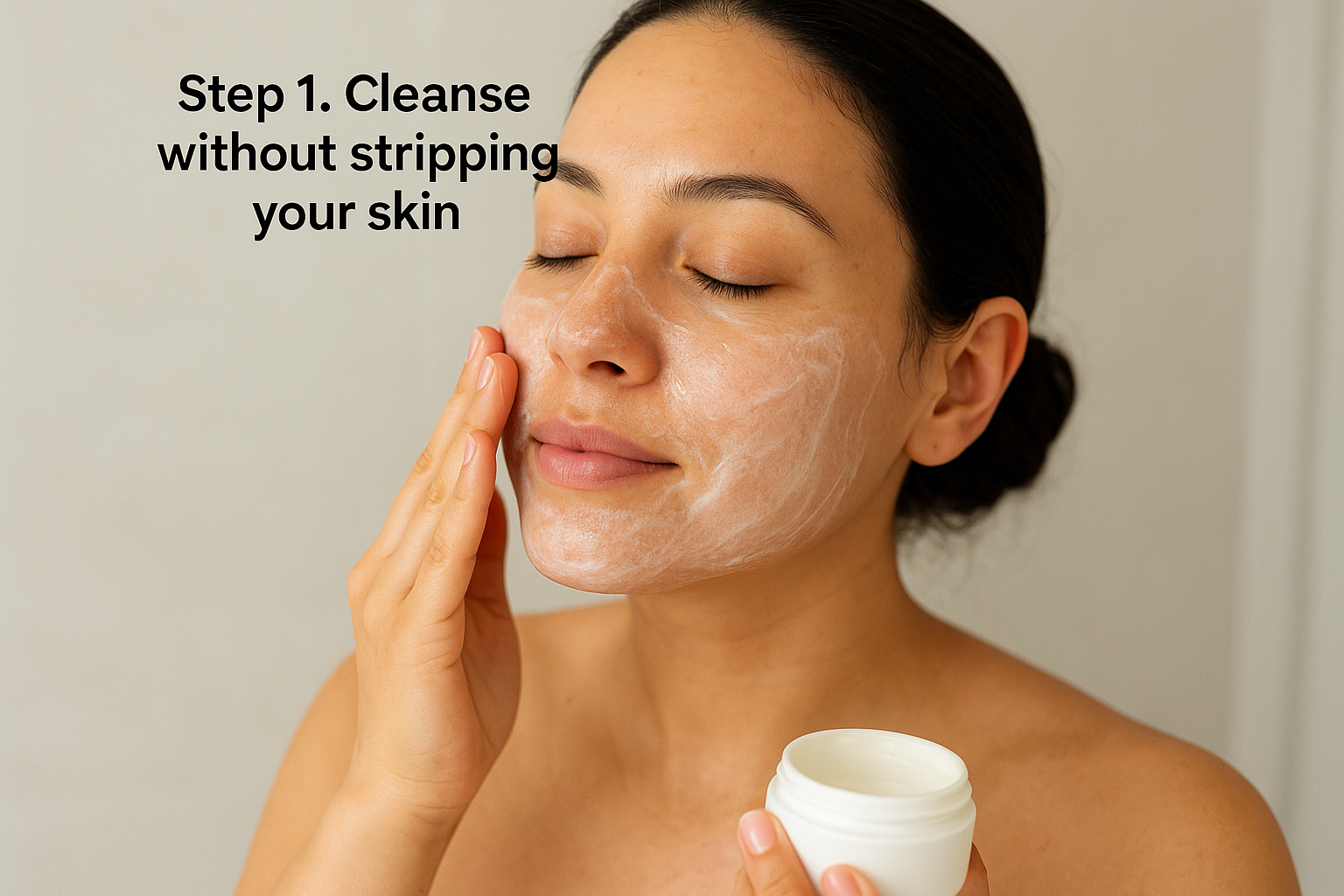
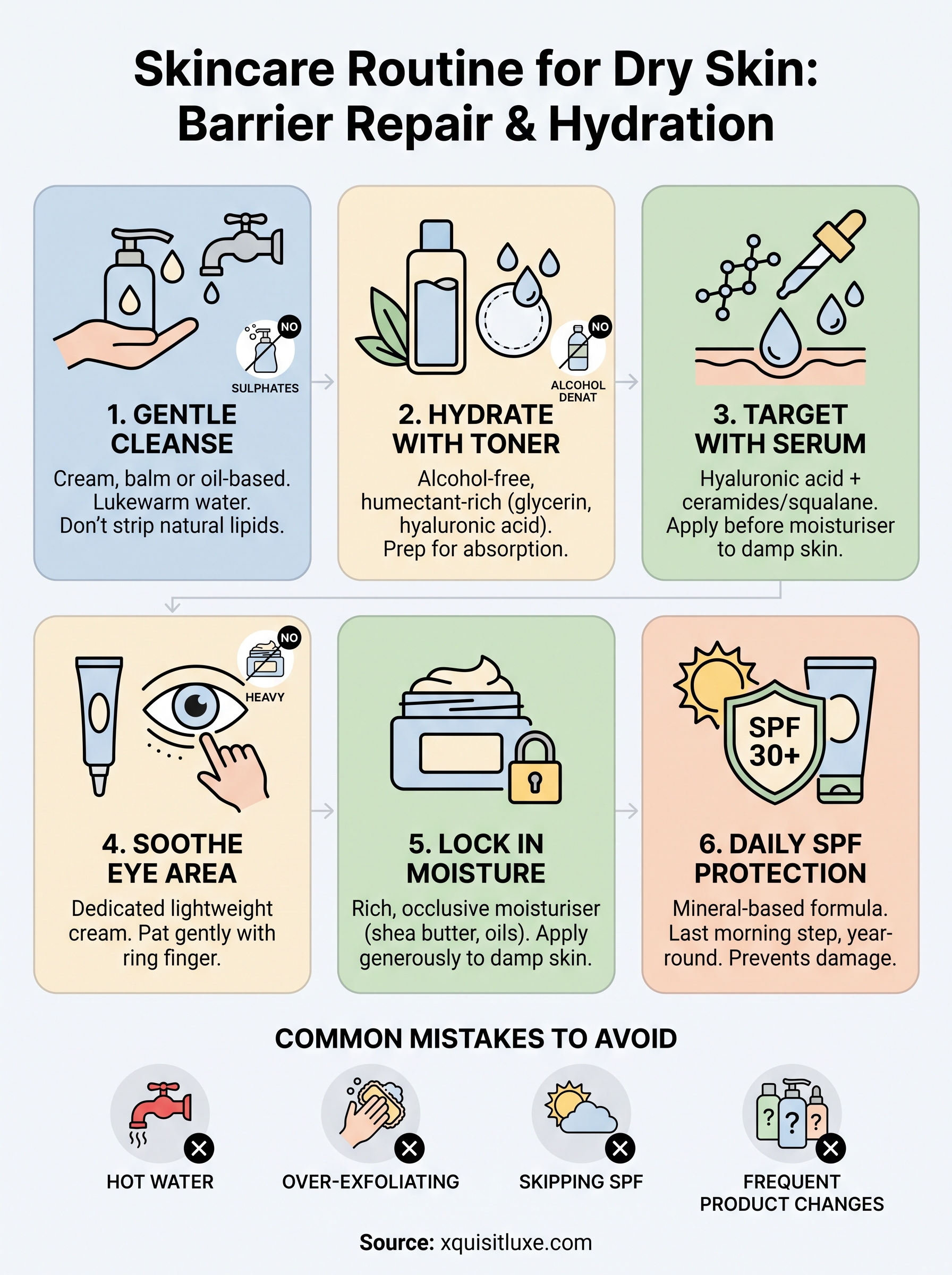
Cleansing is where most dry skin routines go wrong before they've even started. Foaming, sulphate-heavy cleansers strip away the very lipids your barrier needs, leaving skin squeaky clean but also tighter and flakier than before. For a proper skincare routine for dry skin, your cleanser should remove dirt and makeup without touching your skin's natural oils, which means switching your entire approach to what "clean" actually means.
Pick a cream or oil-based formula
Look for cream, balm, or oil cleansers rather than gels or foams. These formulas lift away impurities using emollients instead of harsh surfactants, so your skin stays soft rather than tight after rinsing. Xquisit Luxe's cleansers are formulated with this in mind, using gentle, certified natural ingredients that clean thoroughly without disturbing the barrier you're trying to rebuild. Check the ingredient list for words like glycerin, squalane, or plant oils, and steer clear of anything listing sodium lauryl sulphate near the top.
A cleanser that leaves your skin feeling tight has already undone half your routine before you've applied a single other product.
Keep the water lukewarm, not hot
Hot water feels comforting on a cold morning, but it strips lipids from your skin just as effectively as a harsh surfactant does. Lukewarm water does the same job of rinsing away product and grime without the damage, so make the switch even if it feels less indulgent. This one change, on its own, noticeably reduces post-cleanse tightness within a week or two for most people with dry skin.
Cleanse gently, twice a day
Don't assume that skipping your morning cleanse entirely is doing your skin a favour, because overnight residue from your moisturiser and any environmental buildup still needs removing.
- Morning: a quick rinse with a cream cleanser or micellar water is usually enough, since you're removing overnight product, not a full face of makeup.
- Evening: double cleanse if you wear SPF or makeup, starting with a balm or oil to dissolve product, followed by your regular cream cleanser.
- Application: use your fingertips, not a rough flannel or brush, and massage for 30 to 60 seconds before rinsing.
- Drying: pat skin dry with a clean towel rather than rubbing, and apply your next product while skin is still slightly damp to help lock in moisture.
Getting cleansing right sets up everything that follows, because a stripped barrier can't hold onto the hydration you're about to layer on top.
Step 2. Tone or use an essence for extra hydration
Toning gets a bad reputation because older formulas were built to strip oil from acne-prone skin, leaving a stinging, alcohol-heavy finish that's the last thing dry skin needs. Modern hydrating toners work completely differently. They prep your skin to absorb the next products more effectively while adding a genuine layer of moisture on their own, so this step earns its place in any proper skincare routine for dry skin rather than being an optional extra you can skip when you're rushing.
Skip astringent toners, choose hydrating ones
Before buying anything, flip the bottle over and check the ingredients rather than trusting the marketing on the front label. You want humectant-rich formulas built around glycerin, hyaluronic acid, or aloe vera, ingredients that draw water into the skin instead of pulling oil out of it. Avoid anything listing alcohol denat, witch hazel, or menthol near the top of the list, since these ingredients feel refreshing in the moment but leave dry skin more compromised an hour later.
If a toner tingles or feels drying, it's working against your skin, not for it.
Essences add an extra layer worth having
If you want to go a step further, an essence sits between toner and serum, delivering a lighter concentration of active ingredients in a more watery texture. Think of it as a bridge product, adding hydration and prepping skin for the richer treatments to come without feeling heavy. Essences aren't essential for everyone, but if your skin still feels tight after toning, adding one before your serum gives you another chance to build up moisture before you reach the heavier steps.
How to apply for best results
Application matters as much as the product itself, since patting works differently to rubbing on skin that's already struggling to hold moisture.
- Timing: apply toner or essence immediately after cleansing, while skin is still slightly damp.
- Method: pat the product in with your palms or fingertips rather than swiping with a cotton pad, which can drag and irritate dry, sensitive skin.
- Layering: if using both toner and essence, wait a few seconds between each so they absorb properly rather than sitting on the surface.
- Frequency: use morning and evening, right after cleansing, every single day for consistent results.
Get this layer right and every product you apply afterwards works harder, because you're building on skin that's already primed rather than starting from a dry, thirsty surface.
Step 3. Target concerns with a hydrating serum
Serums carry the highest concentration of active ingredients in your routine, which makes this the step where you actually address your specific dry skin concerns rather than just maintaining what you've got. Choosing a hydrating serum built around humectants and skin-identical lipids gives your barrier the raw materials it needs to hold onto moisture long after you've left the bathroom. Skip this step and you're relying on your moisturiser to do all the heavy lifting, which it simply isn't concentrated enough to manage on its own.
Look for hyaluronic acid and ceramides together
Hyaluronic acid holds up to 1,000 times its weight in water, but on its own in a dry environment it can actually pull moisture from deeper skin layers if there's nothing to seal it in. Pairing it with ceramides or squalane solves this, since these ingredients replenish the lipids your barrier needs while the hyaluronic acid does its water-binding work. Xquisit Luxe's serums combine these ingredient types deliberately, so you're not stuck choosing between hydration and barrier repair.
Hyaluronic acid without a sealing ingredient behind it can leave dry skin thirstier than before you started.
Layer serum before moisturiser, not after
Order matters enormously here, and it's the mistake that undoes a lot of otherwise good routines. Serums have a thinner consistency and should always go on before your moisturiser, never after, so the active ingredients can penetrate rather than sitting on top of a heavier cream barrier.
- Amount: two to three drops is usually enough, applied to slightly damp skin.
- Method: press gently with your palms rather than rubbing, giving the serum a moment to absorb.
- Timing: wait around 60 seconds before applying your next product.
- Frequency: twice daily works for most dry skin types, though some people prefer a richer serum at night only.
Give it time to work
One application won't transform anything, and expecting overnight results usually ends with people abandoning a serum that was actually working. Genuine improvements in barrier function and surface hydration typically show up after three to four weeks of consistent use, so resist the urge to switch products every fortnight. Sticking with one formula long enough to judge it fairly saves you money and gets you results faster than constantly restarting with something new.
Step 4. Soothe the eye area
The skin around your eyes is thinner than anywhere else on your face, with fewer oil glands to keep it supple, which means it dries out faster and shows the effects sooner. Fine lines, crepiness, and that hollow, tired look all get worse when this area is left to fend for itself in a skincare routine for dry skin that only focuses on cheeks and forehead. A dedicated eye cream isn't a luxury add-on here, it's addressing a genuinely different set of needs to the rest of your face.
Why your regular moisturiser isn't enough
Face moisturisers are formulated for skin with more oil glands and a thicker structure, so they're often too heavy or contain ingredients that irritate the delicate eye area, causing milia or puffiness rather than solving dryness. Dedicated eye creams are built with a lighter but more targeted formula, delivering hydration without clogging the fine skin around your lash line. Look for ingredients like peptides, hyaluronic acid, and vitamin E, which support elasticity while replenishing moisture where your skin needs it most.
Thin skin dries out faster, so treating your eye area like the rest of your face almost guarantees it stays parched.
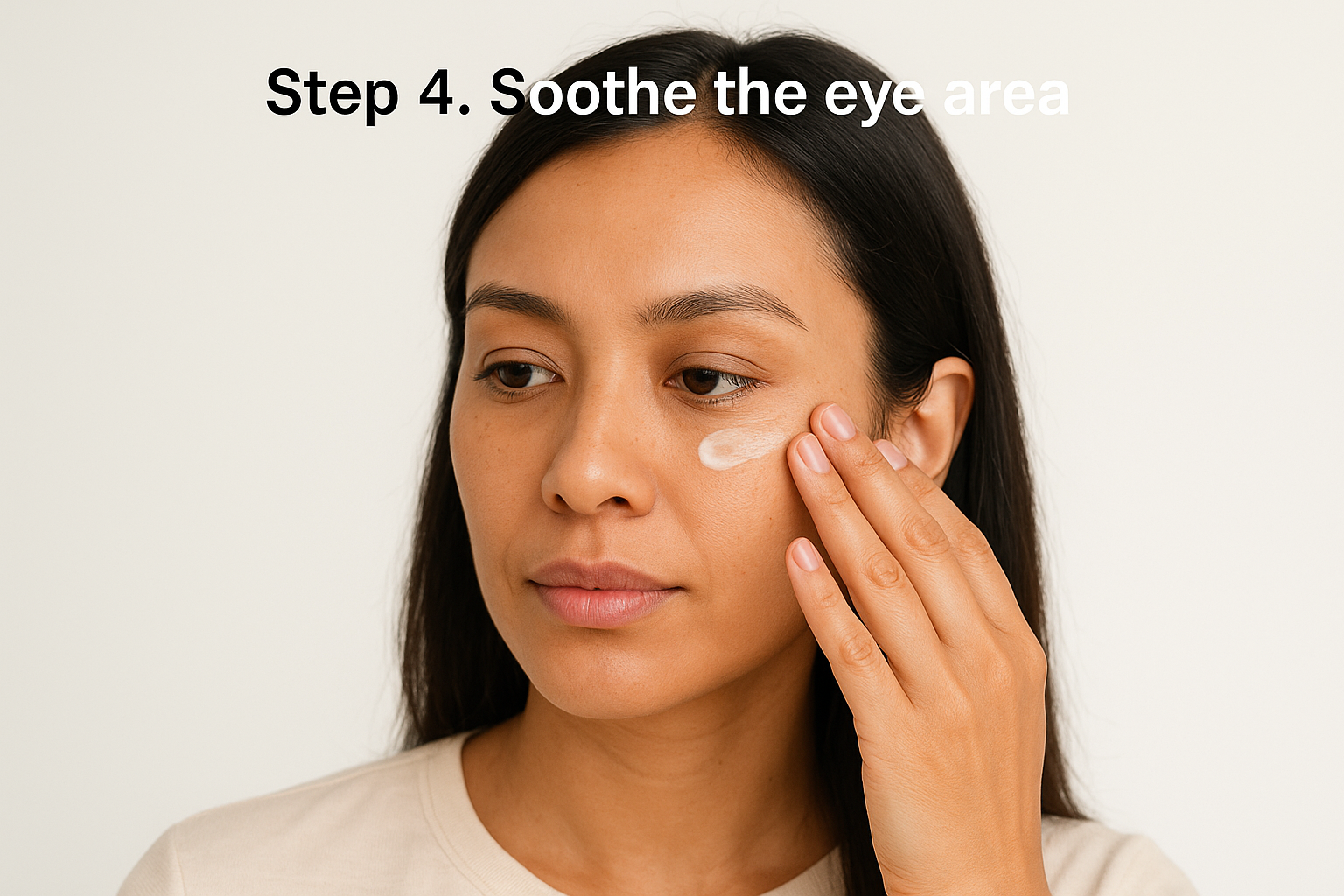
Apply with your ring finger, gently
How you apply eye cream matters just as much as which one you choose, since tugging at this fragile skin accelerates the very fine lines you're trying to prevent.
- Amount: a rice-grain sized amount is plenty for both eyes, more won't speed up results.
- Finger choice: use your ring finger, since it naturally applies the lightest pressure of any finger.
- Motion: pat gently along the orbital bone, from the inner corner outward, rather than rubbing or dragging.
- Placement: stay just above the cheekbone, avoiding direct contact with the lash line to prevent product migrating into your eyes.
- Order: apply after serum and before your heavier moisturiser, so the lighter formula absorbs first.
Consistency matters more than price
Don't assume a higher price tag guarantees better results here, since consistent, gentle application twice daily does far more for dry under-eye skin than an occasional expensive splurge. Most people notice reduced tightness and flakiness within two to three weeks of daily use, though deeper concerns like fine lines take longer, often around eight weeks, to show visible change. Keep your eye cream in your morning and evening routine permanently rather than treating it as something you only remember when your under-eyes feel particularly dry, because prevention works far better than damage control once the skin barrier there is already compromised.
Step 5. Lock in moisture with a rich moisturiser
Moisturiser is the step that seals in everything you've just applied, so skimping here undoes the work of your serum and eye cream in one go. For dry skin, you need a rich, occlusive moisturiser that forms a protective layer on top of the skin, slowing down water loss rather than just adding a splash of hydration that evaporates within the hour. This is also the product most people underuse, applying a thin layer meant for oily skin when dry skin genuinely needs more.
Choose ingredients that seal, not just soothe
Check the label for occlusive ingredients like shea butter, squalane, or plant oils, alongside emollients such as ceramides that smooth and repair the surface. These work differently to the humectants in your serum, sitting on top of skin to physically block moisture from escaping rather than pulling water in. Xquisit Luxe's moisturisers combine both types deliberately, so you get replenishment and protection in a single step rather than needing to layer multiple products to achieve the same effect.
A moisturiser that absorbs instantly and disappears within minutes usually isn't doing enough for genuinely dry skin.
Apply generously while skin is still damp
Damp skin absorbs moisturiser more effectively than dry skin, so timing your application within a minute or two of your serum makes a real difference to how well the product performs.
- Amount: use a full pea to almond-sized amount, more than you'd think, and don't be afraid to apply a second thin layer if skin still feels tight after a few minutes.
- Method: warm the product between your palms first, then press it into skin rather than rubbing it in.
- Neck and jawline: extend application past your jaw, since these areas dry out just as easily and are often forgotten.
- Night version: consider a richer, heavier formula for evenings when you're not worried about makeup sitting on top.
Don't skip it in warmer months
Many people with dry skin swap to a lighter lotion once summer arrives, assuming heat means less need for richness, but air conditioning and increased sun exposure can dry skin out just as much as winter cold. Sticking with a consistent, rich formula year-round, adjusting texture slightly rather than skipping the step altogether, keeps your barrier stable instead of yo-yoing between seasons.
Step 6. Protect your skin with daily SPF
Skipping sunscreen undoes every careful step you've just taken, because UV damage breaks down collagen and weakens the very barrier you've spent weeks rebuilding. Dry skin is particularly vulnerable here, since a compromised barrier already struggles to defend itself against environmental stress, and UV exposure adds another layer of harm on top. No skincare routine for dry skin is complete without daily SPF, regardless of season or how grey the sky looks outside.
Choose a hydrating, mineral-based formula
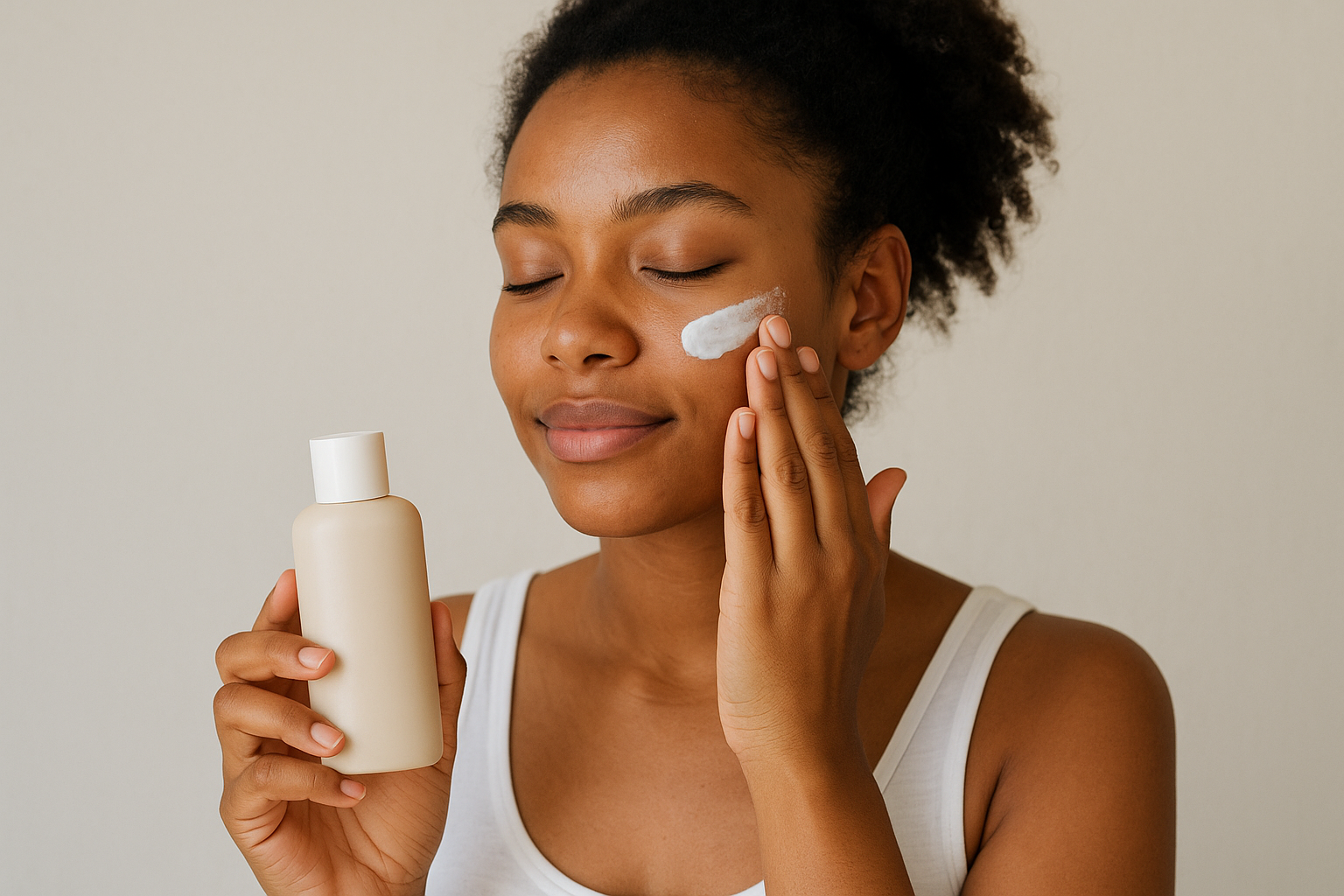
Face the reality that many sunscreens are formulated for oily skin, leaving dry skin feeling tighter than before you applied them. Look instead for a mineral SPF containing zinc oxide or titanium dioxide, blended with hydrating ingredients like glycerin or hyaluronic acid, since these formulas protect without stripping moisture. Chemical sunscreens work fine for many people, but if yours tends to sting or leave a dry, cast-like finish, switching to a mineral formula built for sensitive, dry skin usually solves the problem entirely.
Sunscreen isn't an optional extra for sunny days, it's the step that protects everything else your routine is trying to fix.
Apply as your final morning step
Order matters here just as much as it does earlier in your routine, since sunscreen needs to sit on top to do its job properly.
- Timing: apply SPF as the very last step in your morning routine, after moisturiser, never before it.
- Amount: use roughly a quarter teaspoon for your face alone, more than most people apply by habit.
- Coverage: don't forget your ears, neck, and the back of your hands, areas that show sun damage just as visibly as your cheeks.
- Reapplication: top up every two hours if you're outdoors for extended periods, using a powder or spray formula over makeup if reapplying cream feels impractical.
Wear it every single day, not just in summer
Overcast skies feel like permission to skip SPF, but UVA rays penetrate cloud cover and glass just as effectively as they do on a clear day, which is why dermatologists and the NHS recommend daily protection regardless of weather. Wearing sunscreen consistently, even through a grey British winter, prevents the kind of cumulative damage that shows up years later as fine lines and uneven tone. Treat it as non-negotiable as cleansing, and your dry skin routine finally has the protection it needs to hold onto every bit of progress you've made.
Common dry skin mistakes and how to avoid them
Even a carefully built skincare routine for dry skin can fail if a few habits quietly undo the good work. Most of these mistakes feel harmless, sometimes even helpful, which is exactly why they're so easy to repeat for months without realising they're the reason your skin still feels tight. Spotting them early saves you weeks of frustration and wasted product.
Over-exfoliating to chase smoothness
Flaky patches tempt people into scrubbing harder or exfoliating more often, but this strips away the surface cells your barrier needs for protection, leaving skin rawer than before. Chemical exfoliants like lactic acid are gentler than physical scrubs, and once or twice a week is plenty for dry skin. Anything more frequent keeps reopening the same wound you're trying to heal.
Exfoliating dry skin more often doesn't smooth it faster, it just keeps the barrier from ever fully repairing.
Skipping moisturiser because skin feels oily on top
Dry skin can still produce a shiny T-zone, and it's tempting to skip moisturiser there thinking you're avoiding excess oil. Actually, that shine is often your skin overcompensating for dehydration, and withholding moisturiser only makes it worse. Apply consistently across your whole face, adjusting texture rather than skipping the step in certain areas.
Changing products too frequently
Jumping to a new serum or moisturiser every few weeks because you're not seeing instant results means you never give any single formula the three to four weeks it genuinely needs to work.
| Mistake | Why it backfires | What to do instead |
|---|---|---|
| Hot showers and washes | Strips natural lipids fast | Use lukewarm water only |
| Skipping SPF in winter | UVA still damages barrier | Wear SPF every day, year-round |
| Switching products weekly | Never enough time to judge results | Commit to one formula for a month |
| Using alcohol-based toners | Dries skin further despite fresh feel | Choose humectant-rich, alcohol-free toners |
| Applying products to fully dry skin | Reduces absorption and effectiveness | Apply while skin is still slightly damp |
Ignoring lifestyle factors
Routines matter, but central heating, low water intake, and long hot baths all work against everything you're applying topically. Addressing these alongside your product routine, rather than relying on creams alone to fix a barrier under constant environmental strain, gets you results faster and keeps them lasting longer.
Building your routine into a lasting habit
A proper skincare routine for dry skin isn't about finding one miracle product, it's about six steps done consistently, in the right order, for weeks rather than days. Cleanse gently, hydrate at every layer, and never skip moisturiser or SPF, and your barrier gets the chance to actually repair itself instead of limping from one dry patch to the next.
Give it time. Real barrier repair shows up gradually, usually within three to four weeks, so judge your routine on a month of consistent use rather than how your skin feels after a single night. Small, repeatable habits beat expensive one-off purchases every time.
If you're ready to put this routine into practice, browse Xquisit Luxe's natural skincare collection for cleansers, serums, and moisturisers formulated specifically to support dry, sensitive skin, with free UK shipping over £25 and a 30-day guarantee if it isn't right for you.
