


Rough patches on your elbows, dull skin on your legs, a body wash that never quite cuts it. If that sounds familiar, you're missing a step, and it's simpler to fix than you think. Knowing how to use a body scrub properly is the difference between skin that looks tired and skin that actually glows.
This guide gives you the exact routine: when to scrub in your shower, how much pressure to use, and how often you should be doing it. We'll cover the right technique for buffing away dead skin without irritating it, plus how to follow up so your skin locks in moisture instead of drying out. Get this wrong and you can leave skin red or flaky. Get it right and you'll notice softer, brighter skin within your first few uses.
We'll walk through each step in order, from wetting your skin to rinsing off, and explain why the order matters. You'll also learn how to pick a scrub suited to your skin type, something we take seriously with our natural, dermatologist-tested formulas designed for sensitive and normal skin alike.
What a body scrub does for your skin
Your skin sheds around 30,000 to 40,000 dead skin cells every hour, but that process slows down as you get older or when your skin is dry. Those cells don't just disappear, they sit on the surface and build up, creating a dull, flaky layer that blocks moisturiser from doing its job properly. A body scrub physically lifts that layer away, using small granules or grains to buff the surface and reveal the fresher skin underneath. This is why exfoliated skin looks brighter almost instantly, you're not adding glow, you're removing the barrier that was hiding it.
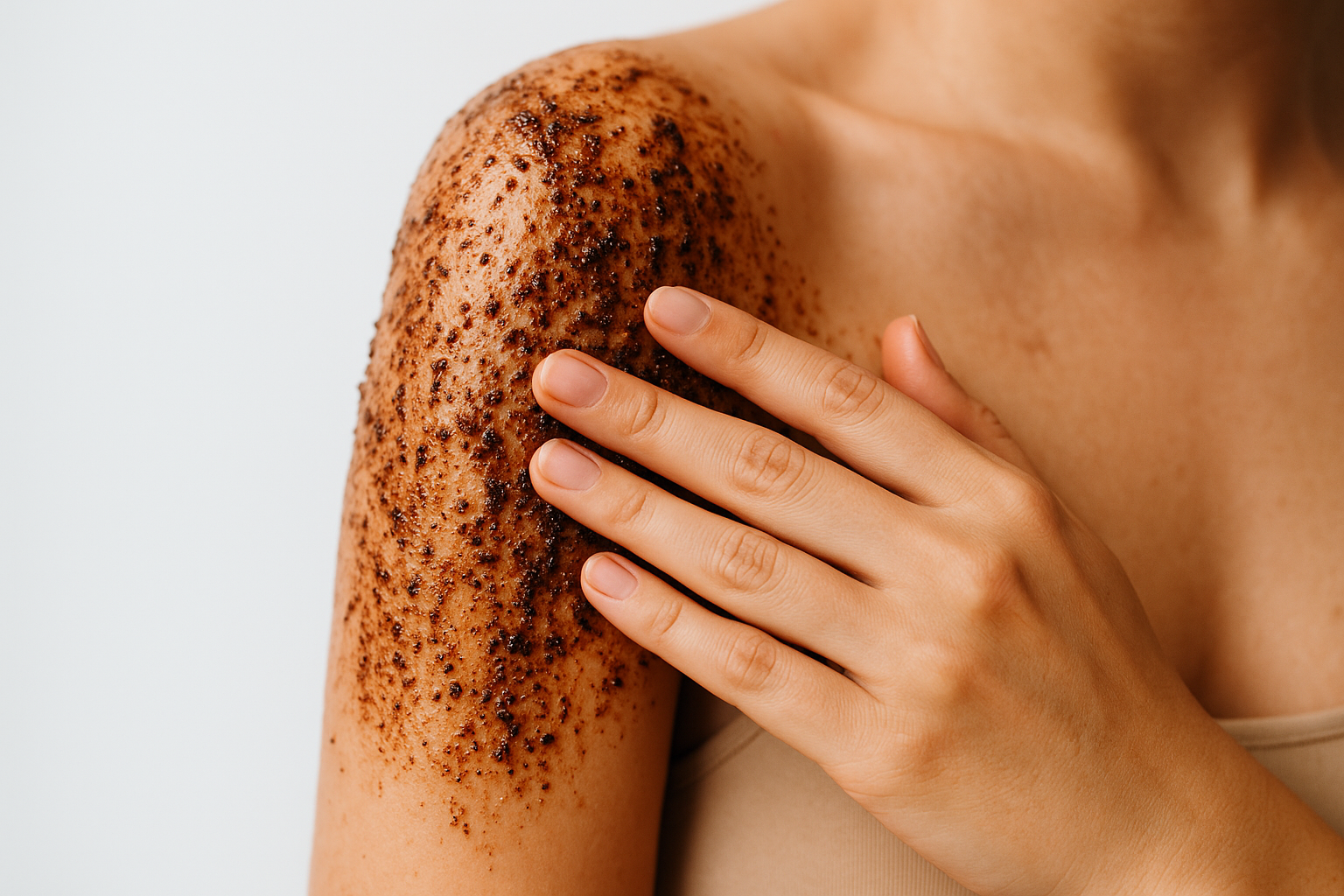
Why exfoliation matters more than you think
Beyond the visible shine, regular exfoliation improves how your skin behaves long term. Dead skin buildup clogs pores on the body just as it does on the face, which is why you get those small bumps on the backs of arms or thighs. Clearing that buildup also helps ingrown hairs, since hair has an easier path to the surface when it's not trapped under dead cells. And when you understand how to use a body scrub consistently, you're setting up every product that follows, from body oil to lotion, to actually absorb rather than sit on top of dry, flaky skin.
Exfoliation doesn't create glow, it removes what's blocking it.
What changes on your skin
Here's a quick breakdown of what scrubbing regularly actually does, so you know what to expect and roughly when.
| Benefit | What you'll notice | Typical timeframe |
|---|---|---|
| Smoother texture | Rough patches on elbows, knees, feet soften | 1 to 2 uses |
| Brighter tone | Skin looks less dull, more even | Immediately after rinsing |
| Fewer ingrown hairs | Less redness and bumps after shaving | 2 to 3 weeks |
| Better product absorption | Lotion sinks in faster, less greasy residue | Immediately after |
| Softer keratosis pilaris bumps | Reduced roughness on arms and thighs | 4 to 6 weeks |
This is also why picking a natural, gentle formula matters. Harsh synthetic grains can create micro-tears in the skin, which cancels out the benefits and leaves you with irritation instead of a glow. The goal is buffing away what's dead without damaging what's healthy underneath, which is exactly why technique matters as much as the product itself.
Step 1. Prepare your skin
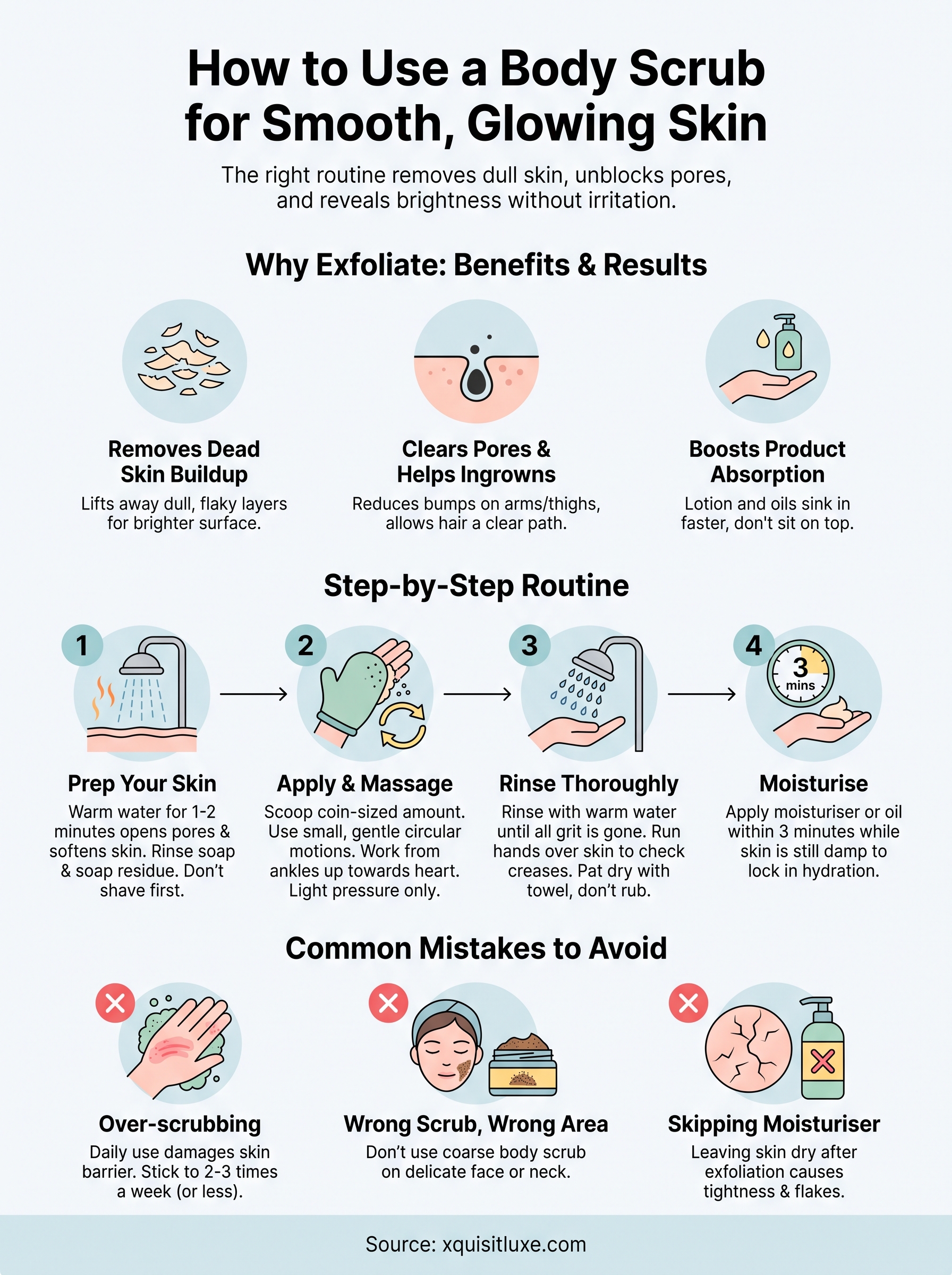
Getting this right starts before the scrub even touches your skin. Warm water opens your pores and softens the top layer of dead skin, so your scrub works with your skin rather than dragging across dry, resistant patches. Step into the shower and let the water run warm, not scalding, for at least a minute or two before you reach for anything else. Skip this step and you'll need to press harder to get the same effect, which is exactly what leads to irritation later on.
Warm water does half the work before you even pick up the scrub.
Next, rinse off any soap or body wash residue and pat down any areas that are particularly dry, like elbows or shins, with a bit of extra water. Dry skin exfoliates unevenly, so a slightly damp, warmed surface gives you a smoother result across the whole body. Avoid shaving right before you scrub, since freshly shaved skin is more sensitive and prone to nicks reopening.
Here's a quick checklist to run through before you start:
- Shower with warm water for 1 to 2 minutes first
- Rinse away any existing product or soap
- Skip shaving on the same day, if possible
- Have your scrub and towel within reach so you're not dripping across the bathroom
- Check your skin isn't broken, sunburnt, or freshly waxed
Once your skin feels warm and slightly damp rather than soaking wet, you're ready to move on. This short bit of prep takes under two minutes but makes a real difference to how comfortable and effective the next step feels.
Step 2. Apply and massage the scrub
Scoop a coin-sized amount of scrub into your palm or a mitt and work in small, circular motions rather than dragging it back and forth. Circular motions lift dead skin more evenly than straight strokes, and they're gentler on the delicate skin over joints and bone. Start at your ankles and work upwards towards your heart, this follows the direction of lymphatic flow and gives legs and arms a slightly firmer, more toned look over time.
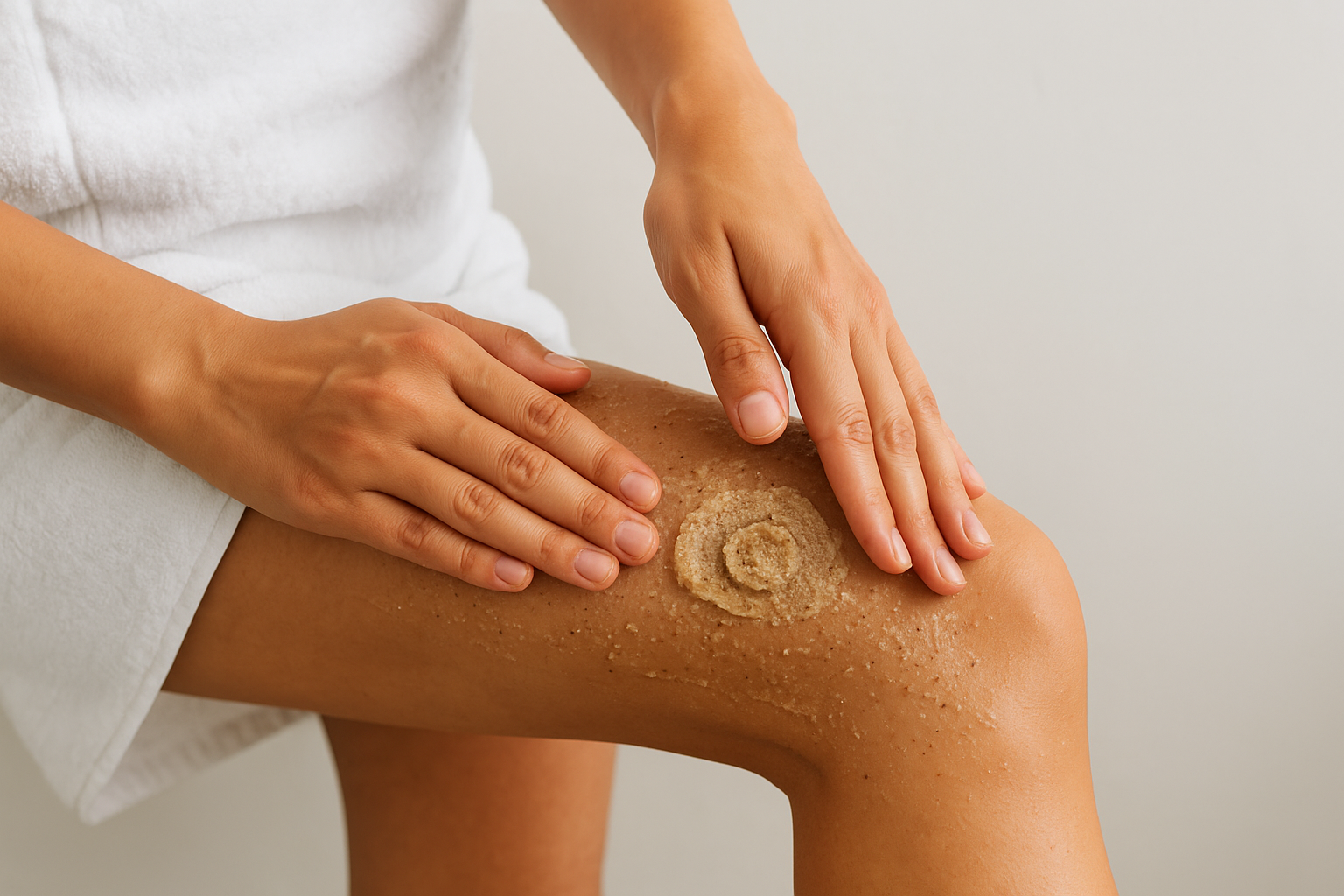
Pressure matters more than most people realise. You want enough friction to feel the grains working, but not so much that your skin goes pink and stays that way after rinsing. If you're scrubbing hard enough to leave marks, you're overdoing it. Light pressure repeated for 20 to 30 seconds per area beats one aggressive pass every time.
If your skin stays pink after rinsing, you've scrubbed too hard.
Pay extra attention to rough zones like elbows, knees, and heels, where dead skin builds up fastest, but slow right down around your knees, inner thighs, and anywhere the skin is thin. Avoid your face entirely unless the scrub is specifically labelled for facial use, since body scrub grains are usually too coarse for that skin.
Work section by section rather than covering your whole body at once. This stops the scrub drying out on your skin before you've had a chance to properly massage it in, which reduces its effectiveness and makes rinsing harder later.
Step 3. Rinse and moisturise
Rinsing well matters just as much as the massage itself. Turn the water back to warm, not hot, and rinse each area until every trace of grit is gone, running your hand over your skin to check for leftover scrub particles in creases like the backs of knees or ankles. Leftover grains can keep exfoliating after you've stepped out, which irritates skin rather than smoothing it. Pat yourself dry with a towel instead of rubbing, since freshly exfoliated skin is more sensitive to friction for the next hour or so.
Rinse thoroughly, don't scrub again
Avoid the temptation to go over rough patches a second time once you've rinsed. Skin that's just been exfoliated is already doing its job, and a repeat pass only strips more than it should. One thorough rinse is enough if you applied the scrub properly in step two.
Moisturise while skin is still damp
Apply your body moisturiser or oil within three minutes of stepping out, while skin is still slightly damp. This locks moisture into the fresh layer you've just revealed, rather than letting it evaporate first. Newly exfoliated skin absorbs product noticeably faster, so you'll use less and still see better results.
Moisturise within three minutes of rinsing, or you're wasting the exfoliation.
Work moisturiser upwards in the same direction you scrubbed, paying extra attention to elbows, knees, and heels where dryness returns fastest.
Common body scrub mistakes to avoid
Even with good technique, small habits can undo the benefits of exfoliating. Over-scrubbing is the biggest one. Reaching for the scrub every day breaks down your skin barrier faster than it can repair itself, leaving skin sensitive, red, and prone to breakouts rather than smooth. Two to three times a week is plenty for most skin types, and once a week is enough if you're prone to eczema or general dryness.
Scrubbing more often doesn't mean smoother skin, it usually means more irritation.
Another common slip is using the wrong scrub on the wrong area. Facial skin is thinner than skin on your elbows or feet, so a scrub designed for rough heels will be far too harsh for your neck or chest. Check the label before you apply anything outside its intended zone, and never share a coarse foot scrub with more delicate areas.
Here's a quick list of mistakes worth checking against your own routine:
- Scrubbing on dry, unwashed skin instead of warm, damp skin
- Applying scrub straight after shaving, when skin is already sensitised
- Skipping moisturiser afterwards, leaving skin tight and flaky within hours
- Using scrub on broken, sunburnt, or freshly waxed skin
- Rinsing quickly and leaving grains trapped in creases, which keep exfoliating after you've dried off
- Pressing hard enough to leave visible redness that lasts more than a few minutes
Finally, don't ignore how your skin responds. If you notice tightness, stinging, or small red bumps after a few uses, that's your skin telling you to scale back frequency or switch to a gentler natural formula before irritation turns into a longer-term problem.
Making exfoliation part of your routine
Getting smooth, glowing skin isn't complicated once you know how to use a body scrub properly. Warm your skin first, work the scrub in gentle circles, rinse thoroughly, then moisturise while you're still damp. Do that two to three times a week and you'll notice softer skin, fewer bumps, and lotion that actually sinks in rather than sitting on top.
Consistency beats intensity here. A gentle routine done regularly will always outperform one aggressive scrub session followed by weeks of irritated skin. Pick a scrub suited to your skin type, respect the frequency your skin can handle, and pair it with a moisturiser that keeps what you've revealed properly hydrated.
If you're ready to build that routine properly, explore our natural body scrubs and skincare bundles and give your skin the gentle, effective exfoliation it's been missing.

