


The skin under your eyes is thinner than anywhere else on your face, which is exactly why fine lines show up there first. If you're searching for how to reduce wrinkles under eyes, you've probably already noticed crepey texture, crow's feet, or lines that stick around even after a full night's sleep. That's not a sign you've done something wrong, it's just biology, and it responds well to the right approach.
The short answer is that you need a combination of consistent hydration and targeted active ingredients like peptides and retinol alternatives, applied correctly and protected daily with SPF. There's no single miracle fix, but small daily habits paired with the right eye cream make a visible difference within weeks, not months.
In this guide, you'll get practical, at-home methods you can start tonight, alongside guidance on which ingredients actually work versus which ones are just marketing. We'll cover lifestyle factors that quietly worsen under-eye ageing, simple techniques to boost circulation, and how to build a routine that fits real life rather than a 10-step regimen you'll abandon by Friday.
Why wrinkles form under your eyes
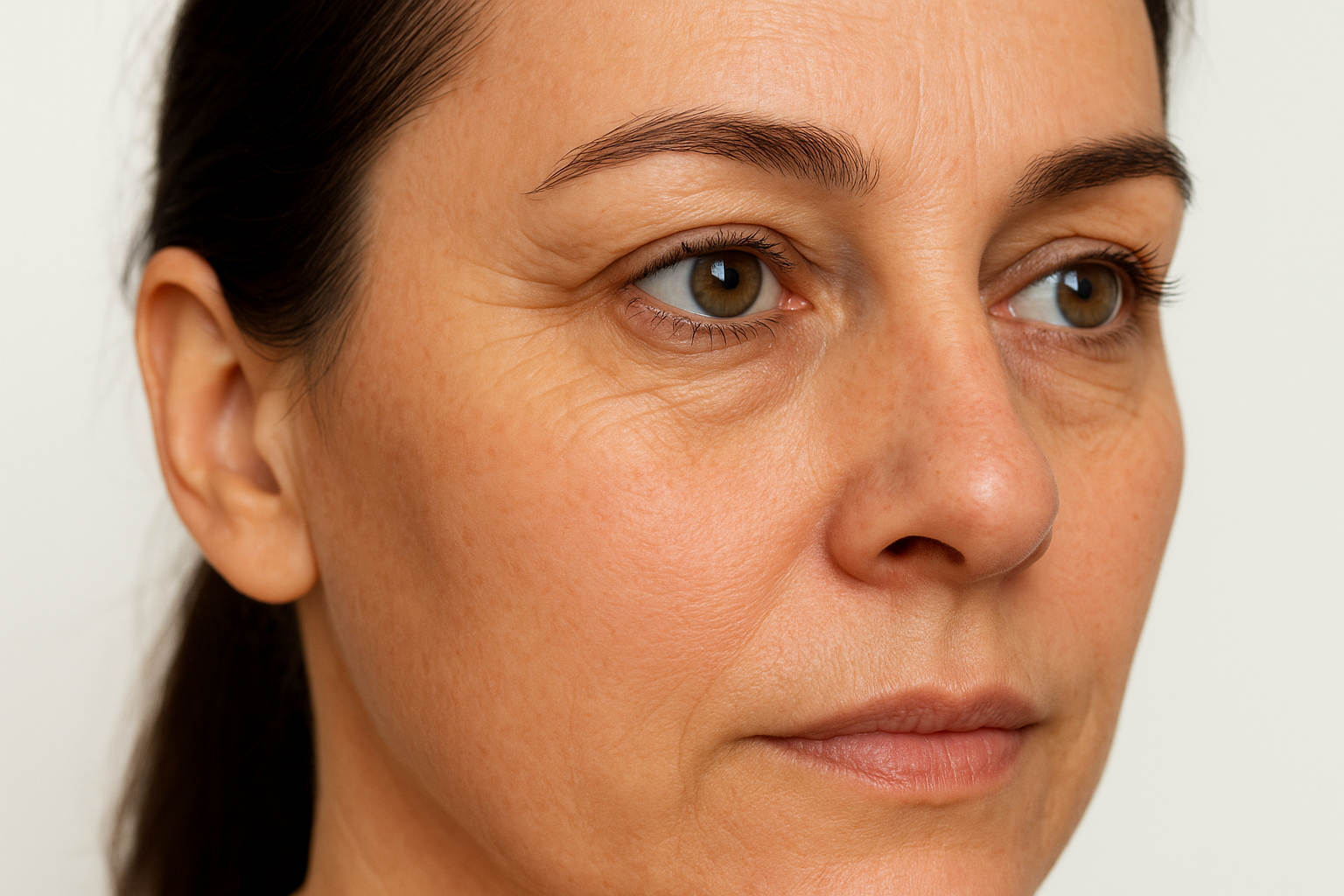
The skin around your eyes is roughly 0.5mm thick, compared to about 2mm on the rest of your face. It also has far fewer oil glands and almost no fat layer underneath to plump it out. That combination means under-eye skin shows dehydration, sun damage, and repetitive movement long before your cheeks or forehead do. Understanding why this area ages differently is the first step to treating it properly, rather than throwing random products at it and hoping something sticks.
Collagen and elastin breakdown
Collagen and elastin are the structural proteins that keep skin firm and bouncy. From your mid-20s onwards, your body produces roughly 1% less collagen each year, and the under-eye area feels this decline faster because it started with less structural support to begin with. Elastin fibres also lose their springiness over time, which is why skin that used to bounce back after a smile now settles into a permanent crease. This isn't reversible in the way a face cream advert might suggest, but you can slow the decline and stimulate some regrowth with the right actives, which we'll cover in Step 3.
Under-eye skin ages faster than the rest of your face simply because it has less collagen, less fat, and less oil to begin with.
Repetitive facial movements
Every time you squint, laugh, or frown, the skin under your eyes creases along the same lines. Do that thousands of times a year for decades and those temporary creases become permanent, etched into the skin as fine lines. Sunglasses help reduce squinting in bright light, and so does correcting your eyesight if you've been putting off an eye test. Facial expressions aren't something you should suppress, but small adjustments like these reduce the mechanical stress that speeds up wrinkle formation.
Sun exposure and free radical damage
Ultraviolet radiation is responsible for up to 80% of visible skin ageing, according to the American Academy of Dermatology. It breaks down collagen directly and generates free radicals that accelerate the process further. The skin under your eyes gets hit particularly hard because most people forget to apply sunscreen there, assuming their foundation or concealer offers enough protection. It doesn't, not at the SPF levels typically found in makeup.
Dehydration and thin skin
Because under-eye skin has so few oil glands, it dries out faster than the rest of your face. Dehydrated skin looks papery and shows fine lines more obviously, even when those lines aren't yet permanent structural wrinkles. This is good news in one sense: dehydration-related lines respond quickly to proper hydration, sometimes within days, whereas structural wrinkles need months of consistent treatment.
Genetics, sleep position, and other factors
Some of this is simply inherited. If your parents developed under-eye wrinkles early, you're more likely to as well, thanks to genetically thinner skin or lower natural collagen production. Sleep position matters too; sleeping on your side or front presses your face into the pillow for hours, creating compression lines that become permanent over years. Smoking accelerates all of the above by restricting blood flow and directly damaging collagen, while poor sleep and high stress raise cortisol, which breaks down skin structure over time.
Here's a quick breakdown of the main contributors:
| Cause | How it affects under-eye skin | Can you influence it? |
|---|---|---|
| Collagen/elastin loss | Reduces firmness and bounce | Partially, with retinoids and peptides |
| Repetitive movement | Etches temporary creases permanently | Yes, with sunglasses and eyewear correction |
| UV exposure | Breaks down collagen, generates free radicals | Yes, with daily SPF |
| Dehydration | Makes thin skin look papery and lined | Yes, with hydrating actives |
| Genetics | Determines baseline skin thickness | No |
| Sleep position | Creates compression creases over time | Yes, by adjusting how you sleep |
Once you know which of these factors apply most to you, the steps ahead make a lot more sense, because you're not guessing, you're targeting the actual cause.
Step 1. Shield your under-eye skin from the sun
Sun protection is the single most effective step in this entire guide, and it's the one people skip most often. If you're only going to act on one piece of advice for how to reduce wrinkles under eyes, make it this one. Every other product in your routine works harder when UV damage isn't actively undoing its benefits day after day.
Skipping SPF under your eyes undoes almost everything else you're doing to treat wrinkles there.
Choose an eye-safe SPF
Regular sunscreen often stings or migrates into your eyes within minutes, which is why most people avoid applying it in this area altogether. Look for a dedicated eye SPF or a mineral-based facial sunscreen formulated for sensitive skin, ideally SPF 30 or higher. Zinc oxide and titanium dioxide formulas tend to sit better around the eyes than chemical filters, since they're less likely to cause irritation or watering.
Apply it properly, every single day
Most people apply sunscreen to their cheeks and forehead, then stop right at the orbital bone, leaving the exact area most prone to wrinkles unprotected. Get into the habit of patting a small amount along the entire orbital area, including right up to the lash line, using your ring finger for a light touch. Reapply if you're outdoors for more than two hours, particularly in UK summer, when UV index can climb higher than most people expect.
Add physical barriers
Sunglasses aren't just a styling choice, they're genuine wrinkle prevention. Look for wraparound styles or larger lenses that block UV from the sides, not just the front, since peripheral light exposure still reaches the delicate skin around your eyes. A wide-brimmed hat adds another layer of protection on bright days and reduces the squinting that etches lines into place over time.
Here's a simple daily checklist to build the habit properly:
- Apply eye-safe SPF 30+ every morning, rain or shine
- Pat it gently up to the lash line, don't rub
- Reapply after 2 hours of direct sun exposure
- Wear UV-blocking sunglasses whenever you're outside
- Keep a travel-size SPF in your bag for reapplication
According to the NHS, UK UV levels are strong enough to damage skin from March through October, not just during obvious heatwaves. That means this isn't a summer-only step, it's a year-round commitment if you're serious about slowing under-eye ageing.
Step 2. Hydrate with a hyaluronic acid eye cream
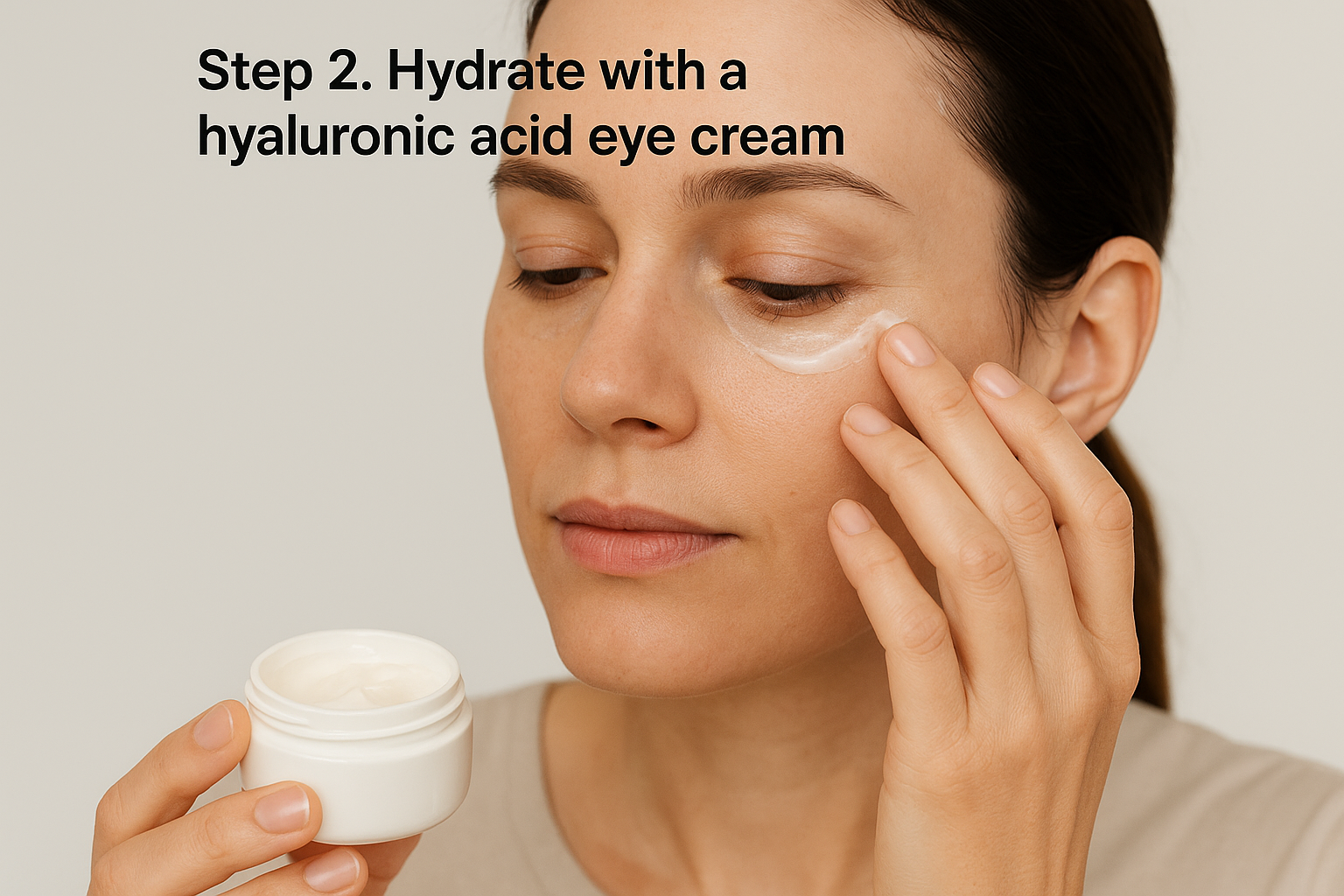
Once sun protection is locked in, hydration is your next biggest lever for how to reduce wrinkles under eyes. Hyaluronic acid holds up to 1,000 times its weight in water, plumping the skin from within and softening the appearance of fine lines almost immediately. Unlike retinoids, it works fast, often within a few hours, which makes it a satisfying place to start if you want visible progress before you commit to slower-acting actives.
Why hyaluronic acid works so well here
Given that under-eye skin has almost no oil glands, it dries out faster than anywhere else on your face, and dry skin shows creases far more obviously than well-hydrated skin does. Hyaluronic acid sits in the upper layers of skin and draws moisture into them, smoothing the surface without altering skin structure the way retinol does. That's why it's often described as a plumping ingredient rather than a repairing one; it treats the symptom quickly while other steps in this guide work on the underlying cause.
Hydration won't rebuild collagen, but it will make existing lines look far less obvious within days.
Choosing the right formula
Not every hyaluronic acid product performs the same way, and molecular weight matters more than the label usually admits. Lower molecular weight versions penetrate deeper, while higher weight versions sit on the surface and lock in moisture. A well-formulated eye cream typically combines both, alongside ceramides or glycerin to prevent the hyaluronic acid from pulling moisture out of deeper skin layers on dry days.
| Formula type | Best for | How it feels |
|---|---|---|
| Low molecular weight HA | Deep hydration, fine lines | Lightweight, absorbs fast |
| High molecular weight HA | Surface plumping, instant smoothing | Slightly richer, sits on top |
| HA + ceramides | Sensitive or very dry skin | Cushioned, non-greasy |
Applying it correctly
Rub too hard here and you'll do more damage than the cream can fix, since this skin tears and creases easily under pressure. Use your ring finger, the weakest finger on your hand, and pat the product in gently rather than dragging it across the skin.
- Apply to slightly damp skin, straight after cleansing
- Pat, don't rub, using your ring finger
- Work from the inner corner outward, following the orbital bone
- Follow with a richer moisturiser to seal the hydration in
- Use morning and night for consistent results
Stick with this for two to three weeks before judging results. Once hydration is handled, you're ready to layer in the ingredients that actually rebuild structure, which is where Step 3 comes in.
Step 3. Boost collagen with retinoids and peptides
Hydration smooths what's already there, but retinoids and peptides are what actually rebuild collagen underneath. If you've been wondering how to reduce wrinkles under eyes at a structural level rather than just plumping the surface, this step is where the real work happens. It's also the slowest step in this guide, so patience matters more here than anywhere else.
Why retinoids work, and why the eye area needs caution
Retinoids speed up cell turnover and signal your skin to produce more collagen, which is exactly what thinning under-eye skin needs. But standard facial retinol is often too strong for this area and causes redness, flaking, or irritation within days. Retinaldehyde and encapsulated retinol formulas tend to be gentler alternatives specifically designed for the eye area, delivering similar benefits with less risk of a reaction.
Retinoids rebuild collagen, but only if you introduce them slowly enough that your skin doesn't rebel.
Peptides as a gentler alternative
Peptides are short chains of amino acids that signal your skin to behave as though it's producing more collagen, without the irritation that comes with retinoids. Copper peptides and palmitoyl tripeptide-based formulas are particularly well studied for firming thin skin, and they layer well underneath a retinoid without cancelling out either ingredient's effect. If your skin reacts badly to retinol, building a routine around peptides alone still delivers measurable improvement over three to four months.
Introducing actives without irritation
Rush this step and you'll end up with puffy, irritated eyes that look worse than when you started, which defeats the entire purpose. Build tolerance gradually using this schedule:
- Weeks 1 to 2: apply a pea-sized amount of eye-safe retinoid every third night only
- Weeks 3 to 4: increase to every other night if there's no redness or flaking
- Week 5 onwards: nightly use, alternating with peptide serum if you want both
- Always apply retinoids after your eye area is fully dry, never on damp skin
- Follow with a hydrating eye cream to buffer any dryness
Avoid combining retinoids with strong exfoliating acids in the same routine, since this area can't tolerate that level of active stacking. Results from consistent retinoid use typically show after 8 to 12 weeks, so don't judge the product on week two and abandon it. Peptides work more subtly but with less risk, making them the safer starting point if you're new to targeting this area with actives at all.
Step 4. Adopt a gentle, eye-safe skincare routine
Actives only work if the rest of your routine doesn't undo them. Layering a peptide serum under a harsh cleanser, or rubbing your face with a rough towel every morning, cancels out weeks of careful work in seconds. Gentle handling matters just as much as which products you buy when you're figuring out how to reduce wrinkles under eyes without causing more damage than you're fixing.
Cleanse without dragging the skin
Foaming cleansers with sulphates strip the thin oil layer that under-eye skin barely has to begin with, leaving it tighter and more prone to creasing. Switch to a cream or gel cleanser with a neutral pH, and remove eye makeup with a separate micellar water or balm rather than scrubbing mascara off with your main cleanser. Always splash lukewarm water rather than hot, since heat breaks down collagen fibres faster than most people realise.
Every rough touch to this area adds up over years, so treat it like you're handling tissue paper, not tough facial skin.
Layer products in the right order
Applying products in the wrong sequence either wastes their benefits or increases irritation risk unnecessarily. Follow this order every time for consistent results:
- Cleanse with a cream or gel formula
- Apply hyaluronic acid eye cream to slightly damp skin
- Wait 60 seconds, then apply peptide serum or retinoid (alternating nights)
- Seal with a richer eye balm if your skin runs dry
- Finish with SPF in the morning, always last
Skip these common mistakes
Many people unintentionally sabotage their own progress through habits that feel harmless but aren't. Watch for these specific errors:
| Common mistake | Why it hurts under-eye skin |
|---|---|
| Rubbing with a towel after washing | Stretches thin skin and worsens creasing |
| Using anti-ageing face cream around eyes | Often too harsh, causes irritation and puffiness |
| Applying too much product | Can cause milia and doesn't improve results |
| Skipping patch tests on new actives | Risks reactions in the most sensitive facial area |
| Tugging skin taut while applying makeup | Creates micro-tears in fragile tissue |
Build consistency, not complexity
Simplicity beats a crowded routine here. Two or three well-chosen products, applied correctly and consistently, outperform ten products used haphazardly. Give your skin a full skincare cycle of roughly 28 days before adding anything new, so you can actually tell what's working. Once your routine feels automatic rather than effortful, you're ready to look at the lifestyle habits that quietly support or undermine everything you're doing topically.
Step 5. Support your skin with sleep and lifestyle habits
No eye cream can outwork a bad night's sleep repeated for months on end. Lifestyle habits sit underneath everything else in this guide, and if you're serious about how to reduce wrinkles under eyes, this is where the boring, unglamorous work pays off far more than any serum. Products treat symptoms; habits change the trajectory.
Sleep position and quality
Sleeping on your side or front presses your face into the pillow for six to eight hours a night, and that pressure creates compression lines that eventually become permanent. Switching to back sleeping removes that mechanical stress entirely, though it takes a few weeks to feel natural if you've slept another way your whole life. A silk or satin pillowcase reduces friction if you can't switch positions, since cotton drags on skin far more as you move through the night.
Poor sleep quality shows up under your eyes faster than almost anywhere else on your body.
Beyond position, sleep duration matters just as much. Skin repairs itself overnight, producing new collagen during deep sleep stages, so consistently getting under six hours undermines every active ingredient you're applying. The NHS recommends seven to nine hours for most adults, and under-eye skin is one of the first places that debt becomes visible.
Diet, hydration, and circulation
What you eat and drink shapes skin structure from the inside, not just the outside. Build these habits into your week:
- Drink at least six to eight glasses of water daily to support skin hydration
- Eat vitamin C-rich foods (citrus, peppers, berries) to support collagen synthesis
- Reduce sodium intake, since excess salt worsens under-eye puffiness and stretches skin
- Limit alcohol, which dehydrates skin and disrupts the deep sleep stages that repair it
- Include omega-3s (oily fish, walnuts) to support skin elasticity
Stress, smoking, and circulation boosters
Chronic stress raises cortisol, which breaks down collagen over time, so managing it isn't just good for your mood, it's good for your skin structure. Smoking restricts blood flow and accelerates ageing across your whole face, but the thin under-eye area shows it earliest. A quick two-minute facial massage each morning, using your ring finger to tap gently along the orbital bone, boosts circulation and helps reduce puffiness before you even reach for a product.
Step 6. Explore professional treatments for deeper lines
Sometimes home care isn't enough, and that's fine. If you've been consistent with SPF, hydration, and actives for three months and deeper static lines still bother you, professional treatments close the gap that creams alone can't reach. This step isn't about admitting defeat, it's about knowing when the tools available to you at home have limits, and when a dermatologist can offer something more targeted.
When to consider going professional
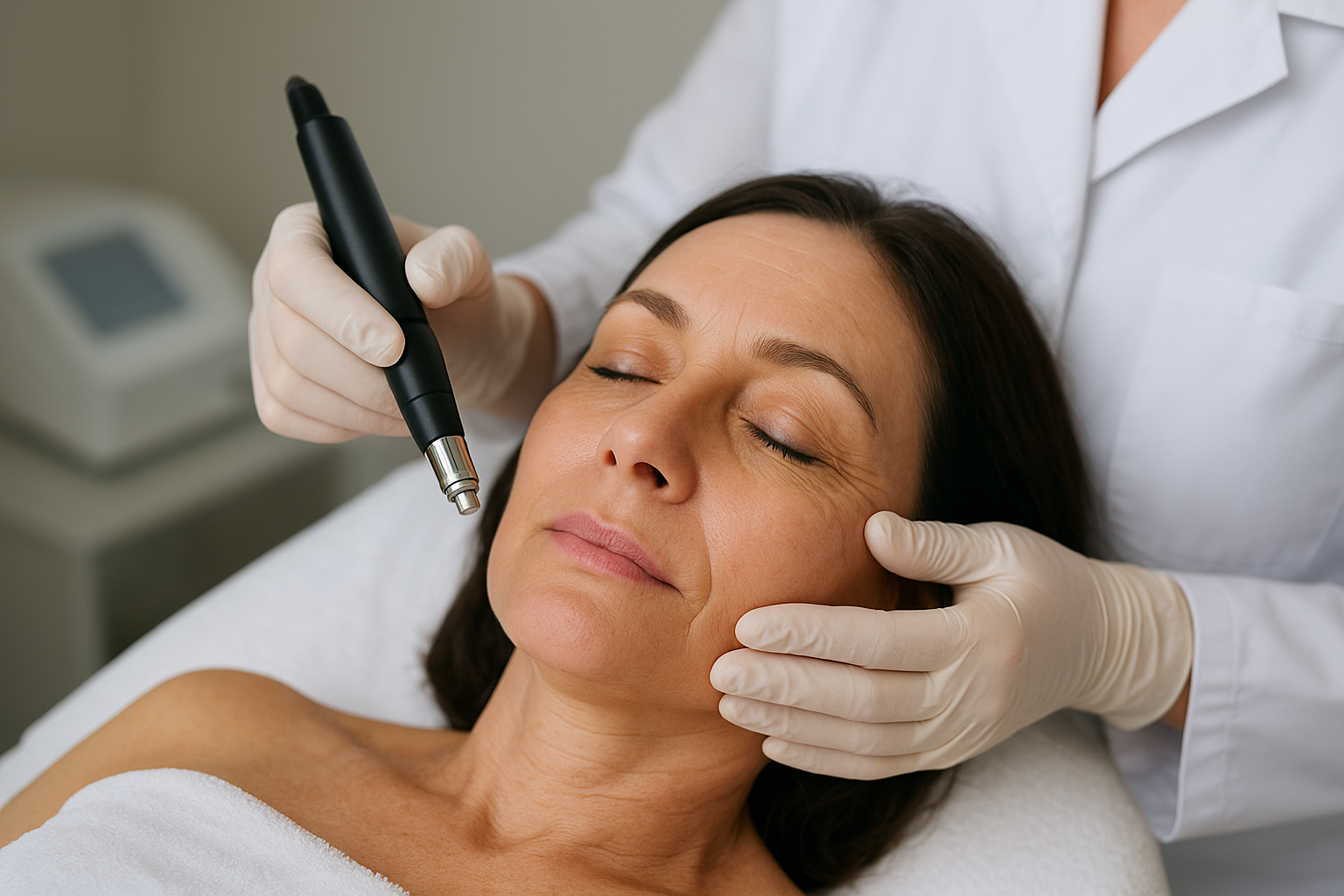
Wrinkles that stay visible even when your face is completely relaxed are usually structural rather than dehydration-related, and these respond far better to clinical treatment than to another jar of eye cream. If you've noticed volume loss under your eyes alongside the lines, that's another sign topical products won't fully address the issue, since creams can't restore lost fat pads. A consultation with a dermatologist or aesthetic practitioner helps you understand which category your wrinkles fall into before you spend money on the wrong solution.
Deep, static lines are a structural problem, and structural problems usually need more than a cream can offer.
Common in-clinic options
Several treatments target under-eye ageing specifically, each with different downtime and cost implications. Here's how the main options compare:
| Treatment | What it does | Typical downtime |
|---|---|---|
| Microneedling | Stimulates collagen via controlled micro-injuries | 1 to 3 days redness |
| Chemical peels (mild) | Removes dead surface cells, improves texture | 2 to 5 days flaking |
| Dermal fillers | Restores lost volume under the eye | Minimal, some swelling |
| Laser resurfacing | Targets deeper wrinkles and pigmentation | 5 to 10 days downtime |
| PRP (platelet-rich plasma) | Uses your own plasma to stimulate repair | 1 to 2 days swelling |
What to ask before booking anything
Not every clinic or practitioner is equally qualified to work on the delicate eye area, and this is one part of your face where you shouldn't shop on price alone. Before committing to any procedure, ask these questions:
- Is the practitioner medically qualified and experienced specifically with the eye area?
- What's the realistic downtime, and does it fit your schedule?
- How many sessions will you likely need to see results?
- What are the risks specific to thin under-eye skin?
- Can they show before-and-after photos of similar cases?
According to the British Association of Dermatologists, always check a practitioner's qualifications through a recognised register before booking, particularly for injectable treatments. Professional treatments work best as a complement to the habits in Steps 1 to 5, not a replacement for them.
Smoother eyes start with consistency
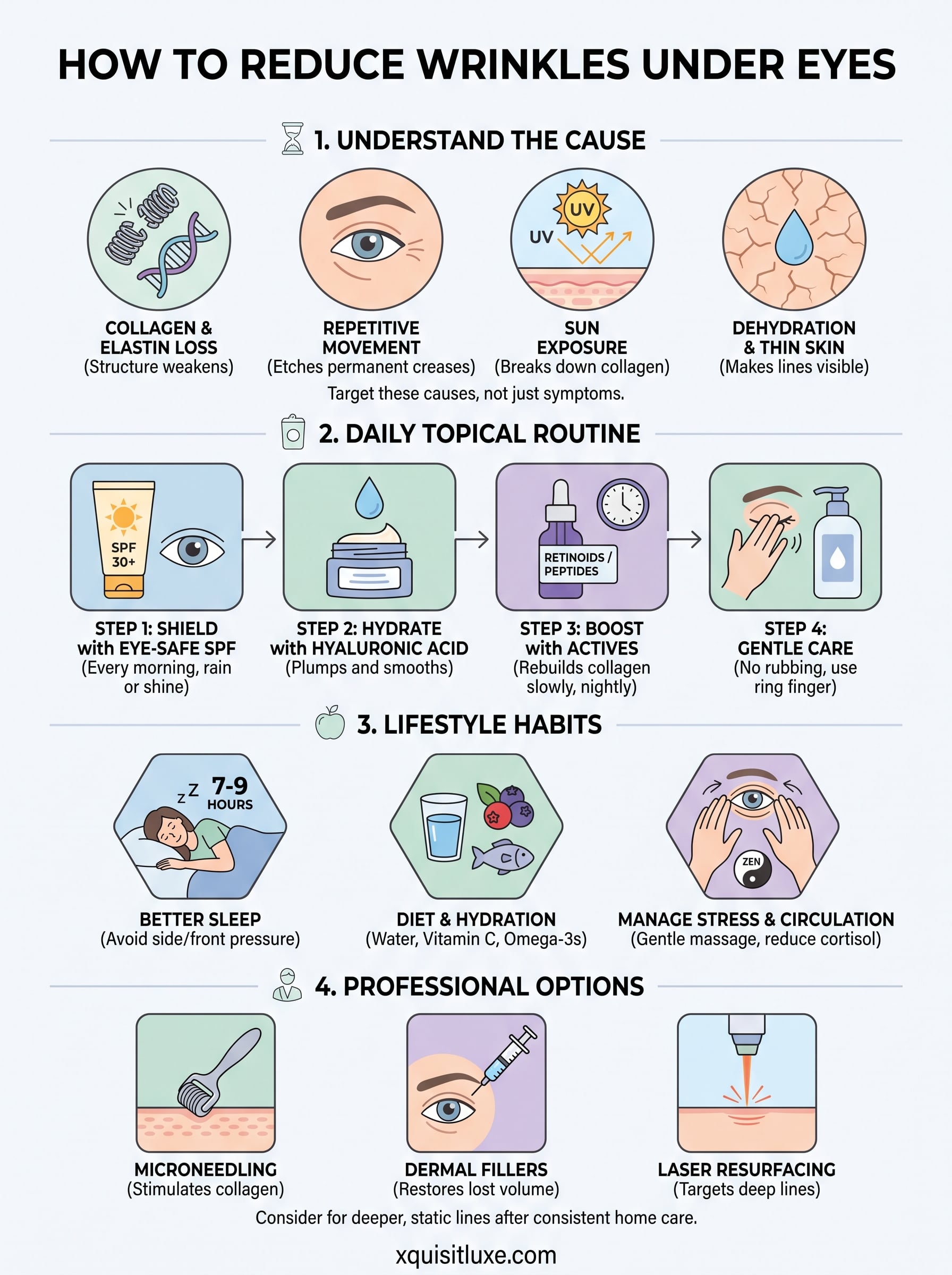
Nothing in this guide works overnight, and that's the honest truth about how to reduce wrinkles under eyes. Daily SPF protects what you have, hyaluronic acid plumps what's dehydrated, and retinoids or peptides slowly rebuild what's been lost. Layer in proper sleep and gentle handling, and you're addressing every cause covered in Step 1, not just the symptoms sitting on the surface. Professional treatments remain there for deeper lines, but most people see real change from the basics alone, given enough weeks to let them work.
The biggest mistake is switching products every fortnight and never giving anything a fair trial. Pick one routine, commit to it for a full month, and judge results properly before changing course. If you're ready to build that routine with clean, dermatologist-tested formulas made for sensitive skin, browse our skincare collection and start tonight, not next week.

