


Buying a skincare gift set for sensitive skin sounds simple enough, until you realise how many products contain fragrances, harsh actives, or synthetic irritants that can leave reactive skin red, tight, and uncomfortable. A beautiful box means nothing if the person unwrapping it can't actually use what's inside. The challenge isn't finding gift sets; it's finding ones built with gentle, dermatologist-tested formulations that won't trigger a flare-up.
That's exactly why we created Xquisit Luxe. Every product in our range is certified natural, cruelty-free, and specifically tested for sensitive skin, so whether you're gifting someone else or treating yourself, you never have to second-guess what's touching your skin. Our curated bundles pair cleansers, serums, and moisturisers that work together without overwhelming delicate complexions, all crafted right here in the United Kingdom with full ingredient transparency.
This guide breaks down everything you need to know before choosing a sensitive skin gift set: what ingredients to look for (and which to avoid), how to match products to specific skin concerns like dryness or uneven tone, and what makes a gift set genuinely worth the money versus just nicely packaged. We'll also cover how to evaluate product certifications so you can shop with confidence, plus practical tips for building a personalised set when pre-made options don't quite fit. By the end, you'll know exactly what to look for, and what to leave on the shelf.
What counts as a skincare gift set for sensitive skin
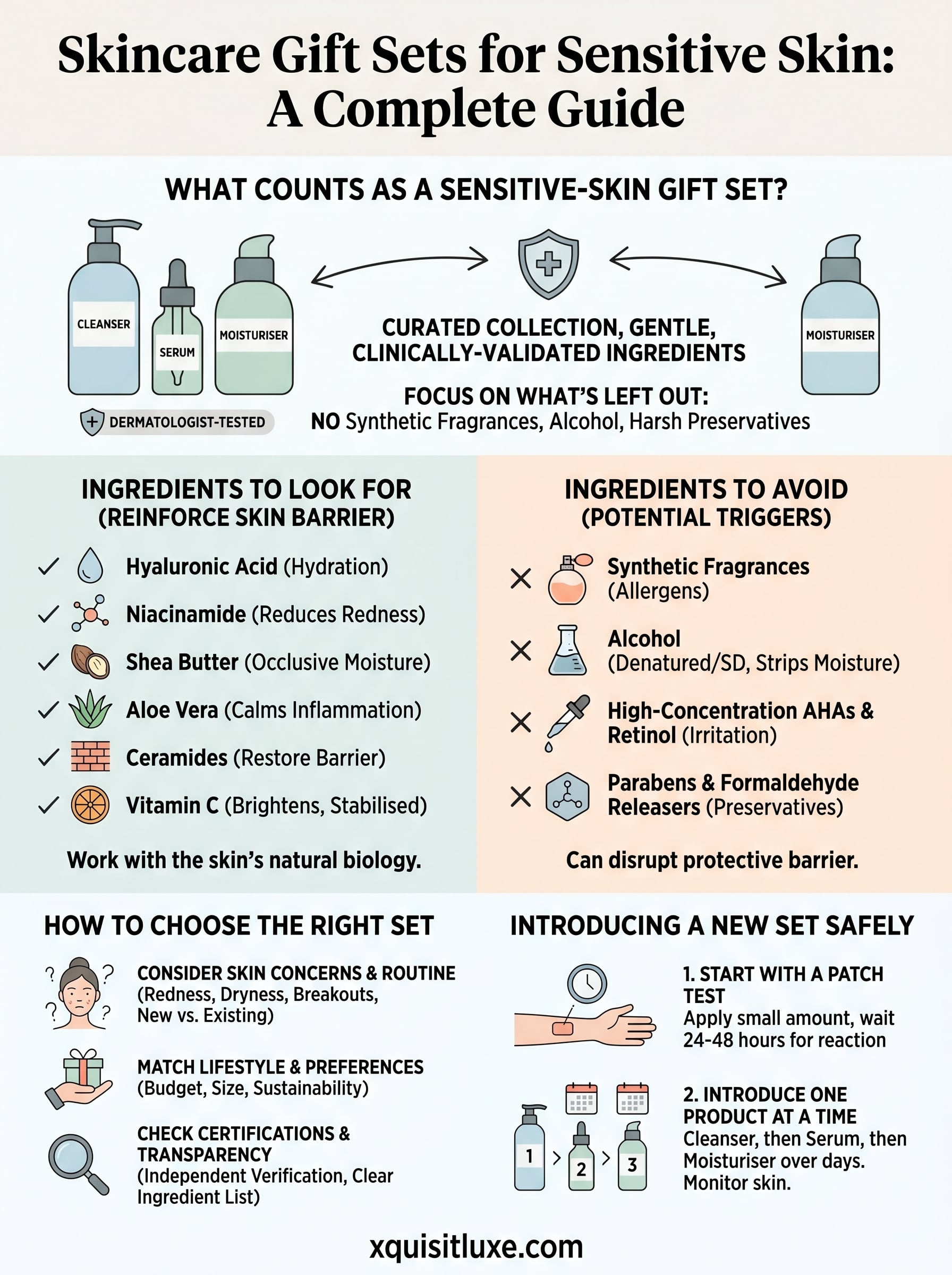
A skincare gift set for sensitive skin is a curated collection of products formulated specifically to minimise irritation and respect the skin barrier. Unlike generic gift sets, these bundles exclude common triggers such as synthetic fragrances, alcohol, and harsh preservatives, replacing them with gentle, clinically-validated ingredients that cleanse, hydrate, and treat without causing redness or discomfort. The focus is always on what's left out as much as what's included.
The best sensitive-skin sets are built around what the skin doesn't need just as much as what it does.
The core products you'd expect to find
Most well-constructed sets include three to five complementary steps that cover the basics of a daily routine. You'll typically find a gentle cleanser, a hydrating serum, and a moisturiser as the foundation, since these three products address cleansing, treatment, and barrier protection in one go. Some sets expand to include an eye cream or a targeted treatment such as a vitamin C serum for brightening, but the core logic stays the same: every product must earn its place without introducing unnecessary risk to reactive skin.
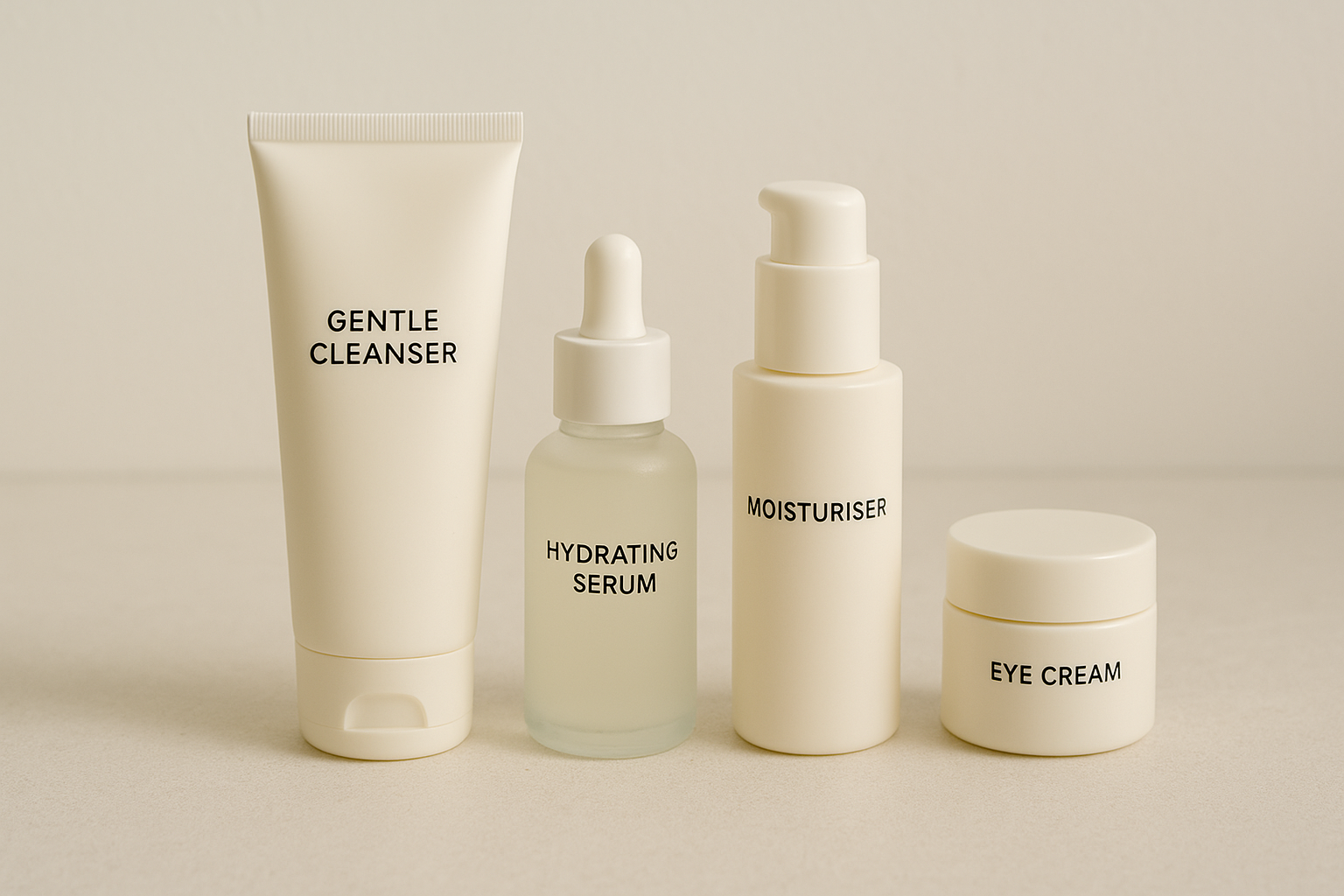
A good set also considers product sequencing and compatibility. The cleanser should prep the skin without stripping it, the serum should deliver active ingredients at a concentration that sensitive skin can tolerate, and the moisturiser should seal everything in with occlusive and humectant ingredients like shea butter or hyaluronic acid. When products are designed as a range rather than assembled from different brands, they share a consistent formulation philosophy, which significantly reduces the chance of an unexpected reaction.
What separates a sensitive-skin set from a standard one
The key difference is formulation intent. Standard gift sets are often assembled for visual appeal or scent profile, which is why so many of them lead with heavily fragranced lotions and body products. Sensitive-skin sets, by contrast, are built around dermatological principles: low fragrance or fragrance-free, pH-balanced formulas, and ingredients that reinforce rather than disrupt the skin's natural protective layer.
You should also look at ingredient transparency as a key trust signal. A credible sensitive-skin product range will clearly list every ingredient, explain why it's included, and carry at least one form of independent verification, whether that's dermatologist testing, allergy-tested certification, or a natural ingredients accreditation. Brands that bury their ingredient lists or lean heavily on vague terms like "gentle" without any supporting evidence are worth approaching with caution.
The role of packaging and format
Presentation matters in a gift set, but it should never come at the cost of formulation quality. Opt for sets where the packaging is practical and protective, keeping products away from light and air that can degrade active ingredients over time. Pump dispensers and sealed tubes are better than open jars for maintaining hygiene and product longevity, which is especially relevant for serums and eye creams that contain oxidation-prone compounds.
Why sensitive-skin gifting needs extra care
Sensitive skin doesn't announce itself with a single, predictable set of symptoms. Some people experience immediate redness and stinging when they encounter a trigger ingredient, while others develop dryness or breakouts days after first use. When you're buying a gift, you often don't know the full picture of someone's skin history, which makes choosing a skincare gift set for sensitive skin significantly higher stakes than picking a candle or a book.
The risk of well-intentioned choices
Most standard gift sets are assembled for shelf appeal rather than formulation safety. Brands add synthetic fragrances because they make opening the box feel luxurious. They include high-concentration actives like retinol or AHAs because they sound impressive on a label. For someone with reactive skin, these ingredients can strip the protective barrier, trigger contact dermatitis, or cause persistent irritation that takes weeks to calm down.
A gift that causes a skin reaction doesn't just go unused; it can actively set back the recipient's skin health.
The damage from a poorly chosen product isn't always reversible overnight. Barrier disruption can make the skin temporarily more reactive to everything, including products it previously tolerated well. That means one wrong gift can affect someone's entire routine for weeks.
Why reactions are hard to predict in advance
Even with the best intentions, you can't always know which specific ingredients will cause a problem for someone else's skin. Two people with sensitive skin can react to entirely different compounds. One person may be fine with essential oils but react to certain preservatives; another may tolerate fragrance but struggle with certain emulsifiers. This unpredictability is exactly why the formulation standard of the brand matters so much when you're selecting a gift.
Choosing a set from a brand that dermatologist-tests every product and keeps its ingredient lists transparent removes a significant layer of risk. You're not relying on guesswork; you're relying on a verified framework designed to minimise the likelihood of irritation across a broad range of skin types.
How to choose the right set for the recipient
Choosing the right skincare gift set for sensitive skin comes down to two things: what you already know about the recipient, and what you can reasonably deduce from that. You don't need to quiz them on their full skincare routine; a few key observations about how their skin behaves and which products they currently reach for will point you in the right direction.
Consider their skin concerns and current routine
Start by thinking about what the recipient has mentioned, or what you've noticed yourself. Redness, persistent dryness, and breakouts are the three most common complaints among people with sensitive skin, and each one points toward a different type of formulation. If they've told you that certain products sting or cause a reaction, that's a clear signal to look for fragrance-free, minimal-ingredient sets with a short, verifiable ingredient list rather than anything complex or heavily scented.
It also helps to think about where they are in their routine:
- New to skincare: Choose a straightforward three-step set covering cleanser, serum, and moisturiser
- Already has a routine: Look for sets that complement their existing steps rather than duplicate them
- Focused on a specific concern: Match the set to that priority, such as brightening, barrier repair, or anti-ageing
A set that slots around what someone already does is far more likely to get used consistently.
Match the set to their lifestyle and preferences
Budget, product size, and packaging format all affect how practical a gift ends up being. Full-size products offer better value and last long enough for the recipient to genuinely assess whether a formula suits their skin. If they haven't tried the brand before, a smaller introductory bundle gives them a lower-risk way to test compatibility before committing to full sizes.
Consider sustainability preferences too when comparing your options. Many people with sensitive skin are equally conscious about what goes into their products and how the packaging is produced. A set that uses eco-friendly, recyclable materials signals that the brand shares their values, which often makes the gift feel more intentional and personal.
Ingredients to look for and avoid
When you're selecting a skincare gift set for sensitive skin, the ingredient list tells you more than any marketing claim on the box. Learning to recognise a handful of key ingredients on both sides of the divide saves you from guessing and gives you a reliable framework regardless of which brand you're considering.
Ingredients that support sensitive skin
The best sensitive-skin formulations share a common thread: they reinforce the skin's natural barrier rather than disrupt it. Prioritise sets that include the following when you're reading labels:
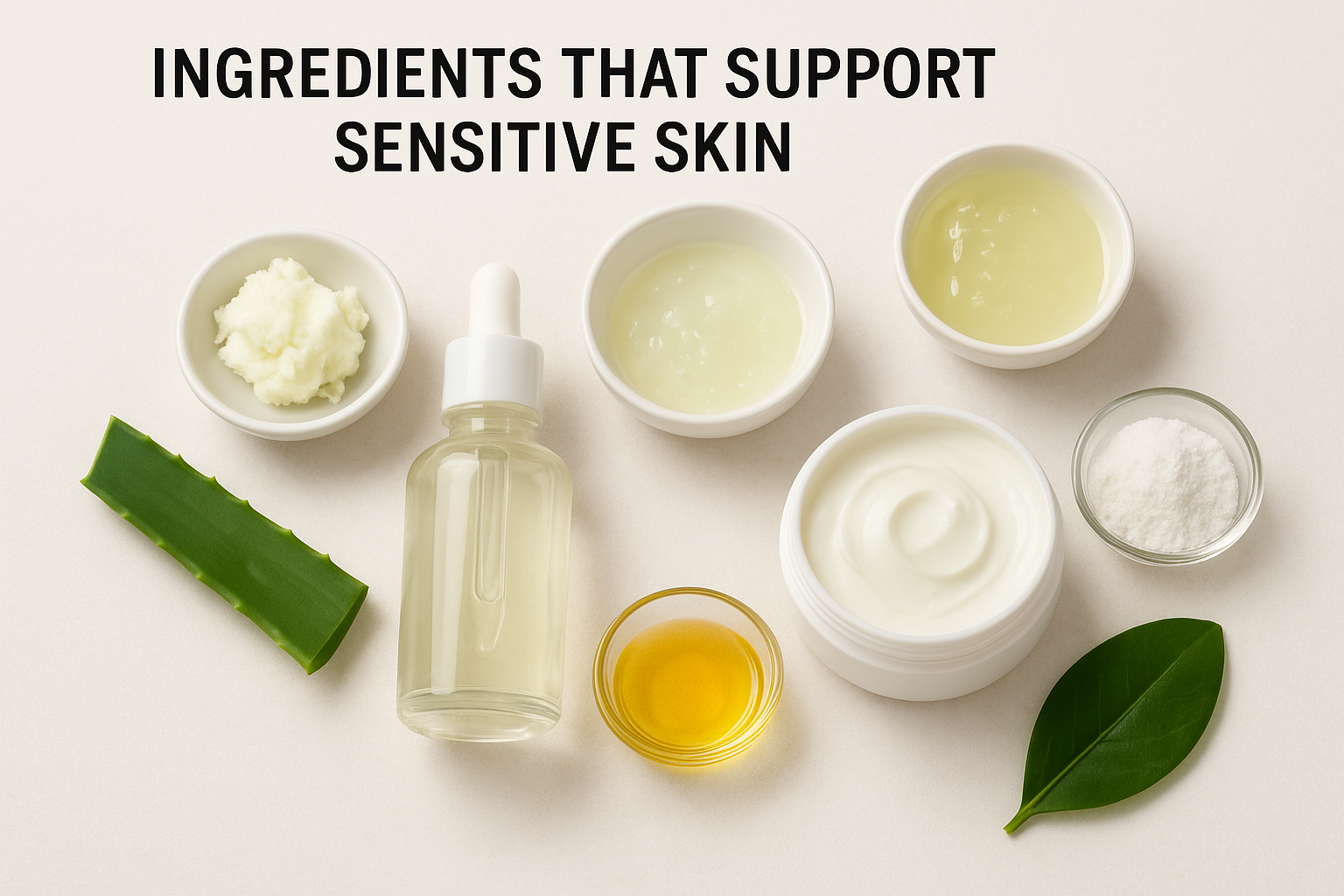
- Hyaluronic acid draws moisture into the skin and suits virtually all skin types, including reactive ones
- Niacinamide reduces redness and strengthens the skin barrier without aggravating sensitivity
- Shea butter provides rich, occlusive moisture that seals hydration in without clogging pores
- Aloe vera calms inflammation and delivers lightweight hydration ideal for easily irritated skin
- Ceramides restore the lipid barrier that sensitive skin often struggles to maintain on its own
- Vitamin C (in stabilised form) brightens uneven tone at concentrations that sensitive skin can tolerate
Ingredients that work with the skin's natural biology consistently outperform high-concentration actives for people with reactive skin types.
These compounds appear regularly in certified natural and dermatologist-tested ranges because they deliver results without putting the skin barrier under unnecessary stress.
Ingredients to avoid
Certain ingredients appear in even premium gift sets and cause problems for sensitive skin more often than not. Synthetic fragrances top the list; they're one of the most common contact allergens in skincare and serve no functional purpose beyond scent. Alcohol (specifically denatured alcohol or SD alcohol) strips moisture and disrupts the barrier, which compounds the sensitivity further.
Watch out for high-concentration AHAs and retinol in gift sets too. Both are effective actives, but they require a careful introduction and are best avoided as gifts unless you know the recipient already uses them. Parabens and formaldehyde-releasing preservatives are also worth avoiding, particularly if the recipient has known skin sensitivities or prefers verified natural formulations.
How to introduce a new set safely
Even the most carefully chosen skincare gift set for sensitive skin needs to be introduced gradually. Reactive skin can respond poorly to sudden change, even when every individual product in the set is well-formulated and gentle. The way you start matters just as much as what you start with, so taking a structured approach at the beginning protects your skin and gives each product a fair chance to work.
Start with a patch test
Patch testing is the single most reliable way to identify a potential reaction before it becomes a problem across your whole face. Apply a small amount of each new product to the inside of your forearm or behind your ear, then wait 24 to 48 hours before using it more widely. If you notice redness, itching, or swelling at the test site, set that product aside and give your skin a few days to settle before trying anything else.
Skipping patch testing to save time is the most common reason people end up attributing a reaction to the wrong product.
Running each product through this process individually, rather than testing them all at once, makes it much easier to pinpoint the cause if something does cause a reaction. It takes a little longer upfront, but it removes the guesswork entirely.
Introduce one product at a time
Once you've patch tested, resist the urge to use the full set from day one. Begin with the cleanser for the first few days, then add the serum, and finally introduce the moisturiser. This staged approach lets your skin adjust to each new formula without being overwhelmed by multiple new ingredients simultaneously.
Keep your existing routine in place while you work through this process, swapping in each new product one step at a time. If a reaction does occur, you'll know immediately which product caused it because only one thing changed. Give each product at least four to five days of consistent use before deciding whether it suits your skin.
Before you buy, do this
Before you commit to any skincare gift set for sensitive skin, run through three quick checks. Confirm the brand carries independent verification, such as dermatologist testing or a certified natural accreditation, rather than relying solely on their own marketing language. Scan the ingredient list for synthetic fragrances and alcohol near the top, since ingredient lists are ordered by concentration. Check whether the brand offers a money-back guarantee, which signals genuine confidence in their formulations and removes the financial risk if a product doesn't suit the recipient's skin.
Every point covered in this guide, from formulation standards to patch testing, comes back to one principle: knowing what you're buying before it touches reactive skin. If you want a starting point that already meets every criterion on this list, explore the natural skincare bundles at Xquisit Luxe and find a set built specifically with sensitive skin in mind.


