


Dull skin, uneven tone, and fine lines that seem to deepen every year are the top three complaints we hear from customers walking into our (virtual) shop. If that sounds like you, understanding the real vitamin c serum benefits for skin is the first step to fixing it, rather than just masking it with makeup.
Here's the short answer: vitamin C works because it's a powerful antioxidant that neutralises free radical damage from sun exposure and pollution, while also supporting collagen production to firm and smooth your complexion. It brightens pigmentation, fades dark spots, and gives tired-looking skin a genuine glow, not a filtered one.
In this guide, we'll walk through six specific ways a good serum earns its place in your routine, from tackling hyperpigmentation to protecting against premature ageing. We'll explain the science simply, without the jargon, so you know exactly what to expect and how soon you might see results with consistent, daily use.
1. Brightens skin and fades dark spots
Uneven skin tone is usually the first thing people notice about their complexion, and it's the number one reason customers reach for a vitamin C serum. Sun spots, post-breakout marks, and general dullness all come from the same root cause: excess melanin sitting in patches rather than spread evenly across your skin.
How it works
Vitamin C, specifically L-ascorbic acid, blocks the enzyme tyrosinase, which your skin uses to produce melanin. Less melanin production means less new pigmentation forming, while existing dark spots gradually fade as your skin renews itself over a normal 28-day cycle. It also has a mild exfoliating effect on the surface layer, which helps buff away the dulling build-up of dead skin cells that makes your complexion look tired.
Vitamin C doesn't bleach your skin, it simply stops new dark spots forming while helping old ones fade naturally.
What you'll notice
Most of our customers tell us the same thing: skin looks brighter within the first fortnight, almost like you've had a good night's sleep for the first time in months. That's the antioxidant effect kicking in early. Dark spot fading takes longer, usually 8 to 12 weeks of daily use, because you're waiting on new skin cells to replace pigmented ones. Don't expect an overnight transformation. Expect a steady, visible shift.
How to get the most from it
Consistency beats concentration here. A 10-15% vitamin C serum used every morning will outperform a 20% serum used twice a week.
- Apply to clean, dry skin before moisturiser
- Always follow with SPF, since brighter skin is more visible to sun damage
- Store your serum away from direct light and heat to stop it oxidising
- Pair with a gentle exfoliant a few times a week to speed up cell turnover
- Give it a full 12 weeks before judging results
According to the NHS, UV exposure is the leading cause of pigmentation, so pairing your serum with daily sunscreen isn't optional if you want lasting results.
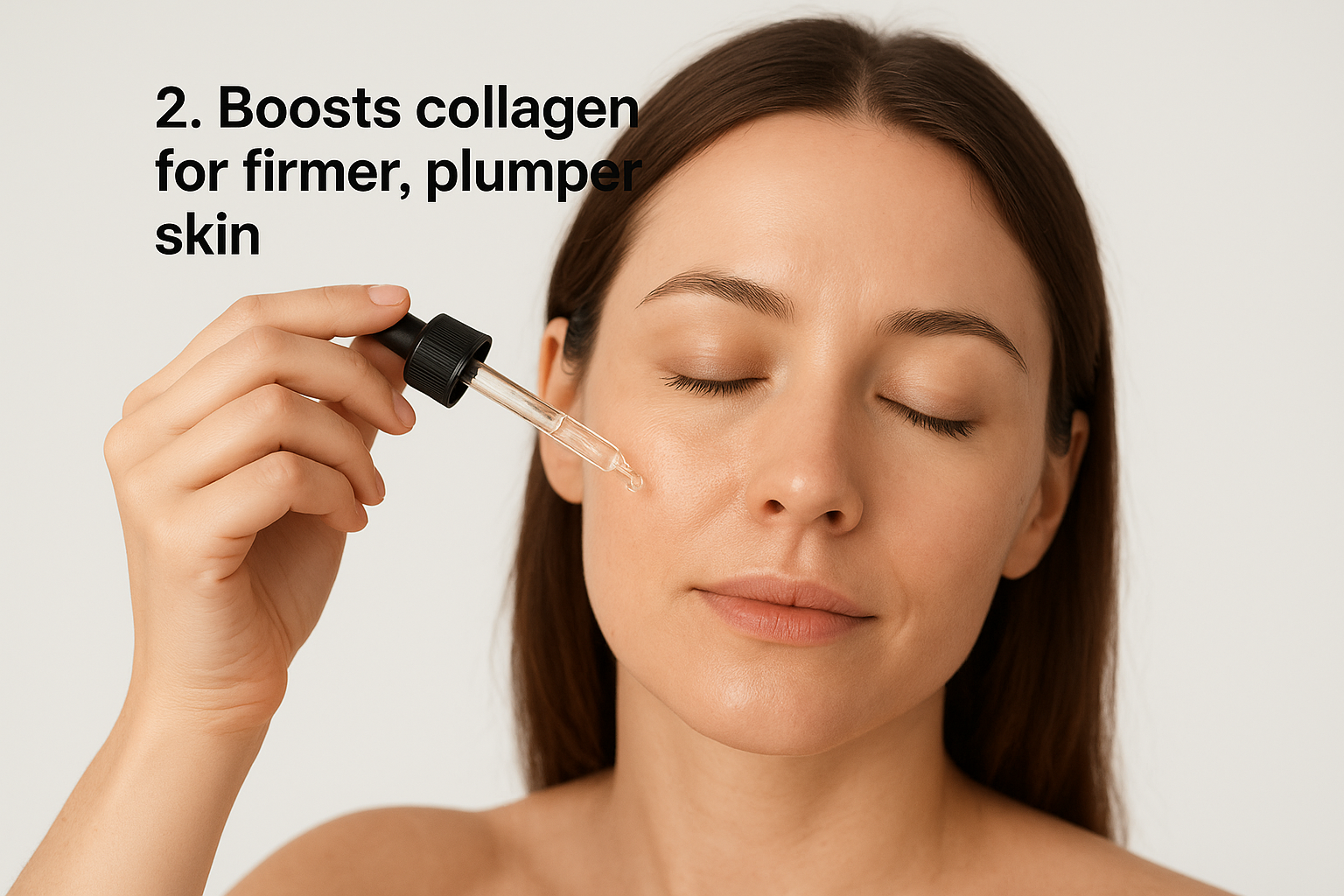
2. Boosts collagen for firmer, plumper skin
Firmness fades faster than most people realise. From your mid-twenties onwards, your body produces roughly 1% less collagen every year, which is why skin that once bounced back now feels softer and looser. Vitamin C serum works directly on this process rather than sitting on the surface hoping for the best.
How it works
Vitamin C acts as a cofactor for two enzymes your body needs to stabilise collagen fibres, prolyl and lysyl hydroxylase. Without enough vitamin C, those enzymes can't do their job properly, so collagen production stalls. Applying it topically gives your skin a direct supply exactly where it's needed, rather than relying on diet alone to reach the deeper layers.
Firmer skin isn't about adding volume, it's about giving your body the raw materials to rebuild what age has worn down.
What you'll notice
Expect subtler, slower changes here than with brightening. Most customers report skin that feels denser and looks slightly plumper after 6 to 8 weeks, with fine lines around the cheeks and jaw softening rather than vanishing outright. This is a long game, not a quick fix.
How to get the most from it
Pair your serum with a moisturiser containing peptides or hyaluronic acid to support collagen from both directions. Gentle facial massage while applying can also improve circulation, helping deliver nutrients where they're needed most for genuinely firmer skin.
3. Provides powerful antioxidant protection
Pollution, blue light from your phone, and everyday sun exposure all generate free radicals, unstable molecules that damage healthy skin cells before you even notice. Vitamin C is one of the few ingredients that tackles this threat directly, rather than just treating the visible aftermath.
How it works
Free radicals steal electrons from your skin cells, a process called oxidative stress that breaks down collagen and speeds up visible ageing. Vitamin C donates electrons instead, neutralising these molecules before they cause lasting damage. This antioxidant action also boosts the effectiveness of your SPF, giving you a stronger defence against the same UV rays that cause pigmentation and premature lines.
Antioxidants don't undo damage that's already happened, they stop tomorrow's damage from taking hold today.
What you'll notice
This benefit works quietly in the background, so don't expect dramatic before-and-after photos. Skin generally feels more resilient, with fewer breakouts triggered by pollution and less reactivity after a day outdoors. Customers who live in busier UK cities often report the biggest difference here.
How to get the most from it
Apply your serum every morning, since antioxidant protection works best when it's active during daylight hours. Combine it with vitamin E for a stronger, more stable defence, and always finish with sunscreen for genuinely complete protection.
4. Calms redness and irritation
Redness and reactive skin often get worse with age, especially if you've spent years using harsh cleansers or over-exfoliating in the name of a clearer complexion. One of the lesser-known vitamin c serum benefits for skin is its ability to calm this kind of irritation rather than add to it, provided you choose a stable, low-strength formula.
How it works
Vitamin C reduces inflammation by limiting the release of inflammatory cytokines, the chemical messengers your skin produces when it's under stress from sun, pollution, or product overload. This calming effect also supports the skin's natural repair process, strengthening capillary walls so redness doesn't sit as visibly on the surface.
Calmer skin isn't about avoiding active ingredients, it's about choosing ones that soothe while they work.
What you'll notice
Expect visible redness reduction within a few weeks, particularly around the cheeks and nose where blood vessels sit closer to the surface. Skin generally feels less tight and reactive to weather changes, and blotchiness after cleansing tends to settle faster than before.
How to get the most from it
Choose a buffered vitamin C derivative like sodium ascorbyl phosphate if your skin is sensitive, since pure L-ascorbic acid can sting on compromised barriers. Patch test first, and introduce it gradually, three times a week before building up to daily use.
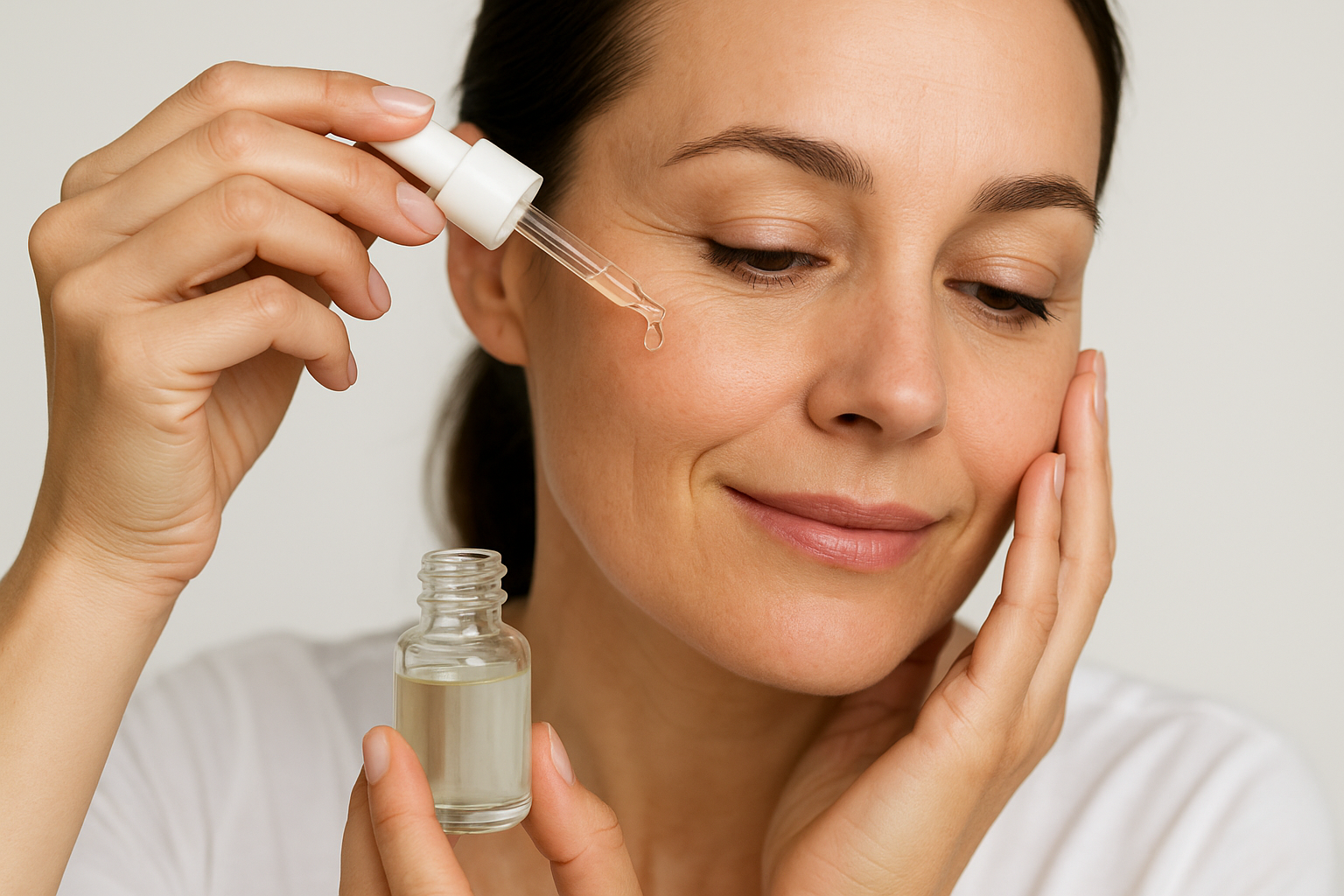
5. Smooths the look of fine lines and wrinkles
Wrinkles form when collagen thins and skin loses its ability to spring back into place. Vitamin C tackles this from underneath rather than plumping the surface with a temporary filler effect, which is why the results tend to last longer than a quick fix cream.
How it works
Beyond boosting collagen production, vitamin C also encourages elastin synthesis, the protein that lets skin stretch and recover its shape. Together, these two proteins fill in the structural gaps that show up as fine lines, particularly around the eyes and mouth where movement wears skin down fastest.
Smoother skin comes from rebuilding structure underneath, not from filling lines on top.
What you'll notice
Expect softer-looking lines rather than a complete disappearance, especially around crow's feet and forehead creases. Most customers notice a difference after 8 to 10 weeks, with skin catching light more evenly and looking less crepey by midday.
How to get the most from it
Apply serum to slightly damp skin so it absorbs faster into fine lines, and always pair it with a hydrating moisturiser to plump the surface while collagen rebuilds underneath.
- Use nightly alongside a retinol-free routine
- Avoid rubbing, pat gently instead
- Combine with sunscreen daily to protect new collagen
6. Locks in moisture and strengthens the skin barrier
Dry, flaky patches usually mean your skin barrier isn't doing its job, letting moisture escape faster than you can replace it. Vitamin C helps here too, working alongside its brightening and firming effects to keep skin properly hydrated rather than just looking hydrated for an hour after application.
How it works
Vitamin C supports the production of ceramides, the fatty molecules that hold your outer skin layer together and stop water evaporating. A stronger barrier also means fewer irritants getting in, which is why well-hydrated skin tends to react less to weather changes, harsh cleansers, or central heating. This works hand in hand with its antioxidant role, protecting the very structure that keeps moisture locked in.
A strong skin barrier is what keeps your moisturiser working for hours instead of minutes.
What you'll notice
Expect skin that feels less tight after cleansing and holds a dewy finish for longer through the day. Flaky patches around the nose and cheeks usually settle within 3 to 4 weeks, and makeup tends to sit better on skin that isn't fighting dehydration underneath.
How to get the most from it
Layer your serum under a moisturiser containing ceramides or hyaluronic acid to seal in the benefits properly.
- Apply to slightly damp skin
- Never skip moisturiser afterwards
- Avoid hot water when cleansing, it strips natural oils
Making vitamin C part of your daily routine
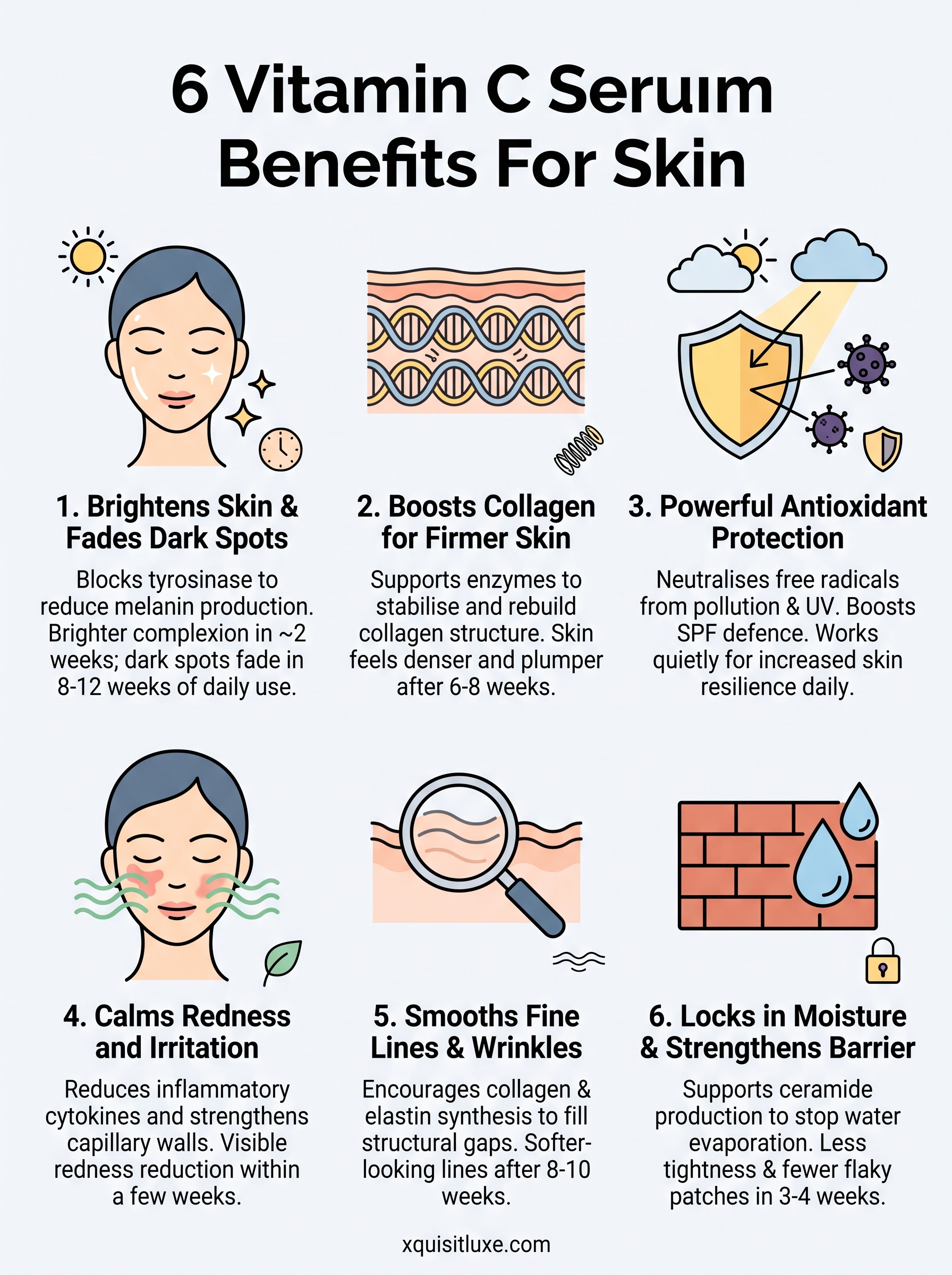
Six benefits, one simple ingredient. Brighter tone, firmer texture, antioxidant protection, calmer skin, softer lines, and a stronger barrier all come from the same daily habit: applying vitamin C serum consistently and pairing it with sunscreen. None of this requires a ten-step routine or an expensive overhaul, just a good formula used every morning without fail.
Give it the full 12 weeks before judging results, since real change happens beneath the surface long before it shows in the mirror. Patience pays off here more than any other skincare ingredient we stock, and the customers who stick with it are the ones who message us months later asking where we've been hiding this stuff.
Ready to see it for yourself? Browse our vitamin C serums and skincare bundles and start your first fortnight of visible brightness today.

