


You've bought the bottle, maybe even felt a bit smug about it sitting on your shelf, but if it's not applied properly, that vitamin C serum is doing very little for your skin. Knowing how to use vitamin C serum correctly, meaning the right order, the right time of day, and the right amount, is what separates a dull complexion from one that actually glows. Get the sequence wrong and you can end up with irritation, pilling, or a product that simply doesn't absorb.
The short answer: cleanse, apply your vitamin C serum on damp skin, wait a minute or two, then follow with moisturiser and SPF if it's morning. Morning application is generally best since vitamin C helps defend against environmental damage during the day, though some people prefer using it at night alongside their other skincare routine steps.
Below, we'll walk through exactly where vitamin C fits among your cleanser, toner, and moisturiser, how much to use, and common mistakes that stop it working. We'll also point to a few gentle, natural formulas worth trying if your current serum is causing more irritation than radiance.
Why vitamin C deserves a place in your routine
Vitamin C, or L-ascorbic acid, is one of the few skincare ingredients with genuine clinical backing behind the marketing claims. It works as a potent antioxidant, neutralising the free radicals generated by UV exposure and pollution before they can break down collagen. Research published by the National Institutes of Health has shown topical vitamin C can reduce visible signs of photoageing and support collagen synthesis, which is why dermatologists reach for it before almost anything else when brightening or firming is the goal.
Beyond the science, the visible payoff is what keeps people coming back to it. Consistent use fades hyperpigmentation and evens out patchy skin tone, softens the look of fine lines, and gives dull, tired-looking skin a noticeable lift within a few weeks. It also helps calm redness and inflammation, which matters if your skin reacts easily to new products.
A good vitamin C serum doesn't just brighten skin, it actively defends it against the damage that causes premature ageing in the first place.
Who notices the biggest difference
Not everyone needs vitamin C for the same reason, but almost every skin type benefits from it in some form. Here's how the main concerns line up with what vitamin C actually does:
| Skin concern | How vitamin C helps |
|---|---|
| Dark spots and uneven tone | Inhibits excess melanin production, fading discolouration over time |
| Fine lines and early ageing | Boosts collagen synthesis and softens the appearance of wrinkles |
| Dullness and tiredness | Restores radiance by brightening the skin's surface |
| Environmental damage | Neutralises free radicals from sun and pollution exposure |
| Mild redness or inflammation | Calms and soothes irritated skin with regular use |
Once you see your specific concern reflected in that list, it becomes much easier to justify the extra step in your routine, and to stay consistent with it.
Getting the benefits, though, depends entirely on using a serum your skin actually tolerates. Cheaper formulas often use unstable or high-strength L-ascorbic acid that oxidises quickly and irritates sensitive skin, which is exactly why we formulate our brightening serums with gentler, more stable derivatives alongside soothing botanicals. If your current bottle stings or leaves your face blotchy, that's not vitamin C failing you, it's the formulation. Switching to a dermatologist-tested version designed for sensitive skin usually solves the problem without giving up the results.
Knowing why it works is only half the job. The next step is making sure you're actually applying it correctly, starting from a clean base.
Step 1. Cleanse your skin
Every vitamin C application should start with a clean face. Any leftover makeup, sunscreen, or overnight oil sits between the serum and your skin, blocking absorption and wasting the product you just paid for. Wash with a gentle, pH-balanced cleanser rather than anything foaming or stripping, since vitamin C already has a low pH and pairing it with harsh cleansing can tip sensitive skin into irritation.
Morning and evening cleansing don't need to look the same. In the morning, a quick rinse with a mild gel or cream cleanser is usually enough to remove overnight residue without disturbing your skin's natural barrier. At night, especially if you've worn sunscreen or makeup, a proper double cleanse, oil-based first, then a gentle water-based formula, makes sure nothing is left behind before you layer on actives.
Skipping the cleanse is the fastest way to waste an expensive vitamin C serum, since it simply can't penetrate through a film of oil or makeup.
What to look for in your cleanser
Not every cleanser plays nicely with vitamin C, so it helps to know what to avoid before you start.
- Avoid sulphates: they strip the skin and can make vitamin C sting more than it should
- Skip high-alcohol formulas: these dry out skin and undo any calming benefit vitamin C offers
- Choose cream or gel textures: they cleanse without disrupting your skin barrier
- Pat, don't rub, dry: this leaves skin slightly damp, which actually helps serum absorption
Once your face is clean and just slightly damp, you're ready to decide whether a toner belongs in the next step, or whether you should move straight to your vitamin C serum.
Step 2. Tone (optional)
Toning isn't essential for everyone, but it earns its place in a lot of routines, particularly if your skin runs oily, congested, or prone to uneven texture. A well-formulated toner removes any last traces of cleanser, rebalances your skin's pH after washing, and preps the surface so your vitamin C serum spreads evenly instead of sitting in patches. Think of it as a bridge step rather than a mandatory one.
Where toner sits in relation to vitamin C matters more than whether you use one at all. Apply toner straight after cleansing and before your serum, giving it a few seconds to sink in rather than layering everything on at once while skin is still wet with product. Patting it in with clean hands works better than dragging a cotton pad across the face, which can cause unnecessary friction on skin that's about to receive an active ingredient.
Toner should smooth the path for vitamin C, not compete with it, so keep the formula simple and skip anything with strong exfoliating acids at this stage.
Choosing the right toner for vitamin C layering
The wrong toner can undo the good work of a gentle cleanser, so it's worth being selective. Look for these qualities:
- Alcohol-free formulas: alcohol dries skin and increases the chance of stinging once vitamin C goes on
- Hydrating ingredients: glycerin, hyaluronic acid, or rosewater support the skin barrier rather than stripping it
- No competing actives: avoid toners already containing retinol, strong acids, or high concentrations of vitamin C, since doubling up can overwhelm sensitive skin
- A calm, fragrance-light formula: reduces the risk of irritation when combined with an active serum straight after
If your skin is naturally balanced and rarely feels tight or oily after cleansing, skipping this step entirely is fine. Vitamin C will still work whether or not toner comes before it, so don't feel pressured into an extra product if your skin doesn't ask for one.
Step 3. Apply your vitamin C serum
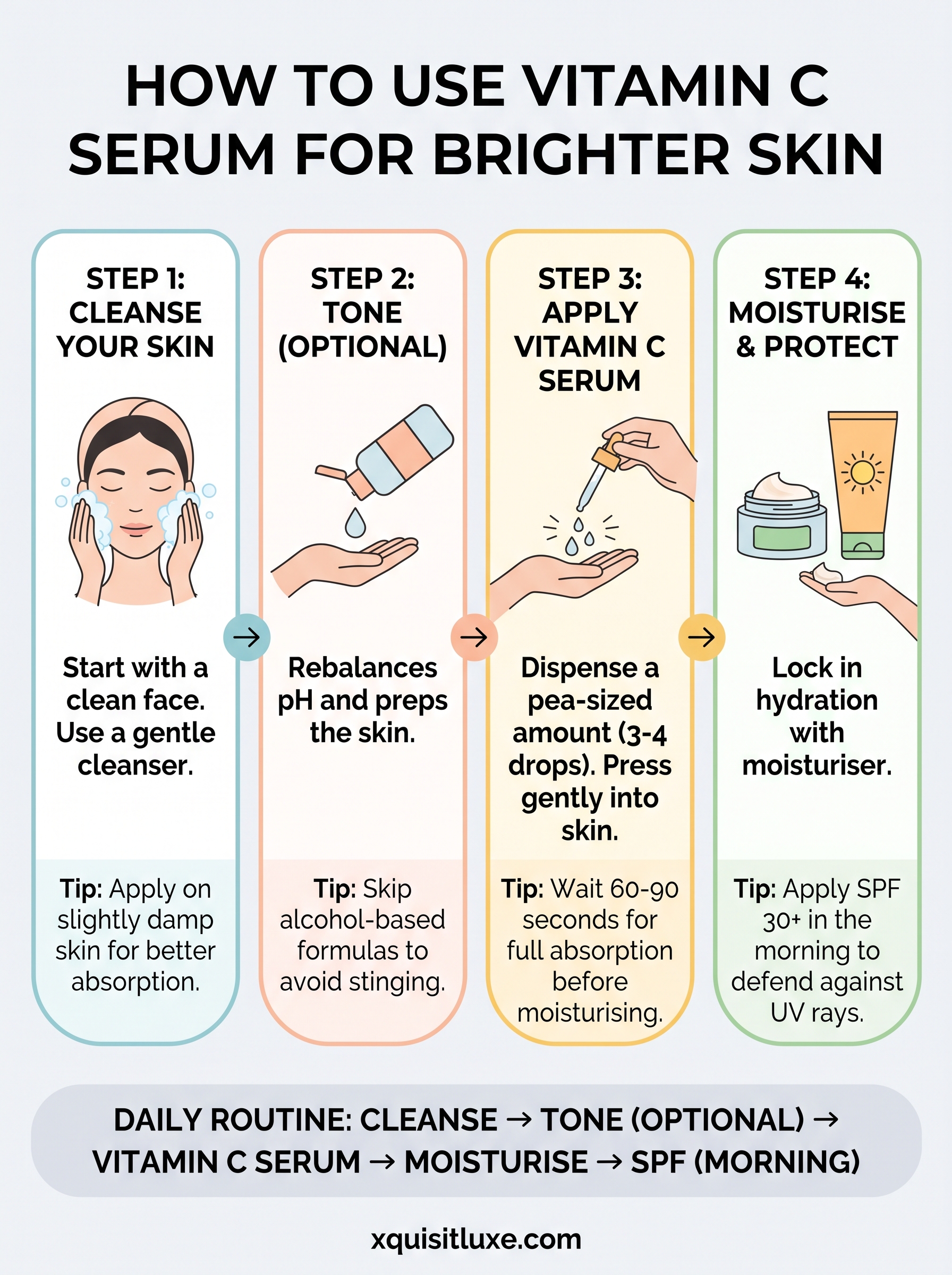
Now comes the step everything else has been building towards. With clean, slightly damp skin, dispense a pea-sized amount of vitamin C serum, roughly three to four drops, into your palm or fingertips. More isn't better here. Applying too much serum wastes product and increases the chance of pilling, especially if you're layering it under moisturiser straight after.

Warm the serum between your fingertips for a second, then press it gently into your face and neck rather than rubbing it in. Work outwards from the centre of your face, avoiding the delicate eye area unless your formula is specifically designed for it. Give the serum sixty to ninety seconds to properly absorb before you move on to the next product. Rushing this part is one of the most common reasons vitamin C serum application fails to deliver visible results, since half the active ingredient ends up smeared onto your moisturiser instead of sinking into your skin.
Give vitamin C a full minute to absorb before layering anything else on top, patience here is what makes the difference between a serum that works and one that just sits on the surface.
Signs your serum is working correctly
A few small cues tell you whether the application has gone to plan:
- Smooth, matte finish: skin should feel slightly tacky, not slick or greasy
- No white residue: pilling usually means too much product or an unabsorbed layer underneath
- Even colour: serum should disappear into skin rather than leaving a visible sheen
- Mild tingling, not stinging: a light tingle is normal for stronger formulas, but real stinging means the concentration or pH doesn't suit your skin
If you notice consistent stinging, switch to a gentler, dermatologist-tested formula rather than pushing through discomfort, since irritation cancels out most of the benefits you're trying to get.
Step 4. Moisturise and protect with SPF
Once your vitamin C serum has had its full sixty to ninety seconds to absorb, seal everything in with a moisturiser. This locks in hydration, softens any slight tackiness left behind, and creates a smooth base if you're applying makeup afterwards. Pick a moisturiser that's fragrance-light and free from harsh actives, since piling more ingredients on top of vitamin C can tip sensitive skin into irritation rather than adding extra benefit.
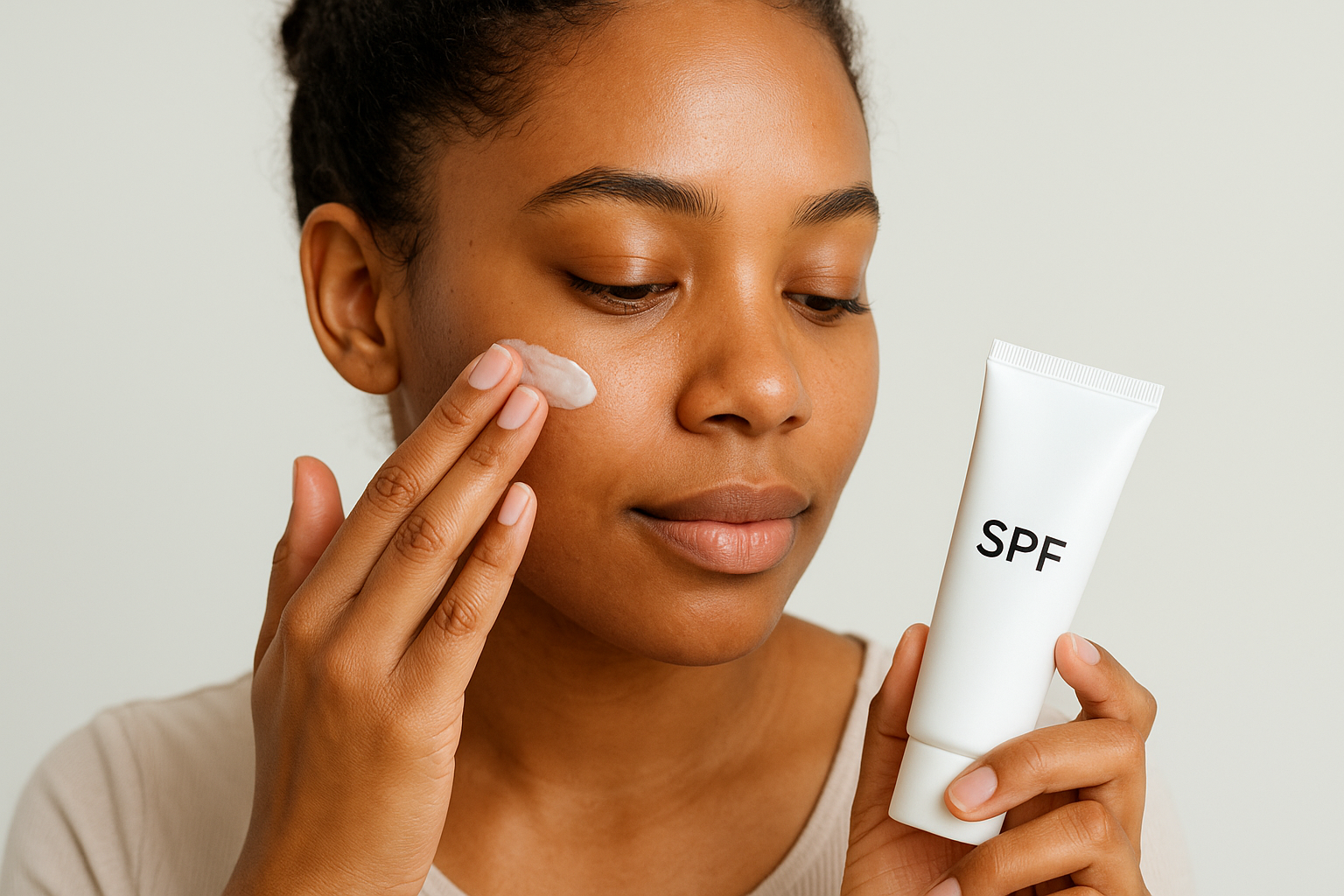
Daytime is where the real payoff happens, and it depends entirely on what comes next. Sunscreen is non-negotiable if you've used vitamin C in the morning, because the two work as a team: vitamin C neutralises free radicals already inside the skin, while SPF stops UV rays from generating new ones in the first place. Skip the sunscreen and you're leaving half the protection on the table, no matter how good your serum is.
Vitamin C without sunscreen is only doing half its job, pair the two every morning for the antioxidant protection you're actually paying for.
Building the right layering order
Getting the sequence right matters more than the exact products you choose, so keep this order in mind each morning:
- Cleanser to remove overnight residue
- Toner if your skin benefits from one
- Vitamin C serum, pressed in and left to absorb
- Moisturiser to lock in hydration
- SPF 30 or higher, applied generously as the final step
At night, simply drop the SPF and finish with moisturiser, since your skin doesn't need sun protection while you sleep. This four-step structure, repeated daily, is what turns a single good serum into a genuinely effective skincare routine rather than a one-off treat.
Making vitamin C part of your daily glow
Getting real results from vitamin C isn't about buying the priciest bottle, it's about following the same simple sequence every day: cleanse, tone if you fancy it, serum, moisturise, and SPF when the sun's up. Miss a step or rush the absorption time, and you're leaving benefits on the table no matter how good the formula is.
Consistency beats perfection here. Skip a day and nothing terrible happens, but stick with the routine for a few weeks and you'll notice brighter, more even skin looking back at you in the mirror. That's the whole point of building daily habits around an ingredient with genuine science behind it.
Ready to see it for yourself? Explore our range of gentle, dermatologist-tested formulas at Xquisit Luxe Self Care and give your skin the glow it deserves.

